
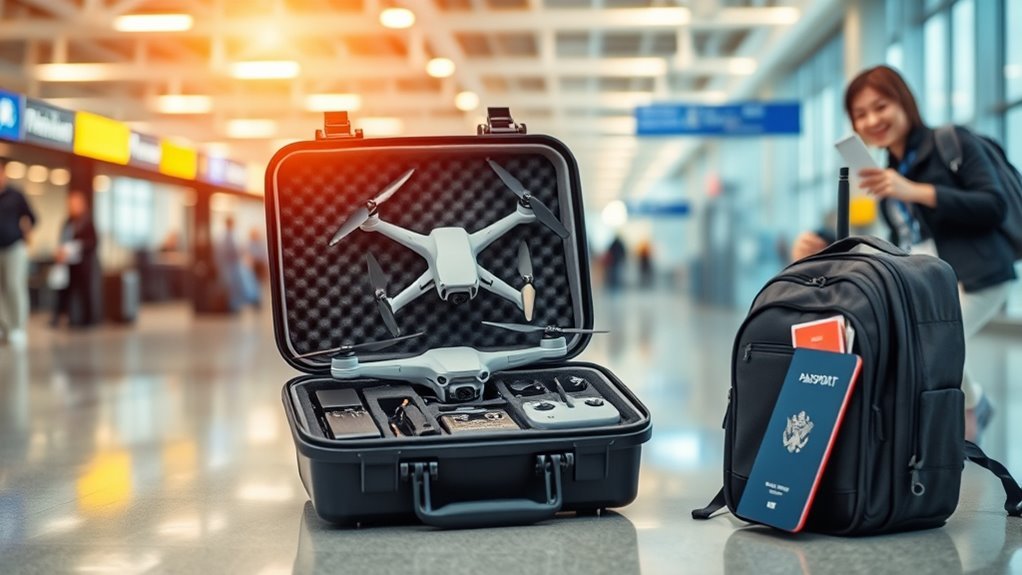
To safely bring your drone on a plane, check your airline’s specific regulations, particularly concerning weight and battery restrictions. Pack your drone securely in a hard case, remove propellers for added protection, and keep batteries in your carry-on. At the airport, declare your drone and follow security protocols, placing batteries in a separate bin. Familiarize yourself with local flying regulations at your destination. Discover key tips on preparation and traveling with your drone to guarantee a hassle-free experience.
Understanding Airline Regulations for Drones
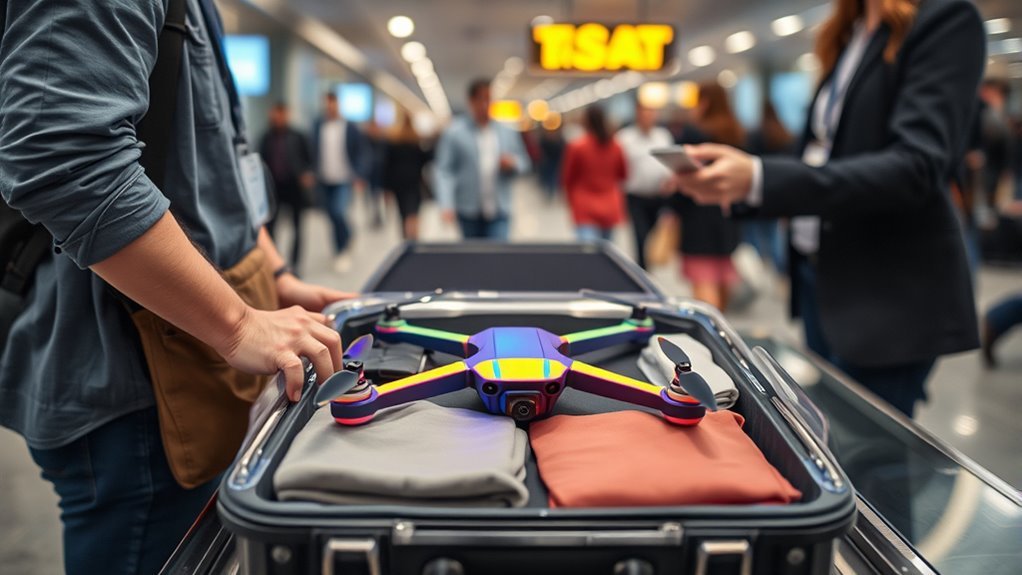
Before you pack your drone for a flight, it’s important to understand the regulations set by airlines and aviation authorities. Each airline has specific policies regarding drones, often influenced by local laws and safety concerns. You’ll need to check if your drone meets the weight restrictions and battery regulations outlined in their airline policies. Most airlines require lithium batteries to be carried in your carry-on luggage, not checked baggage, due to fire hazards. Additionally, familiarize yourself with drone regulations at your destination. Some locations have strict laws about flying drones, which could impact your ability to use it upon arrival. Staying informed about these aspects guarantees you enjoy your freedom to fly without legal complications.
Preparing Your Drone for Travel
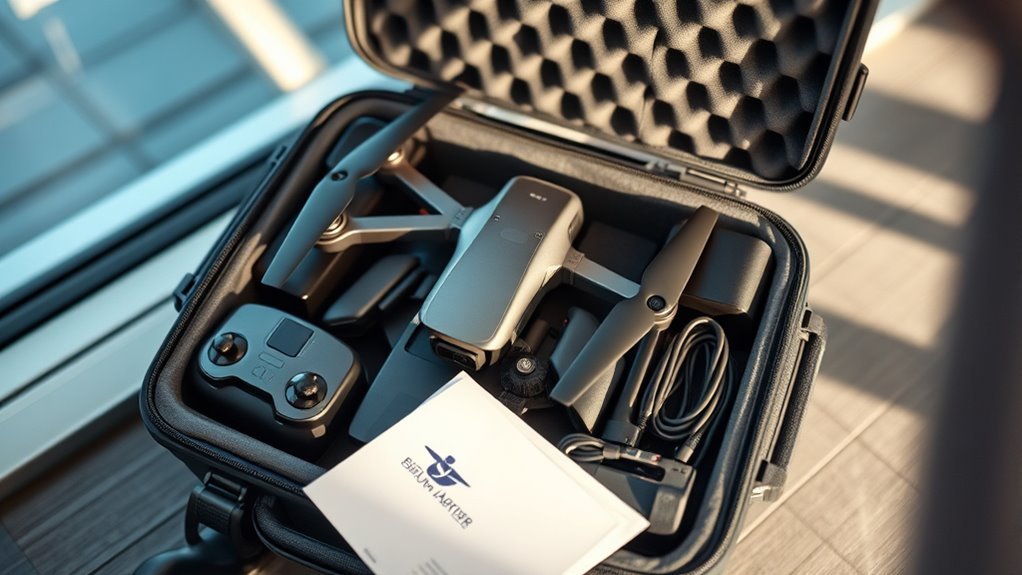
Once you’re clear on the airline regulations, it’s time to get your drone ready for travel. Start with a thorough drone maintenance check. Verify the battery is charged, all parts are secure, and there’s no damage. Create a travel checklist to keep track of essential items like extra batteries, propeller guards, and your remote controller. Don’t forget to include any required paperwork, such as registration documents or proof of purchase. If you’re traveling internationally, research specific regulations for your destination. Consider removing any propellers for extra protection during transport. This preparation not only safeguards your equipment but also guarantees a hassle-free experience at the airport. Additionally, ensure you understand local regulations to avoid any compliance issues while flying at new destinations. Real-time monitoring of your drone’s systems can also enhance its safety during travel, giving you peace of mind as you embrace the freedom of flying your drone at new destinations!
Packing Your Drone Safely
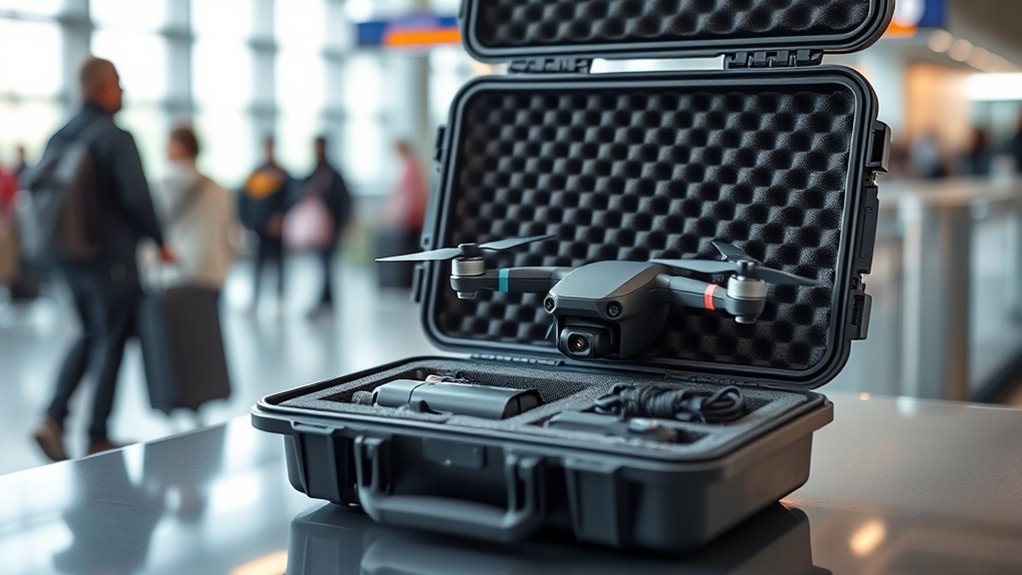
When packing your drone for air travel, choosing the right case is essential to protect it from damage. Make certain to remove the propellers carefully to avoid any breakage, and secure the batteries properly to comply with airline regulations. These steps will help guarantee your drone arrives safely at your destination.
Choose Appropriate Case
Choosing the right case for your drone is essential for guaranteeing its safe transport during air travel. Look for a case that’s made from durable materials like hard plastic or aluminum, which can withstand the rigors of travel. The case should also offer ample padding to protect your drone from impacts.
When selecting a case size, verify it fits your drone snugly without being overly tight, allowing for some movement but preventing it from shifting during transit. A well-fitted case will also comply with airline regulations, making your journey smoother. Remember, investing in a quality case not only safeguards your drone but also gives you peace of mind while you travel, allowing you to focus on capturing those stunning aerial shots.
Remove Propellers Carefully
Before packing your drone, it’s important to remove the propellers carefully to prevent any damage during transit. Proper propeller storage not only protects the propellers but also maintains the overall integrity of your drone. Here’s how to do it right:
- Power Off: Always make sure your drone is powered off to avoid accidental activation.
- Loosen Gently: Carefully unscrew or detach the propellers, taking care not to force any parts.
- Use Protective Covers: If available, place protective covers on the propellers to prevent scratches or bending.
- Store Safely: Keep the propellers in a designated storage compartment or a separate pouch to avoid losing them.
Following these steps guarantees effective drone maintenance and keeps your equipment safe for your travels.
Secure Batteries Properly
Securing your drone’s batteries properly is essential for safe transport and compliance with airline regulations. Most airlines allow lithium-polymer (LiPo) and lithium-ion (Li-ion) batteries, but you’ll need to check specific limits on battery types and watt-hour ratings. Always store batteries in protective cases to prevent short-circuits. Make certain terminals are covered with tape or caps to avoid accidental contact. If possible, carry batteries in your carry-on luggage, as checked baggage can be riskier. Additionally, keep spare batteries under the airline’s capacity limits for safe battery storage. By taking these precautions, you’ll guarantee your journey remains hassle-free while maximizing your freedom to capture amazing aerial footage upon arrival.
Navigating Security Procedures at the Airport
Maneuvering airport security with a drone requires a clear understanding of the procedures in place. At airport checkpoints, you’ll face specific security screenings that can be intimidating. Here are four tips to help you navigate:
- Declare Your Drone: Let security staff know you’re carrying a drone to avoid misunderstandings.
- Remove Batteries: Always take out batteries and place them in a separate bin for screening.
- Follow Size Regulations: Confirm your drone fits within carry-on size limits to prevent delays.
- Be Ready for Manual Checks: Security personnel may need to inspect your device physically, so don’t be surprised.
Best Practices for Flying Your Drone at Your Destination
Once you’ve arrived at your destination, it’s essential to familiarize yourself with local regulations and best practices for flying your drone. Check for any no-fly zones, altitude restrictions, and specific permissions needed for drone use. This local regulations awareness guarantees you’re not only compliant but also respectful of the environment and community. Additionally, be aware that federal government controls navigable airspace above personal property, which may affect where you can legally fly your drone. Furthermore, understanding the restricted zones in the area will help you avoid any potential violations.
For capturing stunning visuals, remember these drone photography tips: shoot during golden hours for the best light, maintain steady control to avoid shaky footage, and frame your shots thoughtfully. Always keep your drone within line of sight and avoid crowds to guarantee safety. By following these guidelines, you’ll enjoy the freedom to explore and capture breathtaking moments while respecting the local laws.
Insurance and Liability Considerations for Drone Travel
When traveling with your drone, it’s essential to contemplate liability coverage options that protect you against potential damages. Don’t overlook the importance of travel insurance, as it can provide additional peace of mind for both your equipment and yourself. Understanding these aspects guarantees you’re prepared for any unforeseen incidents during your trip.
Liability Coverage Options
As you prepare to travel with your drone, understanding liability coverage options is essential to guarantee you’re protected against potential mishaps. Having the right drone insurance can save you from costly damages and legal issues. Here are four key liability coverage options to evaluate:
- Personal Liability Insurance: Covers damages you might cause to others while flying your drone.
- Property Damage Coverage: Protects against damage to property caused by your drone.
- Injury Liability: Provides coverage for injuries sustained by individuals due to your drone’s operation.
- Comprehensive Drone Insurance: Offers a broader protection plan, including theft and accidental damage.
Travel Insurance Importance
While having the right liability coverage for your drone is important, it’s equally essential to evaluate travel insurance when you’re flying with your equipment. Travel insurance can protect you against unexpected events, such as damage to your drone or delays that might jeopardize your plans. Before you purchase a policy, make sure to check the coverage limits; some plans may not fully cover the cost of your drone or its accessories. Additionally, verify if the insurance covers specific activities like aerial photography or racing, as restrictions can affect your freedom to operate. By securing adequate travel insurance, you can enjoy peace of mind and focus on capturing stunning aerial shots without worrying about potential mishaps during your journey.
Frequently Asked Questions
Can I Carry Extra Drone Batteries in My Luggage?
You can carry extra drone batteries, but you’ll need to follow battery safety guidelines and luggage regulations. Make certain they’re properly packaged and within allowed watt-hour limits to avoid issues at security checkpoints.
Are There Age Restrictions for Flying Drones at My Destination?
Before you take flight, check the local drone regulations; age requirements might surprise you. Some places restrict pilots under a certain age, so make sure you’re prepared to enjoy your freedom responsibly and legally.
What if My Drone Gets Damaged During Travel?
If your drone gets damaged during travel, consider getting drone insurance to cover potential repair costs. Also, take travel precautions like using a sturdy case and removing batteries to minimize risks while transporting your gear.
Can I Fly My Drone Near Airports or Restricted Areas?
You can’t fly your drone near airports or restricted areas without following drone regulations and airport guidelines. Always check local laws and airspace restrictions to guarantee you’re flying safely and legally. Freedom comes with responsibility!
How Do I Register My Drone for International Travel?
Maneuvering the skies with your drone requires understanding the drone registration process. For international travel, familiarize yourself with local regulations; each country has unique requirements, ensuring your flying experience remains smooth and unrestricted.
