
When considering the real risks associated with drones, you should focus on regulatory challenges, security vulnerabilities, and privacy concerns. Compliance with diverse regulations is essential; failure can result in penalties and operational delays. Additionally, hacking and unauthorized access pose significant threats to data integrity. Drones can disrupt wildlife and raise public safety issues, including potential collisions. Understanding these complexities helps mitigate risks, and further exploration reveals more on managing these challenges effectively.
Regulatory Challenges and Compliance Issues
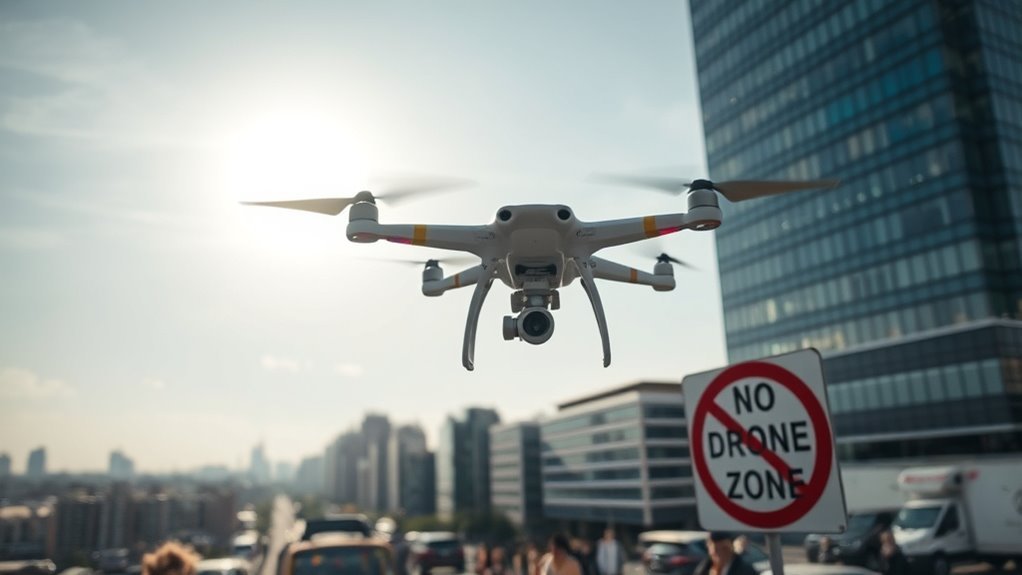
As the use of drones proliferates across various sectors, understanding the regulatory challenges and compliance issues becomes essential for operators and stakeholders. Steering through diverse regulatory frameworks can be challenging, particularly as they vary widely by region and industry. You’ll face compliance challenges that may hinder operational flexibility, such as obtaining necessary licenses, adhering to airspace restrictions, and ensuring adherence to safety standards. Furthermore, evolving regulations often require you to stay informed and adapt quickly, which can be resource-intensive. Additionally, maintaining compliance with privacy laws is crucial to avoid potential fines and ensure legal compliance. Failure to comply could result in penalties, operational delays, or even the loss of flight privileges. To maximize your drone’s potential while maintaining freedom of operation, proactively engaging with these regulatory landscapes is vital for sustainable success in your endeavors. Additionally, understanding drone registration requirements is crucial to avoid potential fines and ensure legal compliance.
Security Vulnerabilities and Cyber Threats
When you consider the integration of drones into various sectors, security vulnerabilities and cyber threats become critical concerns. Data privacy issues arise as drones collect sensitive information, while hacking and unauthorized access can compromise operational integrity. Additionally, malware and software vulnerabilities present significant risks, potentially leading to system failures or breaches. Understanding the limitations of drone technology is essential to mitigate potential security risks and ensure responsible usage. To enhance protection, organizations can leverage proactive vulnerability identification to systematically assess and address potential weaknesses in drone systems.
Data Privacy Concerns
Although drones offer remarkable capabilities for various applications, they also pose significant data privacy concerns, particularly regarding security vulnerabilities and cyber threats. As a drone operator or user, you must consider how your data ownership is affected when collecting and transmitting information. Many drones capture sensitive data without explicit consent requirements from individuals being recorded. This raises ethical dilemmas and potential legal ramifications, especially in jurisdictions with strict privacy laws. Additionally, unsecured data transmission channels can expose your information to unauthorized access, leading to breaches of privacy. To mitigate these risks, guarantee robust encryption methods are employed and remain informed about the data policies of drone manufacturers. Understanding these issues empowers you to navigate the complex landscape of drone usage responsibly.
Hacking and Unauthorized Access
Data privacy concerns naturally extend to the domain of hacking and unauthorized access, where security vulnerabilities in drone systems become critical threats. As you navigate the landscape of drone technology, it’s crucial to recognize that unauthorized access can lead to data breaches, surveillance, and even loss of control over the device. Implementing robust hacking prevention measures, such as encryption and secure communication protocols, is imperative for safeguarding your drone operations. Regular software updates and vulnerability assessments further bolster your defense against potential intrusions. Remember, the responsibility for unauthorized access prevention lies with you. By staying informed and proactive, you can mitigate risks and maintain the freedom that drone technology offers, ensuring that your aerial pursuits remain secure and private.
Malware and Software Vulnerabilities
As drones become increasingly integrated into commercial and recreational activities, the threat of malware and software vulnerabilities poses significant risks to users. Various malware types, including ransomware and spyware, can compromise both drone functionality and personal data. When drones connect to networks, they may inadvertently become conduits for malicious attacks, leading to unauthorized access and data breaches. Regular software updates are vital in mitigating these vulnerabilities, as they patch known security flaws and enhance overall system resilience. However, many users neglect these updates, leaving their drones susceptible to exploitation. Staying informed about potential threats and implementing robust cybersecurity practices is essential for ensuring your drone experience remains safe and secure. Don’t overlook the importance of vigilance in this rapidly evolving technological landscape.
Privacy Concerns and Surveillance
While the benefits of drones in various sectors are evident, the privacy concerns and surveillance capabilities they introduce cannot be overlooked. Drones equipped with facial recognition technology can track individuals without their consent, raising significant ethical questions about autonomy and personal freedom. The potential for data retention exacerbates these issues; collected information can be stored indefinitely, allowing for extensive surveillance over time. This creates a chilling effect, as people may alter their behavior knowing they’re being monitored. It’s essential to establish robust regulations that protect individual rights while balancing the technological advancements drones offer. Additionally, compliance with national forest drone regulations is crucial to ensure responsible use and protect public safety. As you consider the implications of drone usage, reflect on how these privacy concerns may impact your everyday life and civil liberties. Moreover, the advanced sensors integrated into drones can further complicate surveillance dynamics by enabling detailed monitoring capabilities.
Wildlife Disruption and Environmental Impact
Although drones offer significant advantages in various fields, their operation can severely disrupt wildlife and adversely impact ecosystems. When employed for wildlife monitoring, drones can unintentionally cause habitat disturbance that disturbs animal behavior and breeding patterns. The noise and presence of drones may lead to stress among species, pushing them away from vital habitats. This disruption can have cascading effects on food chains and ecosystem balance. Additionally, frequent drone usage in sensitive areas can alter migration routes, making it necessary to assess environmental implications. As you explore the benefits of drone technology, it’s important to weigh these ecological risks and guarantee responsible usage to protect wildlife and maintain the integrity of ecosystems. Your freedom to innovate should not compromise the natural world.
Public Safety Hazards and Accidents
When drones are deployed in populated areas, the potential for public safety hazards and accidents increases considerably. You must consider how these unmanned aerial vehicles can collide with people or property, leading to injuries or damage. Public perception of drones is often clouded by sensationalized incidents, which can heighten anxiety and distrust. In emergency response scenarios, drones can both aid and complicate operations; while they offer real-time data, their presence may obstruct traditional methods or confuse responders. Understanding these dynamics is essential. As you embrace drone technology, it’s important to address the risks associated with public safety to maintain trust and guarantee the effective integration of drones into daily life and emergency services. Collision avoidance technology is essential for mitigating risks during autonomous flights and ensuring safer operations. The implementation of swarm technology allows for enhanced coordination and safety among multiple drones, reducing the likelihood of accidents in crowded environments.
Airspace Congestion and Flight Safety
As drone usage increases, airspace congestion becomes a significant concern, heightening the risk of collisions with manned aircraft. You need to contemplate how effective regulations can manage airspace utilization to guarantee flight safety. Analyzing current frameworks will reveal gaps that could be addressed to mitigate these risks.
Increased Collision Risks
Given the rapid proliferation of drones in both commercial and recreational airspace, the potential for increased collision risks has become a significant concern for aviation safety. As airspace becomes congested, the likelihood of drone interactions rises, necessitating advanced collision avoidance technology. These systems are essential for ensuring drones can detect and navigate around each other, reducing the risk of mid-air collisions. Additionally, effective drone traffic management is vital to maintain orderly operations and facilitate safe integration into existing air traffic frameworks. Without these measures, the promise of drone technology could be overshadowed by safety incidents. You must stay informed about these emerging technologies and advocate for their implementation to enjoy the freedom drones can offer without compromising safety.
Regulating Airspace Usage
While the rise in drone usage presents exciting possibilities, it also necessitates a robust framework for regulating airspace usage to mitigate congestion and enhance flight safety. Effective airspace management is essential as the volume of drones increases, potentially leading to chaotic conditions where collisions become more likely. Implementing stringent drone regulations can help guarantee that operators adhere to established protocols, maintaining safe distances and designated flight paths. This not only protects manned aircraft but also promotes efficient air traffic flow. As you embrace the freedom that drones offer, remember that responsible airspace management is critical. By advocating for clear regulations, you contribute to a safer, more organized environment where both drones and traditional aircraft can coexist harmoniously.
Misuse for Criminal Activities
How can seemingly innocuous drones be repurposed for criminal activities? Drones, while primarily designed for recreation and commercial use, can easily become tools for illicit purposes. For instance, drone smuggling has emerged as a method for transporting contraband across borders, bypassing traditional security measures. Their ability to fly under radar makes them ideal for evading law enforcement. Additionally, drones can be utilized for aerial espionage, gathering sensitive information from corporate or government facilities without detection. This capability raises significant concerns about privacy and security. As you embrace the freedoms drones offer, it is crucial to remain vigilant about their potential misuse, ensuring that the technology serves society positively rather than enabling criminal behavior. Furthermore, the autonomous monitoring capabilities of drones, like those found in agricultural applications, could be exploited for unauthorized surveillance activities. The integration of thermal imaging technology could further enhance their effectiveness in conducting covert operations.
Ethical Considerations in Drone Usage
As you consider the ethical implications of drone usage, privacy invasion concerns emerge as a significant issue. The capacity for surveillance raises questions about accountability in data collection and usage. Understanding these factors is essential for steering through the complex landscape of drone technology. Implementing geofencing technology can help mitigate privacy risks by restricting flight paths and preventing unintended intrusions into personal spaces. Moreover, the integration of advanced stabilization systems can enhance user control and precision, further safeguarding against accidental breaches of privacy.
Privacy Invasion Concerns
The rise of drone technology, although heralded for its myriad applications, raises significant concerns regarding privacy invasion. As drones become more prevalent, the potential for unauthorized surveillance intensifies, challenging the boundaries of personal freedom. You might question the implications of drone transparency; without clear regulations, individuals risk being monitored without consent. Surveillance ethics come into play, as the line between safety and invasion blurs. It’s vital to reflect on how drone operators can maintain ethical standards while balancing the need for security. The unchecked proliferation of drone usage could undermine your sense of privacy and autonomy. Consequently, fostering a dialogue on responsible drone deployment and advocating for stringent guidelines is essential to protect individual rights in an increasingly surveilled society.
Surveillance and Accountability Issues
While privacy invasion concerns highlight the potential for misuse, they also raise significant questions about accountability in drone operations. The intersection of surveillance ethics and technology demands rigorous scrutiny. You’ll need to reflect on how drones are deployed and who is responsible for their actions. Establishing clear accountability measures is vital to prevent abuse and guarantee public trust. Without defined guidelines, the risk of unauthorized surveillance increases, potentially infringing on individual freedoms. Additionally, the lack of transparency in drone usage can lead to a culture of impunity. By advocating for robust oversight mechanisms and ethical standards, you can contribute to a framework that respects privacy while allowing for legitimate uses of drone technology. It’s a delicate balance that’s fundamental in today’s society.
Technological Reliability and Malfunctions
When considering the deployment of drones in various applications, it’s important to acknowledge that technological reliability can greatly impact their performance. Hardware failures, such as component wear, can lead to significant malfunctions. Software glitches may disrupt flight control, causing navigation errors that jeopardize safety. Battery issues can result in unexpected signal loss, leaving you unable to control the drone. Additionally, user errors often compound these risks, especially when maintenance practices are inadequate. Regular firmware updates are key to mitigate vulnerabilities and enhance functionality. Understanding these factors is fundamental for anyone looking to harness the freedom drones offer while minimizing risks associated with their technological reliability and potential malfunctions. Additionally, battery efficiency plays a crucial role in ensuring consistent performance during operations. Furthermore, DJI drones often feature advanced lithium-polymer technology that ensures fewer recharge interruptions, which is essential for maintaining operational reliability. Prioritize vigilance and preparation to guarantee smooth operations.
Impact on Employment and Economic Factors
As drones become increasingly integrated into various industries, their impact on employment and economic factors cannot be overlooked. You might find that while drones enhance efficiency, they also pose significant risks of job displacement. For instance, sectors like delivery, agriculture, and surveillance are evolving rapidly, often reducing the need for traditional labor roles. This shift can lead to widespread economic disruption, as displaced workers may struggle to adapt into new positions without adequate retraining. Additionally, the concentration of drone technology in a few large companies may exacerbate income inequality, limiting opportunities for smaller businesses. Ultimately, the challenge lies in balancing the benefits of drone technology with the need to protect and re-skill the workforce to guarantee a stable economic future. Furthermore, geopolitical tensions can complicate the operational landscape for tech firms, potentially impacting job stability in the drone sector. As the market diversifies into specialized sectors, the demand for lightweight and portable designs will also influence employment patterns as new roles emerge.
Frequently Asked Questions
How Can Drones Affect Property Values in Residential Areas?
Drones can lower property values due to concerns over privacy and noise. If potential buyers perceive drone activity as intrusive, it might deter them from investing, impacting the overall desirability of residential areas.
What Insurance Is Needed for Drone Operators?
As a drone operator, you’ll need various insurance types. Primarily, liability coverage is vital to protect against damages caused by your drone. It’s essential for safeguarding your assets while enjoying the freedom of aerial exploration.
Can Drones Be Used for Emergency Response Situations?
Yes, drones can greatly enhance emergency response by leveraging drone capabilities for rapid assessment and emergency logistics. They deliver supplies, gather real-time data, and improve situational awareness, ultimately increasing efficiency and effectiveness in critical situations.
How Do Weather Conditions Impact Drone Operations?
Picture a kite struggling against strong winds; similarly, your drone’s performance hinges on wind conditions and rain interference. Unfavorable weather can drastically reduce flight stability, battery efficiency, and overall operational safety. Always check forecasts before flying.
What Are the Benefits of Drones for Agriculture?
Drones enhance crop monitoring and precision farming by providing real-time data on plant health, soil conditions, and moisture levels. They enable you to make informed decisions, optimize resource use, and ultimately improve yields and sustainability.
