
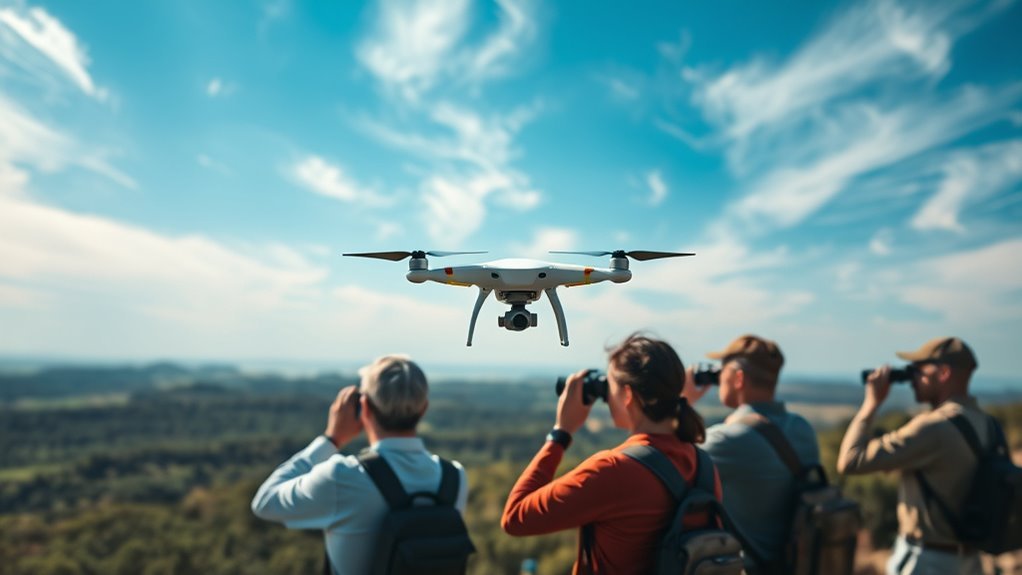
To detect drones in the sky, observe visual cues like flight patterns and shapes. Listen for distinct sounds such as a low hum or buzzing. Utilize radar systems and mobile detection apps for real-time tracking. Be aware of legal considerations, including privacy issues and reporting regulations. Engage with community resources to strengthen detection efforts. Implementing these techniques can enhance your ability to identify drones effectively, and more insights await you as you explore further.
Understanding Drone Types and Their Features
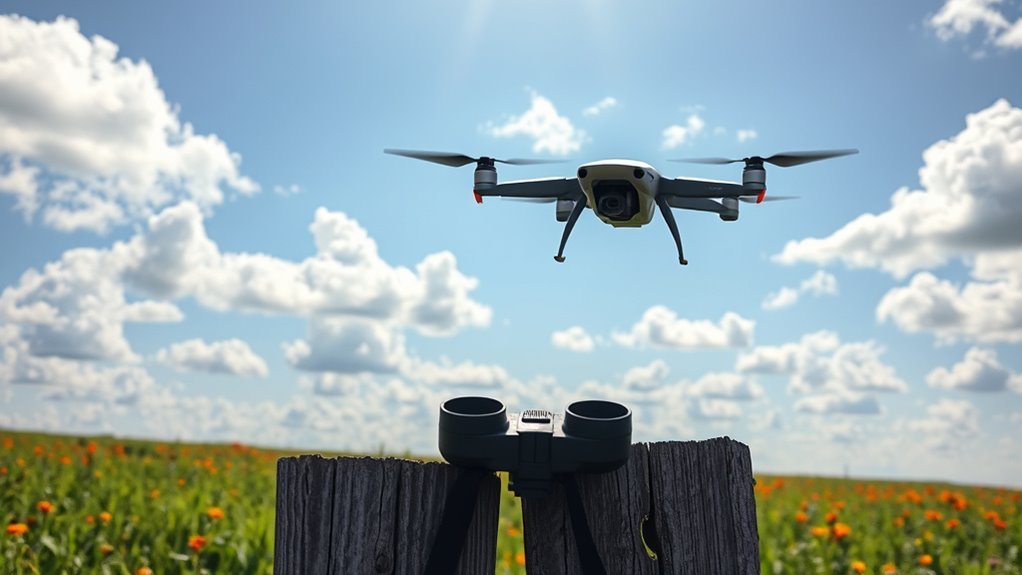
Drones, or unmanned aerial vehicles (UAVs), come in various types, each designed for specific applications and equipped with unique features. Understanding drone classifications is essential for identifying their capabilities. For instance, multirotor drones are ideal for aerial photography due to their stability and ability to hover, while fixed-wing drones excel in long-distance flights. When considering camera specifications, you’ll find options ranging from basic HD cameras to advanced thermal imaging systems, enhancing the drone’s versatility. For example, the JJRC H78G and EXO Blackhawk 3 highlight differing flight times that cater to various user needs. Payload capacity and flight time are also key factors influencing performance. By recognizing these classifications and features, you can better assess which drone suits your needs, ensuring freedom in your aerial pursuits while maximizing operational efficiency and effectiveness. Additionally, features like advanced camera capabilities can significantly enhance the overall quality of aerial imagery captured by drones.
Visual Cues for Spotting Drones
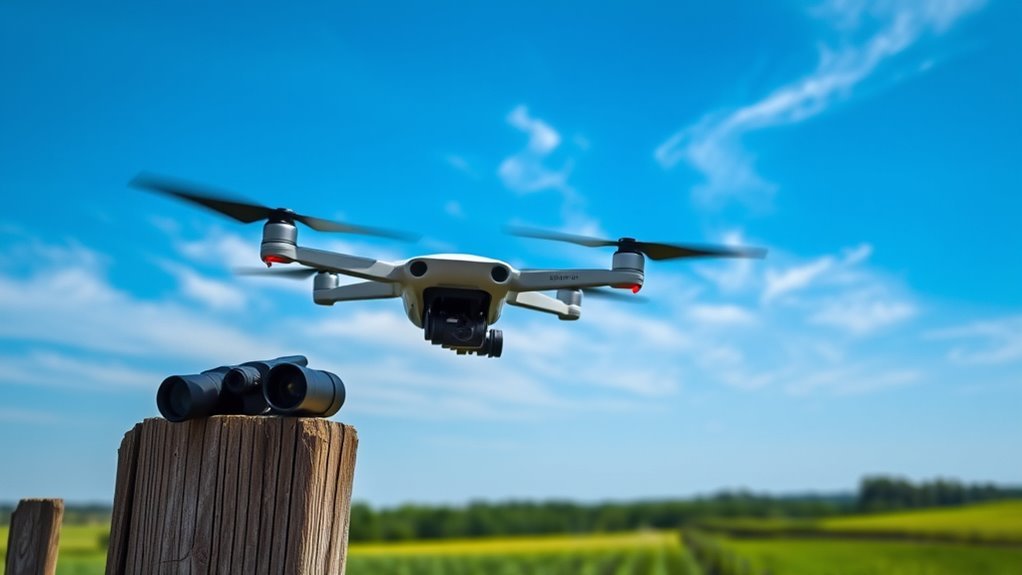
When you’re scanning the skies for drones, certain visual cues can greatly enhance your detection efforts. Pay attention to drone shapes, as they vary considerably—some are compact and boxy, while others are elongated or resemble traditional aircraft. Knowing these shapes can help you identify potential drones swiftly. Additionally, observe flight patterns; drones often exhibit distinct behaviors, such as hovering in place, darting abruptly, or executing smooth, coordinated maneuvers. If you notice a consistent, repetitive route, it’s likely a drone. Stay aware of the environmental context, too—unusual movement in otherwise calm air is a strong indicator. By honing in on these visual cues, you can improve your chances of spotting drones effectively and reclaiming your sense of freedom in the skies.
Listening for Drone Sounds
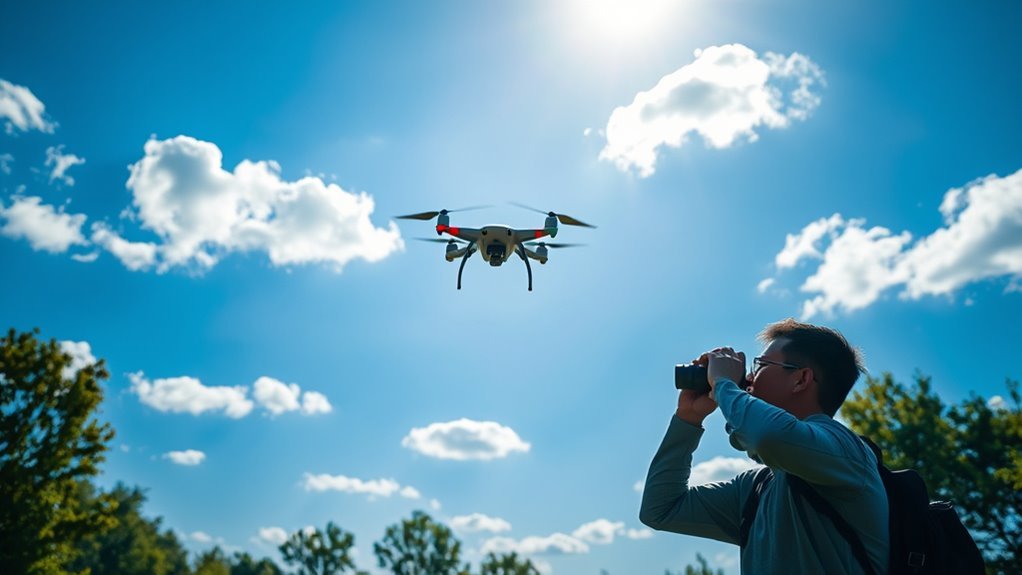
A keen ear can be just as essential as sharp eyes when it comes to detecting drones in the sky. By honing your drone sound identification skills, you’ll enhance your ability to recognize the distinct sounds that drones produce. These sounds often resemble a low hum or buzzing, differing from typical environmental noise. Conducting an environmental noise analysis can help you differentiate between drone noises and other ambient sounds, like birds or traffic. Pay attention to the pitch and frequency variations, as they can signal drone proximity or movement. When you combine auditory cues with visual observations, you’ll create a thorough detection strategy that empowers your awareness and freedom in maneuvering your surroundings.
Using Technology: Radar and Detection Apps
When it comes to detecting drones, radar systems provide a reliable framework by tracking their movements through radio wave reflections. Additionally, mobile detection applications enhance your capability to monitor airspace from a personal device, integrating real-time data for immediate analysis. Understanding both technologies is essential for effective drone detection and response strategies.
Radar Systems Overview
Radar systems play an essential role in detecting drones, leveraging advanced technology to provide real-time surveillance and tracking capabilities. The effectiveness of these systems hinges on radar technology advancements, which have dramatically improved detection range and accuracy. Key radar system components include antennas, transmitters, receivers, and signal processors. These elements work together to emit and analyze radio waves, identifying the unique signatures of drones in the airspace. For those who value their freedom and security, understanding how these systems operate can help you appreciate the protection they offer against unauthorized drone activity. By staying informed about radar technologies, you can better advocate for their use in safeguarding personal and public spaces from potential threats.
Mobile Detection Applications
Mobile detection applications have emerged as vital tools for identifying drones in various environments, integrating advanced radar technology and user-friendly interfaces. You can leverage these apps to stay informed on mobile detection trends, enhancing your situational awareness. Many of these applications offer functionalities like real-time drone tracking, alerts for unauthorized flights, and detailed flight path analysis. By utilizing GPS and signal detection capabilities, they provide you with a thorough view of aerial activity in your vicinity. In addition, you can customize settings to suit your specific needs, ensuring you remain vigilant against potential threats. As drone usage increases, harnessing the power of these mobile detection tools becomes essential for safeguarding your space and maintaining your freedom.
Legal Considerations for Drone Detection
The legal landscape surrounding drone detection is complex and constantly evolving. You must navigate drone regulations, which differ greatly by region. Understanding these regulations is vital to guarantee compliance while addressing privacy concerns that arise from detecting drones. Drone insurance can play a crucial role in protecting operators against potential liabilities that may arise during detection efforts.
| Aspect | Considerations |
|---|---|
| Regulatory Framework | Varies by state/country |
| Privacy Implications | Potential surveillance issues |
| Liability | Risks associated with detection |
| Enforcement | Cooperation with local authorities |
Before implementing any detection methods, it’s important to consult legal experts to avoid infringing on individuals’ rights. Balancing the need for security with the preservation of privacy is key to responsibly managing drone detection efforts. Furthermore, compliance with NDAA regulations is crucial in ensuring that detection technologies do not inadvertently violate federal guidelines.
Community Resources and Networking
While you may focus on the technical aspects of drone detection, tapping into community resources and networking can greatly enhance your efforts. Engaging in community involvement allows you to share insights and strategies with others who share your interest in drone detection. Join local forums, attend workshops, or participate in online discussions to exchange knowledge and resources. Resource sharing not only accelerates your learning curve but also strengthens your network, which can be invaluable when facing challenges. Collaborating with like-minded individuals can lead to innovative solutions and collective action against unwanted drone activity. By leveraging these community resources, you’ll foster a supportive environment that champions freedom and safety in the skies.
Responding to Unwanted Drone Activity
When faced with unwanted drone activity, it’s essential to assess the threat level to determine the appropriate response. You’ll need to report your observations to authorities, ensuring they have the necessary details for investigation. Additionally, implementing countermeasures should be done with caution to avoid unintended consequences while effectively addressing the issue. Remember that shooting down a drone can lead to serious legal consequences, so exploring non-destructive alternatives is advisable. Understanding the advanced safety features of drones can also aid in identifying potential risks and improving your response strategy.
Assessing Drone Threat Levels
As drone technology continues to evolve, it is crucial to develop effective methods for evaluating the threat levels posed by unwanted drone activity. Start with drone behavior analysis to identify patterns indicative of potential threats. Observe flight paths, altitude, and proximity to sensitive areas to gauge intentions. Establish threat assessment criteria that include factors like drone size, payload capacity, and operational history. For instance, a drone hovering over a restricted zone may signal higher risk than one passing through an open area. By systematically applying these criteria, you can differentiate between benign and potentially harmful drone activity. This proactive approach not only enhances safety but also empowers you to protect your freedoms and privacy in an increasingly drone-filled sky.
Reporting to Authorities
How can you effectively report unwanted drone activity to authorities? First, familiarize yourself with local reporting procedures, as they can vary considerably. When you observe a drone that raises concern, document the incident meticulously. Note the time, location, and any distinguishing features of the drone, along with its flight path. This incident documentation will support your report and provide authorities with critical information. If possible, gather evidence such as photographs or videos to bolster your claims. Once you’ve compiled your data, contact the appropriate authorities—this could be local law enforcement or aviation regulators. Make sure to communicate your findings clearly and concisely to guarantee they understand the severity of the situation and can respond effectively.
Implementing Countermeasures Safely
Although responding to unwanted drone activity can be challenging, implementing effective countermeasures is vital for safety and security. You should always prioritize safety protocols while employing countermeasure strategies. Here’s a quick reference table:
| Countermeasure | Effectiveness | Safety Protocols |
|---|---|---|
| Signal Jammer | High | Guarantee legal compliance |
| Drone Capture Nets | Moderate | Use in controlled environments |
| Detection Systems | Variable | Regular system maintenance |
When deploying any countermeasures, assess the risk and legality, guaranteeing you don’t infringe on privacy or airspace regulations. Always stay informed about local laws to maintain your freedom while effectively managing drone threats. Balancing safety and security is vital in these situations.
Frequently Asked Questions
What Should I Do if I Spot a Drone?
If you spot a drone, don’t panic; it might be harmless. Assess the situation, guarantee drone safety, and consider reporting drones to authorities if they’re invading privacy or posing risks. Keep your environment safe!
Can Drones Be Dangerous to Wildlife?
Yes, drones can pose risks to wildlife. Their presence may alter wildlife behavior, causing stress or displacement. Understanding drone impact is essential to guarantee ecological balance and protect vulnerable species from potential disturbances in their natural habitats.
How High Can Drones Fly Legally?
When considering drone regulations, you should know that most countries impose altitude restrictions, typically capping flights at 400 feet above ground level. This guarantees safety and minimizes risks in shared airspace while maximizing your flying freedom.
Are There Any Specific Drone Detection Devices?
Wondering how to safeguard your space? Various drone detection systems and advanced drone detection technology, like RF scanners and radar, can effectively monitor airspace, helping you maintain your freedom and security against unauthorized drone activity.
What Are the Signs of a Drone Being Used for Surveillance?
You’ll notice drone surveillance through unusual hovering patterns, persistent noise, or visible cameras. These signs raise privacy concerns, signaling possible intrusions into your personal space. Stay vigilant to protect your freedoms from unwarranted observation.
