
The AeroVironment Puma LE and Freefly Astro Prime are two exceptional long-endurance enterprise drones, designed to meet the diverse needs of various industries. With the Puma LE offering an impressive 20km radio range compared to the Astro Prime’s 5km, each drone caters to distinct operational requirements. This article will delve into their specifications, performance, and use cases to help you determine which drone best suits your needs.
Overview of the Drones
The AeroVironment Puma LE is a robust, lightweight drone primarily designed for military and commercial applications. This drone is known for its rugged design, capable of enduring harsh weather conditions, and is equipped with advanced features such as GPS navigation, real-time data transmission, and a variety of payload options. The Puma LE is particularly noted for its ease of use and rapid deployment capabilities, making it a favorite among tactical teams and surveillance professionals.
In contrast, the Freefly Astro Prime is a versatile drone that excels in creative applications, particularly in the fields of film and photography. It boasts a modular design that allows for easy customization, enabling users to adapt the drone for various payloads, including high-quality cameras and sensors. The Astro Prime is designed with filmmakers in mind, providing exceptional stabilization and flight performance that enhances cinematic production quality. Its user-friendly interface and intuitive controls make it accessible for both professionals and enthusiasts.
Range Comparison: 20km vs. 5km
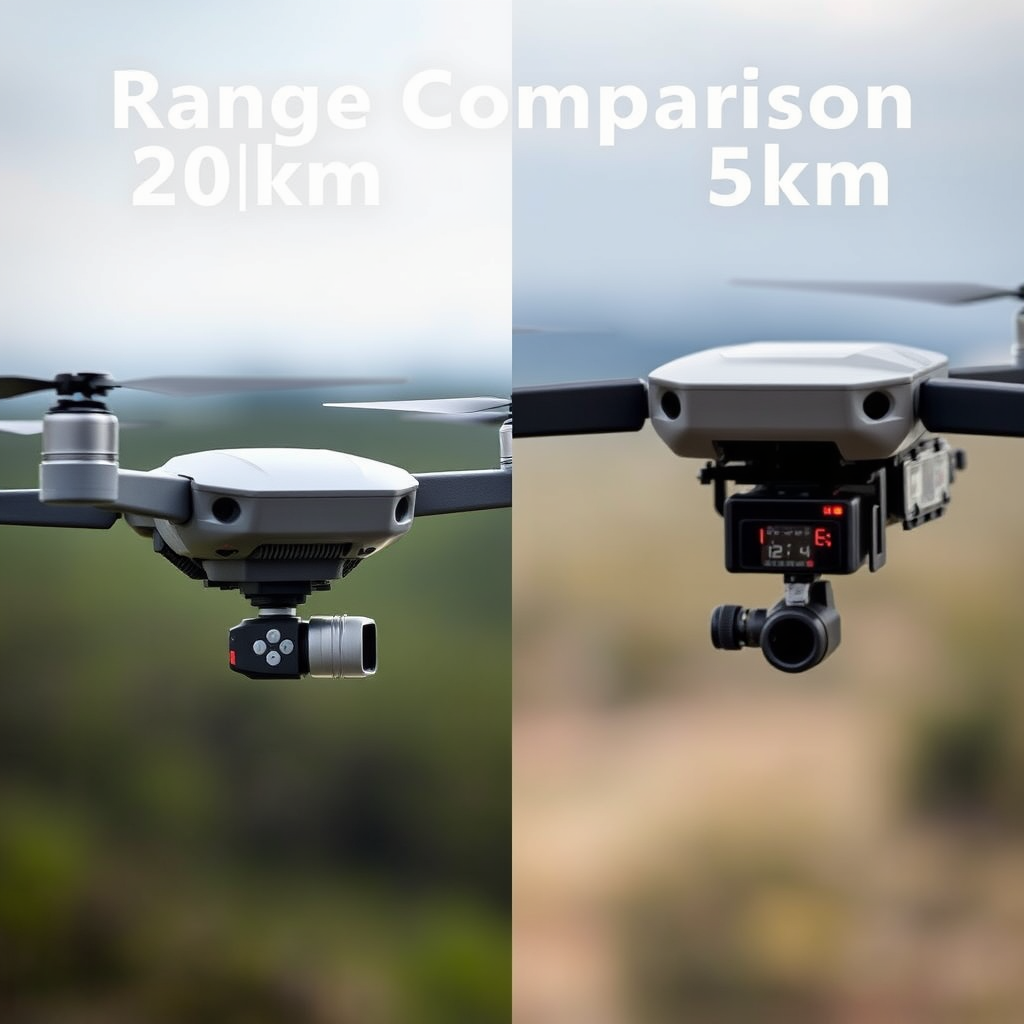
The 20km radio range of the AeroVironment Puma LE is a game-changer for missions that require extensive surveillance or data collection over large areas. This extended range allows operators to conduct tasks far beyond the line of sight, providing the flexibility to monitor vast terrains without needing to reposition the drone frequently. For military applications, this capability is essential for reconnaissance missions, allowing for better situational awareness and strategic planning.
On the other hand, the Freefly Astro Prime’s 5km range is more limited but still sufficient for many creative applications. This range is ideal for short film shoots, live events, and localized inspections where the drone can be easily controlled and monitored. However, this limitation may hinder its use in expansive outdoor environments or for applications requiring prolonged observation distances. Users may need to factor in the drone’s range when planning missions to ensure they remain within operational limits.
Endurance and Flight Time
When it comes to flight endurance, the AeroVironment Puma LE stands out with a flying time of up to 15 hours on a single charge, depending on payload and environmental conditions. This long endurance makes it highly suitable for extended missions, such as border patrol or environmental monitoring, where consistent data collection over time is essential. The drone’s efficient energy management system helps maximize flight duration, providing operators with a reliable tool for long-duration tasks.
In contrast, the Freefly Astro Prime offers a more modest flight time of approximately 30 to 45 minutes, which is standard for most drones in its class. While this may seem limited, it is often sufficient for most film and photography applications, where capturing specific scenes or shots can be accomplished quickly. Users of the Astro Prime can also swap out batteries quickly, allowing for rapid turnaround times between flights, especially during busy film shoots.
Payload Capabilities
The payload capacity of the AeroVironment Puma LE is one of its standout features, supporting various sensors and equipment weighing up to 3.5 kg. This versatility allows the drone to carry high-resolution cameras, thermal imaging devices, or communication equipment, making it ideal for diverse applications, from military reconnaissance to wildlife monitoring. The ability to adapt payloads based on mission requirements enhances its utility, ensuring that it can be tailored to meet specific operational needs.
Conversely, the Freefly Astro Prime is designed with creative professionals in mind, capable of carrying payloads up to 2.5 kg. This capacity generally accommodates high-quality cameras and gimbals, allowing for stunning aerial cinematography and photography. The modular design of the Astro Prime means users can easily switch between different camera setups, maximizing its versatility for various shooting scenarios. However, those seeking to use the Astro Prime for heavier payloads may find this a limiting factor compared to the Puma LE.
Use Cases and Applications
The AeroVironment Puma LE is ideally suited for military and surveillance applications, where long-range, high-endurance capabilities are crucial. Its rugged design and ability to operate in challenging environments make it a reliable choice for intelligence, surveillance, and reconnaissance (ISR) missions. Additionally, it is well-suited for search and rescue operations, allowing for extensive area coverage while providing real-time data to ground teams.
In contrast, the Freefly Astro Prime shines in creative applications such as film production, advertisement shoots, and event coverage. Its ability to capture high-quality imagery and video in a stable manner makes it a favorite among filmmakers and content creators. The drone’s user-friendly interface allows operators to focus on creativity rather than technical complexities, making it an invaluable tool in the hands of professionals in the entertainment industry.
Price and Value Assessment
Pricing for the AeroVironment Puma LE generally starts at around $250,000, reflecting its advanced capabilities and military-grade features. While this may seem steep, the investment is justified for organizations requiring high-performance drones for specialized tasks. The value proposition lies in its durability, long-range capabilities, and extensive support options, making it a reliable choice for critical operations.
On the other hand, the Freefly Astro Prime is more competitively priced, typically ranging between $8,000 and $15,000, depending on the selected configurations and accessories. This price point makes it accessible for independent filmmakers, production companies, and other creative professionals. The Astro Prime’s modular design and high-quality output offer excellent value for those specifically looking to enhance their visual storytelling capabilities.
User Feedback and Reviews
User experiences with the AeroVironment Puma LE have been overwhelmingly positive, particularly regarding its range and endurance. Operators appreciate its reliability and ease of deployment, especially in high-stakes environments. Users have noted that the drone’s performance in adverse weather conditions is commendable, making it a trusted asset in various operational scenarios.
The Freefly Astro Prime has also garnered favorable reviews, especially for its stability and flight performance during aerial shoots. Users frequently highlight its intuitive controls and the quality of the footage it produces. Feedback often emphasizes the drone’s versatility in adapting to various filming needs, making it a preferred choice for many in the creative industry. However, some users have pointed out the need for improved battery life to extend shooting durations further.
The comparison of the AeroVironment Puma LE and Freefly Astro Prime illustrates distinct advantages for different applications. The choice between a 20km and a 5km radio range reflects varying operational needs and contexts. For those seeking greater range and endurance, the Puma LE may be the better option, while the Astro Prime offers unique capabilities in its own right. Evaluate your specific requirements to make an informed decision, ensuring that you select the drone that aligns best with your operational goals and expectations.
Frequently Asked Questions
What are the key differences between the AeroVironment Puma LE and the Freefly Astro Prime in terms of range and endurance?
The AeroVironment Puma LE features an impressive operational range of up to 20 km, making it suitable for long-distance surveillance and reconnaissance missions. In contrast, the Freefly Astro Prime has a maximum operational range of about 5 km. While the Puma LE is designed for extended flights with long endurance, the Astro Prime excels in versatility and adaptability for shorter-range operations, making it ideal for quick missions in confined environments.
How does the flight endurance of the Puma LE compare to the Astro Prime, and why is this important?
The AeroVironment Puma LE boasts an outstanding flight endurance of up to 15 hours, allowing for prolonged missions without the need for frequent recharges or landings. The Freefly Astro Prime, while still capable, has a shorter endurance, typically around 4-5 hours. This difference is crucial for users who require prolonged surveillance capabilities, as longer endurance translates to fewer interruptions and more comprehensive data collection during missions.
Which drone is better suited for military applications: the Puma LE or the Astro Prime?
The AeroVironment Puma LE is generally regarded as the better option for military applications due to its longer range, superior endurance, and rugged design tailored for challenging environments. Its capabilities are specifically engineered for reconnaissance and intelligence gathering, making it a preferred choice for defense forces. However, the Freefly Astro Prime may be favored in tactical situations where agility and rapid deployment are critical, especially in urban settings.
Why should I consider the radio range of these drones when making a purchasing decision?
The radio range of a drone directly impacts its operational flexibility and mission scope. The AeroVironment Puma LE’s 20 km radio range allows for extensive coverage and the ability to operate over larger areas without losing control or data transmission. In contrast, the Freefly Astro Prime’s 5 km range may limit its usability in expansive operations. Understanding your mission requirements and expected operational environment is essential when considering the appropriate radio range for your needs.
What are the primary use cases for the AeroVironment Puma LE and Freefly Astro Prime drones in enterprise settings?
The AeroVironment Puma LE is primarily used in military and defense operations, offering capabilities for surveillance, reconnaissance, and intelligence gathering in remote areas. On the other hand, the Freefly Astro Prime finds its niche in enterprise applications such as agriculture monitoring, infrastructure inspection, and emergency response, where its agility and adaptability shine. Assessing the specific needs of your enterprise will help determine which drone aligns best with your operational goals.
References
- https://en.wikipedia.org/wiki/AeroVironment_Puma
- https://www.reuters.com/article/us-usa-drones-idUSKBN1WZ2X3
- https://www.armytimes.com/2021/04/05/army-looks-to-drones-for-long-range-strike-capabilities/
- https://www.bbc.com/news/technology-56378335
- https://www.sciencedirect.com/science/article/pii/S1877050921008270
- https://www.nytimes.com/2021/10/12/us/drones-us-military.html
- https://www.techrepublic.com/article/how-drones-are-changing-the-us-military/
