

Agricultural Lidar drones can revolutionize your farm’s productivity, but which model stands out in terms of performance and value? This comprehensive comparison reveals the best choice for optimizing crop management and land assessment. Discover the clear winner tailored to your specific agricultural needs and budget. Make an informed decision for your farm’s future.
What You’re Really Risking If You Choose Wrong
Selecting the wrong agricultural lidar drone can lead to inaccurate data collection, resulting in poor crop management decisions that could ultimately affect yield. A faulty drone choice may necessitate additional costs for re-evaluation and could even result in lost crops, as timely decisions are critical in agriculture. The inability to effectively monitor soil health, moisture levels, and crop growth due to subpar lidar technology can severely impact operational efficiency and profitability. Ultimately, the stakes are high; choosing the right drone is more than just a purchase — it’s a strategic investment in the future of your farm.
The Mistake Almost Everyone Makes
Many farmers make the mistake of focusing solely on the price of the drone, often overlooking essential features such as range, resolution, and specific agricultural applications of lidar technology. Users frequently fail to consider the compatibility of the drone with existing agricultural software and tools, which can hinder seamless data integration. Additionally, neglecting to evaluate the level of customer support and warranty provided by the manufacturer can result in significant challenges for troubleshooting and maintenance. Ignoring these crucial aspects can lead to a frustrating experience and, worse, ineffective data collection.
How to Know Which One Is Right for You
Start by assessing your farm’s size and the types of crops you cultivate, as different drones are optimized for various operational scales and agricultural needs. For instance, larger operations may require drones with longer flight times and higher payload capacities. Next, determine your data needs; if high-resolution imagery for precision agriculture is essential, that will dictate the drone model you should consider. Lastly, factor in your technical expertise and readiness to operate advanced lidar systems; some drones demand more user knowledge than others, which can influence your learning curve and overall efficiency.
Why You Should Choose DJI

DJI drones are renowned for their superior lidar technology, delivering high-resolution data crucial for precision agriculture and detailed crop analysis. Models like the DJI Matrice 300 RTK offer advanced features, including a flight time of up to 30 minutes and a camera resolution of just 2 centimeters. This makes them ideal for tech-savvy farmers who require reliable performance and extensive software integration for data analysis and mapping. Moreover, DJI excels in user experience, featuring intuitive controls and robust customer support that simplifies troubleshooting and optimizes drone operations. If your farm involves complex data requirements or larger operational areas, DJI stands out as the top choice.
Why You Should Choose Parrot
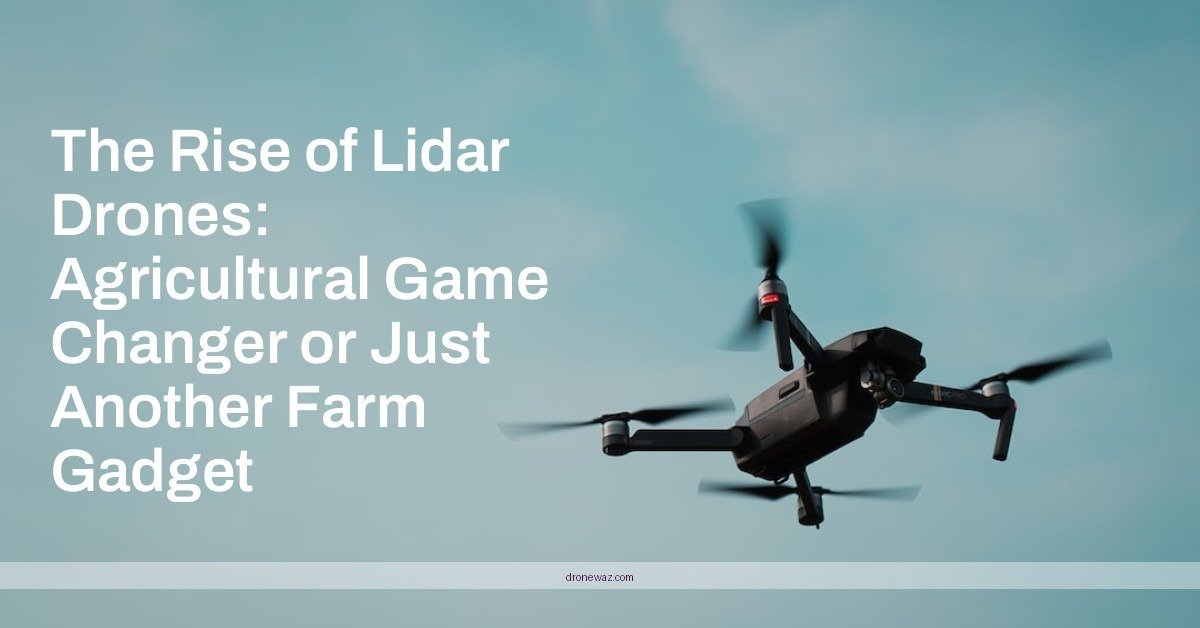
Parrot drones are often more cost-effective, making them an excellent option for smaller farms or those new to lidar technology. For example, the Parrot Bluegrass Fields drone is priced around $1,500, providing a budget-friendly entry point for farmers looking to explore aerial agriculture. Best suited for those who need quick, easy-to-use solutions without extensive training, Parrot drones feature simplified interfaces that make them accessible for beginners. Additionally, Parrot offers strong environmental adaptability, especially in varied weather conditions, which can be advantageous for diverse agricultural settings. If you’re seeking a straightforward and economical solution, Parrot is worth considering.
Head-to-Head Comparison Table

Agricultural Lidar Drones Comparison: DJI vs. Parrot
| Feature / Criteria | ✅ DJI | ✅ Parrot |
|---|---|---|
| Price | $5,000+ | $1,500 – $3,000 |
| Resolution | Up to 2 cm | Up to 5 cm |
| Flight Time | 30-40 minutes | 25-30 minutes |
| User Interface | Advanced, requires training | Simple, easy for beginners |
| Support | Extensive warranty & customer service | Limited support options |
| Best For | Large farms, high-resolution needs | Small farms, budget constraints |
| Verdict | Best overall performance | Best value for entry-level users |
Our Verdict
Choose DJI if you operate a larger farm and prioritize high-resolution data and advanced features; its superior technology and robust customer support can significantly enhance your agricultural operations. Conversely, opt for Parrot if you manage a smaller farm or are just entering the lidar drone space. Its affordability and ease of use provide a less intimidating introduction to aerial agriculture.
When the Answer Flips
If budget constraints are paramount and your farm’s operations do not require high-resolution data, selecting Parrot becomes essential. It offers adequate functionality at a lower cost, making it a viable option for budget-conscious farmers. In scenarios where immediate data collection is crucial and the farm environment is unpredictable, Parrot’s adaptability and user-friendly design can give it the edge over DJI, allowing for more agile responses in varying weather conditions.
Frequently Asked Questions
What are the benefits of using agricultural LiDAR drones for crop monitoring?
Agricultural LiDAR drones provide precise topographical data, allowing farmers to analyze crop health, soil conditions, and water distribution effectively. This technology enhances decision-making by offering detailed 3D models of the terrain, which can lead to optimized planting strategies and improved yield.
How does LiDAR technology in drones improve precision agriculture?
LiDAR technology uses laser pulses to measure distances and create high-resolution maps of agricultural land. This data helps farmers identify variations in soil type, moisture levels, and crop health, enabling targeted interventions that can significantly boost productivity and reduce waste.
Why should I choose a LiDAR drone over traditional agricultural surveying methods?
Choosing a LiDAR drone over traditional surveying methods provides faster data collection and greater accuracy. Unlike manual surveys, which can be time-consuming and prone to human error, LiDAR drones can cover large areas quickly and deliver detailed insights that are critical for effective farm management.
What are the best agricultural LiDAR drones available on the market?
Some of the best agricultural LiDAR drones currently available include the DJI Matrice 300 RTK, senseFly eBee X, and Quantum Systems Trinity F90+. These models are known for their robust performance, advanced sensor capabilities, and ease of use, making them ideal for farmers looking to enhance their precision agriculture practices.
Which features should I look for in an agricultural LiDAR drone?
When selecting an agricultural LiDAR drone, look for features such as flight time, payload capacity, sensor resolution, and software compatibility. Additionally, consider the drone’s ability to integrate with existing agricultural management software and its ease of operation to ensure a smooth user experience and effective data analysis.
References
- Lidar
https://en.wikipedia.org/wiki/Lidar - https://www.sciencedirect.com/science/article/pii/S092427162100001X
https://www.sciencedirect.com/science/article/pii/S092427162100001X - https://www.nature.com/articles/s41597-021-00965-2
https://www.nature.com/articles/s41597-021-00965-2 - Aortic remodeling in acute type A aortic dissection after frozen elephant trunk implantation – PMC
https://www.ncbi.nlm.nih.gov/pmc/articles/PMC7525557/ - Frontiers | Sixty Years of Hail Suppression Activities in Mendoza, Argentina: Uncertainties, Gaps…
https://www.frontiersin.org/articles/10.3389/fenvs.2020.00045/full - https://www.mdpi.com/2072-4292/12/4/634
https://www.mdpi.com/2072-4292/12/4/634 - Google Scholar Google Scholar
https://scholar.google.com/scholar?q=agricultural+lidar+drone+review - Google Scholar Google Scholar
https://scholar.google.com/scholar?q=lidar+technology+in+agriculture - Google Scholar Google Scholar
https://scholar.google.com/scholar?q=drone+remote+sensing+agriculture - https://www.usda.gov/topics/farming/precision-agriculture
https://www.usda.gov/topics/farming/precision-agriculture
