

As drones become more common in residential neighborhoods, commercial spaces, and critical infrastructure zones, many property owners and businesses ask the same question: are drone jammers legal? In the United States, the short answer is generally no. Federal law heavily restricts the use, marketing, and operation of jamming devices because they interfere with authorized radio communications, GPS signals, and other protected wireless services. While the appeal of stopping an unwanted drone may seem understandable, the legal risks tied to drone jammers are significant.
📋 About This Article
Drone jammers are generally not legal in the United States. This article is for homeowners, business owners, and facility managers who want to understand what to do about unwanted drone activity without breaking the law. You’ll learn why jammers are restricted, what a drone jammer does, and what safer, lawful alternatives may help protect your property and privacy.
This issue sits at the intersection of aviation law, telecommunications regulation, public safety, privacy rights, and national security. For anyone dealing with unauthorized drone activity, it is important to understand not only how drone jammers function, but also why regulators treat them as prohibited technology and what lawful alternatives may exist.
What Is a Drone Jammer?
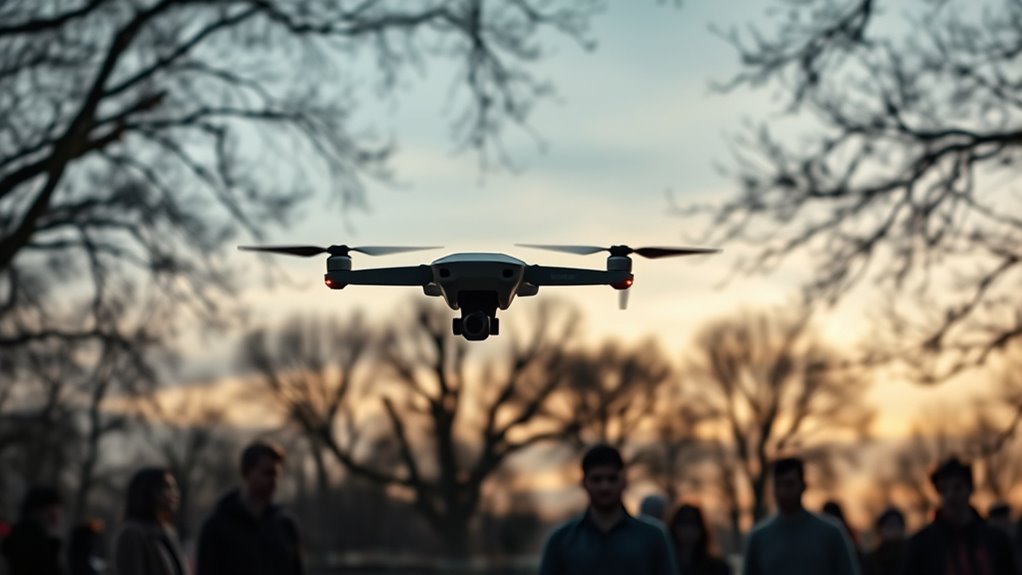
A drone jammer is an electronic counter-drone device designed to interrupt the communication link between an unmanned aircraft and its remote operator. Most consumer and commercial drones depend on radio frequency signals, GPS data, Wi-Fi connections, or other navigation systems to receive commands and maintain stable flight. A jammer targets those signals and creates interference, making normal drone operation difficult or impossible.
These devices are often marketed as anti-drone tools, drone signal blockers, or UAV jamming systems. Depending on the technology used, a jammer may attempt to disrupt:
- Radio frequency control links
- GPS or GNSS navigation signals
- Wi-Fi or video transmission channels
- Telemetry communication between the drone and the operator
The intended outcome is usually to force the drone to lose contact with its controller. Once that happens, the aircraft may hover, land, return to home, or behave unpredictably based on its programming and fail-safe settings.
How Drone Jammers Work
Drone jammers operate by emitting signals on the same frequencies that drones use for command, control, navigation, or data transmission. This creates signal interference strong enough to overpower or confuse the legitimate connection between the drone and its pilot.
Signal Interference and Loss of Control
Most drones rely on a stable communication pathway. When a jammer introduces competing radio frequency energy, the drone may no longer be able to interpret control commands accurately. In practical terms, this can cause the aircraft to stop responding to its operator, lose situational awareness, or trigger a pre-programmed emergency action.
Possible Drone Reactions
When a jammer is used, a drone may react in several ways:
- Hover in place temporarily
- Attempt an automatic landing
- Return to its launch point using fail-safe features
- Drift off course
- Crash if navigation and control systems are severely disrupted
That last possibility is one of the main reasons governments regulate jamming technology so strictly. A disabled drone can become a physical hazard to people, vehicles, buildings, and emergency operations.
Are Drone Jammers Legal Under Federal Law?
In the United States, drone jammers are generally illegal for private individuals and most organizations. Federal law prohibits the use of devices that intentionally interfere with licensed or authorized radio communications. Because drones often operate through protected parts of the radio spectrum, jamming them can violate communications law even if the drone itself is flying where it should not be.
FCC Restrictions on Jamming Devices
The Federal Communications Commission (FCC) has made its position clear: jammers are unlawful to market, sell, own in certain contexts, or operate when they interfere with communications systems. This includes devices that block cell phone signals, GPS signals, Wi-Fi, or drone control frequencies. The FCC treats these products as a serious enforcement issue because signal disruption can affect far more than the intended target.
In the case of drone jammers, the risk is not limited to the drone operator. A jammer can also interfere with nearby wireless networks, public safety channels, aviation systems, and legitimate communications used by others in the area.
Why Federal Agencies Prohibit Drone Jamming
Federal agencies restrict jamming technology for several reasons:
- It can disrupt critical communications infrastructure
- It may interfere with aviation safety systems
- It can affect emergency responders and law enforcement operations
- It creates public safety risks if drones fall or behave unpredictably
- It undermines federal control over the radiofrequency spectrum
Because the radio spectrum is regulated at the federal level, individuals cannot lawfully decide to block signals simply because a drone appears intrusive or suspicious.
Do State Laws Make Drone Jammers Legal?
State laws can add complexity to drone-related issues, but they do not override federal communications law. Some states have drone privacy laws, trespass rules, or restrictions on surveillance activities involving unmanned aircraft. However, those state-level protections do not usually grant permission to use a signal jammer.
This is where confusion often begins. A person may assume that if a drone is invading privacy, hovering over private property, or operating recklessly, they have the right to disable it electronically. In reality, even if the drone operator is violating state or local law, using a jammer can still expose the property owner to federal penalties.
In other words, a drone’s unlawful presence does not automatically make electronic interference lawful.
Penalties for Using a Drone Jammer
The legal consequences for using a drone jammer can be severe. Federal enforcement actions may involve civil penalties, equipment seizure, and even criminal liability in serious cases. The exact outcome depends on the circumstances, such as the type of interference caused, the location, and whether public safety communications were affected.
Potential Legal Consequences
- Substantial FCC fines
- Confiscation of jamming equipment
- Criminal charges under applicable federal statutes
- Liability for property damage or bodily injury if a drone crashes
- Additional regulatory scrutiny for businesses or institutions involved
For commercial property owners, event venues, industrial sites, and private security teams, the risk is especially high. Using prohibited counter-drone technology without legal authority can create major compliance problems and reputational damage.
Why the Law Treats Drone Jammers So Seriously
At first glance, a drone jammer may seem like a targeted solution to a localized problem. Legally and technically, however, it is much broader than that. Jamming technology does not respect property lines, and radio interference rarely stays confined to one device. Once a jammer is activated, surrounding communications systems may also be affected.
That is why regulators approach drone jamming as a spectrum-management issue, not just a drone-control issue. The same tool used to disrupt a recreational drone could also interfere with lawful aviation operations, nearby wireless devices, or emergency communications channels. From a public policy perspective, the government prioritizes communication stability and aviation safety over private attempts to neutralize drones electronically.
Special Exceptions and Government Use
There are limited circumstances in which certain federal agencies may have authority to use counter-UAS technologies, including signal disruption tools. These exceptions are narrow and typically tied to national security, military operations, correctional facilities, border protection, or protection of high-risk government assets.
These legal carve-outs do not extend broadly to private citizens, private businesses, homeowner associations, or most local entities. Even organizations with legitimate security concerns must operate within federal law and should not assume that an anti-drone need creates automatic legal authority.
What to Do Instead of Using a Drone Jammer
If an unauthorized drone is creating safety, security, or privacy concerns, there are lawful alternatives that do not involve illegal signal interference.
Document the Drone Activity
Record the date, time, location, flight behavior, and any visible identifying details. Photos and videos may help support a complaint, especially if the drone appears to be hovering repeatedly over private property or restricted areas.
Contact Local Law Enforcement if Necessary
If the drone presents an immediate safety threat, appears connected to criminal activity, or is interfering with emergency operations, local law enforcement may be the appropriate first call. They can assess whether other laws are being violated.
Report Aviation Concerns to the FAA
If the drone is flying near airports, above restricted areas, or in a reckless manner, reporting the incident to the Federal Aviation Administration (FAA) may be appropriate. The FAA oversees airspace safety and unmanned aircraft operations in the United States.
Use Passive Drone Detection Systems
In some settings, passive drone detection technology may help identify drone presence without transmitting disruptive signals. These systems can monitor radio frequency activity, acoustic signatures, or visual flight patterns, depending on the product and legal environment.
Review Privacy and Property Protections
Property owners concerned about surveillance should consult legal counsel about state privacy law, nuisance claims, trespass issues, and evidence preservation. The right response often depends on whether the drone activity is merely annoying, operationally unsafe, or legally invasive.
Common Misconceptions About Drone Jammers
If a Drone Flies Over My Property, I Can Jam It
This is a common misunderstanding. Property ownership does not create a legal right to interfere with federally regulated radio communications. Airspace and wireless transmission rules are governed by federal law.
If I Can Buy a Jammer Online, It Must Be Legal
Online availability does not equal lawful use. Many products are marketed internationally or through questionable channels, but that does not change U.S. legal restrictions. A device being easy to purchase is not a defense against enforcement action.
Jamming Is Safer Than Physically Taking Down a Drone
Electronic interference may sound less aggressive than physical force, but it still creates serious safety hazards. A jammed drone can become unstable, lose navigation, or crash in an uncontrolled area.
The Bottom Line on Drone Jammer Legality
Drone jammers are generally illegal under federal law in the United States because they intentionally interfere with protected radio, GPS, and communication signals. The FCC prohibits jamming devices due to the broad risks they create for public safety, wireless networks, aviation systems, and emergency communications. While state laws may shape how drone privacy or trespass issues are handled, they do not typically authorize private jamming.
For individuals and organizations facing unwanted drone activity, the safer and legally sound approach is to rely on documentation, reporting channels, passive detection methods, and legal guidance. In a rapidly evolving drone environment, compliance matters just as much as security. Understanding that distinction is essential before taking action against any unmanned aircraft.
Frequently Asked Questions About Drone Jammer Laws
Are drone jammers legal for private individuals to use?
In most countries, private individuals are not allowed to use drone jammers. These devices interfere with radio signals, GPS, or communication links between a drone and its operator. Because they intentionally disrupt wireless communications, they are often treated as illegal radio interference equipment under telecommunications, aviation, or public safety laws. In places such as the United States, the use, sale, marketing, or operation of signal-jamming devices is generally prohibited by federal law. Even if a drone is flying over your property, that usually does not give you the legal right to jam its signals.
Why are drone jammers usually illegal?
Drone jammers are usually illegal because they can interfere with much more than the targeted drone. A jammer may disrupt GPS reception, Wi-Fi, cellular signals, emergency communications, or other nearby radio services. That creates safety risks for aircraft, first responders, businesses, and the public. Governments regulate the radio spectrum closely, and devices that intentionally block or scramble signals are commonly banned unless specifically authorized for limited government or military use. The legal concern is not only property protection, but also the wider risk of harmful interference and public danger.
Can businesses or property owners use a drone jammer to stop drones over their land?
Generally, no. Businesses, event venues, farms, and homeowners usually cannot lawfully use drone jammers simply because a drone is nearby or flying over their property. Property ownership does not typically give someone the right to interfere with regulated communications signals. In many jurisdictions, using a jammer can lead to fines, device seizure, civil liability, and potentially criminal penalties. If a drone is causing safety, privacy, or trespassing concerns, the safer legal approach is usually to document the activity, contact local law enforcement, aviation authorities, or the relevant communications regulator, and explore lawful counter-drone options.
Are any organizations allowed to use drone jammers legally?
In some jurisdictions, certain government agencies, military units, or specially authorized security bodies may be permitted to use counter-drone technology, including jamming, under strict legal controls. These permissions are usually narrow and tied to national security, critical infrastructure protection, border enforcement, or high-risk public safety operations. Even then, use is typically governed by specific statutes, licensing requirements, operational protocols, and oversight. Private security companies and ordinary organizations should not assume they have similar authority unless the law clearly provides it.
What are the legal alternatives to using a drone jammer?
Legal alternatives depend on the situation, but they often include passive drone detection systems, geofencing coordination, privacy screens, physical barriers where appropriate, improved site security, and reporting suspicious drone activity to the proper authorities. Some businesses use radar, RF detection, acoustic sensors, or camera-based monitoring systems that identify drones without interfering with communications. If a drone presents an immediate threat, contacting law enforcement or aviation regulators is usually the most appropriate step. Because drone and communications laws vary by country and can change, it is wise to consult a qualified attorney or regulator before adopting any counter-drone measure.
