

You’ll find the Atom 1.0 Micro Drone offers a compact, durable design with lightweight carbon fiber and plastics, ensuring solid crash resistance. Its flight is agile and stable in mild winds, with sharp, intuitive controls ideal for beginners. The 1080p camera captures decent images in good light, though low light performance is limited. Battery life runs about 7-8 minutes, requiring extra batteries for longer sessions. If you want a balanced overview to see if it fits your needs, keep exploring.
Design and Build Quality
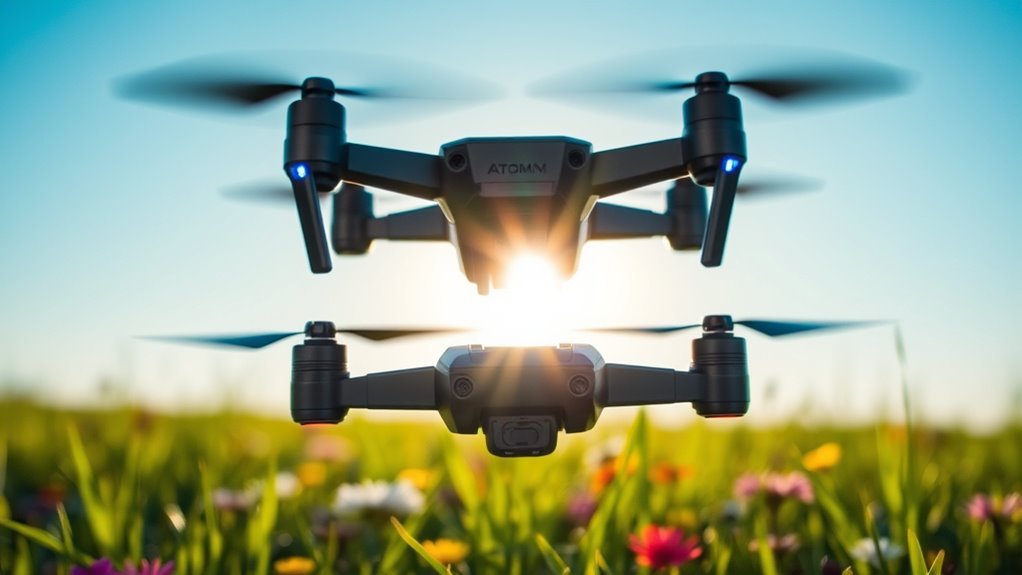
The Atom 1.0 Micro Drone’s design prioritizes compactness without sacrificing durability, making it ideal for both indoor and outdoor use. When you hold it, you’ll notice the meticulous attention to material quality, combining lightweight plastics with reinforced components to resist minor impacts. This balance guarantees it stays robust while maintaining portability. Its aesthetic appeal leans toward a sleek, minimalist look that won’t draw unnecessary attention, aligning with your desire for unobtrusive freedom. The drone’s structure is streamlined, reducing drag and enhancing ease of handling. Every design element seems purposefully selected to support versatility without complicating maintenance or transport. If you value a device that’s both tough and visually subtle, the Atom 1.0 Micro Drone meets these expectations through thoughtful engineering and material choices.
Flight Performance and Controls
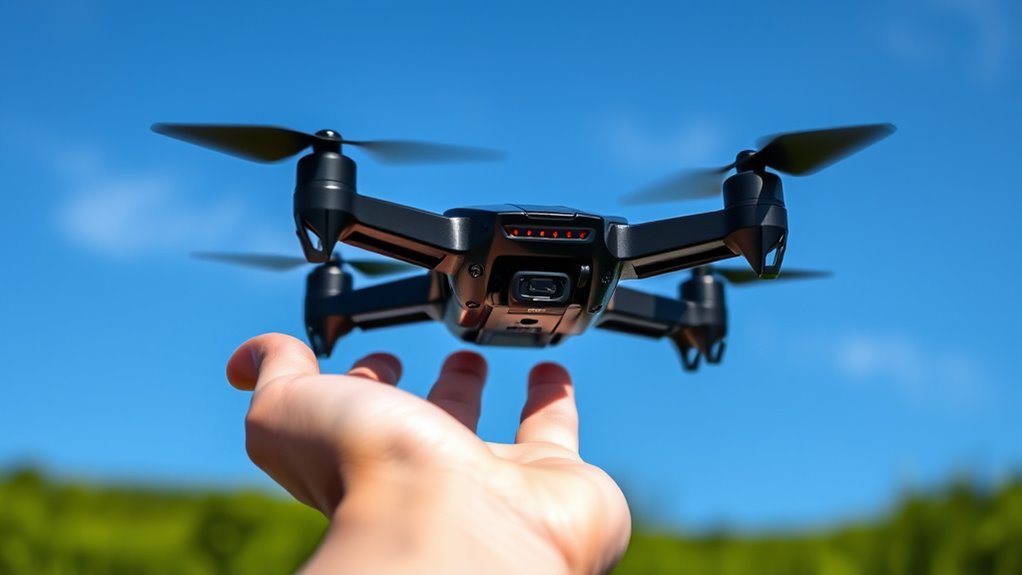
Although compact in size, the Atom 1.0 Micro Drone delivers surprisingly agile flight performance, allowing you to navigate tight spaces with ease. You’ll notice its impressive flight stability, even in mildly breezy conditions, which supports steady maneuvering without constant corrections. The control responsiveness is sharp, giving you a direct feel for every input, essential when precision is needed in confined or complex environments. Its intuitive controls reduce the learning curve, making it accessible whether you’re a novice or seeking more freedom in flight paths. However, while it excels indoors, outdoor performance may be limited under stronger winds. Overall, this drone balances agility and stability well, empowering you to explore with confidence and control, maximizing your sense of freedom during each flight session.
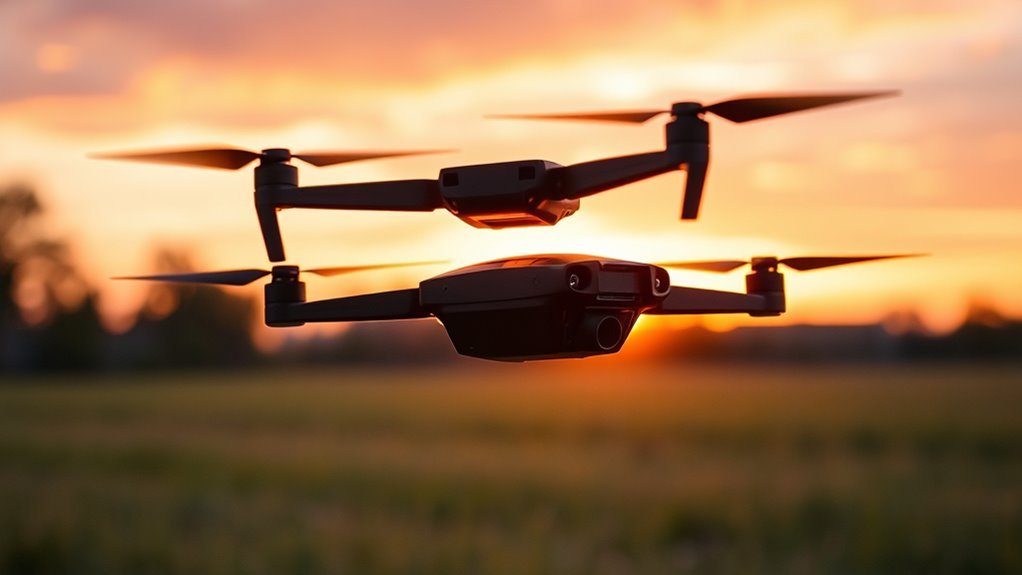
Camera Features and Image Quality
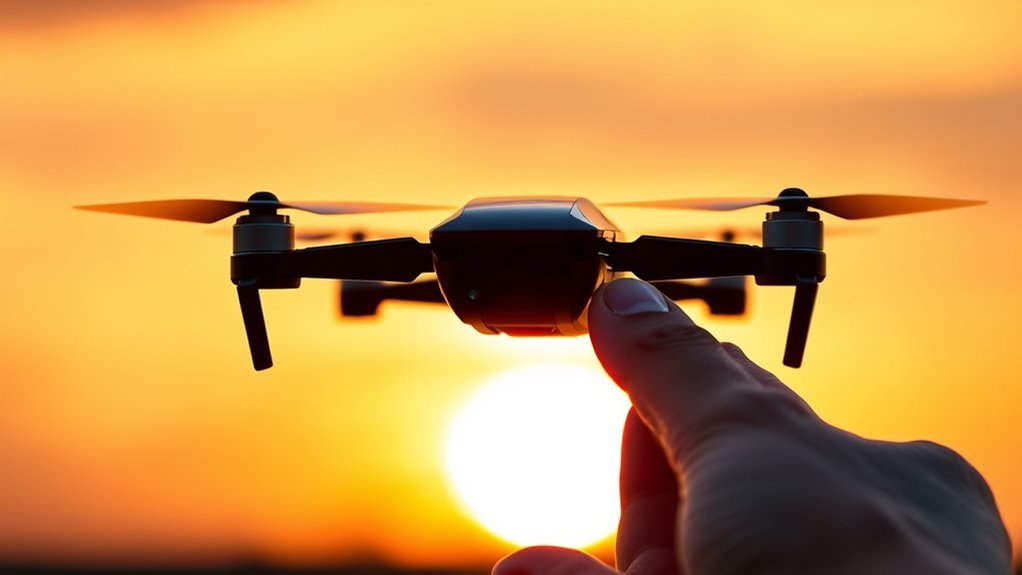
When capturing footage with the Atom 1.0 Micro Drone, you’ll find that its camera features are designed to complement its compact form without compromising image quality. The drone offers a 1080p camera capable of delivering sharp, clear images under well-lit conditions. Video stabilization is functional but modest, helping reduce jitter during flight, though it may struggle with more aggressive movements. Low light performance is limited; footage can become grainy and lack detail as illumination decreases, which restricts its use after dusk or indoors. While the camera suits casual aerial photography and provides decent freedom to explore visually, it doesn’t match higher-end drones in dynamic range or color accuracy. You’ll appreciate the balance of portability and decent image capture, but you shouldn’t expect professional-grade results.
Battery Life and Charging
Battery performance plays an essential role in determining how much flight time you can get from the Atom 1.0 Micro Drone. With a focus on battery efficiency, this drone offers approximately 7-8 minutes of continuous flight per charge. While this duration may seem limited, it’s typical for micro drones, balancing lightweight design with power demands. Charging time is another critical factor; the Atom 1.0 requires around 45 minutes to fully recharge its battery, which may affect how quickly you can get back in the air. If your freedom depends on uninterrupted flying sessions, considering additional batteries might be necessary. Overall, the Atom’s battery life and charging time reflect a compromise between compactness and functionality, catering well to users valuing portability without sacrificing reasonable flight duration.
Durability and Crash Resistance
When you handle the Atom 1.0 Micro Drone, you’ll notice its frame is built from durable materials designed to withstand minor impacts. The drone also incorporates impact absorption features that help minimize damage during crashes. Additionally, it’s important to reflect on how straightforward repairing or replacing parts can be after a collision.
Frame Material Strength
The Atom 1.0 micro drone’s frame is crafted from a blend of lightweight carbon fiber and reinforced plastic, offering a balance between rigidity and flexibility. When you examine the frame materials, this combination provides notable strength compared to all-plastic frames, enhancing durability without adding significant weight. In strength comparison to full carbon fiber frames, it may slightly lag, but gains in shock resilience due to the plastic’s flexibility. This means you can expect a sturdy frame that tolerates everyday bumps and minor crashes while maintaining agile flight performance. If freedom in maneuvering and confidence in material endurance matter to you, this hybrid frame offers a practical compromise, combining structural integrity with enough give to withstand the rigors of dynamic flying environments.
Impact Absorption Features
Anyone who’s flown micro drones knows that crashes are inevitable, so the Atom 1.0’s impact absorption features are crucial to its longevity. The drone employs advanced impact technology that effectively disperses collision forces, minimizing damage to critical components. Its cushioning design integrates flexible materials around the frame, providing shock absorption without adding excessive weight. This balance guarantees that the drone maintains agility while enhancing crash resistance. You’ll appreciate how these features allow for more confident flying, knowing minor crashes won’t ground your drone immediately. While no system is foolproof, the Atom 1.0’s durability benefits greatly from this thoughtful engineering, extending its operational life. Overall, the impact technology and cushioning design work cohesively to protect your investment, letting you explore more freely with less worry about durability.
Repair and Replacement Ease
Ease of repair plays a significant role in the overall durability and long-term value of the Atom 1.0 micro drone. When you’re flying freely, crashes are inevitable, so having access to clear repair guides is essential. The Atom 1.0’s manufacturer provides detailed instructions, helping you quickly diagnose issues and perform necessary fixes. Replacement parts are readily available and reasonably priced, which means you won’t be grounded for long after a mishap. The drone’s modular design further simplifies component swaps, encouraging you to maintain it without specialized tools. This approach not only extends the drone’s lifespan but also supports your freedom to explore without constant worry about damage. Overall, repair and replacement ease make the Atom 1.0 a resilient choice for those who value independence in flight.
Suitable User Levels
For those considering the Atom 1.0 Micro Drone, understanding who it’s best suited for is essential. This drone strikes a balance between beginner suitability and features appealing to an experienced user. If you value freedom in flight control yet need manageable learning curves, the Atom 1.0 fits well.
You’ll find it particularly suitable for:
- Newcomers seeking an intuitive, responsive entry into drone flying without overwhelming complexity.
- Experienced users wanting a compact, agile device for quick maneuvers and indoor use.
- Hobbyists requiring a reliable micro drone that supports skill-building and casual exploration.
Its design and controls accommodate various skill levels, making it versatile. Whether you’re just starting or refining your piloting, this drone offers an adaptable experience without sacrificing performance or accessibility.
Price and Value for Money
When evaluating the Atom 1.0 Micro Drone, you’ll want to compare its price against similar models in the market to see where it stands cost-wise. Consider the features it offers relative to its price point, determining whether those capabilities justify the investment. This approach helps you establish if the drone delivers solid value for your money.
Cost Comparison Analysis
Although the Atom 1.0 Micro Drone carries a price tag that might initially seem steep compared to other entry-level drones, its blend of advanced features and build quality offers a compelling value proposition. When weighing cost efficiency against budget options, consider how this drone’s price aligns with its durability and performance. You’ll find that cheaper drones often cut corners, impacting longevity and user experience.
Here’s how the Atom 1.0 shapes up in cost comparison:
- Superior materials and craftsmanship reduce replacement costs.
- Enhanced flight stability and range minimize the need for extra gear.
- Integrated features lessen dependence on costly accessories.
Features Versus Price
Beyond just the upfront cost, evaluating the Atom 1.0 Micro Drone means looking closely at what you get for your money. When considering features versus price, your value perception hinges on the drone’s compact design, responsive controls, and flight stability. Compared to others in the market competition, the Atom 1.0 offers a solid balance of portability and performance. While it lacks some advanced sensors found in higher-end models, it compensates with ease of use and durability. For those seeking freedom in quick, agile flights without breaking the bank, this drone delivers reasonable feature depth for its price point. Ultimately, your decision should weigh these capabilities against alternatives to guarantee the Atom 1.0 aligns with your expectations and budget.
