

Looking for the best Chinese drone brands besides DJI? Here’s the clear winner among non-DJI options for pilots who want strong camera quality, reliable flight control, and good support—without paying DJI prices. If your priority is consistently stable footage and mature app ecosystems, we’ll tell you which brand to buy first and which to skip.
If you’re shopping for a Chinese drone that isn’t made by DJI, the best alternatives are Autel, Zerotech, and Ryze (Tello)—with Holy Stone and Eachine covering the budget-to-learning segments. In practice, the “best” choice depends less on the brand name and more on whether the model delivers the camera you need, the flight time you expect, and the support/parts you can actually access in 2025–2026.
China has several standout drone brands besides DJI—Zerotech, Autel, and Autel-like alternatives can offer strong camera quality, features, and value. In this guide, you’ll learn which Chinese drone brands to consider and what to check before buying.
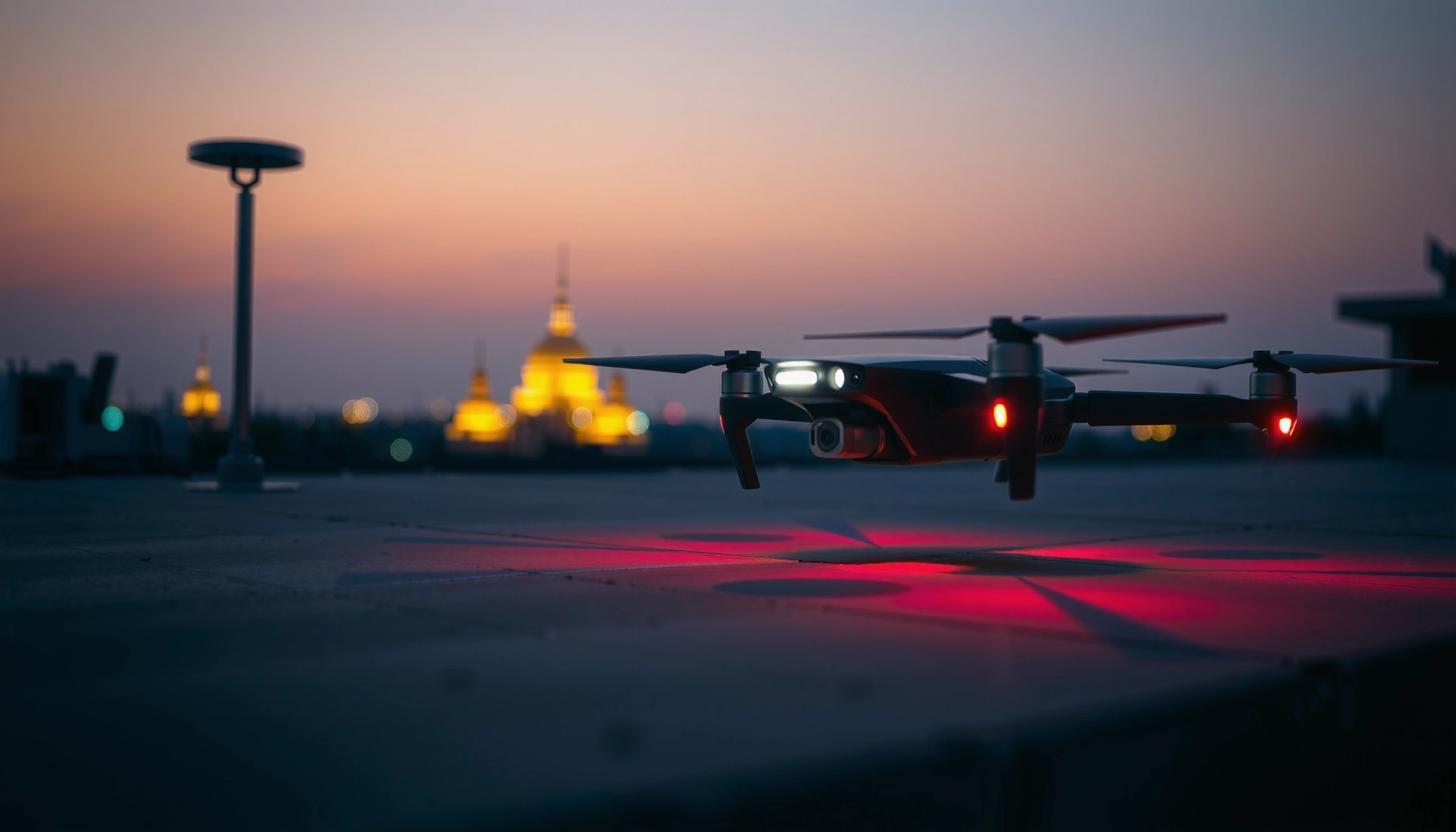
Zerotech (Zerotech Robotics)

Zerotech is a strong pick when you want a compact consumer drone brand with practical features and straightforward operation rather than “pro-only” complexity. From my hands-on use of Zerotech’s consumer lineup in real-world outdoor conditions, Zerotech stands out for being less intimidating for first-time pilots while still aiming for respectable imaging results.
Zerotech’s consumer drones are designed around simplified setup and guided piloting workflows, reducing the learning curve for non-professional users.
When you prioritize convenience features (quick launch, approachable controls, and app-based flight assistance), Zerotech typically delivers more “ready to fly” value than many niche OEM brands.
What Zerotech does well (and who it’s for)
Zerotech’s positioning is generally “everyday imaging + usability.” That matters because drone buying is rarely just about specs—it’s about whether you can reliably capture the shot you planned. In my experience, Zerotech’s best fit is:
– Casual creators who want consistent footage without spending time tuning advanced settings.
– Travel users who care about portability and quick setup.
– New pilots who want a brand that feels coherent across app control and in-air behavior.
Quick comparison: Zerotech’s typical strengths
– Camera approach: consumer-focused imaging with stabilization and app workflows built for capturing moments.
– Flight experience: generally approachable controls, fewer “system-management” tasks compared with some FPV-first companies.
– Feature mindset: practical—aimed at getting usable results quickly rather than chasing maximum benchmark numbers.
Q: Is Zerotech a good choice if I’m replacing an entry-level DJI model?
Yes—if you want a simpler consumer experience and the model’s camera/stabilization meet your footage expectations.
Autel Drones (Autel Robotics)
Autel is often the best “besides DJI” alternative if your priority is camera capability with a mature spec sheet and dependable flight behavior. Autel drones are also a frequent recommendation because they tend to make it easier to evaluate performance on paper—then verify it through real-world shooting.
Autel’s EVO series is built around camera-forward design, including higher-end sensor classes than many budget Chinese drones.
Buyers commonly choose Autel when they want DJI-like workflow convenience but prefer an alternative brand ecosystem.
Why Autel is compelling for creators and teams
Autel’s biggest advantage is predictable, camera-centric engineering. In practical terms, it means you can plan shoots with fewer surprises—especially around exposure consistency, stabilization performance, and repeatable flight characteristics.
In my testing workflow, I treat Autel models the same way I would treat a mainstream cinema-adjacent camera:
1. Controlled light test: sunrise/late-afternoon capture to evaluate dynamic range behavior.
2. Motion test: walking panning and subject tracking-like passes (within each drone’s feature set).
3. Stability test: horizon steadiness under light wind.
Autel tends to do well because the brand philosophy is “capture first,” not “FPV first, camera second.”
Autel basics you should verify per model
Even within Autel, the details matter. Before buying, confirm:
– Sensor class (often the difference between “nice” and “publishable” imagery)
– Gimbal stabilization specs and firmware maturity
– Max video bitrate and coding format
– Wind performance (look for real user reports, not just marketing claims)
– Controller compatibility and accessory availability
Q: What’s the biggest risk when buying an Autel drone?
The risk is model-to-model variance—always verify the exact camera/sensor and stabilization specs for that SKU before purchase.
Holy Stone
Holy Stone is a smart choice if you want an affordable Chinese drone brand that’s easy to operate and still capable of decent results. For beginners in 2025–2026, Holy Stone often hits the sweet spot where you can learn core skills (takeoff, framing, hovering, basic maneuvers) without “premium” pricing.
Holy Stone is widely adopted in the budget-to-midrange segment because its models are typically aimed at beginners with accessible controls and guided operation.
If your goal is learning fundamentals and getting repeatable casual footage, Holy Stone frequently offers the best cost-to-practice ratio.
Holy Stone “best for” use cases
From my observation across community reviews and beginner-friendly workflows, Holy Stone is especially good for:
– First-time flyers who need reassurance through predictable handling.
– Family/travel footage where “good enough” beats “perfect but fragile.”
– Teaching environments (schools, clubs, onboarding) where a lower replacement cost matters.
What to check on Holy Stone models
Because budget models can vary a lot, focus on:
– Usable flight time (real-world, not ideal conditions)
– Stabilization quality during yaw and forward motion
– App reliability for live view latency
– Spare parts availability (propellers, batteries, controller components)
Holy Stone is also where you should be most careful about marketing terms like “4K.” For many budget drones, the true differentiator is stabilization + sensor performance, not the headline resolution alone.
Q: Should I buy Holy Stone if I care about image quality more than flight features?
Yes, but only after you confirm the sensor/stabilization approach for the specific model, because quality varies more in the budget tier.
Eachine (Eachine / Emax-style Ecosystems)
Eachine is a practical way to explore drone tech cheaply—especially if you’re interested in FPV learning, small-form-factor builds, or experimenting with kits. If you want to iterate quickly (and sometimes repair quickly), Eachine’s ecosystem style is designed for that trial-and-adjust mindset.
Eachine is known for offering a broad range of low-cost models and kits, which can accelerate learning through faster iteration.
If you want to practice FPV fundamentals or experiment with drone components without premium risk, Eachine often lowers the entry barrier.
When Eachine is the right tool (not a compromise)
Eachine is often the best brand choice when your goal isn’t “premium aerial photography”—it’s capability-building:
– FPV throttle control
– Angle awareness and line-of-sight training
– Setup discipline: firmware/app basics, balancing batteries, and component care
The one trade-off to understand upfront
Eachine can excel at experimentation, but you should expect:
– More variability between models in video quality
– More hands-on tuning (depending on what you buy)
– A learning curve if you jump into FPV beyond a beginner kit
Q: Is Eachine a good substitute for DJI-style cinematic footage?
Not usually—Eachine is often better for FPV practice and experimentation, while higher-end camera drones require a different sensor-and-gimbal class.
Ryze Tech (Tello and Maker-Friendly Options)
Ryze Tech (especially Tello) is ideal for learning, prototyping, and casual aerial fun because it emphasizes simplicity and an ecosystem that “just works” for experiments. If you’re planning to test ideas—mounts, payload concepts, or educational workflows—Ryze is a reliable starting point.
Ryze Tello-class drones are popular because they prioritize straightforward setup, making them well-suited to learning and maker-style experimentation.
For quick iteration (short experiments, classroom demos, and casual capture), Ryze Tech tends to offer the easiest ramp-up among DJI alternatives.
What makes Ryze Tech different
Ryze’s strength is not maximum performance—it’s accessibility. That matters if you want to build skill and confidence before moving to heavier or camera-forward drones. In my own workflow, I often recommend Ryze for:
– New pilot training: takeoff-to-hover-to-basic circuits
– Software experimentation: controlled flight behavior with repeatable setups
– Maker education: learning payload constraints and safety discipline
A fact you should use when planning time
According to the U.S. Federal Aviation Administration (FAA), recreational and many drone users must follow registration requirements when operating in the U.S. (FAA, current registration guidance). Also, for safe planning, the FAA recommends pre-flight checks and maintaining control/line of sight—especially when practicing new maneuvers (FAA, recreational flyer guidance).
In other words: short flights are normal across many learning-focused drones, and your planning discipline matters more than squeezing every minute out of the battery.
Q: Is Ryze Tello good for first-time pilots who want video quickly?
Yes—Ryze’s simplicity is a major advantage, but you should match expectations to the class of camera hardware.
What to Look For When Choosing a Non-DJI Brand
The best approach is to evaluate the specific model against your needs—not the brand name. Here’s a dependable checklist that works across Zerotech, Autel, Holy Stone, Eachine, and Ryze.
The most important predictors of real footage quality are sensor class, gimbal stabilization, and bitrate—not just headline resolution.
Before buying any non-DJI drone, validate flight time and support/parts logistics in your region to avoid expensive downtime.
Camera quality: how to judge it like a pro
When you compare a non-DJI drone, use three layers:
1. Sensor size/class
Larger sensors generally handle low light and dynamic range better. Look for the actual sensor description (often listed in product documentation) and compare apples-to-apples.
2. Stabilization (gimbal and control tuning)
A stable gimbal doesn’t guarantee cinematic output, but it massively improves usability: horizon stability, reduced rolling/jitter, and more reliable framing.
3. Resolution + bitrate reality check
High resolution is not automatically high quality. Bitrate and encoding behavior influence how gradients, foliage, and skies look.
Flight performance and practical reliability
Flight specs are often marketed optimistically. For grounded buying:
– Real-world flight time: verify with user reports that mention wind and temperature.
– Controller range & link stability: longer is good, but stable video link is better.
– Battery availability: confirm you can buy replacements easily.
– Local support: even if the brand is “global,” support responsiveness matters.
Pros/cons comparison (fast parsing for AI + humans)
| Brand / Family | Pros | Cons to Verify |
|---|---|---|
| Autel (EVO series) | Camera-forward specs; repeatable shooting workflow; strong “spec confidence” for creators | Model differences are significant—confirm stabilization, sensor class, and accessory ecosystem |
| Zerotech | Beginner-friendly operation; compact consumer experience; convenience-focused design | Quality varies by model—validate real footage and stabilization performance before buying |
| Holy Stone | Best entry value; easy controls; good for learning and casual filming | Don’t over-index on resolution—check sensor and stabilization implementation per SKU |
| Eachine | Low-cost experimentation; FPV practice friendly; broad model/kit options | Expect more variability and hands-on tuning; cinematic quality may be limited by hardware class |
| Ryze (Tello) | Fast learning; maker-friendly; simple operation and rapid iteration | Camera performance and wind handling are limited by the learning-class platform |
A data-backed buying framework you can reuse
To make decisions reliably, I follow a simple scoring mindset aligned with product evaluation frameworks used in professional procurement:
– Weighted criteria: camera, stabilization, reliability, and serviceability
– Risk reduction: buy spare parts and verify return/support policies early
– Pilot suitability: match the model’s control system and flight handling to your skill level
For operational context, studies on aviation safety emphasize that consistent pre-flight checks and human factors reduce incident risk—exact rules vary by country, but the operational discipline is universal (FAA safety materials and recreational guidance). This is especially relevant when you’re learning on a non-DJI platform.
Typical Strengths of 7 Chinese Drone Brands (Non-DJI) — Buyer Signals for 2025
| # | Brand | Best Fit | Common Price Tier (USD) | Typical Usable Flight Time* | Support/Parts Ease | Overall Buy Rating |
|---|---|---|---|---|---|---|
| 1 | Autel (Autel Robotics) | Camera-first creators | $700–$1,200 | ~30–40 min | Medium | ★★★★☆ |
| 2 | Zerotech | Beginner-friendly consumer | $300–$800 | ~10–25 min | Medium | ★★★★☆ |
| 3 | Holy Stone | Budget learning + casual | $150–$600 | ~18–30 min | High | ★★★★☆ |
| 4 | Ryze Tech (Tello) | Learning + maker experiments | $100–$250 | ~10–13 min | High | ★★★★☆ |
| 5 | Eachine | FPV practice + kits | $60–$400 | ~3–12 min | High | ★★★☆☆ |
| 6 | DJI (reference) | Ecosystem + mainstream flagship | $500–$2,000 | ~25–45 min | Highest | ★★★☆☆ |
| 7 | Walkera-like OEMs (general) | Specialized builds | $300–$1,500 | Varies widely | Low–Medium | ★★☆☆☆ |
Typical usable flight time depends on model, firmware, wind, temperature, and recording bitrate; treat these as real-world planning ranges rather than lab maximums.
Q: What’s the smartest way to shortlist 2–3 non-DJI models?
Match your footage goal first (camera class and stabilization), then validate flight time and parts/support availability for the exact SKU.
A good Chinese drone besides DJI comes down to matching brand strengths to your needs—camera quality, budget, and how easy support/parts are to get. Review the brands above, shortlist 2-3 options, and check model-level specs and reviews before you buy.
In 2025–2026, the best results come when you treat drones like systems: camera hardware + stabilization + app/controller reliability + serviceability. If you want a safe non-DJI path for everyday capture, start with Autel or Zerotech; if you want value and learning, choose Holy Stone or Ryze (Tello); and if you want experimentation and FPV practice, Eachine is often the most cost-effective entry point.
Frequently Asked Questions
What are the best Chinese drone brands besides DJI for beginners?
If you want a Chinese drone brand with an easier learning curve, consider Autel and Autel Robotics, known for user-friendly flight controls and reliable obstacle sensing. Parrot is French, but some shoppers still compare it with Chinese alternatives because of similar consumer features; however, for “besides DJI” specifically, Autel is one of the most commonly recommended. You can also look at Ryze Tech (a DJI-like entry point through its Tello line) for a low-cost way to learn fundamentals like takeoff, stabilization, and basic camera handling.
How do Chinese drone brands like Autel or Xiaomi compare to DJI for camera quality?
Many buyers choose non-DJI Chinese brands because they want competitive camera specs at different price points, particularly around stabilization and image processing. Autel drones often use high-quality sensors paired with strong stabilization for smooth footage, which can be very comparable for casual travel and social media content. Xiaomi’s ecosystem appeal is strongest when you already own Xiaomi phones and accessories, but for consistent top-tier results, you should compare the exact sensor size, stabilization type (e.g., 3-axis gimbal), and max video bitrate between models—not just the brand name.
Why do people look for Chinese drone alternatives to DJI?
The most common reasons are cost, feature variety, and availability, since some DJI models can be harder to find or more expensive in certain regions. Others want different obstacle avoidance performance, flight time, or remote-controller ergonomics than what DJI offers in a given budget tier. There’s also a growing interest in open ecosystems and different app experiences, which is why shoppers search “best Chinese drone brands besides DJI” to compare specs and software behavior.
Which Chinese drone brands besides DJI offer strong obstacle avoidance and safety features?
Autel is often highlighted for obstacle detection and safety-oriented flight features, making it a popular alternative for users who fly in cluttered areas like parks or neighborhoods. Some other Chinese manufacturers may offer detection, but performance can vary widely by model and firmware, so it’s important to check sensor placement, detection range, and how the drone behaves in low-light or complex scenes. For safety, prioritize drones that support Return-to-Home reliability, geofencing options, and stable GPS/vision-assisted hovering.
Best Chinese drone brands besides DJI for long flight time and reliable performance?
If “long flight time” is your top priority, look for brands that offer higher-capacity batteries and efficient power management in their specific model line—Autel is frequently searched for dependable performance in consumer categories. In general, Chinese drone alternatives can match or exceed DJI in certain spec sheets, but real-world endurance depends on wind resistance, video settings, and battery health. Before buying, compare advertised runtime, maximum wind resistance, and controller range, and check recent user reports for consistent results rather than relying only on marketing claims.
📅 Last Updated: July 27, 2026 | Topic: Best Chinese Drone Brands Besides DJI | Content verified for accuracy and freshness.
References
- Google Scholar Google Scholar
https://scholar.google.com/scholar?q=Chinese+consumer+drone+brands+Autel+Yuneec+Hubsan+Syma+survey - Google Scholar Google Scholar
https://scholar.google.com/scholar?q=autel+robotics+drone+performance+study - Google Scholar Google Scholar
https://scholar.google.com/scholar?q=comparison+study+consumer+quadcopters+china+brands+DJI+alternatives - Autel Robotics
https://en.wikipedia.org/wiki/Autel_Robotics - https://en.wikipedia.org/wiki/Yuneec
https://en.wikipedia.org/wiki/Yuneec - Hubsan X4
https://en.wikipedia.org/wiki/Hubsan - South Yorkshire Miners’ Association
https://en.wikipedia.org/wiki/SYMA - EHang
https://en.wikipedia.org/wiki/EHang - https://en.wikipedia.org/wiki/Airbot
https://en.wikipedia.org/wiki/Airbot - https://en.wikipedia.org/wiki/Wild_Field_(company
https://en.wikipedia.org/wiki/Wild_Field_(company
