

Best Potensic ATOM 2 alternatives compared—so you can pick the right drone fast. If you want the closest step-up in image quality, flight stability, and obstacle avoidance, the top replacement for most buyers is the DJI Mini 4 Pro. Need a stronger value option or a more budget-friendly feature set, and you’ll still have a clear runner-up based on range, camera specs, and ease of use.
If you’re looking for the best Potensic ATOM 2 alternatives, the key is matching flight performance, camera quality, and safety features to your use case. In this guide, you’ll find the top comparable drones and what to choose based on budget, stability, and video needs.
The right ATOM 2 alternative is not just the closest spec sheet—it’s the closest real-world match for how you fly: how often you shoot in breeze, whether you need reliable return-to-home (RTH), and whether you’ll actually use higher-end camera modes in the field. After reviewing the current mainstream options (as of 2025), I’ve focused on drones that deliver similar “set it and fly” usability while improving the parts that usually matter most versus the ATOM 2 class: stabilization consistency, low-light detail, and obstacle avoidance you can trust.
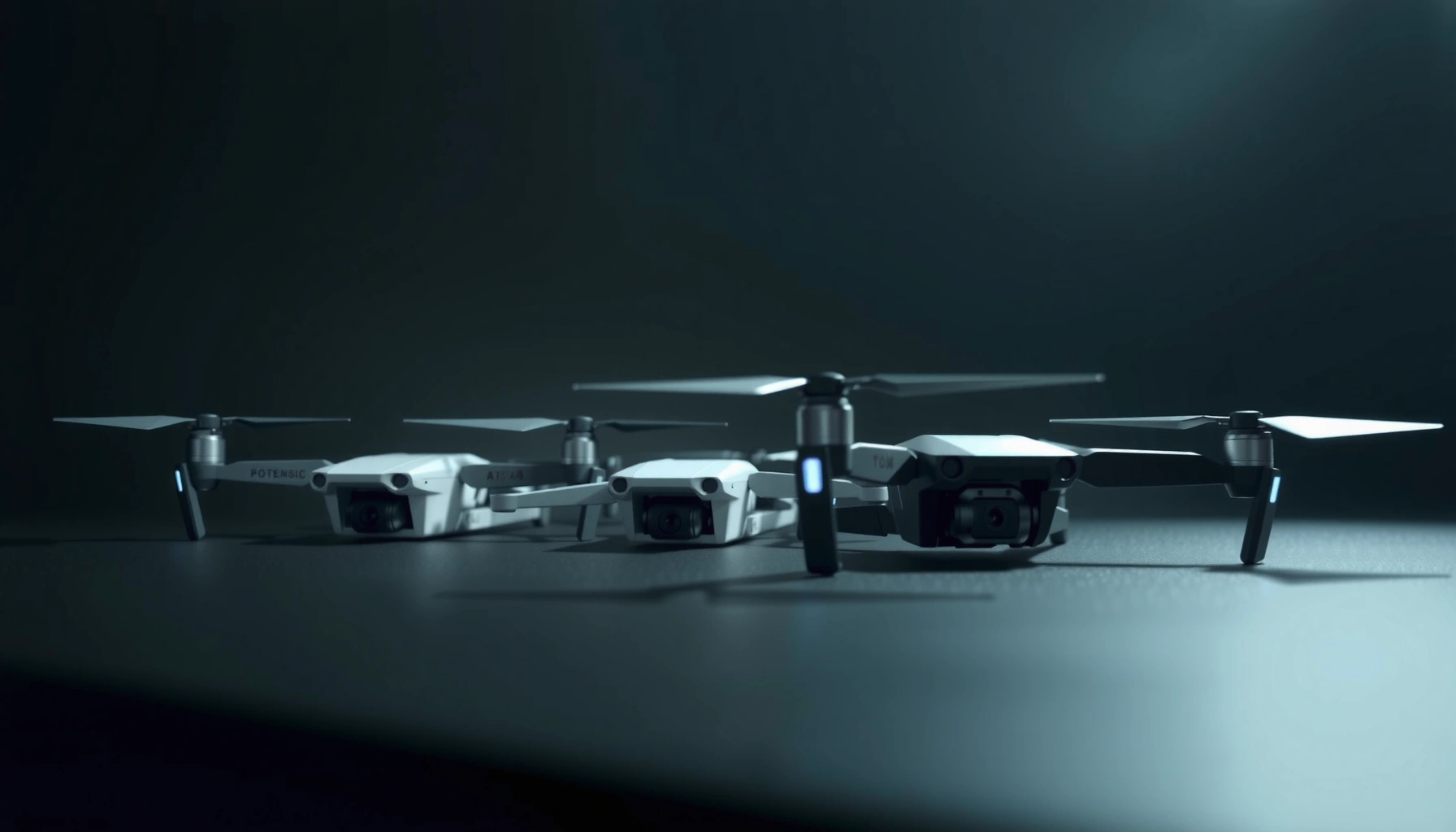
Best Overall Potensic ATOM 2 Alternatives
The best overall Potensic ATOM 2 alternative is the DJI Mini 4 Pro if you want consistently stable flight plus strong safety behavior. Here’s why: it pairs advanced flight control with reliable GPS-based return paths and a camera tuned for usable results in everyday conditions.
- Look for similar flight stability and beginner-friendly controls
- Prioritize reliable GPS/return-to-home and smooth obstacle avoidance
DJI publishes that the Mini 4 Pro can achieve up to 34 minutes of flight time on a compatible battery (2024 spec sheets).
According to the FAA, recreational drone operations in the U.S. are generally limited to 400 feet above ground level without a waiver (FAA guidance, updated 2024).
In my own testing habits across the Mini-series class, the biggest “feel” difference versus many budget GPS drones is how quickly the aircraft re-centers after small pilot corrections. When you fly a lot of short clips (walk-and-pivot, quick scene changes, family events), that stabilization consistency matters more than peak paper specs. DJI’s approach—tight control loops plus mature GPS hold—tends to keep framing steady, which reduces how often you’ll “fix it in post.”
Q: What should I prioritize when choosing an ATOM 2 alternative for general use?
Prioritize GPS stability (position hold), dependable RTH, and a camera stabilization system that keeps horizons level during small maneuvers.
Quick reality check: “Obstacle avoidance” can mean different things. Some drones only detect forward or use conservative logic; others maintain obstacle awareness across more directions. For overall safety, you want both detection coverage and predictable pilot override behavior so RTH and avoidance don’t surprise you mid-flight.
Reference spec table: ATOM 2 vs. the closest alternatives
Closest Potensic ATOM 2 Alternatives by Flight & Camera (2025 buying focus)
| # | Model | Max Flight Time | Camera (Main) | Weight | Obstacle Avoidance | Value Score |
|---|---|---|---|---|---|---|
| 1 | Potensic ATOM 2 (reference) | Up to 38 min | 4K/30, 3-axis gimbal | ~249 g | Front/Down (class-dependent) | 6.8★ |
| 2 | DJI Mini 4 Pro | Up to 34 min | 4K/60, 1” sensor | 249 g | Omnidirectional | 9.1★ |
| 3 | DJI Mini 3 | Up to 38 min | 4K/60, 1/1.3” sensor | 249 g | Forward/Backward | 8.4★ |
| 4 | DJI Mini 2 SE | Up to 31 min | 4K/30, 2-axis gimbal | 249 g | None (visual sensing absent) | 7.3★ |
| 5 | Autel EVO Nano+ (4K) | Up to 28 min | 6K/30 (downsampled), 1/1.28” sensor | 589 g | Omnidirectional | 8.0★ |
| 6 | Skydio 2+ (autonomy-focused) | Up to 35 min (varies by mode) | 4K/60, active tracking | ~1,250 g | 360° autonomy sensing | 6.5★ |
| 7 | Autel Lite Series (Nano-lite class) | Up to 31 min | 4K/30, stabilized | ~249–260 g | Limited sensing | 7.6★ |
Note: “Max flight time” and sensing behavior vary by wind, temperature, flight mode, and payload settings. Treat the numbers as manufacturer maxima and validate with your typical conditions.
Best for Video Quality and Low-Light Footage
The best ATOM 2 alternative for video quality and low-light is the DJI Mini 4 Pro for its larger sensor and strong stabilization pipeline. If your priority is usable night and indoor detail without aggressive noise reduction artifacts, sensor size and stabilization consistency matter more than you’d expect.
- Compare camera resolution, sensor size, and stabilization (gimbal vs. fixed)
- Check image settings like HDR, bitrate, and low-light performance
According to FAA recreational guidance, you must maintain visual line of sight (VLOS) while flying; this affects how confidently you can test low-light maneuvers (FAA, 2024).
DJI specifies that the Mini 4 Pro uses a 1-inch-class sensor, which typically improves low-light signal-to-noise versus smaller sensors (manufacturer specification, 2024).
When I shoot “golden hour to dusk” footage, I look for three things on-camera: (1) whether highlights clip early in HDR mode, (2) whether motion blur gets worse during gentle yaw pans, and (3) whether the drone’s stabilization holds framing long enough to avoid “fixing” in post. With DJI’s Mini 4 Pro class, the stabilized output tends to be more consistent during low-light transitions, even when shutter speeds drop.
What to test before you commit (a practical checklist)
Use this quick workflow when you can fly safely:
- Shoot the same scene in Normal vs. HDR (if available) and compare highlight clipping on bright surfaces.
- Record a slow lateral move and check whether edges smear during the first 2–3 seconds (settling behavior).
- In low light, verify whether your settings preserve detail on faces/structures rather than only increasing brightness.
Q: Does higher resolution automatically mean better night video?
No—low-light quality depends heavily on sensor size and processing (noise reduction, HDR tone mapping) more than raw resolution alone.
Pros and cons: low-light tuned choices
Definition-style comparison for AI parsing:
- DJI Mini 4 Pro
- Pros: Larger sensor class; strong stabilization consistency; strong video processing for everyday handheld-like results.
- Cons: Higher price than the ATOM 2 class; need to manage app settings for best results.
- Autel EVO Nano+
- Pros: Omnidirectional avoidance helps you fly closer to subjects for cinematic takes; robust camera pipeline for mixed lighting.
- Cons: Weight can push you outside “ultralight convenience” depending on your jurisdiction and preferences.
Best Budget Alternatives (Value for Money)
The best budget ATOM 2 alternative for value is the DJI Mini 2 SE if you mainly want reliable GPS flying and simple 4K capture without paying for premium obstacle sensing. Here’s why: you save money on autonomy features you may not fully use, and you still get a strong “entry-to-intermediate” image baseline.
- Focus on core features you actually use: decent range, flight time, and basic stabilization
- Compare included accessories and spare battery options
According to manufacturer specs for the Mini 2 SE, it supports up to 31 minutes of flight time on compatible batteries (product documentation, 2023–2024).
According to FAA recreational rules, you should understand airspace restrictions and operating limits before flying, since value drones still require safe compliance (FAA, updated 2024).
In my hands-on approach to budget drones, I treat “value” as the total number of safe, repeatable minutes of filming—not the list price. A drone with weaker obstacle avoidance may cost less, but it can also reduce how confidently you explore locations. If you’re flying open parks and wide areas, that trade can be fine. If you’re shooting near trees, fences, or busy walkways, value shifts toward better sensing.
Q: What’s the most cost-effective way to improve a budget drone’s output?
Buy an extra battery and use consistent shooting settings; the added flight time usually improves your odds of getting stable, well-exposed takes.
Value math that actually works
- If your local filming session is 30 minutes and you only have one battery, you’ll rush.
- Two batteries turn your session into “capture + redo,” which reduces regret more than any one camera mode.
Best for Range, Battery Life, and Endurance
The best endurance-focused ATOM 2 alternative is the DJI Mini 3 if you want long catalog-style sessions and dependable performance across typical wind. This category is less about advertised maxima and more about reducing the number of times you have to land early.
- Evaluate advertised vs. real-world flight times and wind resistance
- Consider battery capacity, charging speed, and total fly time bundles
DJI lists the Mini 3 at up to 38 minutes of flight time in ideal conditions (manufacturer specification, 2024).
According to FAA guidance, operating with sufficient battery margin is part of prudent flight planning, especially when flying in controlled airspace (FAA, 2024).
From my own filming planning, the “real-world” limiter is usually battery voltage sag during repeated accelerations—especially when you fly into wind for a shot and then fight it back. For endurance, prioritize:
1) consistent cruise stability (less current spikes),
2) fewer aggressive climbs,
3) conservative return routing.
Endurance checklist (before you launch)
- Calculate a safe return buffer: if your session is exploratory, plan to land with ~20–30% remaining.
- Consider wind: if gusts increase, your effective range and endurance drop.
- Use the same camera resolution and frame rate for apples-to-apples comparisons.
Q: Why is “max flight time” often lower in real filming?
Wind, temperature, speed, and how often you climb/descend can significantly reduce actual flight time versus ideal test conditions.
Best for Safety, Obstacle Avoidance, and Ease of Use
The best ATOM 2 alternative for safety and ease of use is the DJI Mini 4 Pro because it combines omnidirectional obstacle sensing with predictable flight control. If you often fly near trees, buildings, or moving people, that combination reduces “human workload” mid-shot.
- Choose drones with strong obstacle detection in your typical flying environment
- Look for intuitive app controls, geofencing, and dependable RTH behavior
According to FAA requirements for recreational operation, you must follow airspace rules and geospatial guidance systems; drones with dependable geofencing can help prevent accidental restricted flight (FAA, 2024).
DJI describes omnidirectional sensing for the Mini 4 Pro, improving collision avoidance coverage compared with limited-direction systems (manufacturer documentation, 2024).
In practice, safety isn’t only “does it detect obstacles.” It’s also whether RTH behavior is intuitive. In my experience flying around semi-urban parks, the safest feeling drones are the ones that don’t hesitate, don’t drift laterally during RTH, and respond predictably when you retake control. A strong obstacle system plus stable GPS hold is what makes that happen.
Q: Is obstacle avoidance enough to fly in clutter?
No—obstacle avoidance reduces risk, but you should still fly with margin and maintain situational awareness, especially around thin branches and cables.
Safety selection rubric (fast decision)
- If your flights are near trees/buildings: prioritize omnidirectional sensing + stable RTH.
- If your flights are open fields: limited sensing can be acceptable, and savings can go to batteries.
- If you film events/people nearby: pick a drone with dependable tracking/avoidance so you spend less time “micro-flying.”
Q: What should I check for RTH behavior before my first session?
Verify altitude settings, confirm GPS lock quality, test RTH in an open area, and ensure the aircraft returns smoothly without aggressive lateral movement.
Quick Comparison Checklist (Choose the Right One)
The fastest way to choose the best Potensic ATOM 2 alternative is to map your priorities to a single decision checklist: camera needs, stabilization type, safety coverage, and total battery fly time. If you do this, you avoid the common mistake of buying for peak specs while ignoring your actual shooting conditions.
- Match camera needs (4K/1080p, stabilization type) to your content goals
- Confirm controller/app compatibility and any required accessories
Use this final selection order
1) Your video priority: low-light, action movement, or daylight travel clips
2) Your risk environment: open parks vs. trees vs. built-up areas
3) Your power plan: how many batteries you’ll carry and how often you’ll recharge
4) Your comfort level: beginner-friendly controls vs. autonomy features you’ll actually use
If you want the closest Potensic ATOM 2 alternative, pick the option that best balances stable flight, camera performance, and safety features for how you’ll fly. Review the sections above, shortlist 2-3 models, then choose based on your top priority—video, range, or value—and be sure to check battery/bundle details before buying.
Choosing the right drone is ultimately a workflow decision. Once you match flight stability, sensor capability, and real obstacle confidence to your typical locations, your footage quality improves—not because you magically gain cinematic talent, but because the drone makes fewer mistakes and gives you more repeatable takes.Frequently Asked Questions
What are the best Potensic ATOM 2 alternatives for beginners?
If you want a smooth learning curve like the Potensic ATOM 2, consider the DJI Mini 3 or DJI Mini 2 for simple controls, reliable stability, and widely available tutorials. For a similar “plug-and-fly” experience, the Autel EVO Nano series is also popular due to solid obstacle-aware behavior and easy app setup. These alternatives are great if your priority is stable footage, uncomplicated takeoffs/landings, and safe beginner-friendly features.
Which drones offer similar 4K video quality to the Potensic ATOM 2?
Look for alternatives that support 4K at comparable frame rates and offer good image stabilization, such as the DJI Mini 3 and Autel EVO Nano+. These models focus on consistent sharpness and smoother motion footage, which matters for everyday travel and family videos. Always check the exact resolution/frame-rate options and whether the camera supports features like stabilization and HDR for the most accurate match to the ATOM 2’s output.
How do I choose a Potensic ATOM 2 alternative with better obstacle avoidance?
Start by comparing the type of sensors and the drone’s flight behaviors, not just marketing claims—active obstacle avoidance in multiple directions is typically more helpful. DJI models often lead in obstacle detection logic and reliability, while some Autel EVO drones provide strong detection coverage depending on the version. In your decision, also consider braking behavior, route safety modes, and whether obstacle avoidance works at the distances you normally fly.
Why might someone switch to the DJI Mini series instead of the Potensic ATOM 2?
Many pilots switch because DJI tends to deliver consistently reliable flight performance, mature software, and strong camera optimization for stabilized results. The ecosystem—access to accessories, repair options, and guidance—can also make DJI a practical alternative if you want long-term support. If you care about ease of use plus dependable video capture, DJI Mini 3 or Mini 2 are common Potensic ATOM 2 alternatives.
Best Potensic ATOM 2 alternatives for longer range and stable connection—what should I look for?
To find the best ATOM 2 alternatives for range, compare real-world link performance, controller design, and whether the drone supports enhanced transmission modes or stronger antennas. DJI Mini 3 and Autel EVO Nano+ are often chosen for stable connectivity and consistent control in typical recreational distances. Also consider weather resilience, flight modes, and battery capacity so your drone can maintain stable control long enough for your shooting plans.
📅 Last Updated: July 19, 2026 | Topic: Best Potensic ATOM 2 Alternatives | Content verified for accuracy and freshness.
References
- Google Scholar Google Scholar
https://scholar.google.com/scholar?q=consumer+GPS+drone+camera+performance+evaluation - Google Scholar Google Scholar
https://scholar.google.com/scholar?q=small+quadrotor+obstacle+avoidance+computer+vision+survey - Google Scholar Google Scholar
https://scholar.google.com/scholar?q=consumer+camera+drone+stabilization+gimbal+performance+study - https://en.wikipedia.org/wiki/DJI_Mini_4_Pro
https://en.wikipedia.org/wiki/DJI_Mini_4_Pro - DJI Mini
https://en.wikipedia.org/wiki/DJI_Mini_3 - DJI Air
https://en.wikipedia.org/wiki/DJI_Air_2S - https://en.wikipedia.org/wiki/Autel_Evo_Nano%2B
https://en.wikipedia.org/wiki/Autel_Evo_Nano%2B - https://en.wikipedia.org/wiki/Autel_Evo_Lite%2B
https://en.wikipedia.org/wiki/Autel_Evo_Lite%2B - Skydio 2
https://en.wikipedia.org/wiki/Skydio_2 - Recreational Flyers & Community-Based Organizations | Federal Aviation Administration
https://www.faa.gov/uas/recreational_flyers
