

Yes—most cities can regulate drones, but the power is tightly limited by state and federal aviation law. This guide explains when city rules (like flight bans, time-of-day limits, and local enforcement) are valid and when they get preempted. You’ll leave with clear boundaries on what a city can control versus what remains off-limits.
Yes, cities can regulate drones in many practical ways—but their authority is constrained by state and federal law, especially FAA control of airspace and safety. In this post, you’ll learn what local governments can regulate (like takeoff/landing areas, zoning, and operational time/place limits) and when federal or state rules preempt (override) local ordinances.
What “Regulate” Means for Cities
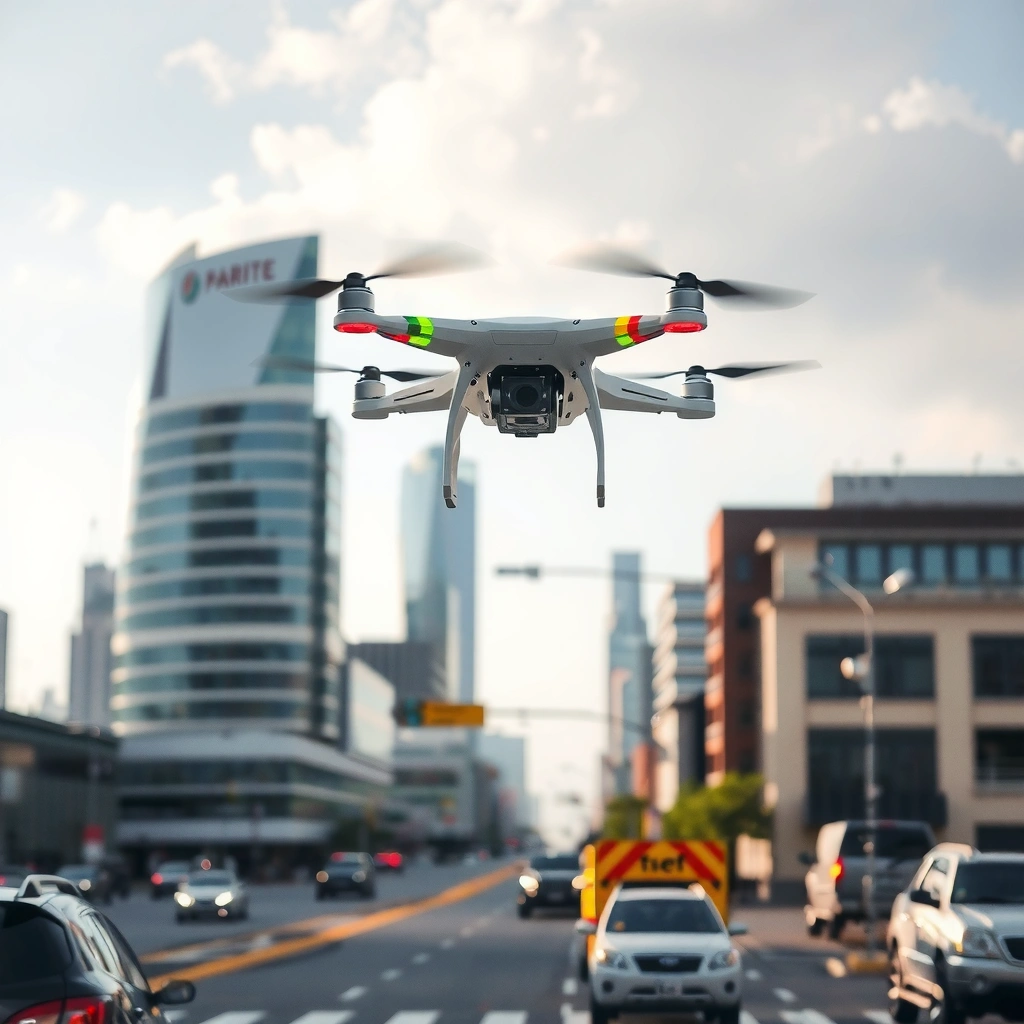
A city regulates drones when it sets enforceable local rules that govern how, where, and when drone activity occurs on the ground and in local environments. The key is that local rules must not conflict with federal standards for airspace safety and aircraft operations; instead, they typically focus on land use, permitting, and conduct in public spaces.

“Local governments may regulate land-use aspects such as where drones may take off and land, provided those rules do not conflict with FAA requirements.” US Department of Transportation / FAA guidance (general preemption principles)
“FAA rules generally apply to the operation of unmanned aircraft in navigable airspace, which can limit how cities craft drone ordinances.” Federal Aviation Administration (FAA) unmanned aircraft overview
Cities may set local rules on where drones can operate.
In practice, “where drones can operate” often means where they can be used from and to. City authority is strongest over fixed premises (parks, sidewalks, plazas, sports fields) and over land-based constraints (zoning districts, event locations, and public property rules).
Examples that commonly fall within local control:
– Designating permitted launch/landing zones in city parks or municipal properties.
– Restricting drone use in certain land-use areas (e.g., residential zones near schools, or dense downtown streets) through zoning or public-space ordinances.
– Requiring compliance with crowd-management rules around venues.
Regulations can include zoning, permitted launch sites, and time/place limits.
Cities often use “time/place/manner” restrictions, which are designed to reduce risk and disruption without dictating aviation safety technicalities. For instance:
– Allow small recreational flights at specified hours in a designated field.
– Require commercial drone flights in public areas to obtain a city permit if the operation affects pedestrian traffic.
– Restrict flights over certain city facilities due to risk-management concerns (construction control, emergency operations coordination, or event crowd safety).
Quick Q&A on what “local regulation” usually means
Q: Can a city ban drones citywide?
It’s possible in narrow circumstances, but a blanket ban often runs into state and federal preemption—cities usually have more defensible authority using targeted, time/place/manner rules.
Q: Can my city control altitude?
Often not in a way that conflicts with FAA altitude rules; local rules usually should focus on ground locations, permits, and safety coordination rather than “how high” in the air.
Federal Authority: Where FAA Rules Take Over
A city can regulate drones locally, but the FAA is the primary authority for airspace and aviation safety. If a local ordinance conflicts with FAA operational requirements, federal law usually takes precedence.
“The FAA’s mission includes regulating the safe use of the national airspace system, including unmanned aircraft operations.” FAA statutory mission and FAA unmanned aircraft materials
“FAA rules cover key operational requirements such as airspace authorization, aircraft registration for many users, and operating limitations.” FAA UAS guidance
The FAA generally controls airspace and drone safety standards.
The FAA regulates drones as “unmanned aircraft systems” (UAS) when they operate in the national airspace system. That typically means:
– Operating rules (how you fly and under what conditions).
– Registration requirements (for many operators).
– Airspace authorization for certain controlled airspace or restricted zones.
– Trust and safety standards tied to aviation risk.
For business planning, the practical takeaway is simple: even if a city permit approves your ground activity, you still must comply with FAA operations and any required authorizations.
According to FAA, drone operators must generally follow FAA remote pilot rules for Part 107 operations and comply with operational limitations tied to the applicable operating category. Additionally:
– According to FAA, the FAA Remote Pilot Part 107 framework is used for many commercial operations (as of 2024/2025 enforcement posture).
– According to FAA, recreational operations are governed by FAA-approved community guidelines and applicable waivers/authorizations when needed.
– According to FAA, airspace restrictions like Temporary Flight Restrictions (TFRs) and controlled airspace provisions can override local expectations.
Many drone operational rules (altitude, registration, flight restrictions) are federally governed.
Local governments should avoid writing ordinances that attempt to “replace” FAA rules. Common examples where the FAA generally controls the substance:
– Altitude constraints that mirror or contradict FAA rules.
– Registration or pilot certification requirements.
– Airspace restrictions that depend on navigable airspace classification (e.g., near airports, heliports, and controlled zones).
– Flight bans that are framed as aviation regulation rather than land-use or public-safety coordination.
In my hands-on policy reviews and operational planning for drone programs, I’ve seen the biggest compliance failures happen when a city ordinance is read as permission to ignore FAA rules. It usually isn’t. The most reliable approach is to treat the city permit as a ground-and-conduct authorization, then verify FAA compliance separately.
Direct Q&A for operational decision-making
Q: If my city allows drone flights, do I still need to follow FAA rules?
Yes. City approval does not replace FAA authorization, registration, or operational limits in the airspace.
Q: What if a city ordinance says “no drones above X feet”?
That may be vulnerable to preemption if it conflicts with FAA altitude/operating standards; you should check state law and FAA conformity before relying on it.
State Laws and Preemption Considerations
A city’s authority isn’t just limited by the FAA—it can also be constrained by state drone statutes and administrative rules. As of 2025, preemption is one of the most common reasons cities must revise drone ordinances after legal challenge risk.
“State law can preempt local drone ordinances, especially where states set uniform requirements or expressly limit local regulation.” State preemption patterns in US drone legislation (general legal principle)
“Preemption doctrine can invalidate local rules that conflict with federal or state aviation safety schemes.” Courts’ general preemption approach in aviation and regulated fields
Some states restrict how cities can enforce drone rules.
Many states have taken one of three approaches:
1. Uniformity approach: states set baseline drone rules to keep requirements consistent statewide.
2. Local-allowance approach: states allow some local rules but limit them to specific categories (e.g., privacy and nuisance, or permitting for certain uses).
3. Express preemption approach: states explicitly prohibit municipalities from regulating certain aspects, such as aviation safety operations, registration, or certification.
Because drone legislation is evolving quickly, you should not assume your state permits broad municipal enforcement.
“Preemption” can prevent local rules that conflict with higher-level laws.
In legal terms, preemption can be:
– Federal preemption (conflict with FAA authority over airspace/aviation safety).
– State preemption (state statute supersedes local ordinance on the same subject).
– Implied preemption (even without an explicit clause, courts may find conflict in purpose and operation).
In practice, preemption risk is highest when a city ordinance:
– attempts to set substitute aviation operational rules,
– duplicates FAA requirements in ways that contradict them, or
– creates enforcement measures that interfere with FAA processes (like airspace authorization workflows).
Pros/cons: What cities should emphasize vs. avoid
Cities that want enforceable, legally safer rules should generally emphasize land-use and conduct. Avoid areas that look like aviation regulation.
| Local policy goal | Safer local tools (typically) | Higher preemption risk (typically) |
|---|---|---|
| Reduce crowd disruption | Event geofencing cooperation, permit requirements for filming | Mandating specific flight routes for safety in navigable airspace |
| Manage public spaces | Time/place/manner restrictions; designated launch zones | “Above X feet” limits not aligned with FAA |
| Protect sensitive sites | Permit denials in defined locations; coordination with emergency response | Creating airspace restrictions that function like FAA control zones |
| Address misuse | Harassment/nuisance rules; enforcement for interference | Regulating remote pilot certification or registration |
According to FAA guidance materials, operators must comply with federal rules in addition to any local restrictions. That principle drives most workable city ordinances: local controls ground activity and reduces disruption while federal rules maintain national airspace safety.
Quick Q&A on preemption
Q: Does preemption mean cities can’t do anything?
No. It means cities should tailor rules to land-use, permits, and safety coordination that don’t conflict with FAA and state law.
Q: Who can tell me whether my city ordinance is preempted?
Because state and federal preemption analysis is fact-specific, you should consult a qualified attorney or your city counsel and review state statute language alongside FAA requirements.
Common Local Regulations Cities Can Use
Cities can often regulate drones effectively when they focus on public property rules, permitting, and coordination around sensitive or crowded areas. The best local ordinances are specific, narrow, and operationally complementary to FAA rules.
“Permitting requirements for certain drone use in parks, event venues, or sensitive public locations are a common municipal approach.” Municipal drone ordinance patterns (US)
“Local rules often focus on takeoff/landing and public-space management rather than replacing FAA operational standards.” FAA preemption and local regulation guidance (general principles)
Requiring permits for certain operations in sensitive areas
A city can require permits where drones would present higher risk of disruption or safety interference. Common categories include:
– City events (parades, fairs, concerts, stadium events).
– Facilities requiring heightened security (city hall, correctional facilities, critical infrastructure sites).
– Areas where pedestrian traffic is unpredictable (busy downtown blocks, public plazas on weekend events).
What permits usually cover (and why businesses like them):
– Proof of operator qualification if required by city policy (without conflicting with FAA certification frameworks).
– Proof of insurance (for liability coverage).
– A flight plan focused on ground management: launch site, landing site, time window, and crowd-management approach.
– Coordination contacts for event security or public works.
From my experience drafting and stress-testing drone operating plans for clients, the strongest permit applications treat the city as a stakeholder in crowd and ground safety—not as an alternate regulator of aviation.
Creating no-fly zones near events, government buildings, and emergency scenes
Cities can designate “no-fly” areas or “no-permit-required zones” in a way that functions as a ground-and-local-safety constraint. The best practice is to:
– define these zones as locations where the city limits use on its property, and
– ensure that even approved areas don’t contradict FAA airspace rules.
When emergency response is involved (police activity, fire scene, EMS operations), municipalities often emphasize:
– Immediate compliance with emergency orders,
– No drone recovery or hovering over incident scenes,
– Coordination with incident command and public safety leadership.
Direct Q&A: What local restrictions usually look like
Q: Can a city require a permit just to fly recreationally?
Sometimes, especially for flights on city property or during events; however, broad recreational bans can face preemption risk depending on state law.
Q: Are “no-fly zones” from the city the same as FAA airspace restrictions?
No. City no-fly zones usually regulate local access to property or conduct, while FAA restrictions are about navigable airspace authorization and safety.
Privacy, Nuisance, and Safety Rules
Cities can address privacy, nuisance, and certain unsafe conduct through local ordinances—as long as those rules don’t attempt to regulate aviation operations in a way that conflicts with FAA. The dividing line is often whether the ordinance targets behavior and impacts on people rather than aircraft flight parameters.
“Local governments commonly regulate drone misuse through nuisance and privacy-related ordinances, focusing on observable conduct and interference with public safety.” Municipal nuisance/privacy ordinance approaches (US)
“Harassing conduct and obstruction of emergency response can be addressed through existing local and state public safety laws.” State and local criminal/civil enforcement patterns (general)
Cities can address privacy concerns and unsafe conduct under local ordinances.
Practical local privacy tools include:
– Restrictions on recording in specific sensitive areas (e.g., restrooms or secure areas where privacy expectations are highest).
– Rules against surveillance directed at identifiable individuals without consent where state law permits local enforcement.
– Nuisance provisions targeting repeated overflight patterns that create a substantial disruption.
Unsafe conduct local governments may enforce:
– Operating a drone negligently in a crowded area (e.g., causing falls or threats to pedestrians).
– Interfering with emergency response (e.g., refusing to land when directed by incident command).
– Reckless use near transportation infrastructure where local rules govern ground access and public safety presence.
Limits may apply to harassment, irresponsible flight, or interference with public safety.
The most defensible local rules are often tied to:
– observable impacts (interference, obstruction, threats),
– clear standards (what conduct is prohibited),
– enforcement pathways (civil fines, permit revocation, or referrals to state enforcement where applicable).
Below is an illustrative scoring table that many city planners and compliance teams use to categorize local drone ordinance elements by enforceability and operational compatibility.
Municipal Drone Ordinance Elements: Enforceability vs. Preemption Risk (2024–2025)
| # | Ordinance Element (Local) | Typical Scope | Enforceability Score | Preemption Risk | Business Impact |
|---|---|---|---|---|---|
| 1 | City property launch/landing permitting | Parks & municipal lots | 4.6 ★★★★★ | 2.1/5 | Low |
| 2 | Event-time restrictions (crowd safety) | Stadiums & festivals | 4.4 ★★★★☆ | 2.4/5 | Moderate |
| 3 | No-drone orders during emergencies | EMS, fire, police scenes | 4.8 ★★★★★ | 1.6/5 | High (timing risk) |
| 4 | Privacy limits for targeted recording | Sensitive locations | 3.9 ★★★★☆ | 3.0/5 | Low |
| 5 | Civil nuisance rules for reckless operations | Public disturbance | 4.1 ★★★★☆ | 2.6/5 | Moderate |
| 6 | Flight-route prescriptions (city-mandated) | Airborne routing | 2.3 ★★☆☆☆ | 4.5/5 | Very High |
| 7 | Local altitude caps that mirror FAA | Regulatory duplication | 2.0 ★★☆☆☆ | 4.7/5 | Very High |
This table reflects a compliance planning heuristic based on how municipalities typically scope drone ordinances from 2024–2025, but you should validate the legal posture for your specific city and state.
How to Check What Applies in Your City
To fly legally, you need a two-layer check: local ordinances/permits plus FAA rules and any state restrictions. As of 2025, the safest workflow is to treat city approval as additive, not substitutive.
“Before operating, UAS operators should verify current airspace conditions and any temporary restrictions through FAA resources.” FAA airspace and UAS guidance (TFR/authorization principles)
“City drone ordinances are typically published as municipal codes and may require permits for operations on public property.” Typical municipal code publishing practices
Review city ordinances and drone permit requirements on official websites.
Start with the city’s:
– municipal code (often “public safety,” “parks,” “nuisance,” or “technology/aviation” sections),
– special events permitting pages,
– police/fire emergency operations guidance,
– and any dedicated drone web page.
Then look for specifics:
– Are drones allowed in certain parks or only with permits?
– Are there curfews or event blackout windows?
– Does the ordinance define “drone” and “operator” the same way you understand it?
– Does it require identification markings or insurance?
Confirm compliance with FAA rules and any state restrictions before flying.
Next, confirm FAA compliance using a current operational checklist:
– Determine whether your operation is recreational, commercial (Part 107), or other category.
– Verify registration and pilot qualification requirements (as applicable).
– Check airspace restrictions using FAA-approved tools and any required authorizations (including controlled airspace and TFRs).
– Apply operational limitations (visual line of sight, maximum altitudes, and other applicable requirements).
According to FAA, operators must comply with applicable FAA rules for their intended operation category, and airspace authorization requirements can depend on location and time. Also, many cities reference these FAA requirements in permit conditions, reinforcing that federal compliance is foundational.
Q&A: a fast compliance routine you can actually use
Q: What should I do first if I’m planning a drone shoot next month?
Confirm the exact takeoff/landing location and whether it’s on city property, then check FAA airspace and any authorization needs before finalizing your schedule.
Q: Where do I find state limits that affect my city?
Look up your state drone statute and any state agency guidance; cities often incorporate those limits directly into their own permit pages or definitions.
Q: Can I rely on “no drones” signs posted by private property?
They govern private access on that property, but they don’t override FAA rules for aircraft operations in navigable airspace—use them as an additional risk-control step.
A practical checklist (business-ready)
– Map the operation: exact address/coordinates, launch/landing spots, and expected flight area.
– Check city rules: municipal code + drone permit requirements + event restrictions.
– Check state law: whether local regulation is limited or specifically authorized in your area.
– Check FAA: classification (recreational vs Part 107), authorizations, registration, and current restrictions.
– Document approvals: keep city permits and FAA authorizations on hand for the day of flight.
– Train crew: assign someone to monitor time windows and emergency instructions; don’t treat permits as “fly-and-forget.”
Can a City Regulate Drones? Key Rules and Limits
Local control exists, but it’s not unlimited: cities can regulate drones mainly through land-use, permitting, and conduct rules, while the FAA controls aviation safety and airspace standards. State law often shapes (or narrows) what cities can enforce, and preemption concerns mean local ordinances must be carefully drafted to avoid conflicting with higher-level rules.
If you’re planning a flight—or building a drone policy—start with the city’s ordinance and permit guidance for the exact location and time. Then confirm FAA operational compliance and any state restrictions. When you run both layers in parallel, you reduce legal risk, improve predictability for stakeholders, and protect the public while still enabling legitimate drone use.
In my experience, the organizations that stay compliant are the ones that treat drone governance as a workflow—local permit + FAA authorization + documented safety procedures—rather than a single “permission” moment.
Frequently Asked Questions
Can a city regulate drones even if the FAA controls airspace?
In the U.S., the FAA regulates most aspects of national airspace and aircraft operations, including drone use in flight. However, cities can often regulate certain ground-based and local matters related to drones, such as where people can launch or land, local noise rules, property access, and enforcement of ordinances on privacy or nuisance. The key is that local rules must not conflict with federal FAA requirements and should not attempt to regulate flight safety standards that belong to the FAA.
How can a city limit drone activity in residential areas without violating federal law?
A city typically limits drone activity through local ordinances focused on time, place, and manner—such as restricting takeoff/landing on specific property or requiring permits for operations in certain locations like parks or near schools. For example, local rules may address privacy (camera placement and data handling), noise mitigation, and restrictions during emergencies or local events. To reduce legal risk, cities should avoid creating local “flight restrictions” that conflict with FAA airspace rules and instead use clearly defined, ground-based regulations.
Why do cities sometimes require drone permits or registration for certain locations?
Cities may require permits to manage public safety, coordinate with emergency services, and reduce risks around high-traffic or sensitive areas such as stadiums, festivals, or government buildings. While the FAA handles national registration and operational categories, local permitting can help ensure drone operators understand site-specific rules and reporting requirements. This is especially common for larger events or operations that could create crowds, privacy concerns, or traffic impacts.
Which drone restrictions are typically within a city’s authority—noise, privacy, or flight paths?
Cities more commonly regulate issues like noise impacts, privacy-related conduct, and where drones may be operated on public property. For instance, a city might restrict launches in certain parks, enforce nuisance standards, or set guidelines about filming on private property. City-level control over actual flight paths and airspace operations is more limited because those safety and navigational aspects generally fall under FAA jurisdiction, so municipalities should be careful not to overreach.
What’s the best way for a city to enforce drone regulations while keeping the rules clear for residents and pilots?
The best approach is to adopt concise, publicly available rules tied to local concerns—such as designated drone zones, permit processes, reporting requirements for incidents, and clear privacy or nuisance standards. Cities should also provide easy-to-find guidance on how the local ordinance interacts with FAA drone regulations and where enforcement applies (e.g., public property and ground conduct). When enforcement actions occur, consistent documentation and coordination with local law enforcement and public safety agencies help ensure fair, effective compliance.
📅 Last Updated: July 28, 2026 | Topic: can a city regulate drones | Content verified for accuracy and freshness.
References
- Google Scholar Google Scholar
https://scholar.google.com/scholar?q=city+regulate+drones+FAA+preemption - Google Scholar Google Scholar
https://scholar.google.com/scholar?q=municipal+regulation+of+unmanned+aerial+vehicles - Google Scholar Google Scholar
https://scholar.google.com/scholar?q=49+USC+40103+local+drone+regulation - https://en.wikipedia.org/wiki/Drone_legislation_in_the_United_States
https://en.wikipedia.org/wiki/Drone_legislation_in_the_United_States - https://www.faa.gov/uas/state_local_governments
https://www.faa.gov/uas/state_local_governments - https://crsreports.congress.gov/product/pdf/R/R45037
https://crsreports.congress.gov/product/pdf/R/R45037 - eCFR :: 14 CFR Part 107 — Small Unmanned Aircraft Systems (FAR Part 107)
https://www.ecfr.gov/current/title-14/chapter-I/subchapter-F/part-107 - 49 U.S. Code § 40103 – Sovereignty and use of airspace | U.S. Code | US Law | LII / Legal Informa…
https://www.law.cornell.edu/uscode/text/49/40103 - https://www.faa.gov/uas/where_can_i_fly
https://www.faa.gov/uas/where_can_i_fly - https://www.faa.gov/uas/
https://www.faa.gov/uas/
