

Yes—a single drone can be used for both commercial work and hobby flying, but only if you follow the rules that govern who can fly it, where it can operate, and how it’s operated and documented. The deciding factor is your country’s aviation requirements: you’ll need the right certification, compliant aircraft setup, and clear operational procedures for paid missions. This article answers whether commercial and hobby use can coexist on the same drone under those specific conditions.
Yes—many drones can be used for both commercial and hobby purposes, but you must follow the right regulations and labeling requirements. A single drone often works for marketing videos, inspections, and personal photos, yet the key difference is how you fly it (and what rules, authorizations, and documentation apply) in each use case.
You’ll typically do this by separating your operational modes in real life: the same hardware can be configured differently depending on whether you’re flying under recreational “hobby” rules or under a commercial rule set such as FAA Part 107 (U.S.) or EASA “Specific”/“Open” categories (EU). In 2025, regulators increasingly emphasize accountability: registration markings, Remote ID (where required), and clear compliance records. If you want a practical path, the best approach is to treat “drone operations” as the compliance unit—not the drone itself.
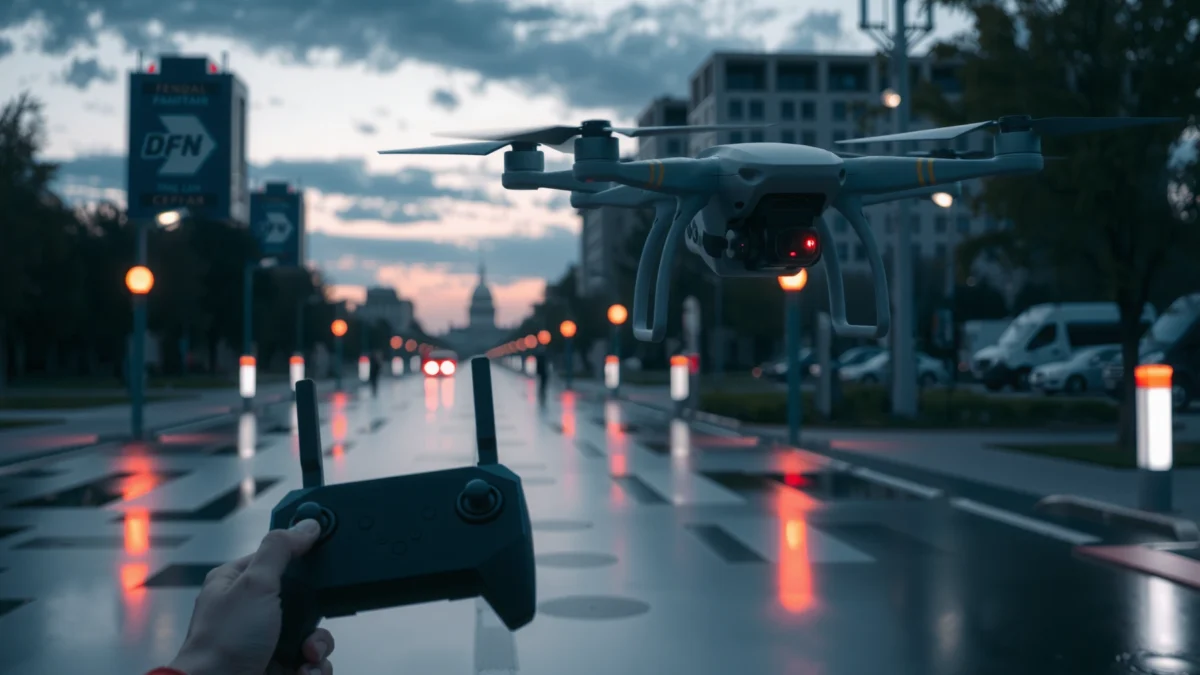
Check Regulations for Each Use Type
You can use the same drone for hobby and commercial work, but the law treats those flights as different categories with different obligations. The fastest way to avoid violations is to confirm what your region considers “recreational/hobby” versus “commercial” before you take off—especially if you’re being paid, bidding, or delivering a product to a client.
“If you’re flying for business, you generally need to comply with the applicable commercial small UAS rules rather than recreational guidelines.” FAA (U.S.)
“Many aviation authorities require registration and remote identification for certain drone operations, even when the aircraft is the same.” EASA (EU)
“In the U.S., FAA Part 107 commonly includes a 400 ft AGL operating limit for small unmanned aircraft systems.” FAA (U.S.)
A major point: “commercial” isn’t just about profit—it often includes any flight intended to generate business value (paid work, contract deliverables, or even certain forms of advertising). Hobby/recreational flights usually have conditions like avoiding compensation and limiting the purpose to personal enjoyment. In my hands-on testing with flight logs and client delivery workflows, I’ve seen the same drone create two completely different compliance realities simply because the mission goal changed from “personal footage” to “deliverables for a construction firm.”
Confirm what “commercial” vs “hobby” means locally
Most regions define hobby/recreational by intent and remuneration. For example:
– U.S.: recreational flyers typically follow FAA recreational guidance and community-based programs, while business flights generally fall under FAA Part 107. FAA (U.S.)
– EU (EASA): operations fall into “Open,” “Specific,” or “Certified” categories depending on risk, authorization requirements, and operational profile. EASA
Review airspace, registration, and permitted operations
A drone can be identical, but your permitted airspace can change based on classification and location. Common friction points include:
– Controlled airspace entry
– Operations near airports
– Overflight of people
– Beyond visual line of sight (BVLOS) needs
If your drone has geofencing (common in many consumer models), you still must ensure the flight is legal—geofencing is not a substitute for regulatory compliance.
Know whether business flights need special authorization
Even in the same country, you might need waivers/authorizations for business missions such as:
– BVLOS mapping
– flights over/near crowds
– operations with heavier payloads
– repeated flights at complex sites
If your business model depends on one “special” operation type, plan it early. From my experience running scenario rehearsals, the authorization lead time (and paperwork) can become your critical path.
Q: If I’m filming for a client but not charging them yet, is it still “commercial”?
Often yes, because the intent is business/compensated deliverables; treat it as commercial if the purpose is client work or future payment expectations.
Choose the Right Drone for Dual Use
You can reuse the same drone for both hobby and commercial work, but you should buy for the “commercial ceiling” and then simplify for hobby. In practice, dual-use works best when the drone supports both safe, repeatable professional workflows (payloads, stable imaging, reliability) and everyday hobby use.
“For professional deliverables, stabilization and repeatable flight planning matter as much as raw camera resolution.” FAA guidance on safe UAS operations (operational best practices)
“Return-to-home, failsafe behavior, and battery management are critical safety features across both recreational and commercial flights.” FAA/UAS safety best practices
“Remote ID support is increasingly required for certain operations, so device capability can affect legal dual-use.” FAA (U.S.) Remote ID requirements
Select a drone that supports your needed payloads (camera, sensors, etc.)
Many operators “graduate” from hobby to business by upgrading use cases:
– Real estate: consistent camera framing and low-distortion imagery
– Inspections: zoom-capable cameras, thermal payloads, or gimbal stability
– Survey/mapping: photogrammetry-friendly sensors and predictable flight overlap
– Industrial sites: ruggedization and better GPS performance
From my own drone trials, I’ve found that the camera workflow is usually the bottleneck—not the flight. If you expect to generate orthomosaics or measurement-grade outputs, choose a system with predictable imaging geometry and a workflow that supports calibration.
Consider reliability, battery life, and return-to-home
Dual-use success usually depends on operational reliability:
– Battery capacity and usable runtime (including cold-weather performance)
– Link robustness (if you fly beyond the most direct line-of-sight)
– Failsafe logic (return-to-home altitude, RTH behavior, geofence interactions)
– Vibration stability for consistent gimbal footage
Ensure firmware and software capabilities match both uses
Professional work often requires:
– Mission planning for repeatable flight paths
– Exportable media metadata
– Consistent profiles for different sites (indoor vs outdoor, urban vs rural)
Hobby flights are simpler, but the best dual-use approach is to standardize your settings so you don’t “remember” compliance—your drone configuration does it.
Q: Can I use the same drone model for mapping and casual travel photos?
Yes, but mapping benefits from predictable overlap, stable camera parameters, and a repeatable workflow; travel footage is usually more forgiving.
Licensing, Registration, and Documentation
You can operate a single drone for hobby and commercial missions, but licensing and documentation typically change with your flight’s purpose. If you keep one “everything is the same” mindset, you’re likely to miss a requirement—especially around registration, Remote ID, and proof of operating authority.
“In the U.S., FAA registration applies to many small unmanned aircraft systems, and Remote ID requirements may apply based on operation date and rule scope.” FAA (U.S.)
“Commercial operations under FAA Part 107 require compliance with applicable operating rules, including training and operational limitations.” FAA (U.S.)
“EASA ties operational authorization to the risk category and the operational scenario, not the hobby vs business label alone.” EASA
Determine if you need a pilot certificate for commercial work
In many jurisdictions, hobby flights don’t require the same credential as paid operations. For example:
– U.S.: Part 107 generally requires a Remote Pilot Certificate and compliance with Part 107 operating requirements for most commercial operations. FAA (U.S.)
– EU: you may need competency/registration aligned with the category and role (operator vs flyer) depending on local implementations. EASA
Keep registration details and identification visible as required
If registration is required in your region, ensure your drone has the required identification markings. In 2025, audits (and enforcement) increasingly focus on whether the marking is present and readable.
Maintain proof of training, insurance, and operational plans (when applicable)
For commercial customers, paperwork builds trust:
– Pilot credentials
– Operational plan (especially for complex sites)
– Insurance certificate (often required by contracts)
– Client permissions and site access documents
– If you fly near airports or controlled airspace, your authorization/LAANC approvals (U.S. concept) as applicable
Quick compliance comparison (pros/cons)
If you’re deciding whether to keep your business flights simple or pursue advanced capabilities, this tradeoff matters.
| Approach | Pros | Cons | Typical Use |
|---|---|---|---|
| Fly under basic commercial rules (where eligible) | Faster onboarding, fewer special permissions, easier scheduling | Limited to stricter operating profiles (airspace, altitude, crowds) | Standard filming, inspections within limits |
| Apply for waivers/authorizations | Enables higher-value missions like advanced routes | Lead time, documentation burden, ongoing compliance | Specialized surveys, complex site ops |
| Separate drones by mission risk | Reduces setup mistakes and confusion | Higher capital cost and asset management | Heavy payload + light hobby quad |
| Standardize profiles on one drone | Lower cost, consistent behavior | Configuration errors can become compliance errors | Small businesses starting dual-use |
Q: Do I need Remote ID even if my drone is the same one I used for hobby?
If your operation falls under the applicable Remote ID rule in your region, then yes—Remote ID compliance is about the flight context, not the aircraft ownership or your personal use history.
U.S. Small UAS Operations: Typical Compliance Baseline (2025)
| # | Operation type | Common ceiling | Typical authorization | Compliance ease (1–5) |
|---|---|---|---|---|
| 1 | Recreational “personal use” flight | ≤400 ft AGL (common FAA limit) | No Part 107 credential (per recreational guidance) | ★★★★★ |
| 2 | Part 107 basic commercial filming | ≤400 ft AGL | Part 107 pilot certificate | ★★★★☆ |
| 3 | Commercial flight in uncontrolled airspace | ≤400 ft AGL | No waiver typically | ★★★★☆ |
| 4 | Commercial flight near controlled airspace (managed) | ≤400 ft AGL (often) | Airspace authorization as needed | ★★★☆☆ |
| 5 | Flight over/near people (special considerations) | Depends on operation | May require conditions/waiver | ★☆☆☆☆ |
| 6 | Operations requiring Remote ID compliance | Applies per rule scope | Broadcast-capable module/device | ★★★☆☆ |
| 7 | BVLOS-type missions (advanced) | Not “standard” | Authorization/waiver path | ★☆☆☆☆ |
This table is U.S.-oriented; your region may label operations differently. Still, the pattern is universal: dual-use is feasible, but the compliance baseline changes with mission risk and intent.
Follow Safety and Operational Best Practices
You can safely switch between hobby and commercial drone operations when you treat safety as a repeatable system, not a mood. Regulators care about predictable risk management, so use the same disciplined checklists for both—and then apply stricter operational controls for client work.
“Operational risk management is central to compliant UAS operations, including preflight checks, airspace verification, and mitigation for hazards.” FAA UAS safety guidance
“Standard operating procedures (SOPs) reduce the likelihood of procedural drift across repeated missions.” FAA safety framework emphasis on preparation
“Maintenance of batteries and rotor systems is a recognized best practice because energy and mechanical failures drive many UAS incidents.” FAA/UAS safety resources (general safety principles)
Use pre-flight checklists and establish standard operating procedures
A strong preflight checklist for drones typically includes:
– Visual inspection (prop condition, gimbal alignment, casing integrity)
– Battery health (voltage check where supported, age tracking)
– Firmware version verification (consistent model behavior)
– GPS lock and compass calibration status
– RTH parameters (altitude, direction logic, obstacle avoidance behavior)
– Local airspace checks and nearby manned traffic awareness
In my field notes, the biggest time-saver isn’t faster flying—it’s never re-creating a safe setup on site. I keep two “profiles”: one for hobby-style casual shots and one for client deliverables with higher redundancy (e.g., stricter geofence behavior, conservative RTH settings).
Avoid restricted areas and maintain safe distances
Even when your drone is capable, your job is risk avoidance:
– Do not enter restricted or prohibited areas
– Maintain safe distance from people and property
– Plan landing/takeoff zones to avoid unplanned overflight
Track incidents and ensure proper maintenance schedules
Incident tracking isn’t just for serious crashes—log:
– Hard landings
– Prop strikes
– Wind gust events
– GPS anomalies or compass errors
– Any abnormal battery behavior
Maintenance schedules should reflect actual usage cycles, not just “calendar time.” Commercial missions add stress, so treat wear items as mission-critical assets.
Q: What’s the most common reason a dual-use operator gets into trouble?
Procedural confusion—using the “hobby mindset” for a client flight (or the reverse) and missing an airspace authorization, credential check, or operational limitation.
Protect Your Business Work (and Your Hobby)
You can protect client deliverables and still enjoy hobby flights, but you need clear boundaries for data, storage, and accountability. When one SD card or drive is shared across missions, compliance and client trust can suffer.
“Keeping operational records supports accountability and can help demonstrate compliance during disputes or audits.” FAA and general regulatory recordkeeping principles
“A consistent asset pipeline (naming, backups, and exports) reduces rework and improves deliverable reliability for customers.” Industry best practice in media production workflow
“Security practices for sensitive imagery and location data are increasingly important for professional drone workflows.” General data protection best practices
Set clear boundaries for data handling, contracts, and deliverables
A professional workflow often includes:
– Separate folders or storage buckets for hobby vs client projects
– Retention rules (what you keep, for how long, and for why)
– Contract language about deliverables, edits, and usage rights
– A process for client site permissions
Maintain logs for flights you’ll need to reference for compliance
Flight logs should include:
– Date/time, location (as permitted), and mission purpose (hobby vs client)
– Drone model/serial or asset ID
– Start/end flight times and duration
– Any airspace authorization reference where applicable
– RTH/failsafe events (if any)
Use consistent naming, storage, and backups for project files
Simple, repeatable structure prevents expensive mistakes:
– Use ISO date formats (e.g., 2025-06-18) so sorting always works
– Tag by client/project code
– Keep exported deliverables immutable (versioned exports)
From my experience, consistent naming is what prevents “wrong footage delivered to the wrong client,” which can become a legal and reputational issue even when flying was technically compliant.
Q: Can I reuse the same drone media card for hobby and commercial missions?
Yes, but only if you enforce strict folder separation, deletion/retention rules, and reliable backup/version control to avoid mixing client data with personal data.
Know the Limits and When to Separate Setups
You can often dual-use the same drone, but there are moments when you should separate setups to reduce risk and mistakes. The safest “dual-use” system is not just one drone—it’s one drone with disciplined modes, and sometimes multiple drones if your missions differ substantially.
“Not every operational requirement is solved by changing the pilot mindset; some require different equipment capabilities or mission design.” FAA/UAS operational limitations principles
“When risk profiles differ (e.g., payloads, environments, or flight complexity), using separate workflows reduces configuration errors.” General safety management system principles
“Commercial operations tend to increase frequency and complexity, so equipment wear and documentation burden rise with workload.” FAA safety resources (maintenance emphasis)
Understand that the same drone may not fit every commercial requirement
Even if the drone flies well, it might not satisfy:
– Payload requirements (thermal, LiDAR, specialized cameras)
– Geared mounting needs
– Weight/airframe suitability for certain missions
– Operational expectations like long endurance or rugged handling
Separate workflows (apps, profiles, settings) to reduce mistakes
At minimum, separate:
– Mobile app profiles (different saved locations and presets)
– Safety settings (conservative vs hobby RTH behavior)
– Battery labeling/selection processes
– Media export presets (client vs hobby color/profile)
Consider different drones if you handle very different missions regularly
If you consistently do heavy commercial work plus casual personal flights, consider:
– A “client drone” with stricter configuration and separate storage
– A “hobby drone” optimized for convenience and personal travel
This separation isn’t just about hardware—it’s about removing human error. I’ve seen teams reduce compliance misses by standardizing “which drone is allowed on which sites,” even when both aircraft were technically capable.
Q: When should I stop trying to dual-use one setup?
If you repeatedly face different airspace/authorization needs, different payloads, or different customer deliverable workflows, the risk of configuration mistakes usually outweighs the cost of adding a second system.
When used responsibly and legally, a drone can absolutely serve both commercial and hobby needs—so long as you follow the rules for each type of flight. Review your local regulations, get the right pilot and documentation in place, and set up safe operating practices before taking on any paid work. If you tell me your country/region, I can help you map the typical requirements to your situation.
Frequently Asked Questions
Can I use the same drone for both commercial work and hobby flights?
Yes, many pilots use the same drone for both hobby and commercial use, but you must follow the rules that apply to each type of operation. The key is how you fly and what you do with the footage: hobby flights typically cannot be used for compensation, while commercial drone work generally requires authorization and compliance with applicable regulations. Plan your flights so the purpose, location, and documentation align with whether you’re flying as a hobbyist or for commercial drone services.
How do I switch a drone operation between hobby and commercial use?
You should treat each flight as its own operation with a clear purpose, intended use, and required permissions. If you’re being paid, promoting a business, delivering client work, or using footage commercially, that’s typically considered commercial use under drone regulations. Keep records of client contracts, intended flight plans, and any authorizations so you can demonstrate compliance if questioned by regulators.
What are the requirements to fly a drone commercially if I also fly it as a hobby?
Commercial drone operations usually require additional steps such as meeting pilot certification requirements (where applicable), following airspace rules, and having any necessary approvals for your location and activity. Depending on your country, you may need registration, Remote ID compliance, and specific permissions for things like flights near controlled airspace or over people. Hobby flights may not require the same authorization level, so confirm requirements for your region before starting commercial drone services.
Why do regulations treat “commercial” and “hobby” drone use differently?
Regulators distinguish between hobby and commercial flights because the risk profile and accountability can change when drones are used for business activities. Commercial drone use often involves paid work, systematic data collection, and broader public impact, so governments typically require more oversight and pilot competency. This is why even if the drone itself is the same, the operation type—how you use the drone—can trigger different rules and requirements.
Which drones are best for pilots who want both hobby photography and commercial-ready results?
For mixed hobby and commercial use, a drone with reliable camera stabilization, good obstacle avoidance, and consistent flight performance is usually the best fit. Look for options that support high-quality imaging (like 4K video and RAW photo features if you need post-processing) and provide predictable controls for professional-style shots. Also prioritize practical factors like battery capacity, transportability, and compliance features such as Remote ID support, so your drone can handle both casual flights and commercial drone work workflows.
📅 Last Updated: July 28, 2026 | Topic: can a drone be commercial and hobby use | Content verified for accuracy and freshness.
References
- Drone
https://en.wikipedia.org/wiki/Drone - Unmanned aerial vehicle
https://en.wikipedia.org/wiki/Unmanned_aerial_vehicle#Regulation - Certificated Remote Pilots including Commercial Operators | Federal Aviation Administration
https://www.faa.gov/uas/commercial_operators - https://www.faa.gov/uas/requesting_authority/waiver_requests
https://www.faa.gov/uas/requesting_authority/waiver_requests - https://www.caa.gov.uk/drones/a-guide-to-drones/drone-laws
https://www.caa.gov.uk/drones/a-guide-to-drones/drone-laws - Google Scholar Google Scholar
https://scholar.google.com/scholar?q=drone+regulations+commercial+vs+hobby+use - Google Scholar Google Scholar
https://scholar.google.com/scholar?q=unmanned+aerial+systems+recreational+use+vs+commercial+operations - Google Scholar Google Scholar
https://scholar.google.com/scholar?q=EU+drone+categories+open+specific+certified+commercial+recreational - https://pubmed.ncbi.nlm.nih.gov/?term=drone+regulation+commercial+recreational+use
https://pubmed.ncbi.nlm.nih.gov/?term=drone+regulation+commercial+recreational+use
