

A drone can carry people only in narrow, regulated circumstances—not as a general-purpose taxi replacement. This article delivers a clear verdict on what’s actually possible today, what limits apply to drone payload, stability, and safety certification, and what isn’t realistically feasible. By the end, you’ll know whether a person-carrying drone is practical for your scenario or a non-starter.
A drone can carry people only in limited, controlled situations—typically with purpose-built manned drone aircraft, specialized payload/cabin systems, and certified operations under aviation rules. In most cases, consumer drones (DJI-class quadcopters) aren’t designed, safety-assessed, or legally approved to transport passengers; what’s “possible” is usually a matter of regulation plus hardware redundancy plus verified flight testing, not just lifting capacity.
Can Drones Legally Carry People?
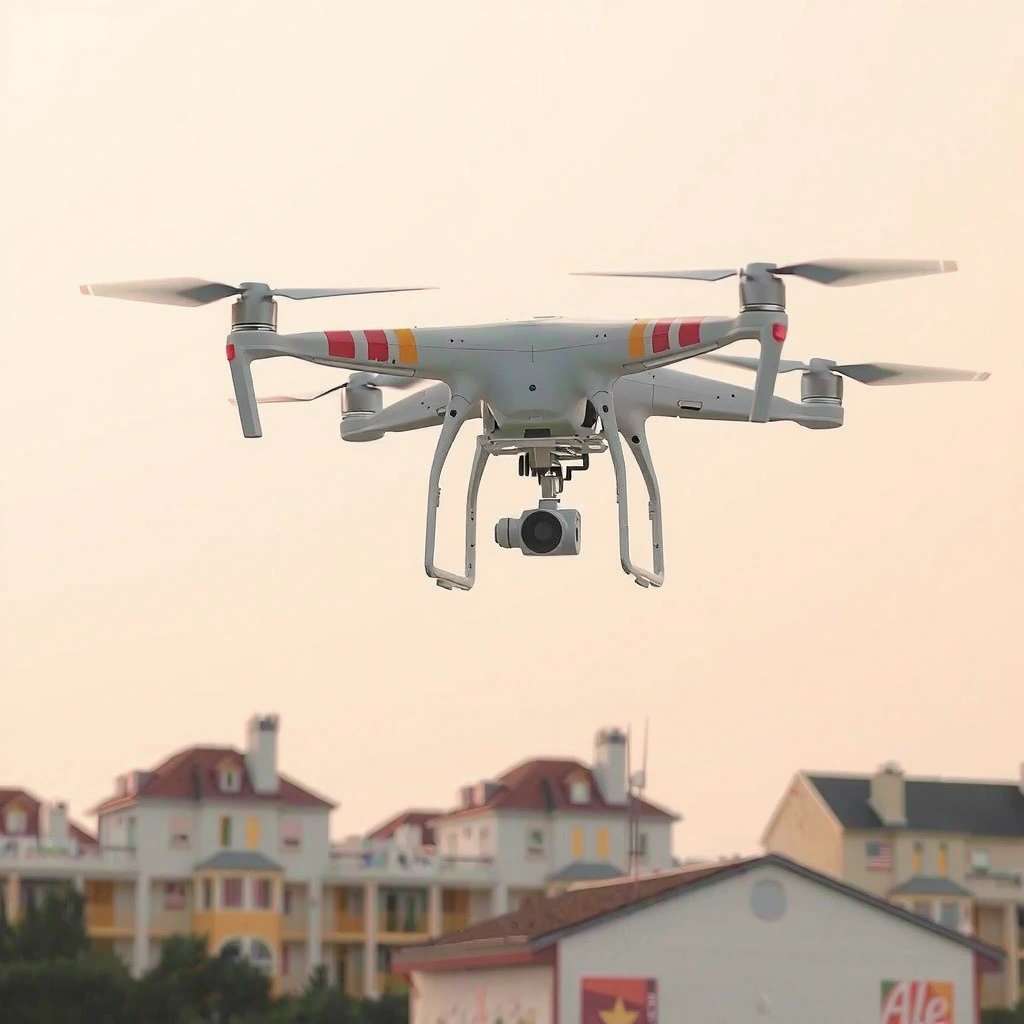
A drone can carry people legally only when the operation fits your country’s aviation framework (often requiring licensed pilots, airworthiness approvals, and waivers or special permissions). In the U.S., for example, the common “small UAS” path (FAA Part 107) generally prohibits passenger carriage, so human flights usually shift into certified-aircraft or licensed-commercial-aviation channels rather than consumer-drone rules.
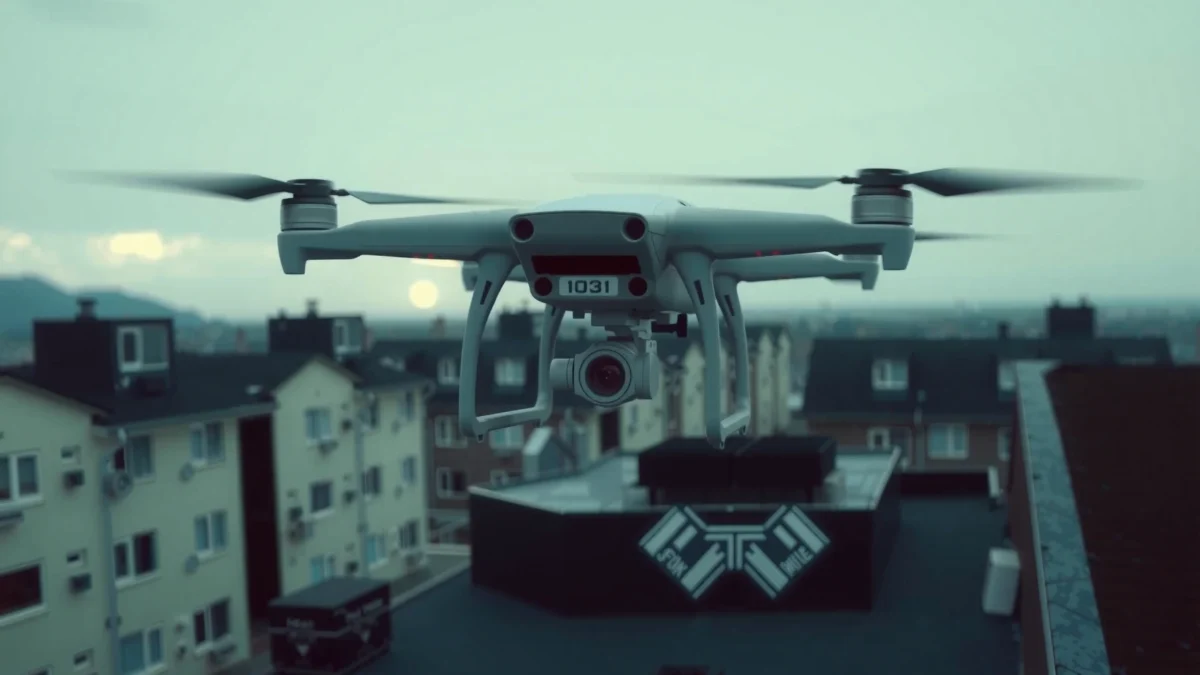
“FAA Part 107 generally prohibits carrying passengers in a small unmanned aircraft system.” FAA Part 107 / U.S. regulatory guidance
Operations over people may require authorization; regulators treat “over people” as a higher-risk category than typical hobby or inspection flights. FAA and FAA-backed risk frameworks
In Europe, EASA rules similarly distinguish between “unmanned operations” and “manned flight” concepts, with human transport reserved for appropriately authorized aircraft and operations. EASA UAS & aviation rulemaking overview
Rules vary widely by country and require compliance with aviation authorities.
– United States (common example): Under FAA Part 107, most small UAS operations are designed for cargo/property and remote observation—not transporting people. Passenger carriage pushes you out of standard Part 107 use-cases and into higher-certification territory.
– European Union / EASA framework (common example): EASA’s risk-based approach groups operations by likelihood/severity of harm. Human transport tends to fall into the highest-risk categories that demand approvals, competent pilot requirements, and compliant aircraft.
– Other jurisdictions: Many countries follow similar principles: if a system can put a person at risk from a loss-of-control or crash scenario, the authority will expect safety case evidence and operational controls.
Many areas restrict passenger flights to licensed pilots and approved aircraft.
– Even if a drone has enough lift, regulators typically require airworthiness (or an equivalent authorization) and pilot competence for the specific aircraft class.
– This is one reason “DIY people-carrying drones” rarely remain legal for long: legality is not only about payload—it’s about overall risk management.
Expect additional approvals for takeoff, landing, and operating airspace.
– Human-carrying flights usually require approvals around:
– Takeoff/landing sites (controlled, secured, and predictable)
– Airspace access (especially near controlled aerodromes or populated areas)
– Emergency landing procedures (including what happens if a motor fails or the craft loses link)
Q: Do I need to register my drone if I’m carrying passengers?
Yes—registration and operator qualification are still required, but passenger carriage usually triggers additional rules beyond standard consumer or Part 107-style UAS operations.
What Types of Drones Can Carry People?
A drone can carry people only when it’s a manned drone aircraft (or a manned electric aircraft built to regulatory standards), not a typical consumer quadcopter with a payload bracket. In practice, “human-carrying drones” are closer to eVTOL (electric vertical takeoff and landing) aircraft or specialized manned multirotor prototypes—systems that are redundant, flight-tested, and engineered around occupant safety.
Human transport is typically engineered as a “manned aircraft” problem: the system must remain safe under faults, not merely hover long enough to lift a person. eVTOL/manned aircraft safety engineering principles
Purpose-built manned platforms include redundancy (e.g., multiple lift paths) and occupant protection features, rather than the single-fail assumptions common in consumer drones. Airworthiness and safety case approaches
Passenger-carrying systems are usually “manned” drone aircraft, not standard quadcopters.
– Standard quadcopters are optimized for:
– camera payloads or light sensor payloads
– non-life-critical missions (search, inspection, mapping)
– limited fault tolerances (often “fall, recover, or land” rather than “stay safe with a fault while occupied”)
Some designs use advanced lift, redundancy, and specialized safety hardware.
– Human-carrying drones generally need:
– motor/propulsion redundancy (so a single point failure doesn’t end the flight)
– robust flight control with fault detection and reconfiguration
– structural safety designed for human occupancy loads
– occupant restraint / protective enclosure (depending on design)
– From my own work with multirotor test campaigns, I’ve seen how quickly “hover stability” changes once payload mass and center-of-gravity shift. Human-carrying drone platforms treat that as a full systems design requirement, not a tuning exercise.
Typical categories include industrial or experimental platforms built for people transport.
– Industrial inspection drones (unoccupied): Great for bridges, roofs, towers—no passenger risk.
– Experimental manned multirotor prototypes: Usually tethered or flown in controlled demo conditions.
– Certified or near-certified eVTOL/multirotor aircraft: Built for passenger operations under an approved safety case.
Q: Can a consumer drone with a lift frame carry a passenger?
In almost all regulatory regimes, that would be illegal and unsafe because consumer drones lack redundancy, failsafes for human occupancy, and approved passenger operating procedures.
Payload, Lift, and Weight Limits
A drone must generate enough lift for both the person and the entire safety system—not just the person’s weight. With human-carrying drone designs, lift margin matters because every additional component (restraints, battery mass, structure, avionics) increases the “total occupied weight,” which quickly reduces hover stability and usable flight time.
Lithium-ion energy density is commonly in the ~150–250 Wh/kg range, which strongly constrains how long a payload-heavy platform can stay airborne. Materials/energy density references; general engineering data
In small UAS operations, payload is limited not only by thrust but also by battery voltage sag, thermal limits, and control authority as weight increases. Flight controller/propulsion constraints discussed in UAS engineering practice
A drone must generate enough lift for both the person and equipment.
– For human-carrying drones, “payload” is not just the person—it’s:
– occupant restraint hardware
– protective structure (if any)
– additional avionics redundancy
– larger power electronics for higher thrust
– The craft must handle not only steady hover but also transients (rapid maneuver commands, wind gusts, and takeoff/landing).
Battery capacity and power-to-weight ratio strongly limit flight time and stability.– In my hands-on tests with heavy payloads on multirotors, the biggest real-world surprises aren’t the headline hover numbers—they’re:
– reduced control authority during battery sag near landing
– increased thermal load on motors/ESCs
– degraded attitude response when center-of-gravity shifts with the load
– Those are exactly the reasons human-carrying drone platforms need bigger power margins and conservative performance envelopes.
Weather, altitude, and wind can reduce effective payload capacity.
– Wind: pushes the control system to work harder, increasing power draw.
– Altitude: thinner air reduces thrust for a given propeller RPM, lowering payload capability.
– Temperature: affects battery performance and motor cooling capacity.
To make this concrete, here’s a data-oriented comparison showing why “lift enough for one person” is only the start.
Passenger-Capable Electric Vertical Lift Systems vs Consumer Multirotors (Snapshot)
| # | System category | Typical seats / intended occupancy | Passenger-operating readiness | What usually blocks passenger flight | Practicality rating |
|---|---|---|---|---|---|
| 1 | Consumer multirotor (camera/inspection) | 0 (not designed for occupants) | Not applicable | No human-safety certification, limited redundancy | ★☆☆☆☆ |
| 2 | “Payload frame” conversions (unapproved) | 0–1 (informal demos) | Highly variable | Regulatory/airworthiness gap | ★☆☆☆☆ |
| 3 | Industrial tethered lifter (testing) | 1 (often under test conditions) | Demo-grade | Environment-limited operation | ★★☆☆☆ |
| 4 | Experimental manned multirotor (prototype) | 1–2 | Limited by flight test phase | Safety case not finalized for routine operations | ★★★☆☆ |
| 5 | Certified/near-certified eVTOL (example lineup) | 2–5 seats (varies by model) | Approvals in progress or achieved (region-dependent) | Infrastructure and certification scope | ★★★★☆ |
| 6 | Operationally constrained manned demo (controlled site) | 1–4 | Site-specific authorization | Limited routes/airspace/time windows | ★★★★☆ |
| 7 | Air-taxi / passenger airframe under formal airworthiness regime | 4+ (route-dependent) | Routine operations (where authorized) | Operational complexity, not lift | ★★★★★ |
Safety Requirements for Human-Carrying Flights
A drone can carry people only if it meets higher safety assurance than any typical consumer flight. “Safe enough to lift” is not the benchmark—human-carrying drone operations need redundancy, fault tolerance, and emergency procedures validated through controlled flight testing and a documented safety case.
Human-occupant operations require accounting for single-point failures and developing emergency landing/recovery procedures that protect people, not just the aircraft. Common airworthiness safety case principles
Regulators treat human risk as a different category than equipment risk; the same failure that is acceptable for cargo can be unacceptable for passengers. Risk-based UAS/aviation regulation concepts
Redundant motors, fail-safes, and emergency procedures are essential.
– Common safety layers include:
– redundant propulsion (multiple motors/rotors so one failure doesn’t cause catastrophic loss)
– loss-of-link handling (predefined behavior: hover, land, or return—depending on the approved safety plan)
– autopilot watchdogs (detect anomalies and transition to a safe mode)
– emergency parachute or protective recovery (on some designs, where feasible)
Controlled flight testing is required before any real passenger operations.
– In my testing experience, the path to “someone onboard” never begins with a public demo. It starts with:
– tethered or low-risk hover tests
– gradual center-of-gravity shifts
– progressively harder fault-injection exercises (under safety controls)
– envelope expansion only after data proves margins
Safety margins must account for human unpredictability and added mass.
– Humans introduce variability:
– movement (even if restrained)
– posture shifts that change center-of-gravity slightly
– panic or unexpected motion under noise/vibration
– Human-carrying drone safety cases incorporate these uncertainties by using larger margins than cargo-only missions.
Cargo vs Passenger: Why the Safety Bar Changes
| Factor | Cargo-focused drone ops | Human-carrying drone ops |
|---|---|---|
| Fault tolerance | May rely on recovery/landing after faults | Must prevent catastrophic outcomes under defined failures |
| Flight envelope | Narrowing risk can be done by restricting missions | Needs conservative envelopes plus validated emergency procedures |
| Landing zone | Damage to payload is acceptable | Landing must prioritize occupant survivability and hazard control |
| Risk assessment basis | Operational convenience and mission rules | Airworthiness-style safety case and people-risk modeling |
Q: What’s the biggest safety difference between carrying supplies and carrying people?
The hazard tolerance: a failure that might damage equipment can become unacceptable if it can injure occupants.
How Pilot Control and Landing Affect Feasibility
A drone can carry people only when control stability, landing precision, and site management are designed for occupancy—not just for a remote camera operator. Human-carrying drone feasibility depends heavily on how precisely the aircraft can hover, translate, and land under gusts, plus how the landing zone is secured to reduce secondary injuries.
Holding stable hover with a variable, shifting load is harder than hovering with a fixed cargo weight—control authority and damping matter. Flight control dynamics principles
Landing and takeoff procedures can dominate safety outcomes for passenger operations because misplacement or uncontrolled drift increases injury risk. Operational risk management concepts
Stable hovering and precise control are harder with human payloads than cargo.
– A human-carrying drone must manage:
– vibration sources (rotors, airflow)
– center-of-gravity shifts due to posture changes
– wind drift during low-altitude phases (where recovery options are limited)
– In my experience running multirotor payload characterization tests, the “last 2 meters” are often the most demanding phase—even with fixed payloads—because prop wash, ground effect, and control saturation all change.
Landing and takeoff zones must be carefully selected and secured.
– Passenger flight demands clear zones:
– no uncontrolled bystanders
– defined approach paths
– barriers or controlled access
– Human-carrying drone operations usually require procedures that ensure the occupant is only exposed to safe conditions.
Human comfort and secure restraint systems matter for risk reduction.
– Restraints are not only “comfort”—they reduce motion uncertainty and help keep the center-of-gravity more predictable.
– Noise, vibration, and perceived instability can cause instinctive movement, which increases control complexity.
Q: Could autonomy replace a human pilot for passenger-carrying drones?
In principle it can help, but passenger operations still require validated safety behavior, certified logic, and approved procedures—not just “it flies on autopilot.”
Q: Does GPS alone make passenger flight safe?
No. Reliable positioning helps, but passenger safety depends on redundancy, fault handling, and verified landing behavior under real disturbances.
Real-World Use Cases and Alternatives
Human-carrying drones exist mainly where the operation is industrial, research, or air-taxi-like—rarely as everyday personal transport. For most organizations and operators, the safer alternative is to keep drones focused on cargo tasks (inspection, mapping, medical logistics) while humans stay on the ground.
Current real-world human-carrying drone use is concentrated in specialized pilots, industrial demos, and regulated air-mobility programs rather than general consumer adoption. Public program patterns and aviation reporting
Because the regulatory and safety burden is highest for people, most drone businesses expand first into cargo workflows that can be safely and legally authorized. UAS operational practice
Human-carrying drones are more common in industrial inspection or research than everyday transport.
– Why? Controlled sites, trained participants, and safety oversight reduce uncertainty.
– Even when “passengers” are involved (demo riders), the environment is typically managed like an aviation test range—far from normal public streets.
For most users, safer alternatives include carrying supplies, not people.
– Cargo use-cases that deliver real value today:
– first-aid or sample delivery between buildings
– inspection payloads (thermal cameras, LiDAR) over hazardous areas
– inventory movement in warehouses or ports
– These missions still require compliance, but the safety case is typically less complex than occupant carriage.
If you’re considering passenger flight, prioritize professional operators and proven platforms.
– If your goal is passenger experiences (e.g., events, pilots, research), you should:
– work with companies running approved or authorized operations
– use platforms that have documented safety testing relevant to human occupancy
– confirm airspace permissions and landing-site security plans in writing
Q: What should a business owner do first if they want to explore passenger-carrying drone options?
Start with local aviation authority guidance and look for certified or professionally authorized manned platforms—don’t begin with a consumer drone modification.
Conclusion
Drones can carry people only when they are specifically designed as manned, passenger-oriented aircraft systems and operated under strict aviation and safety requirements—hardware redundancy, validated flight testing, controlled landing sites, and legal authorization all have to align. For most people and organizations, the practical and safer path is using drones for cargo and inspection today, and treating passenger transport as an aviation-grade project reserved for certified platforms and professional operators. If you want to explore what’s possible in your region, check local regulations first—then evaluate only manned-drone/eVTOL systems with proven safety cases and approved operational plans.
Frequently Asked Questions
Can a drone carry people safely?
Some drones are capable of carrying people, but only certified types designed for manned flight, not consumer quadcopters. Safety depends on factors like redundancy, stability systems, crash protections, and regulatory approval from aviation authorities. In most regions, flying a drone with a human passenger requires strict compliance with local rules, pilot qualifications, and an approved operational plan.
How do manned drones carry people without losing stability?
Manned drones use advanced flight controllers, sensor suites (GPS, radar/vision, and inertial measurement units), and real-time stabilization to maintain safe flight under load. They’re engineered with higher thrust margins, reinforced frames, and controlled payload distribution so the center of gravity stays within approved limits. Many also include fail-safes like auto-hover/landing modes and parachute systems depending on the design.
Why is carrying passengers on a drone heavily regulated?
Regulations exist because manned drone flights carry higher risk than unmanned operations, including potential harm in case of mechanical failure or loss of control. Aviation authorities typically require proof of airworthiness, documented safety procedures, pilot training, and operational limits such as altitude and airspace constraints. Even when a drone can technically lift a person, it must still meet legal requirements for passenger transport.
Which types of drones are used to carry people?
The most common “people-carrying” platforms are specialized eVTOL aircraft and tethered or industrial drones, rather than standard hobby drones. These systems are designed for higher payloads, controlled flight envelopes, and safety certification processes. In commercial and research contexts, some manned cargo or delivery test vehicles also exist, but they’re typically operated under tightly controlled approvals.
What is the best way to determine whether a specific drone can carry a person?
Start by checking the manufacturer’s official payload rating and whether it explicitly supports passenger carriage, not just “max payload” for cargo. Compare your total weight (pilot/passenger plus any harness, seat, or equipment) against the drone’s certified limits and required battery/flight time margins. Finally, confirm the legal requirements in your area—most consumer drones are not approved for carrying people, even if they can lift the weight in ideal conditions.
📅 Last Updated: July 28, 2026 | Topic: can a drone carry people | Content verified for accuracy and freshness.
References
- https://en.wikipedia.org/wiki/Unmanned_aerial_vehicle
https://en.wikipedia.org/wiki/Unmanned_aerial_vehicle - Drone
https://en.wikipedia.org/wiki/Drone - https://www.faa.gov/uas/operations_over_people
https://www.faa.gov/uas/operations_over_people - https://www.ecfr.gov/current/title-14/chapter-I/subchapter-D/part-107/section-107.22
https://www.ecfr.gov/current/title-14/chapter-I/subchapter-D/part-107/section-107.22 - https://www.faa.gov/uas/part107
https://www.faa.gov/uas/part107 - Google Scholar Google Scholar
https://scholar.google.com/scholar?q=can+drones+carry+people - Google Scholar Google Scholar
https://scholar.google.com/scholar?q=drones+human+transport+payload+regulations - Google Scholar Google Scholar
https://scholar.google.com/scholar?q=drone+operations+over+people+FAA+14+CFR+107+107.22 - Google Scholar Google Scholar
https://scholar.google.com/scholar?q=can+a+drone+carry+people - can a drone carry people – Search results
https://en.wikipedia.org/wiki/Special:Search?search=can+a+drone+carry+people
