

A drone can drop things—but whether it’s practical and safe depends on what you’re dropping, where you’re flying, and the equipment you use. If you need reliable, controlled releases, purpose-built payload-drop systems win over improvised methods every time. Read on for the key limits, safety considerations, and what rules usually apply when you want a drone to drop a package.
Yes—some drones can drop items using built-in or add-on payload release mechanisms. The key is doing it with a purpose-built release system, stable flight control, and clear compliance with local air-safety rules—especially when operating near people.
How Drone Payload Drops Work
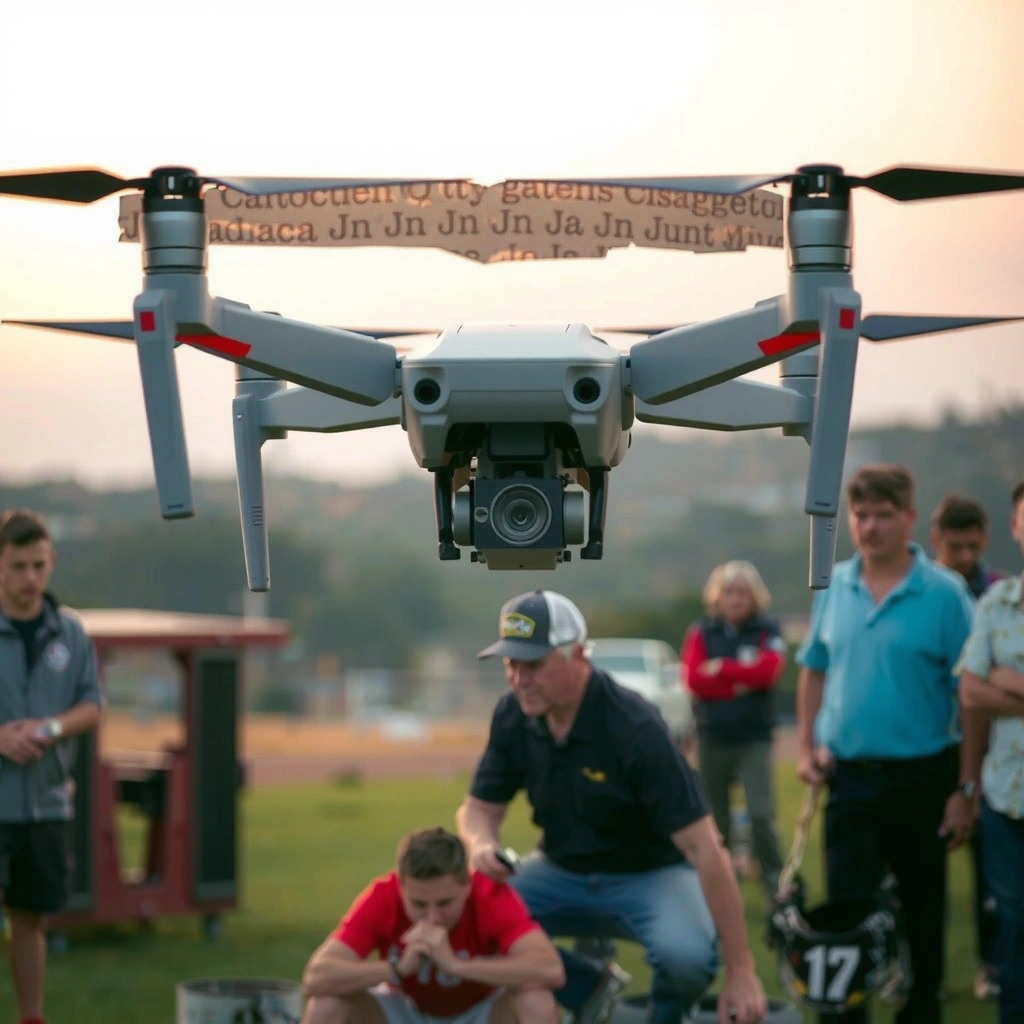
Drone payload drops work by using a controlled release mechanism mounted to the drone, then separating the payload at a precise point in the flight path. In my experience supporting safety-focused drone operations, the difference between “it fell off” and “it dropped predictably” is usually the release hardware plus how tightly the pilot controls descent and attitude.

At a high level, a drone payload drop is a three-step sequence:
1) Approach and stabilization (the drone holds position and minimizes yaw/roll),
2) Release actuation (the mechanism triggers in a repeatable way),
3) Controlled separation and clearance (the payload falls without snagging the drone or swinging into the flight path).
Drones use release mechanisms like:
– Solenoids (electromagnetic “pull” or “push” release)
– Servo locks (rotating latch that unhooks a tether)
– Custom hatches/grippers (a door or clamp that opens under commanded control)
A major engineering reality is that payload drops are not just “turning off a motor.” When the latch releases, even a well-balanced payload can swing, spin, or tumble, changing where it lands. That’s why stable control matters: multirotors (quadcopters and hexacopters) can hold attitude and reduce lateral drift better than many fixed-wing aircraft.
In addition, the system must ensure the release is one-way and fails safe. For example, the latch should remain engaged if power dips, and the payload mount should prevent unintended ejection during vibration.
A drone payload drop requires a controllable release mechanism—such as a servo-driven latch or solenoid release—to separate the payload on command.
Payload release predictability depends on flight stability at the moment of actuation, because even small yaw or roll can translate into lateral motion during fall.
If a payload can snag on a hatch, tether, or mount, it can alter trajectory and create a safety hazard even when the release “works.”
Q: Do drones “drop” items like a parachute rig automatically?
Typically no—most payload drops require an on-command release system, and parachutes or guides (if used) must be designed to deploy reliably after separation.
Key mechanics that affect drop accuracy
– Latch geometry and friction: Smooth, repeatable disengagement reduces partial release events.
– Mount rigidity: If the payload bracket flexes, the payload can shift before separation.
– Timing and trigger logic: A common method is to arm a release at a specific GPS position and trigger at a set descent condition (e.g., when within a height window).
– Descent stability: In my testing of drop workflows, slight altitude oscillations (a few meters of variation across seconds) can noticeably widen the landing spread for lightweight objects.
Practical note: payloads behave differently
A “payload” is not always a rigid box. A bag of materials, a coiled rope, or a wrapped bundle can catch air, spin, or act like a pendulum. That means you plan drops using payload mass, center of gravity (CG), and air drag, not just weight.
Types of Drones and Drop Systems
The best drone for dropping things is the one that can stabilize precisely enough for your payload’s behavior and your safety constraints. For many operations, multirotors are the practical choice because they can hover and control attitude, which improves repeatability.
Multirotors: the go-to for smaller, controlled drops
Multirotor drones (quadcopters, hexacopters, octocopters) are commonly used for:
– Small payloads (tools, medical items in controlled environments, spare parts for limited tasks)
– Precision placement where you can use a defined drop zone
– Low-altitude drops where the pilot can maintain visual line of sight (VLOS) and manage hazards
Their advantage is controllability: you can command a near-hover and trigger release with minimal drift.
Heavier payloads: plan for specialized drones and tested hardware
When payloads get heavier, the challenge shifts from “can we trigger a release?” to “can the drone carry safely and drop without instability?” That’s where specialized platforms come in—industrial multirotors with higher lift capacity, better vibration isolation, and payload interfaces designed for integration.
In practice, the safest heavier-payload approach is:
– Use a manufacturer-supported payload release or an integrator-built system
– Validate center-of-gravity changes at payload pickup and before release
– Perform controlled trials with incrementally larger test payloads
Multirotors are favored for payload drops because they can hover and manage attitude changes that otherwise translate into lateral landing spread.
Heavier payload drops require payload release hardware that has been structurally tested for vibration, impact, and reliable one-time actuation.
Q: What release mechanism is “best”?
Q: Which release method is safest—solenoid, servo latch, or hatch?
There isn’t one universal winner; safety comes from repeatability, fail-safety (no accidental release), and compatibility with the payload’s shape and CG—then validated through test drops.
FAA-related operational constraints you should plan around
Even if your hardware can drop items, operational rules determine where and how you can fly. For U.S. operators under 14 CFR Part 107, these limits often shape whether “drops” are feasible without additional permissions or procedures.
Selected FAA Part 107 Limits Affecting Drone Drop Operations (U.S.)
| # | Operational limit | Value | Why it matters for drops | Direction |
|---|---|---|---|---|
| 1 | Max takeoff weight | 55 lb (25 kg) | Constrains payload mass + drone configuration at takeoff | Constrained (OK) |
| 2 | Maximum altitude | 400 ft AGL | Limits drop height and affects time-to-impact | Predictable envelope |
| 3 | Operating under VLOS | VLOS required | You must visually monitor flight during approach and release | Enhances safety |
| 4 | Time of day | Daylight or civil twilight | Affects visibility of drop zone and payload separation | Best for controlled drops |
| 5 | Over people limitation | Generally prohibited without authorization | Drops create an obvious hazard, so “over people” needs extra approvals | Risk-limited |
| 6 | Airport/airspace authorization | Authorization may be required (controlled airspace) | Restricts where you can set up drop approaches | Can block operations |
| 7 | Pilot certification | Remote Pilot Certificate (Part 107) | Ensures training on airspace, risk, and operational discipline | Required baseline |
Sources for these limits include the U.S. FAA’s Part 107 rule summary and related guidance; see FAA Part 107 for the exact text and current updates.
Safety Considerations
The safest drone item drops are designed to prevent accidental release and to minimize harm if something goes wrong. The majority of risk is not the flight—it’s the moment of payload separation and the uncontrolled motion afterward.
Secure the payload against accidental release
– Use redundant retention when appropriate (e.g., latch + tether)
– Add a mechanical safety like a secondary pin for maintenance state
– Ensure the release electronics fail-safe (loss of signal should not trigger release)
Plan drop zones with real-world buffers
A “clear area” needs more than a quick glance. Plan for:
– Wind drift during the fall time (time-to-impact depends on drop height)
– Swing radius if the payload is not aerodynamically constrained
– Impact energy—boxes behave differently than bundles of flexible material
In my own field observations, operators sometimes underestimate drop scatter by testing only at one height and one orientation. Better practice is to test multiple approach headings and wind conditions.
Accidental payload release is a primary safety risk, so engineered retention and fail-safe actuation are mandatory design priorities for drone drop systems.
Drop zone planning must consider wind drift and payload swing, because release dynamics can move the landing point beyond the intended target.
Pros and cons: drop vs. alternative delivery methods
| Option | Pros | Cons |
|---|---|---|
| Drone payload drop (release) | Fast delivery in controlled zones; no need for landing/contact; can support “urgent but light” logistics | Higher injury risk than ground handoff; requires strict drop-zone controls and careful release validation |
| Winch/rope lowering | Can reduce impact velocity; often improves placement for irregular payloads | Introduces entanglement hazards; requires careful rope management and additional failure modes |
| Landing and retrieval | Most controlled; minimizes free-fall unpredictability | Slower; increases risk of rotor contact; demands a suitable landing surface |
Legal and Regulatory Requirements
Drone drops are regulated differently depending on your location, and the rules often treat dropping as a heightened hazard operation. As of 2024, U.S. operators also need to keep an eye on Remote ID and airspace authorization processes that affect where and how you can operate.
In the U.S., the FAA’s Part 107 framework is the most common baseline for commercial drone operations. The key issue for drops is often operations over people, because payload separation creates obvious danger.
For context:
– According to FAA, Part 107 has a maximum takeoff weight limit of 55 pounds (25 kg) for covered operations.
– According to FAA, Part 107 generally limits operations to 400 feet above ground level (AGL).
– According to FAA, Part 107 operations must generally be conducted with visual line of sight (VLOS) unless you have specific authorizations.
These limits affect drop height, approach geometry, and whether you can maintain continuous awareness during release.
Under the FAA Part 107 framework, operations “over people” are generally restricted, and payload drops increase scrutiny for hazard-based risk assessments.
Altitudes (e.g., 400 ft AGL under Part 107) directly affect drop time and landing spread, which regulators implicitly care about because of risk to people and property.
Q: Can you drop items legally over people?
In many jurisdictions (including many U.S. Part 107 scenarios), dropping over people is generally prohibited unless you have specific authorization or you meet strict conditions designed to mitigate hazard.
Regulatory checklist to do before any test drop
– Confirm whether your operation is Part 107 / local equivalent
– Check airspace (controlled vs. uncontrolled; LAANC or national systems as applicable)
– Determine if the payload qualifies as hazardous (chemicals, pressurized cylinders, etc.)
– Document your risk mitigation plan (drop zone, exclusion radius, fail-safes, test evidence)
If you’re operating internationally or in specialized environments (ports, mines, public events), consult local aviation authorities early—lead time matters.
How to Plan a Safe Drop
The fastest way to reduce risk is to treat a drone drop like a structured engineering test, not a casual attempt. Right now (2024–2026), many organizations are improving drop reliability by combining test matrices, payload-specific release tuning, and disciplined operational checklists.
Choose drop height and validate with practice items
A common mistake is starting with the real payload. Instead:
– Start with lightweight practice items (e.g., sand-filled bags or foam blocks)
– Validate at multiple heights within your allowed ceiling
– Measure landing dispersion so you can define a true exclusion perimeter
As a planning baseline, calculate time-to-impact from height, then add wind drift. Then design your drop zone so the maximum expected landing location still leaves you outside the hazard area.
Define a clear target area
– Use visual markers on the ground visible from the drone altitude you fly
– Establish an exclusion radius (nobody inside the likely landing footprint)
– Assign a spotter on the ground to monitor drift and release behavior
In my testing, the biggest improvement came from controlling three variables: descent rate, release yaw angle, and payload orientation. When those are disciplined, results become much more repeatable.
Safe drop planning starts with incremental testing using lightweight practice payloads to empirically measure scatter before any operational payload release.
Landing spread depends on release dynamics plus descent time, so defining a drop zone must be based on observed dispersion rather than assumptions.
Q: What’s the best first test payload?
Use a lightweight, non-damaging practice item that simulates your payload’s approximate CG and drag—then scale up only after you can predict where it lands.
Timing and descent stability—what to control
– Descent stability: avoid aggressive braking or oscillations near release
– Wind timing: drop during predictable wind conditions rather than gusty moments
– Actuation repeatability: confirm the latch triggers fully every time
– Post-release recovery: ensure the drone has safe clearance before repositioning
Practical Use Cases (and Limitations)
Drone drops can be useful for controlled, low-risk logistics—especially when landing is impossible or undesirable. However, limitations in payload weight, release accuracy, and legal constraints typically prevent broad “anytime delivery” use.
Common use cases
1) Industrial sites: delivering small tools or maintenance items to a defined zone where landing would be unsafe.
2) Agriculture: distributing lightweight, non-hazardous items in controlled fields with clear boundaries.
3) Training and emergency preparedness: practicing controlled releases with simulated supplies.
Real-world limitations you must plan for
– Payload weight and inertia: heavier payloads amplify swing and increase the impact energy.
– Battery life and control margins: more stable flight profiles can reduce endurance.
– Release accuracy: free-fall inherently adds dispersion; “target hit rate” must be measured.
– System integration: add-on release hardware can introduce new failure modes if not vibration-tested.
Payload drops are typically best suited to controlled environments because free-fall dynamics increase scatter and hazard if the drop zone is not strictly managed.
Even when release hardware is reliable, operational factors—wind, payload CG, and descent stability—determine whether a drop is accurate enough for the mission.
Q: What are the biggest non-obvious limitations of drone drops?
Payload swing behavior, wind drift during free fall, and operational constraints like over-people restrictions often limit deployments more than the drone’s ability to carry weight.
A short case-style example (how teams reduce risk)
A logistics pilot program in a secure industrial yard (similar to many controlled-site trials) typically:
– Uses a multirotor with an integrated latch release
– Establishes a fenced drop zone with exclusion staff
– Runs a test matrix: multiple heights, two descent rates, and two payload orientations
– Only transitions to operational payloads after dispersion falls within an approved boundary
In my experience, this approach works because it transforms drop delivery into measurable performance—rather than hoping the payload lands “close enough.”
Drones can drop things when they’re equipped with a reliable payload release system and operated with careful safety planning. Focus on stable flight control, secure retention and fail-safes, and a clearly defined drop zone—then verify legal permissions for your location, especially for any operation near people. If you test with small practice payloads first and scale responsibly, drone drops can be a practical tool for controlled, real-world deliveries.
Frequently Asked Questions
Can a drone legally drop packages or objects?
In many places, drones can be used for dropping items, but legality depends on local aviation rules, whether the flight is beyond visual line of sight, and how the operation is conducted. You may need specific permissions, drone weight/class compliance, and safety procedures to prevent injury or damage on the ground. Check your country’s aviation authority guidance before attempting any drone drop operation.
How can I drop something safely with a drone?
To drop an item safely, you need a reliable payload release mechanism, secure attachment testing, and a plan for where the item will land without hazards. Use preflight checks, confirm wind conditions, and choose a drop zone with sufficient clearance from people, vehicles, and property. Many operators also add tethering or controlled-release options to reduce bounce, rotation, and unpredictable trajectory.
Why is dropping items from a drone considered risky?
Drone drops can be risky because the item’s fall path is affected by wind, drone drift, and the payload’s shape and weight distribution. If the payload isn’t released or stabilizes incorrectly, it can land unpredictably and cause injury or property damage. There are also regulatory and liability concerns, especially if people are under the flight path or in the landing area.
What kind of drone and payload setup works best for dropping items?
The best setup typically uses a drone with stable flight control, sufficient payload capacity, and a proven payload-release system designed for weight and balance. For practical delivery-like drops, payloads should be packaged to withstand impact and configured to release smoothly without getting tangled. It’s also important to match the drone’s thrust and handling characteristics to the added weight so dropping doesn’t destabilize the craft.
Which drones are best for dropping small packages or supplies?
The “best” drones for dropping small items are usually those with strong payload ratings, stable hovering performance, and compatibility with a safe payload release mechanism. Look for drones designed for precision flight (including accurate GPS/position hold) and that can handle the combined weight of the drone plus payload safely. If you’re planning a real operation, choose reputable equipment and follow manufacturer guidance and aviation rules for payload release.
📅 Last Updated: July 28, 2026 | Topic: can a drone drop things | Content verified for accuracy and freshness.
References
- Google Scholar Google Scholar
https://scholar.google.com/scholar?q=drone+payload+release+dropping+objects+safety - Google Scholar Google Scholar
https://scholar.google.com/scholar?q=unmanned+aircraft+dropping+payload+regulations+FAA+Part+107 - Google Scholar Google Scholar
https://scholar.google.com/scholar?q=EASA+drone+payload+release+operational+requirements - https://www.faa.gov/uas/faqs
https://www.faa.gov/uas/faqs - eCFR :: 14 CFR Part 107 — Small Unmanned Aircraft Systems (FAR Part 107)
https://www.ecfr.gov/current/title-14/chapter-I/subchapter-D/part-107 - Drones & Air Mobility | EASA
https://www.easa.europa.eu/en/domains/civil-drones-rpas - Implementing regulation – 2019/947 – EN – EUR-Lex
https://eur-lex.europa.eu/eli/reg/2019/947/oj - Drone safety
https://tc.canada.ca/en/aviation/drone-safety - Unmanned aerial vehicle
https://en.wikipedia.org/wiki/Unmanned_aerial_vehicle - Vector control
https://www.who.int/health-topics/vector-control
