

Yes, DJI drones can fly at night, but nighttime drone operations require more than simply launching after sunset. Pilots must understand FAA night flying rules, evaluate their drone’s low-light capabilities, and use proper lighting and safety procedures before taking off. Whether you fly for aerial photography, commercial work, or recreation, night flights involve different risks than daytime operations, including reduced visibility, difficulty judging distance, and increased reliance on navigation systems.
📋 About This Article
Yes—DJI drones can fly at night, but the flight must be planned and operated with the right safety setup and legal rules. This article is for DJI owners, recreational flyers, and pilots working under FAA Part 107 who want to capture nighttime photos or video. It explains when night flying is allowed, what lighting and equipment considerations matter most, and how to reduce common risks like limited visibility and judging distance in the dark.
For DJI drone owners, the good news is that many modern models include features that support safer low-light flying. However, advanced flight technology does not replace legal compliance or good pilot judgment. If you want to capture city lights, real estate twilight footage, or cinematic nighttime landscapes, it is essential to combine the right equipment, current regulations, and disciplined flight planning.
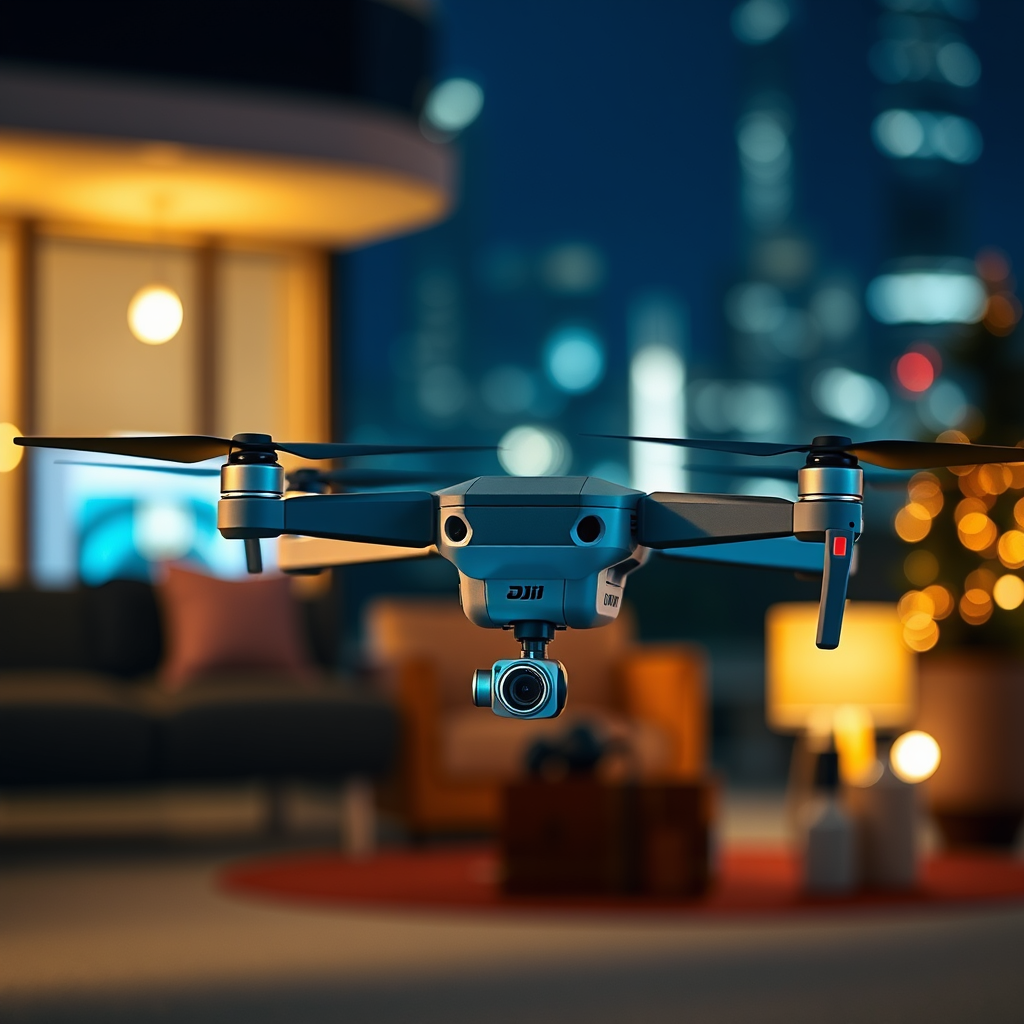
Can DJI Drones Fly at Night?
DJI drones are generally capable of flying at night, provided the aircraft is functioning properly, the pilot follows local aviation regulations, and the drone is equipped with the required anti-collision lighting when necessary. Night flight is not prohibited by default, but it is regulated. In the United States, the FAA allows drone operations at night under specific conditions, and those conditions apply to both recreational and Part 107 drone pilots.
From a technical standpoint, many DJI models are well-suited for evening and nighttime use because they include GPS stabilization, intelligent flight modes, return-to-home functionality, and obstacle sensing on select models. These features help the aircraft maintain stable positioning and improve control when visual references are limited. Still, sensors and cameras perform differently in darkness, so pilots should never assume that a drone will behave exactly the same at night as it does in daylight.
How DJI Drones Perform in Low-Light Conditions
DJI has developed several consumer and professional drones with strong imaging and flight performance, and some models handle low-light environments better than others. Performance at night depends on the drone’s camera sensor, obstacle avoidance system, positioning capability, and onboard lighting.
GPS and Flight Stability
Most DJI drones rely heavily on GPS for stable hovering and route accuracy. At night, GPS remains one of the most important flight safety tools because the pilot may have fewer ground references available. A strong satellite connection helps maintain aircraft position, supports return-to-home accuracy, and reduces drifting in open environments.
Obstacle Avoidance Limitations
Obstacle avoidance can be helpful, but it should not be treated as a guarantee of safety after dark. Some vision sensors require adequate ambient light to detect objects effectively. In very dark environments, obstacle sensing performance may be reduced, and certain avoidance functions may be limited or unavailable. This is especially important when flying near trees, utility lines, buildings, or uneven terrain.
Camera Quality for Night Photography and Video
DJI drones with larger image sensors generally perform better in low-light photography and videography. Models such as the DJI Mavic 2 Pro, with its Hasselblad camera and larger sensor, are often preferred for nighttime aerial imaging because they can capture more detail with less noise. Other newer DJI drones may also offer improved dynamic range, better ISO handling, and enhanced image processing that help produce clearer night footage.
Even so, nighttime image quality depends on more than the drone alone. Exposure settings, shutter speed, ISO, wind conditions, and pilot stability all affect the final result. Flying slowly and avoiding aggressive movements often leads to sharper images and smoother video in dark scenes.
FAA Rules for Flying a DJI Drone at Night
Drone pilots in the United States must follow FAA regulations when flying at night. The specific rules depend on whether the operation is recreational or commercial, but safety and visibility are core requirements in both cases.
Part 107 Night Flying Requirements
Commercial drone operators flying under FAA Part 107 can legally conduct night operations if they meet the current rule requirements. This typically includes completing the necessary knowledge requirements for night operations and ensuring the drone is equipped with anti-collision lights visible for the required distance. Pilots must also remain compliant with all standard Part 107 operating rules, including airspace authorization where applicable.
A Part 107 certificate is important for anyone using a DJI drone for business purposes such as aerial inspections, real estate photography, construction monitoring, event coverage, or professional videography. Night operations add complexity, so commercial pilots should be especially careful with pre-flight planning, lighting, and risk assessment.
Night Flying for Recreational Drone Pilots
Recreational pilots may also fly at night, but they must still follow FAA recreational drone rules. This includes flying only for hobby or personal enjoyment, keeping the drone within visual line of sight, and using anti-collision lighting if required under current regulations. Pilots should also avoid controlled airspace unless they have proper authorization through LAANC or another approved FAA process.
Because regulations can change, DJI drone users should always verify the latest FAA rules before a night flight. Local laws, park rules, and municipal restrictions may also apply, especially in urban areas, near airports, or in protected public spaces.
Required Lighting for Night Drone Operations
One of the most important legal and practical requirements for night flying is proper drone lighting. Anti-collision lights make the aircraft easier to see in darkness and help the pilot maintain orientation. They also improve visibility to other airspace users.
Why LED Lights Matter
Bright LED strobe lights are commonly used for nighttime drone operations because they increase visibility at a distance and can make it easier to distinguish the drone’s position and direction. This is especially useful when the drone is flying against a dark sky, over water, or above areas with minimal ground lighting.
Best Lighting Setup for a DJI Drone
For many pilots, the ideal setup includes lightweight anti-collision strobes mounted in a way that does not block sensors, propellers, or the camera gimbal. Lights should be secure, balanced, and bright enough to remain visible without interfering with flight performance. Red, green, and white orientation lights may also help the pilot identify the front and rear of the drone more easily.
When adding accessories, always confirm that the extra weight does not negatively affect battery life, stability, or takeoff safety. A poorly mounted light kit can create vibration, reduce flight time, or interfere with obstacle detection systems.
Best DJI Drones for Night Flying
Not every DJI drone is equally suited for nighttime use. Some are better for casual night visibility, while others are stronger choices for professional low-light imaging.
DJI Mavic Series
The DJI Mavic line is popular for night flying because of its portability, intelligent flight features, and strong camera systems. Higher-end Mavic models often deliver better low-light image quality and more advanced obstacle sensing than entry-level drones.
DJI Phantom Series
The Phantom series has long been valued for stable flight performance and dependable GPS navigation. Although older than some newer platforms, Phantom drones can still be effective for controlled nighttime operations when flown in suitable conditions.
Professional DJI Models
Enterprise and cinema-focused DJI drones may offer superior sensors, more robust flight control systems, and payload flexibility. These platforms are often used for inspections, public safety, mapping, and advanced content production where reliable nighttime performance is essential.
Essential Safety Tips Before Flying a DJI Drone at Night
Night drone safety begins before takeoff. A careful pre-flight routine can reduce the chance of losing orientation, damaging the aircraft, or violating airspace rules.
Inspect the Drone Thoroughly
Check propellers, arms, motors, firmware status, GPS signal strength, battery health, and lighting equipment before every night operation. Confirm that the return-to-home altitude is set correctly for the environment and that the compass and IMU status are normal.
Scout the Location in Daylight
Whenever possible, visit the flight area before sunset. Daytime scouting helps identify trees, buildings, antennas, power lines, towers, and restricted access areas that may be difficult or impossible to see clearly at night. Knowing the terrain in advance can dramatically improve safety.
Monitor Weather Conditions
Wind, fog, mist, and temperature shifts can have a greater impact at night. Visibility may change quickly, and cooler temperatures can affect battery performance. Always review local weather conditions and avoid flying if visibility is poor or winds exceed your comfort level and the drone’s operating limits.
Keep Visual Line of Sight
Even with strong LED lights and a stable video feed, the pilot must maintain visual line of sight with the aircraft where required by law. If the drone becomes too distant to identify its orientation safely, bring it back immediately. Relying only on the screen is not enough for compliant and safe operations.
Use Conservative Flight Movements
Night is not the time for aggressive maneuvers. Fly slower, ascend carefully, and make wider turns. Smooth flight inputs give you more time to respond if visibility changes or if the drone’s orientation becomes unclear.
Common Challenges of Flying DJI Drones After Dark
Night flights can be rewarding, but they also come with operational challenges that many new pilots underestimate.
Reduced Depth Perception
Distance is harder to judge in darkness, especially over open fields, water, rooftops, or dimly lit roads. Objects may appear farther away than they actually are, which increases the risk of collision.
Orientation Loss
One of the biggest risks in nighttime drone flying is losing track of the drone’s front and rear direction. Anti-collision lights help, but pilots should still keep the aircraft close enough to maintain clear awareness of its heading.
Sensor Performance in Darkness
Some visual positioning systems and obstacle sensors may not work at full effectiveness in low-light conditions. This can affect hovering precision at low altitude and make obstacle detection less reliable. Reviewing your specific DJI model’s user manual is essential because different aircraft have different night performance characteristics.
Battery Management
Cold nighttime temperatures can reduce battery efficiency and shorten flight time. Pilots should avoid draining batteries too low and should leave a comfortable margin for return and landing. Night flights demand more caution, so planning shorter missions is often the smarter choice.
Best Practices for Night Aerial Photography and Videography
Many pilots fly DJI drones at night to capture dramatic city skylines, illuminated buildings, traffic trails, and twilight landscapes. To get better footage, it helps to approach the flight like a controlled photo mission rather than a casual cruise.
Choose Well-Lit Environments
Urban scenes, waterfronts, stadium areas, and architectural landmarks typically produce better night content because they provide natural light sources and visual contrast. Extremely dark rural areas may be more difficult to film cleanly unless the drone camera is highly capable in low light.
Adjust Camera Settings Carefully
Manual camera settings often deliver better nighttime results than automatic mode. Lower shutter speeds can brighten the image, but they also increase blur if the drone moves too quickly. Higher ISO settings can help exposure but may add noise. The best balance depends on the scene and the drone camera sensor.
Plan Simple Flight Paths
Simple, repeatable movements are often the most effective at night. Slow push-ins, gentle reveals, and controlled orbit shots usually look better than fast or complex maneuvers. Stable motion is especially important when working with low-light footage.
Should You Fly a DJI Drone at Night?
Flying a DJI drone at night can be safe, legal, and highly productive when done correctly. The key is understanding that nighttime drone operations require more preparation than daytime flights. DJI aircraft offer strong technology for navigation, stabilization, and imaging, but success depends on the pilot’s planning, legal compliance, and risk awareness.
If you intend to fly after dark, make sure your drone is equipped with appropriate lighting, review FAA night flight regulations, inspect your equipment thoroughly, and choose a location that supports safe visual operation. For both hobbyists and professionals, the best night flights are the ones that prioritize control, visibility, and responsible decision-making from takeoff to landing.
Frequently Asked Questions
Can DJI drones fly at night?
Yes, many DJI drones can technically fly at night, but whether you are legally allowed to do so depends on the aviation rules in your country or region. DJI drones such as the Mavic, Air, Mini, and Phantom series are equipped with GPS, obstacle sensing on some models, and camera systems that make low-light flight possible. However, night operations are more challenging because visibility is reduced, obstacle detection may be less reliable, and it is harder to maintain visual line of sight. Before flying after dark, pilots should confirm local regulations, ensure the drone has proper lighting if required, check weather conditions, and avoid areas with trees, power lines, or buildings that are difficult to see at night.
Do you need special permission to fly a DJI drone at night?
In many cases, yes or at least additional compliance steps are required. For example, in the United States, FAA rules allow night flying for some drone pilots if they meet specific conditions, such as completing the required knowledge standards and using anti-collision lighting visible for a certain distance. Commercial operators and recreational pilots may both need to follow updated nighttime flight requirements under current drone regulations. In other countries, night flying may require prior authorization, a special operational certificate, or may be restricted altogether. The safest approach is to review your local civil aviation authority’s rules before takeoff, because flying at night without proper approval can lead to penalties, fines, or liability issues.
What lights are required for a DJI drone to fly at night?
Night flight rules commonly require anti-collision lights that are visible from a significant distance, often at least 3 statute miles in places like the United States. These lights should flash at a rate that makes the drone easier to detect by the pilot and by others nearby. While some DJI drones have built-in LEDs, those lights may not always satisfy legal visibility requirements for nighttime operations. Many pilots add third-party strobe lights specifically designed for drone compliance. It is important to mount them securely without interfering with the propellers, camera, sensors, or the drone’s balance. Even when lights are installed, pilots must still be able to maintain orientation and keep the aircraft within visual line of sight.
Is it safe to fly a DJI drone at night?
Flying a DJI drone at night can be safe when done carefully, but it usually involves more risk than daytime flying. Darkness makes it harder to judge distance, identify obstacles, monitor battery return paths, and spot birds, wires, or sudden weather changes. Some DJI obstacle avoidance systems may perform less effectively in low light, depending on the model and environment. To improve safety, pilots should fly in familiar open areas, keep altitude conservative, perform a full pre-flight check, calibrate the compass if needed, verify home point accuracy, and make sure return-to-home settings are appropriate. It is also wise to avoid high-speed maneuvers and to maintain a strong GPS signal throughout the flight. If conditions are uncertain, postponing the flight is the best decision.
Which DJI drones are best for night flying?
DJI drones with better low-light cameras, stable GPS performance, and strong flight systems are generally more suitable for night use. Models with larger sensors, such as premium Mavic series drones, usually capture clearer footage in darker conditions than entry-level models with smaller sensors. However, camera quality is only one factor. A good night-flying drone should also have reliable positioning, sufficient battery life, visible orientation lights, and stable hovering ability. Even so, no DJI drone eliminates the legal and operational challenges of flying after dark. The best choice depends on your purpose, whether that is photography, inspection, or general aerial filming, and it should always be matched with proper training, legal compliance, and safe night flight practices.
