
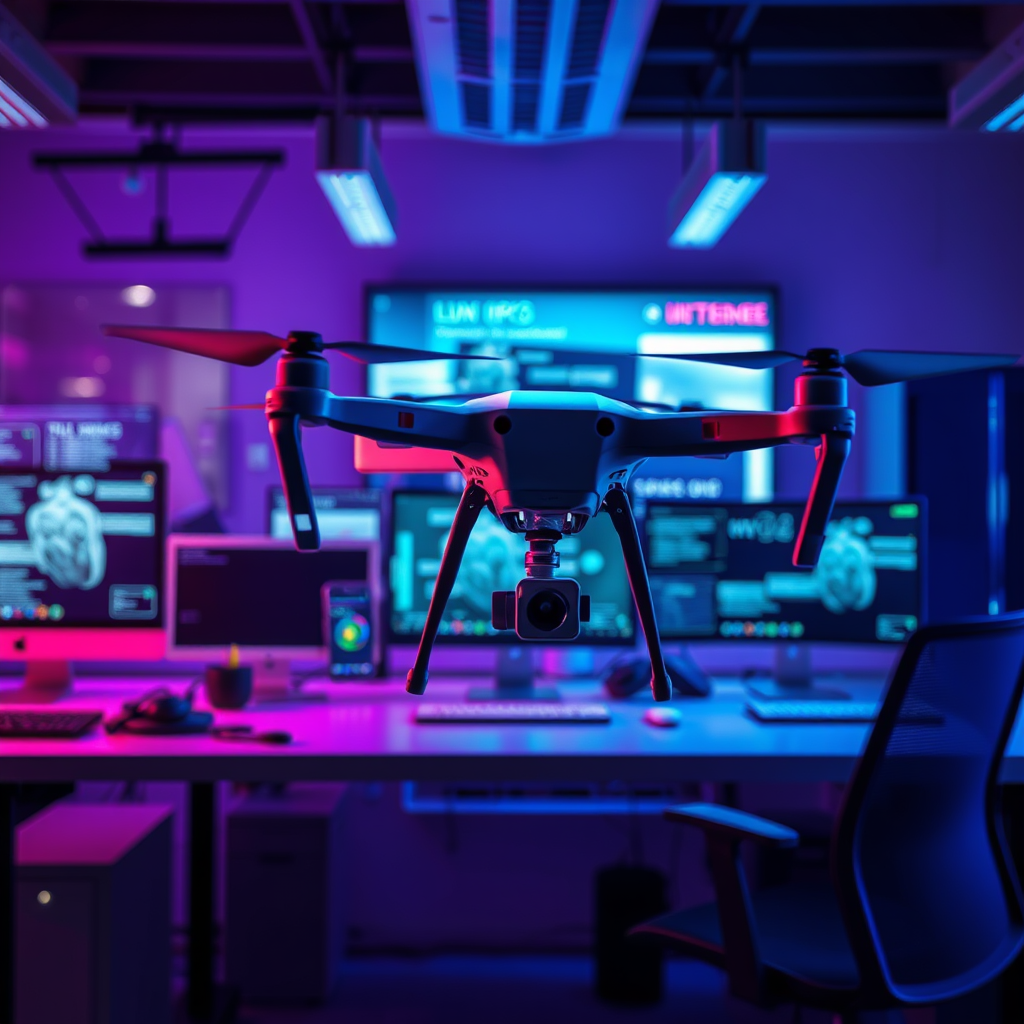
Drones can indeed play a crucial role in detecting nuclear weapons, but their effectiveness is contingent upon the technology deployed and the specific scenarios they encounter. As unmanned aerial vehicles (UAVs) become more sophisticated, they are increasingly utilized in nuclear detection efforts, leveraging advanced sensors and imaging capabilities to monitor areas that are otherwise difficult to access. This article delves into how drones are utilized in nuclear detection, the technologies that empower them, and the challenges they face in this critical domain.
Understanding Drones and Nuclear Detection

Drones, or unmanned aerial vehicles (UAVs), are advanced aerial systems equipped with various sensors and imaging technologies that enable them to gather crucial data from hard-to-reach or hazardous areas. Their role in nuclear detection is particularly significant, as they can provide real-time surveillance of sensitive locations, such as nuclear power plants, military installations, and borders. By employing drones for nuclear detection, authorities can enhance their monitoring capabilities and respond effectively in scenarios that require quick assessments of nuclear threats.
The ability of drones to operate in dangerous environments without putting human lives at risk heightens their value in nuclear detection efforts. They can access remote areas or unstable regions that may pose risks to personnel, ensuring that critical data is collected efficiently and safely. Furthermore, drones can be deployed rapidly in response to potential nuclear threats, providing critical situational awareness to decision-makers.
Types of Technologies Used in Drones
The effectiveness of drones in detecting nuclear weapons hinges on the sophisticated technologies they incorporate. Among the most important are radiation sensors, which are specifically designed to detect radioactive materials and emissions. These sensors can identify gamma rays, alpha particles, and beta particles, providing essential data on the presence of nuclear materials. For instance, drones equipped with scintillation detectors can measure radiation levels in real-time, offering immediate feedback on potential nuclear threats.
In addition to radiation sensors, multi-spectral imaging technology plays a pivotal role in identifying nuclear activity. This technology utilizes various wavelengths of light to capture different features of an area, including thermal and visual data. By analyzing the thermal signatures of facilities, drones can detect anomalies that may indicate illicit nuclear activities, such as cooling systems operating at unusual temperatures or unauthorized modifications in infrastructure.
Moreover, advancements in drone technology have led to the integration of Artificial Intelligence (AI), which significantly enhances their capabilities. AI can analyze data collected by drones in real-time, facilitating immediate threat assessments and decision-making processes. This combination of advanced sensors and AI-driven analytics positions drones as powerful tools in the nuclear detection landscape.
Current Applications of Drones in Nuclear Detection
Drones are currently employed in various applications related to nuclear detection, showcasing their versatility and effectiveness. One primary application is surveillance missions, where drones monitor sensitive areas such as nuclear facilities, power plants, and international borders. For example, drones can patrol the peripheries of nuclear sites to detect any unauthorized access or suspicious activities, enabling authorities to respond swiftly.
In the aftermath of a nuclear incident, drones are invaluable during emergency response efforts. They can be deployed to assess radiation levels in disaster-affected areas, providing critical information for first responders and government agencies. For instance, following the Fukushima nuclear disaster in Japan, drones were used to measure radiation levels and identify the safest routes for emergency personnel. The ability to gather real-time data on environmental conditions helps guide decision-making and ensures the safety of response teams.
Additionally, drones are being utilized in research and development initiatives aimed at improving nuclear detection capabilities. Collaborative efforts between governments and tech companies are focused on enhancing drone technology to create more sophisticated systems capable of detecting even the faintest signals of nuclear materials.
Advantages of Using Drones
The utilization of drones in nuclear detection presents several advantages that enhance operational efficiency and effectiveness. One of the most significant benefits is cost-effectiveness; drones are generally much less expensive to operate than manned aircraft. This affordability allows for extensive surveillance operations without straining budgets, making them an attractive option for governments and organizations tasked with monitoring nuclear activities.
Another key advantage is the provision of real-time data. Drones can transmit information instantaneously, allowing decision-makers to receive immediate insights into potential threats. This rapid data exchange is crucial in scenarios where timely responses can mitigate risks and enhance safety. For instance, in border security operations, drones can quickly relay information about suspicious activities, enabling law enforcement to respond proactively.
Drones also offer flexibility in deployment. They can be launched from various locations and require minimal infrastructure, making them ideal for emergency situations where rapid response is essential. Their ability to operate in diverse environments, including urban areas or hazardous zones, further underscores their versatility as valuable tools in nuclear detection efforts.
Limitations and Challenges
Despite their advantages, drones face several limitations and challenges in the realm of nuclear detection. One significant issue is their detection range; drones may struggle to identify low-level radiation from a distance, particularly in densely populated areas where background radiation could mask potential threats. This limitation necessitates a strategic approach to drone deployment, ensuring that they are used in scenarios where their capabilities can be maximized.
Another challenge is regulatory hurdles. Airspace regulations can restrict drone operations in certain areas, particularly near critical infrastructure or sensitive locations. Navigating these regulations can complicate the deployment of drones for nuclear detection, requiring collaboration with governmental agencies to ensure compliance while maximizing operational effectiveness.
Additionally, the environmental factors can impact drone performance. Weather conditions such as high winds, rain, or fog can hinder a drone’s ability to operate effectively, potentially compromising data collection efforts. Developing drones that are resilient to various environmental challenges is vital for ensuring their reliability in nuclear detection missions.
Future Prospects for Drone Technology
Looking ahead, the future prospects for drone technology in nuclear detection are promising. One area of development is the enhancement of sensors, which may lead to more sensitive detection capabilities. As technology advances, it is likely that we will see drones equipped with next-generation sensors that can identify even the most minute traces of radioactive materials, thus increasing their effectiveness in monitoring nuclear activity.
Moreover, the integration of AI into drone operations holds great potential. As AI algorithms become more sophisticated, drones could autonomously analyze data collected during missions, identifying potential threats with minimal human intervention. This capability could revolutionize nuclear detection practices, enabling quicker responses and reducing the risk of human error.
Collaboration between governments, research institutions, and private companies will be crucial in driving innovations in drone technology for nuclear detection. As the geopolitical landscape evolves, the demand for advanced detection systems will continue to grow, prompting ongoing investments in research and development.
In conclusion, while drones can assist in detecting nuclear weapons, their capabilities are influenced by technology and operational challenges. The integration of advanced sensors and AI, along with continued investment in research and development, could significantly enhance their effectiveness in nuclear detection efforts. As the field evolves, staying informed about the latest advancements in drone technology will be essential for better understanding and preparedness against nuclear threats.
Frequently Asked Questions
Can drones be used to detect nuclear weapons?
Yes, drones can be equipped with specialized sensors that allow them to detect nuclear materials and radiation associated with nuclear weapons. These sensors, such as gamma-ray detectors and neutron detectors, can provide real-time data on radiation levels, helping authorities identify and locate illicit nuclear materials. However, the effectiveness of drones in detecting nuclear weapons depends on factors such as the type of sensors used, the drone’s flight altitude, and environmental conditions.
How do drones detect radiation from nuclear weapons?
Drones detect radiation through advanced sensor technologies that are sensitive to gamma rays and neutrons emitted by radioactive materials. When a drone flies over an area, these sensors can measure radiation levels and identify anomalies that may indicate the presence of nuclear weapons or materials. The data collected can then be analyzed in real-time or post-flight to assess potential threats and inform appropriate responses.
Why are drones preferred for nuclear detection over traditional methods?
Drones are preferred for nuclear detection due to their ability to access hard-to-reach or hazardous areas without putting human lives at risk. They can cover large geographical areas quickly and gather data in real-time, enhancing situational awareness. Additionally, drones can be deployed rapidly in response to threats, making them an efficient tool for monitoring nuclear sites and potential smuggling routes.
What are the limitations of using drones for detecting nuclear weapons?
While drones offer significant advantages for nuclear detection, they also have limitations. For instance, the effectiveness of radiation detection can be reduced by distance, as radiation levels decrease with increased separation from the source. Environmental factors, such as weather and terrain, can also impact sensor performance. Moreover, drones may face regulatory restrictions in certain airspaces, limiting their deployment for detection missions.
Which drones are best suited for nuclear detection missions?
The best drones for nuclear detection missions are those that can carry advanced radiation detection sensors and have the necessary flight capabilities. Models such as the DJI Matrice 600 and the senseFly eBee X are popular choices because they offer payload capacity, stability, and long flight times. Additionally, custom-built drones specifically designed for hazardous material detection, equipped with specialized sensors, can provide enhanced capabilities for identifying nuclear threats.
References
- https://www.sciencedirect.com/science/article/pii/S2211379721000100
- https://www.nti.org/analysis/articles/drones-and-nuclear-security/
- https://www.bbc.com/news/world-us-canada-47381443
- https://www.army.mil/article/166064/the_role_of_drones_in_modern_warfare
- https://www.nap.edu/catalog/25323/technology-for-nuclear-weapons-detection-and-its-applications
- https://www.fas.org/sgp/crs/nuke/RS22824.pdf
- https://www.wired.com/story/drones-nuclear-detection/
- https://www.rand.org/pubs/research_reports/RR2050.html
