

Drone dogfighting is no longer a concept limited to science fiction or military simulation labs. As unmanned aerial vehicles become faster, smarter, and more autonomous, the question is shifting from can drones dogfight? to how far can drone air combat capabilities go? In modern defense strategy, drones are increasingly used not only for surveillance and reconnaissance, but also for contested airspace operations, target interception, and simulated aerial engagements. Their growing role in air combat is reshaping how military planners think about maneuverability, pilot risk, and tactical decision-making.
📋 About This Article
Yes, drones can dogfight in the sense that they can engage in realistic air-to-air combat scenarios, especially in training, testing, and advanced defense programs. This article is for curious readers who want to understand how drone air combat works and how it differs from classic piloted dogfights. It explains what “drone dogfighting” means today and explores the possibilities and limits behind drone maneuvering, decision-making, and pilot risk.
At its core, drone dogfighting refers to unmanned aircraft engaging in air-to-air combat scenarios, often in training exercises, test environments, or advanced military development programs. These engagements may be simulated, semi-autonomous, or, in some cases, designed to support real combat missions. Unlike traditional fighter jet dogfights, where human pilots depend on instinct, visual cues, and experience under pressure, unmanned systems rely on artificial intelligence, sensor fusion, onboard computing, and real-time communications to react to aerial threats.
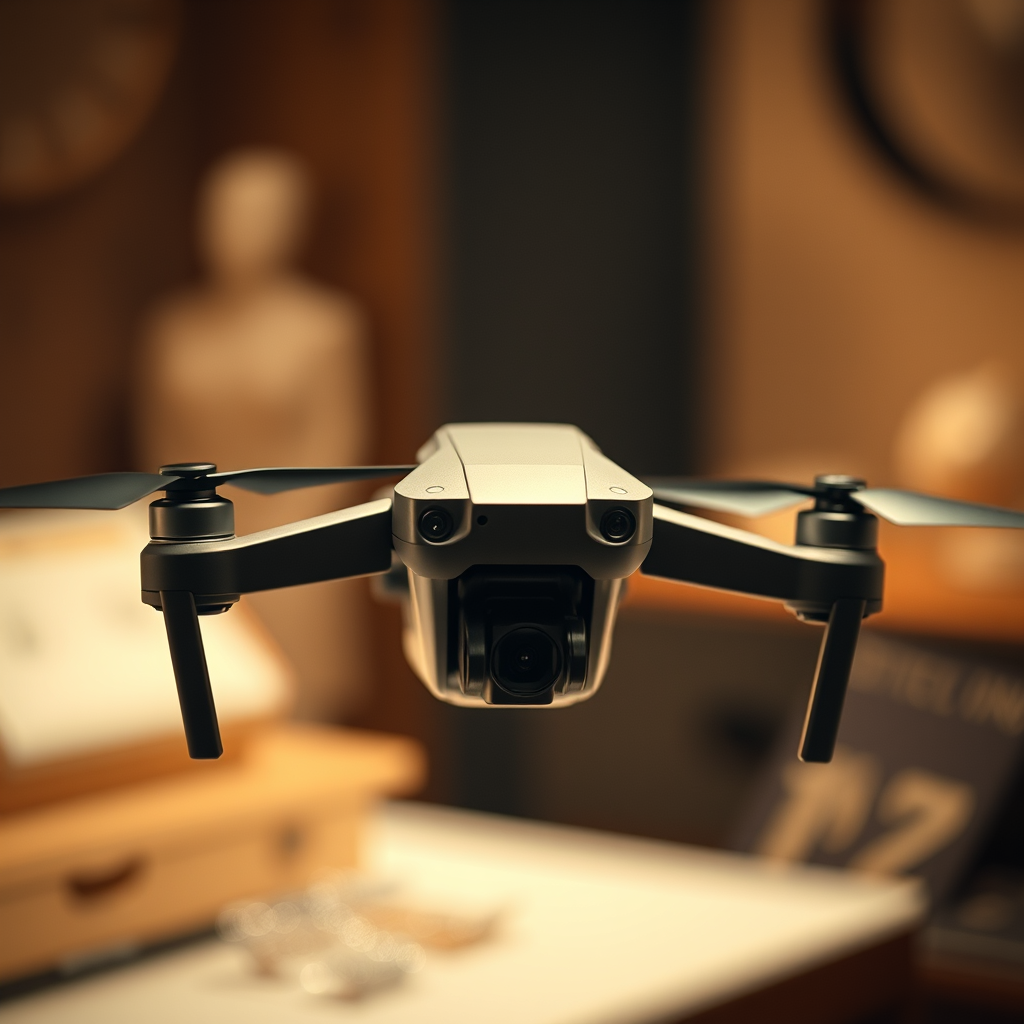
What Drone Dogfighting Really Means
Dogfighting has historically described close-range aerial combat between piloted aircraft, where speed, agility, and pilot skill determine survival. In the drone context, the concept changes significantly. A drone does not experience fatigue, fear, or disorientation. Instead, it operates through programmed flight logic, autonomous control systems, and high-speed data processing.
This makes drone dogfighting less about human reflexes and more about algorithmic performance. In a simulated aerial combat environment, an unmanned aerial vehicle can identify targets, calculate engagement angles, predict enemy movement, and execute evasive maneuvers within fractions of a second. These capabilities make drones highly effective in scenarios where reaction time and precision matter more than human endurance.
Military organizations are particularly interested in this application because drone-based air combat can be used to train personnel, evaluate tactics, and test aircraft behavior in dynamic threat conditions. It also offers a way to experiment with combat scenarios without putting pilots directly at risk.
How Drones Perform in Air-to-Air Combat Scenarios
Autonomous Maneuvering and Flight Control
One of the biggest advantages drones have in dogfight-style engagements is their ability to perform aggressive maneuvers without concern for human physical limitations. A manned fighter aircraft must operate within tolerances that prevent the pilot from blacking out or losing spatial orientation under high G-forces. An unmanned combat aerial vehicle, by contrast, can often push harder and react faster because no pilot is onboard.
Advanced flight control systems allow drones to execute tight turns, rapid climbs, sudden dives, and evasive movements with exceptional consistency. In close aerial engagements, this can create a major tactical advantage. A drone can also sustain a level of maneuver precision that is difficult for even experienced fighter pilots to match in high-pressure combat situations.
Real-Time Threat Detection
Drone dogfighting depends heavily on situational awareness. To operate effectively in contested skies, drones use a combination of radar, electro-optical cameras, infrared sensors, and sometimes lidar or passive tracking systems. These components work together to detect nearby aircraft, monitor relative position, and identify possible threats.
Sensor fusion plays a critical role here. Rather than relying on a single data stream, modern UAV systems combine multiple sensor inputs into one tactical picture. This improves target tracking accuracy and enables faster threat assessment. In an aerial combat setting, that kind of integrated awareness can be the difference between an interception and a missed engagement opportunity.
Artificial Intelligence in Tactical Decision-Making
Artificial intelligence is the engine behind modern drone combat capability. AI systems can process incoming battlefield data, compare it to known engagement patterns, and choose a tactical response almost instantly. In dogfighting scenarios, this may include selecting the best pursuit angle, avoiding incoming fire, repositioning for a stronger attack vector, or coordinating with other unmanned assets.
Machine learning also expands what drones can do over time. As autonomous systems are exposed to more simulations and training environments, they can improve pattern recognition, adapt to different enemy tactics, and refine their response models. This creates a combat framework where drones are not just following fixed instructions, but learning to behave more effectively in aerial engagements.
The Core Technologies That Make Drone Dogfighting Possible
Onboard Computing Power
High-speed onboard processors are essential for any drone operating in a dogfight scenario. Air combat unfolds rapidly, and there is little time to send every decision back to a remote pilot or ground station. A combat-capable drone must be able to process sensor data, run navigation systems, evaluate risks, and control flight surfaces in real time.
Edge computing has become increasingly important in this area. By handling critical decisions directly on the aircraft, drones reduce latency and maintain combat effectiveness even in environments where communications are degraded or jammed.
Secure Communication Systems
Even highly autonomous drones still depend on secure communications for mission coordination, data sharing, and command oversight. Encrypted links allow UAVs to transmit surveillance data, receive updated instructions, and operate as part of a broader air combat network. In military operations, this connectivity supports coordinated maneuvers between drones, manned aircraft, and ground-based command systems.
However, communication is also a vulnerability. Electronic warfare, signal disruption, and cyber intrusion are serious concerns in drone operations. For that reason, resilient communication architecture is as important as flight performance in any drone dogfight capability.
Simulation and Training Environments
Many current drone dogfighting programs exist in simulated or controlled environments rather than live combat. These simulations allow military engineers and defense analysts to test algorithms, evaluate aircraft behavior, and study tactical outcomes safely and repeatedly. Virtual combat training also gives armed forces a way to prepare for future air warfare in which autonomous systems may play a central role.
Drone dogfight simulators can replicate hostile aircraft behavior, weather conditions, electronic warfare threats, and multi-vehicle engagements. This helps refine both autonomous software and human command strategies before deployment in real-world scenarios.
How Drone Dogfighting Differs From Traditional Fighter Combat
The comparison between drones and manned fighter jets reveals both strengths and limitations. Traditional dogfighting relies heavily on pilot experience, intuition, and adaptability in chaotic environments. A skilled pilot can make unconventional choices, interpret subtle cues, and improvise under pressure in ways that many autonomous systems still struggle to replicate fully.
Drones, on the other hand, excel in speed of calculation, endurance, and repeatable execution. They can remain airborne for long periods, operate in dangerous environments without risking a pilot, and carry out difficult maneuvers with algorithmic precision. In a pure reaction-speed contest, an autonomous drone may outperform a human pilot. In a highly unpredictable combat setting, the human element may still remain valuable.
This is why many defense experts see the future not as a complete replacement of fighter pilots, but as a hybrid model. Manned-unmanned teaming, sometimes called collaborative combat aviation, could allow fighter aircraft and drones to work together in shared battlespace operations. In that model, drones might handle high-risk intercepts or aggressive maneuvering while human pilots oversee broader mission judgment.
Military Implications of Drone Air Combat
Reduced Risk to Human Pilots
Perhaps the most obvious advantage of drone dogfighting is that it removes pilots from direct danger. In high-threat airspace, sending an unmanned platform instead of a crewed fighter can reduce casualties and expand operational options. This is particularly relevant in missions involving enemy air defenses, aggressive interception, or uncertain rules of engagement.
Lower Operational Cost in Some Scenarios
While advanced combat drones are far from inexpensive, they can still offer cost advantages compared with some manned aircraft programs. Training losses, high-risk testing, and experimental combat exercises can be conducted with less long-term human and financial cost when unmanned platforms are involved. In addition, smaller drones may be deployed in swarms or coordinated formations to overwhelm enemy defenses in ways that traditional aircraft cannot.
Changing Air Combat Doctrine
The rise of autonomous UAV combat is forcing military planners to revisit long-standing doctrine. Air superiority has traditionally been built around manned fighter aircraft, pilot training, and centralized command structures. Drone dogfighting introduces a new variable: machines that can make tactical decisions at machine speed. This affects everything from engagement strategy and force structure to air defense planning and electronic warfare preparation.
As drone warfare evolves, nations investing in AI-enabled air combat systems may gain a strategic edge. That said, the effectiveness of drone dogfighting will depend not only on hardware, but also on software reliability, command integration, and battlefield resilience.
Limitations and Challenges
Autonomy Still Has Boundaries
Despite major advances, autonomous systems are not infallible. Dogfighting involves complex environments, uncertain target behavior, and rapidly changing threat conditions. AI can process enormous amounts of data, but it may still struggle with ambiguous situations, unexpected tactics, or adversaries using deception techniques.
This is especially important in real combat, where a miscalculation can have strategic consequences. Rules of engagement, target verification, and escalation control are difficult areas for fully autonomous systems to navigate without human supervision.
Electronic Warfare and Cyber Threats
Any drone operating in contested airspace faces the risk of jamming, spoofing, or cyberattack. If a UAV loses communication, receives false sensor inputs, or experiences software compromise, its combat effectiveness can degrade quickly. In a dogfighting context, even a short disruption can be decisive.
For this reason, hardened networks, anti-jamming systems, and cybersecurity architecture are fundamental to drone combat development. Without these protections, even highly maneuverable drones may be vulnerable in advanced conflict zones.
Ethical and Legal Questions
The idea of autonomous aerial combat also raises serious legal and ethical issues. If a drone makes engagement decisions independently, questions emerge around accountability, compliance with international law, and the acceptable level of machine autonomy in lethal operations. These concerns are becoming more urgent as AI systems take on greater responsibility in military decision-making.
While simulated dogfights for training and testing are widely accepted, the transition from simulation to fully autonomous lethal combat remains a subject of intense debate among governments, defense agencies, and international security experts.
The Future of Drone Dogfighting
Drone dogfighting is likely to become more capable as AI, propulsion systems, and sensor technology continue to improve. Future unmanned combat aerial vehicles may feature greater stealth, faster processing, more adaptive behavior, and tighter integration with manned aircraft. Swarm tactics, distributed sensing, and autonomous cooperative engagement could further expand what drones can do in air-to-air combat.
At the same time, the future of aerial warfare will not depend on maneuverability alone. Success will also require robust command systems, trusted autonomy, secure communications, and strategic doctrine that reflects the realities of machine-speed combat. In that environment, drone dogfighting will be more than a technical experiment. It will be a meaningful part of how modern militaries prepare for contested skies.
So, can drones dogfight? Yes, they can—and in many respects, they already do in simulated and developmental settings. Their ability to detect threats, execute high-speed maneuvers, process battlefield data, and support tactical missions makes them a powerful emerging force in air combat. As unmanned systems become more autonomous and more deeply embedded in defense operations, drone dogfighting is poised to play a significant role in the future of military aviation.
Frequently Asked Questions
Can drones actually dogfight like traditional fighter jets?
Drones can engage in air-to-air combat, but not always in the same way traditional fighter jets have historically dogfought. Classic dogfighting involves highly maneuverable aircraft piloted by humans in close-range aerial combat. Modern drones, by contrast, rely heavily on sensors, software, autonomy, remote control, and sometimes beyond-visual-range weapons or tactics. While some advanced unmanned aerial vehicles can perform aggressive maneuvers and even simulate close-in combat, their main advantage often comes from endurance, precision targeting, and reduced risk to human pilots rather than replicating old-style turning battles. In short, drones can “dogfight” in a modern sense, but the methods, decision-making, and battlefield roles are often very different from traditional manned air combat.
What technologies would allow a drone to win a dogfight?
Several technologies are critical for a drone to succeed in aerial combat. First, advanced sensors such as radar, infrared tracking, and optical systems help the drone detect and track enemy aircraft. Second, artificial intelligence and autonomous flight control can improve reaction time, target prioritization, and maneuvering decisions, especially in fast-changing combat scenarios. Third, secure and resilient communications are important so the drone can maintain contact with operators or allied systems without being jammed or hacked. Fourth, high-performance propulsion and flight control systems allow the drone to execute sharp turns, rapid acceleration, or evasive actions. Finally, the effectiveness of onboard weapons, electronic warfare tools, and real-time data fusion can determine whether the drone can engage an opponent before being detected or targeted itself. Together, these systems make drone air combat less about pilot reflexes and more about information dominance, automation, and survivability.
Are military drones better than human pilots in aerial combat?
Military drones have some clear advantages over human pilots, but whether they are “better” depends on the mission. Drones do not suffer from fatigue, fear, or the physical limitations that affect humans during high-G maneuvers. They can also be designed to take greater risks because there is no pilot onboard. In some test scenarios, AI-controlled systems have shown impressive performance in simulated aerial combat because they can process data and react extremely quickly. However, human pilots still bring judgment, adaptability, and contextual understanding that remain valuable in complex or unpredictable combat situations. In real-world warfare, the best results may come from teaming humans and drones together, where pilots provide strategic decision-making and drones handle dangerous, data-heavy, or highly reactive tasks.
What are the biggest limitations of drones in dogfighting?
The biggest limitations of drones in dogfighting include communication vulnerability, autonomy constraints, and design trade-offs. Many drones depend on data links to receive commands or share intelligence, and those links can be disrupted by jamming, cyberattacks, or signal loss. Even highly autonomous systems may still struggle with edge cases, fast-changing rules of engagement, or distinguishing threats in crowded airspace. In addition, not all drones are built for high-speed maneuvering; many are optimized for surveillance or strike missions rather than close combat. Power, weight, range, and weapons capacity also create engineering compromises. Legal and ethical concerns further complicate the issue, especially when autonomous systems are given authority to identify and engage targets. These limitations mean that while drones are becoming more capable, they are not automatically superior in every air combat scenario.
Could future wars feature drone-versus-drone dogfights?
Yes, future conflicts could very likely include drone-versus-drone air combat, especially as more nations develop autonomous and semi-autonomous aerial systems. As drones become more common for surveillance, strike missions, electronic warfare, and air defense, opposing forces will need ways to intercept, disable, or destroy each other’s unmanned aircraft. This could lead to specialized combat drones designed specifically to hunt other drones using missiles, guns, directed energy weapons, or electronic attack. In many cases, these engagements may not resemble cinematic dogfights but instead involve sensor contests, network disruption, and long-range targeting. Even so, as drone technology advances, some systems may be built for agile close-range aerial engagements. The broader trend suggests that drone air combat will become increasingly important, especially in contested airspace where speed, autonomy, and cost-effective force projection matter.
