

Yes, drones can fly on Mars, as demonstrated by the successful flights of NASA’s Ingenuity helicopter. This groundbreaking achievement marked a significant milestone in extraterrestrial exploration. Despite the challenges posed by the Martian atmosphere, which is about 1% as dense as that of Earth, powered flight is indeed possible under specific conditions. The innovations and technologies behind Martian drones like Ingenuity not only showcase engineering ingenuity but also open up new frontiers for exploration. This article will delve into the technical challenges, the innovations behind Martian drones, and their potential applications for exploration.
Understanding the Martian Atmosphere
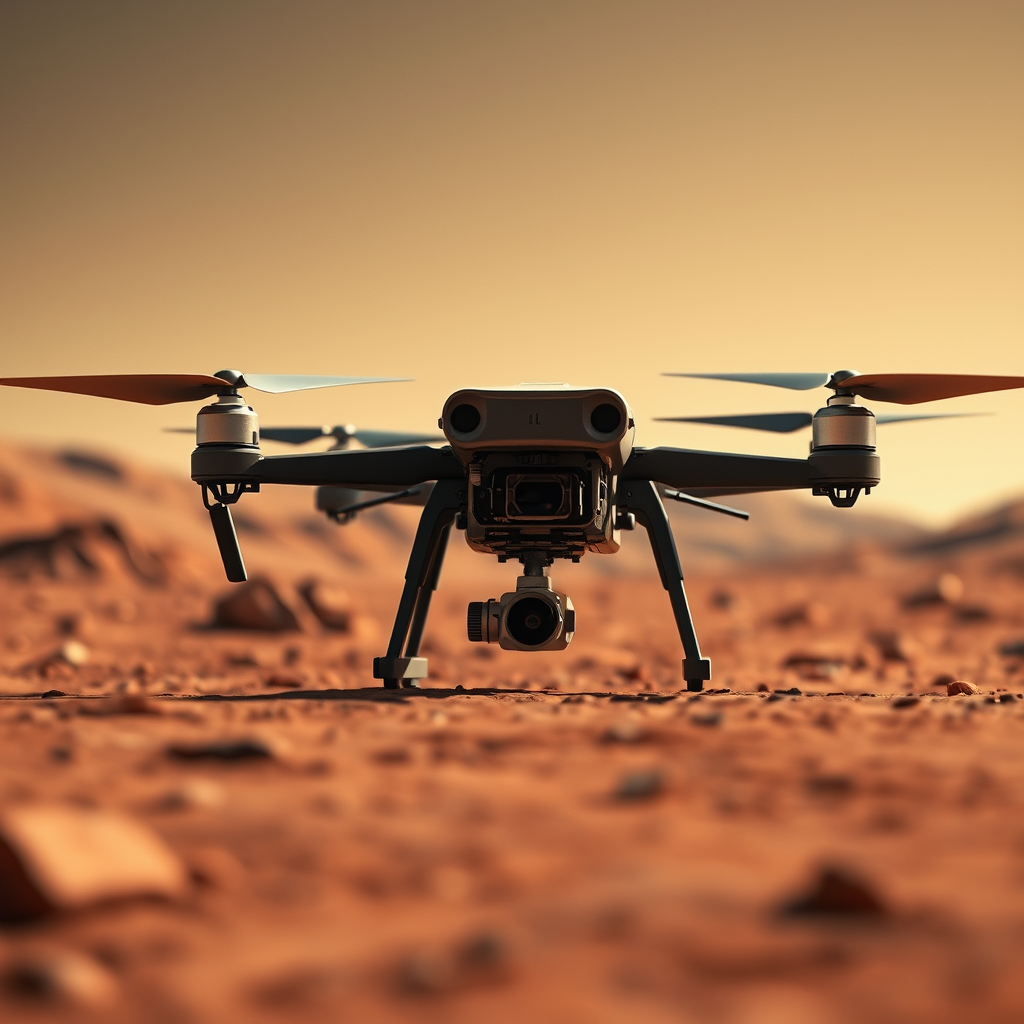
Mars presents a unique environment for flight due to its very thin atmosphere, which is composed of approximately 95% carbon dioxide, with traces of nitrogen and argon. The atmospheric density on Mars is about 1/100th of that on Earth, which poses significant challenges for flight. This low density means that traditional flight mechanics, which rely on air density to generate lift, must be rethought. Drones operating on Mars must contend with less lift being produced by their rotors, necessitating larger rotor diameters and higher rotation speeds to achieve the required thrust. The Martian atmosphere also experiences temperature variations and dust storms that can affect flight stability and visibility, complicating flight operations even further.
NASA’s Ingenuity Helicopter: A Case Study
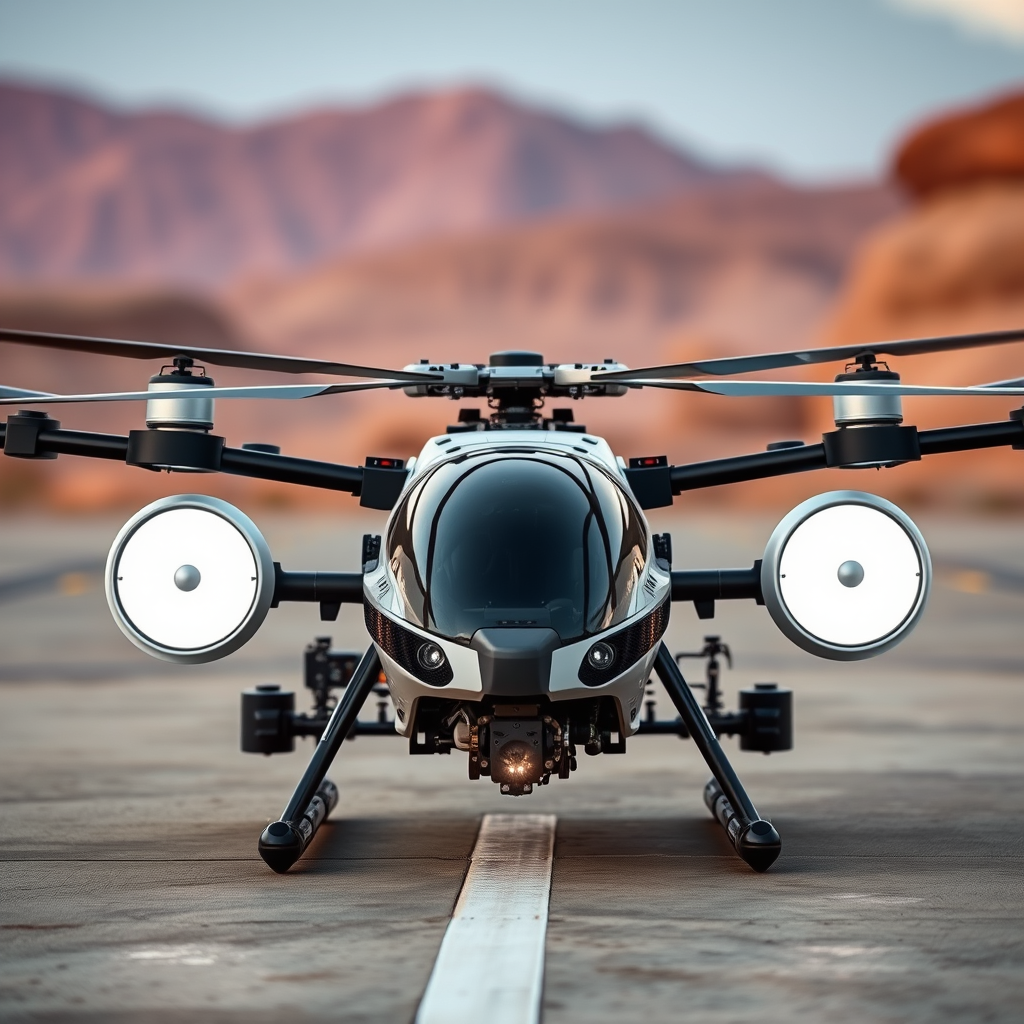
NASA’s Ingenuity helicopter serves as a pivotal case study, being the first powered aircraft to fly on another planet. Ingenuity successfully completed its inaugural flight on April 19, 2021, achieving a height of approximately 10 feet for about 40 seconds. This achievement was not just a technical demonstration; it was a proof-of-concept that paved the way for future aerial exploration on Mars. Ingenuity’s design includes advanced features such as autonomous navigation and obstacle avoidance, enabling it to conduct flights without direct control from Earth. This capability is essential given the communication delays between Earth and Mars, which can range from 13 to 24 minutes. Ingenuity has since completed numerous flights, continuously proving that aerial vehicles can provide valuable data for surface missions.
Design Challenges for Martian Drones
Designing drones for Mars involves several unique challenges that engineers must address. First and foremost, the drones need to be lightweight to maximize flight efficiency in a thin atmosphere. Ingenuity weighs just 4 pounds, and its light frame is crucial for maintaining lift with limited atmospheric density. Additionally, robust power sources are essential, and solar panels have been integrated into Martian drones to harness sunlight for energy generation. The reliance on solar power presents its own challenges, including the need for energy-efficient systems that can operate in low light conditions and during nighttime.
Moreover, the flight control systems must be specifically calibrated to adapt to Mars’ lower atmospheric pressure and distinct gravitational pull, which is about 38% that of Earth’s. This means that flight algorithms must account for different aerodynamic behaviors and adjust in real time for stable flight. Engineers are continuously innovating to refine these systems, ensuring that Martian drones can perform with precision.
Flight Mechanics on Mars
Understanding the mechanics of flight in Mars’ atmosphere is crucial for successful drone operation. The principles of lift and thrust must be recalibrated to account for the thin atmosphere. Engineers have determined that larger rotor blades are necessary to generate adequate lift; for instance, Ingenuity’s rotor blades are 4 feet long, significantly larger than those typically found on Earth-bound drones. The helicopter’s rotor system spins at speeds of over 2,400 revolutions per minute, allowing it to create sufficient lift in an environment where atmospheric resistance is minimal.
Another critical aspect of flight mechanics on Mars is the drone’s ability to maneuver. The low gravity on Mars allows for more agile movements, but it also requires precise control to navigate the Martian terrain effectively. The combination of these factors necessitates advanced flight simulations and thorough testing to ensure that drones can operate safely and efficiently when exploring the planet’s surface.
Potential Applications of Drones on Mars
The potential applications of drones on Mars are vast and varied. One of the primary uses of these aerial vehicles is to scout terrain and identify scientific targets from above. Drones can provide high-resolution imaging and data collection that ground-based rovers cannot achieve, allowing for a more comprehensive understanding of the Martian environment. This capability is particularly valuable in identifying areas of interest for future exploration, such as potential sites for sample collection or locations that may harbor signs of past life.
Drones can also assist rovers in navigation, providing real-time information about obstacles and terrain conditions. This partnership can significantly enhance mission efficiency, allowing rovers to focus on their primary tasks while drones conduct aerial surveys. Furthermore, drones equipped with specialized sensors may detect geological features, atmospheric conditions, or even radiation levels, contributing to a more holistic picture of Mars’ landscape.
Future Drone Missions on Mars
Looking ahead, upcoming missions to Mars are likely to incorporate more advanced drones capable of longer flights and greater autonomy. NASA’s plans for the Mars Sample Return mission, for example, may involve the use of drones to assist in the collection and transport of Martian samples. Collaborations between robotic systems, such as rovers and drones, will be essential for maximizing the effectiveness of exploration efforts.
In addition, as our understanding of Mars advances, the possibility of human exploration increases. Drones could play a vital role in supporting human missions by scouting for safe landing sites, monitoring environmental conditions, and assisting astronauts in their exploration efforts. The integration of aerial vehicles into Martian exploration signifies a new era of research and discovery, enhancing our ability to study this enigmatic planet.
In conclusion, drones can indeed fly on Mars, and their successful operation opens new avenues for exploration and research. NASA’s Ingenuity helicopter has set a precedent for aerial exploration, demonstrating that powered flight is feasible even in the challenging conditions of the Martian atmosphere. As technology advances, we can expect the development of more sophisticated drones that will enhance our understanding of the Martian landscape and assist in future missions. The future of Martian exploration is bright, and the integration of drones into our exploration toolkit will undoubtedly yield significant scientific insights. Stay tuned for future developments in this exciting field!
Frequently Asked Questions
What technology allows drones to fly on Mars?
Drones designed for Mars, like NASA’s Ingenuity helicopter, utilize advanced technologies such as autonomous flight systems, lightweight materials, and specialized rotor designs. These drones operate using battery power, with solar panels for recharging. They are equipped with sensors and cameras to navigate and collect data in the thin Martian atmosphere, which is only about 1% as dense as Earth’s.
How do Martian drones handle the planet’s thin atmosphere?
Martian drones are engineered specifically to cope with the challenges of Mars’ thin atmosphere. They have larger rotor blades that spin at higher speeds compared to drones on Earth, allowing them to generate enough lift despite the low air density. Additionally, these drones’ onboard software is programmed for autonomous navigation, enabling them to adjust their flight paths in real-time based on the environmental conditions.
Why is Mars a suitable place for drone exploration?
Mars offers a unique environment for drone exploration due to its varied terrain, which includes mountains, valleys, and craters, providing opportunities to gather data that rovers alone might not reach. Drones can cover large areas quickly, offering aerial perspectives of potential landing sites for future missions. They also allow scientists to scout areas for geological studies and identify regions of interest for further exploration.
Which features should I look for in drones designed for extraterrestrial use?
When considering drones for extraterrestrial use, key features to look for include lightweight construction, robust autonomous navigation systems, high-efficiency energy sources like solar panels, and advanced imaging capabilities. Additionally, the drone should have reliable communication systems to transmit data back to Earth and be equipped to withstand extreme temperatures and radiation levels often found on planets like Mars.
What challenges do developers face when creating drones for Mars exploration?
Developers encounter several challenges when creating drones for Mars, including the planet’s extreme temperatures, dust storms, and limited sunlight for solar-powered systems. The engineering must account for the thin atmosphere, which affects lift and maneuverability. Furthermore, the communication delay due to the distance from Earth complicates remote piloting, necessitating robust autonomous systems that can operate without immediate human intervention.
References
- https://en.wikipedia.org/wiki/Ingenuity_(Mars_helicopter
- https://www.nasa.gov/mission_pages/mars/missions/ingenuity.html
- https://www.nytimes.com/2021/04/19/science/mars-helicopter-ingenuity.html
- https://www.sciencedirect.com/science/article/pii/S0094576521001943
- https://www.jpl.nasa.gov/news/nasa-to-fly-helicopter-on-mars
- https://www.theguardian.com/science/2021/apr/19/nasa-mars-helicopter-ingenuity-first-flight
- https://www.space.com/mars-helicopter-ingenuity-first-flight-details
- https://www.bbc.com/news/science-environment-56726539
