

Drones can indeed capture high-resolution images from significant altitudes, which raises concerns about their ability to see inside your home. While drone technology has advanced, its effectiveness in penetrating your privacy largely depends on factors like camera quality and flight altitude. Even secluded areas aren’t safe from drone surveillance. Understanding your privacy rights and protective measures available can help. If you want to learn more about safeguarding your home from these technologies, there’s plenty to explore.
Understanding Drone Technology
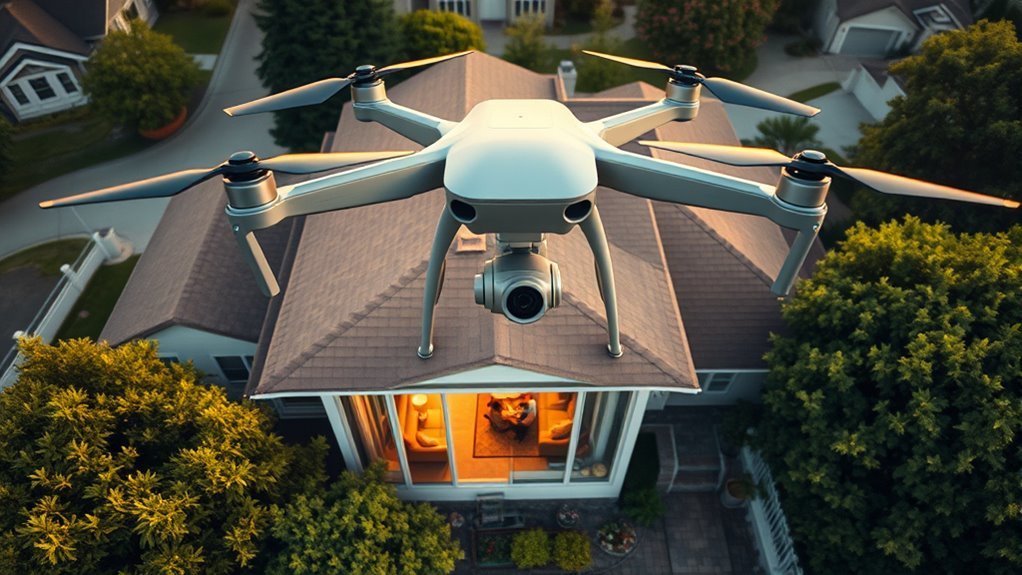
Drones, often referred to as unmanned aerial vehicles (UAVs), have revolutionized various industries by offering innovative solutions and capabilities. You might be surprised to learn that there are several drone types, each designed for specific tasks, from consumer drones for photography to commercial drones used in agriculture and delivery services. These drones are equipped with advanced camera technologies that enhance their functionality. High-resolution cameras, thermal imaging, and even LiDAR systems enable drones to capture detailed images and data. As seen with Autel’s 8K camera, these enhancements allow for intricate detail capture and immersive storytelling. Many drones, such as the DJI Air 3S, offer superior imaging capabilities that are particularly beneficial for professional applications. By understanding these drone types and their camera capabilities, you can appreciate both the potential and the privacy concerns they pose. As you explore this technology, consider how it balances freedom and security in your everyday life.
The Range and Capabilities of Drone Cameras
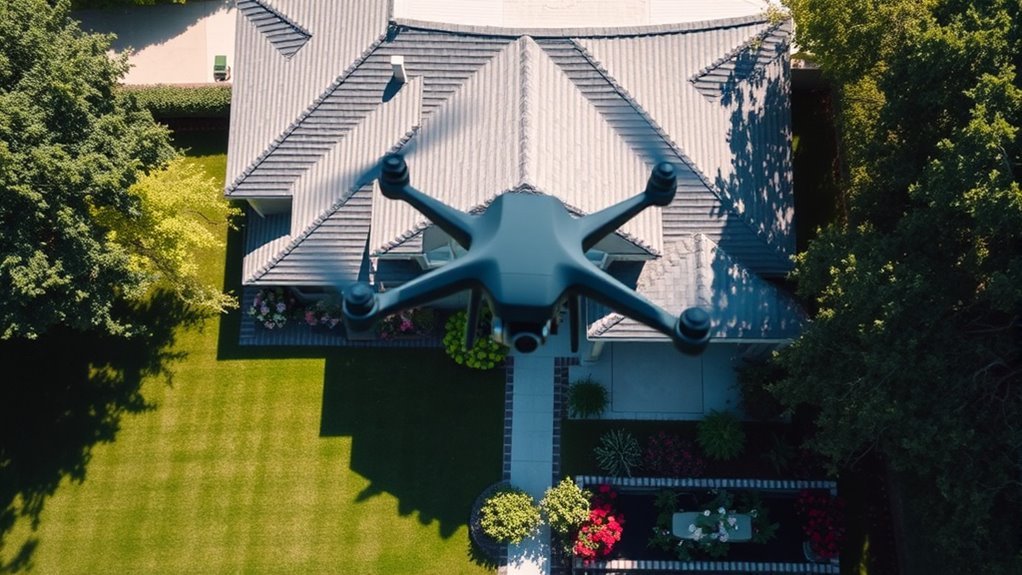
When you think about drone cameras, it’s essential to take into account both their resolution and flight altitude. High-resolution cameras can capture stunning details, but their effectiveness can be limited by how high the drone flies. Understanding these factors helps you grasp the potential and limitations of drone technology in capturing images. Additionally, drones equipped with advanced collision avoidance systems can better navigate around obstacles, enhancing their ability to capture images in complex environments. The battery life of the drone also plays a crucial role in determining how long it can maintain its flight altitude and capture high-quality images.
Camera Resolution Impact
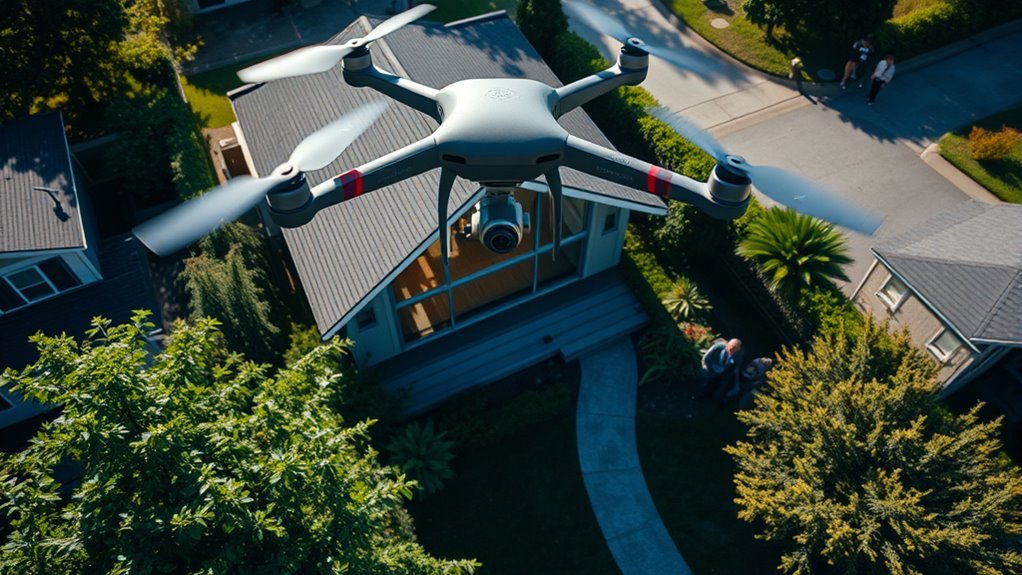
How does camera resolution influence the effectiveness of drone technology? The clarity of a drone’s camera directly impacts its ability to capture detailed images from the sky. Higher resolution means sharper images, allowing you to discern finer details from greater distances. For instance, if you’re monitoring wildlife or surveying land, resolution effects can make all the difference in identifying features or changes in the environment. Conversely, low-resolution cameras may result in blurry or pixelated images, hindering your ability to gather essential information. As drones become more prevalent, understanding camera clarity helps you appreciate the technology’s capabilities and limitations. Ultimately, better resolution translates to enhanced accuracy and insight, empowering you to make informed decisions without compromising your sense of privacy.
Flight Altitude Limitations
While high camera resolution enhances image clarity, the effectiveness of drone technology also hinges on flight altitude limitations. Understanding these restrictions is vital for anyone utilizing drones, as drone regulations often dictate how high you can fly.
| Altitude (Feet) | Image Clarity | Legal Restrictions |
|---|---|---|
| 0 – 100 | High | Few regulations |
| 100 – 400 | Moderate | Standard regulations |
| Above 400 | Low | Strict regulations |
Flying at lower altitudes offers better detail, but it’s essential to stay within legal parameters. Ignoring flight altitude rules not only risks your drone but also your freedom to operate. Stay informed, and you’ll maximize your drone’s potential without infringing on regulations.
Legal Regulations Surrounding Drone Surveillance
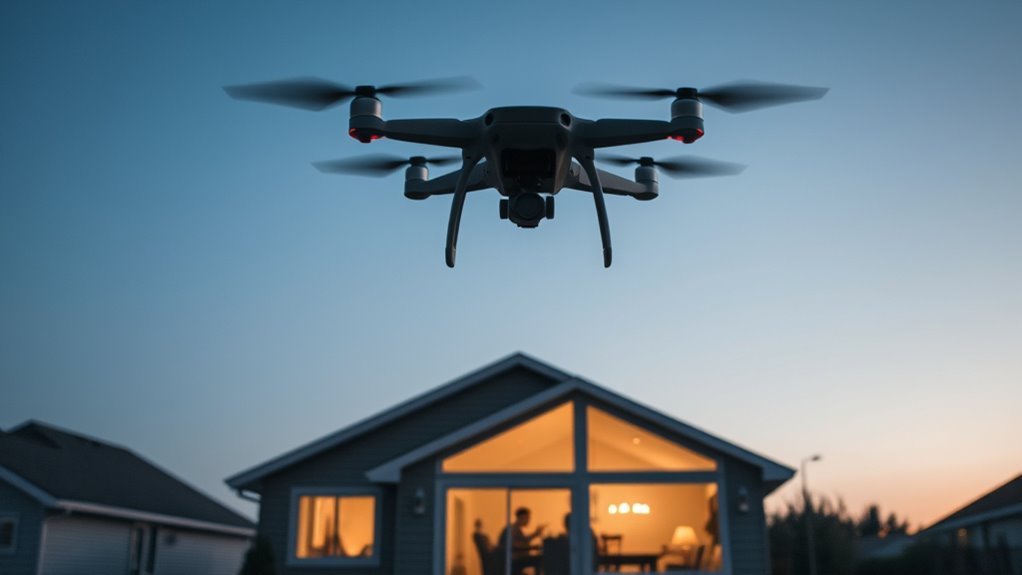
As drone technology rapidly evolves, the legal landscape surrounding drone surveillance continues to struggle to keep pace, raising important questions about privacy rights. You might wonder how drone regulations and surveillance laws affect your freedom. Currently, many areas lack clear guidelines on where drones can fly and what they can observe. This ambiguity can lead to invasive surveillance practices, infringing on your right to privacy. While some states have enacted laws to protect citizens, the patchwork of regulations can be confusing. It’s vital for you to stay informed about local laws that govern drone usage, as these regulations directly impact your personal space. Additionally, understanding the limitations of drone technology is crucial in recognizing how these devices may operate within legal boundaries. Advocating for thorough legislative measures is essential to guarantee that your privacy remains protected in this evolving technological landscape. Moreover, the integration of AI-driven obstacle avoidance in drone technology raises further concerns about how these devices may navigate and monitor private properties without consent.
Privacy Concerns and Public Perception
Considering the rapid advancement of drone technology, it’s no surprise that privacy concerns have surged among the public. Many people worry about how drones might infringe on their personal spaces, leading to a growing public sentiment that values privacy. Ethical considerations surrounding drone usage are increasingly debated, as individuals express fears of surveillance without consent. Additionally, individuals may not be aware that shooting down a drone can lead to serious legal consequences that could further complicate privacy issues. Asylon’s software enhances proactive security measures that can help mitigate these concerns through advanced monitoring.
| Concerns | Public Sentiment | Ethical Considerations |
|---|---|---|
| Invasion of Privacy | Heightened Awareness | Consent for Surveillance |
| Data Misuse | Calls for Regulation | Accountability of Users |
| Lack of Transparency | Distrust in Technology | Moral Responsibilities |
As drones become more prevalent, you might find yourself questioning where to draw the line between innovation and personal freedom.
How Drones Can Potentially Compromise Privacy
Drones, with their ability to capture high-resolution images and videos from the sky, can easily compromise your privacy without you even realizing it. As drone technology advances, the potential for privacy invasion grows. You might think your home is a safe space, but a drone hovering nearby could capture intimate moments or private activities. The accessibility of drones means anyone can use them, raising concerns about who’s watching and what they’re recording. Even if you’re in a secluded area, the risk remains, as these devices can fly unnoticed. This reality challenges your sense of freedom and security, leaving you to wonder how to maintain your privacy in a world increasingly dominated by surveillance technology. Additionally, it is crucial to be aware of the drone regulations that govern where and how drones can be operated, as these rules can help protect your privacy rights. Moreover, advancements in AI-powered obstacle detection enhance drone navigation capabilities, allowing them to operate more effectively in urban environments.
Steps to Protect Your Home From Drone Surveillance
To safeguard your home from unwanted drone surveillance, you can take several proactive measures. Installing privacy window films can block prying eyes, while outdoor surveillance cameras help monitor any aerial activity. Additionally, employing drone detection systems provides an extra layer of security, alerting you to any intruding drones in your vicinity. Implementing geofencing technology can also help ensure that drones do not enter sensitive areas around your home.
Install Privacy Window Films
As concerns about drone surveillance grow, installing privacy window films can be a practical solution for enhancing your home’s security. These films come in various types, such as reflective, frosted, and blackout options, allowing you to choose based on your needs and aesthetic preferences. Reflective films can deter outside viewers during the day, while frosted films offer a softer look without sacrificing privacy. Blackout films provide complete concealment, making it impossible for drones to see in. By applying these privacy window films, you not only protect your private space but also assert your right to freedom from unwanted surveillance. Investing in this simple yet effective measure can greatly enhance your peace of mind at home.
Use Outdoor Surveillance Cameras
One effective way to bolster your home’s defense against unwanted drone surveillance is by using outdoor surveillance cameras. These cameras not only enhance your outdoor security but also act as a deterrent for potential intruders, including those using drones. To maximize their effectiveness, pay attention to camera placement—position cameras strategically to cover entry points, backyards, and any blind spots that might be exploited. Ascertain that they have a clear line of sight and are mounted high enough to avoid tampering. Additionally, consider using cameras with motion detection features, which can alert you to any unusual activity. By integrating outdoor surveillance cameras into your security plan, you’re empowering yourself to protect your privacy and maintain control over your personal space.
Employ Drone Detection Systems
While outdoor surveillance cameras help deter unwanted surveillance, employing drone detection systems adds another layer of security to safeguard your privacy. These systems utilize advanced drone detection technologies to identify and track drones that may intrude upon your airspace. By integrating these technologies, you can quickly respond to potential threats and enhance your privacy protection strategies.
You might consider options like radio frequency (RF) detectors or acoustic sensors that alert you when a drone is nearby. This proactive approach not only empowers you but also discourages unwanted surveillance. Remember, a combination of outdoor cameras and drone detection can create a robust defense against prying eyes, ensuring your freedom is respected and your home remains a private sanctuary.
The Future of Drones and Privacy Implications
With the rapid advancement of drone technology, the implications for privacy are becoming increasingly complex and critical. As drones become more integrated into everyday life, their potential for surveillance raises significant concerns about drone ethics. You might find yourself questioning how much control you have over your own space when these flying devices can easily capture images or data from above. The evolution of surveillance technology means that privacy invasions could become normalized, challenging your right to freedom. It’s essential to engage in conversations about regulations that balance technological innovation with ethical considerations. As we navigate this future, understanding the potential risks can empower you to advocate for necessary protections against unwarranted surveillance. Additionally, the size and material composition of drones can influence their radar visibility, making it easier for them to operate without detection in sensitive areas. The advanced features of drones, such as AI-powered analytics, can enhance their surveillance capabilities, raising further concerns about privacy invasion.
Frequently Asked Questions
Can Drones Capture Audio From Inside My House?
When it comes to audio surveillance, you might feel like you’re living under a magnifying glass. Drones can capture sounds, raising significant privacy concerns. It’s essential to stay informed and protect your personal space from unwanted intrusion.
What Types of Drones Are Best for Surveillance?
For effective surveillance, consider drones with advanced drone capabilities like high-resolution cameras and thermal imaging. These surveillance technologies enhance monitoring while ensuring your privacy and freedom, allowing you to stay informed without intrusive measures.
How High Can Drones Fly Over Residential Areas?
Ever wondered how high those buzzing drones can fly? In residential areas, drone altitude regulations usually cap them at 400 feet, ensuring safety while respecting residential airspace limits. So, freedom’s balanced with responsibility!
Can I Use a Drone to Monitor My Own Property?
You can use a drone to monitor your property, but make certain you’re aware of drone legality and respect property boundaries. Staying informed helps you enjoy your freedom while avoiding potential legal issues or disputes with neighbors.
Are There Drone Detection Devices Available for Homeowners?
You might’ve heard about drone regulations stirring privacy concerns. Thankfully, there are drone detection devices for homeowners. They can help you safeguard your space, ensuring you maintain the freedom to enjoy your property without unwelcome surveillance.
