

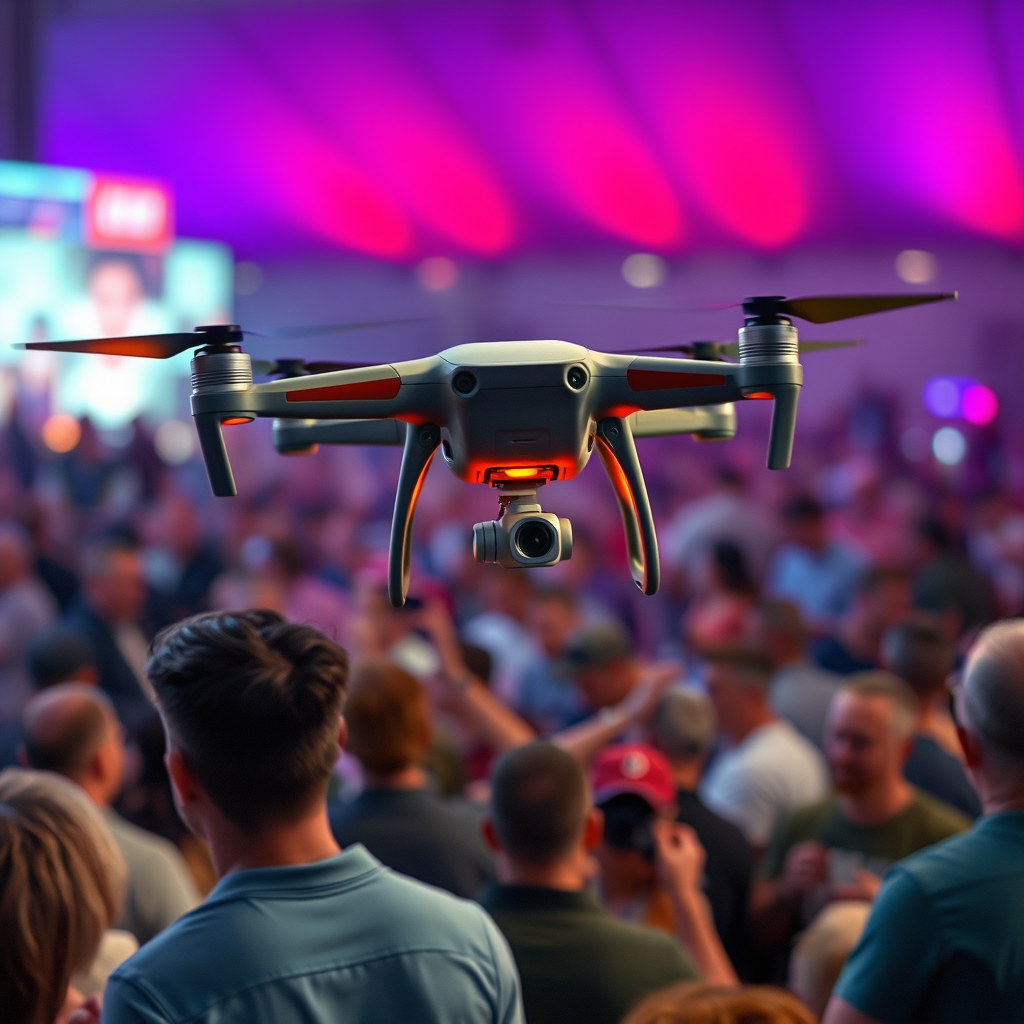
Flying a drone over a crowd is possible in some situations, but it is never a casual decision. The moment a drone operates above people, the legal, technical, and safety standards become much stricter. Whether you are filming a festival, covering a sports event, capturing wedding footage, or flying recreationally in a public space, you must understand the rules that govern operations over people and the real-world risks involved. Drone pilots who ignore these requirements can face enforcement action, liability exposure, and serious safety consequences.
📋 About This Article
You can sometimes fly a drone over a crowd, but only if you follow strict rules and safety requirements. This article is for drone pilots who want to film events or fly in public and need to understand what is allowed, what conditions must be met, and when extra permissions may be necessary. You’ll learn the key U.S. guidelines for flying over people, how to plan safely for real-world risks like malfunctions, and what to check before you take off.
For any operator, the key issue is simple: a drone malfunction above a group of people can cause injury, panic, or property damage. That is why aviation authorities such as the Federal Aviation Administration (FAA) regulate these flights carefully. If you are asking, “Can I fly a drone over a crowd?” the practical answer is: only if your aircraft, flight plan, and operating conditions fully meet the applicable legal and safety requirements.
What the Rules Say About Flying a Drone Over People
In the United States, drone operations fall under FAA regulations. For most small unmanned aircraft systems, the governing framework is Part 107. Under these rules, flying over people is not automatically allowed. A drone pilot must satisfy specific operational criteria, and in some cases a waiver or additional compliance measures may be required.
The FAA distinguishes between general flight over people and flight over open-air assemblies, such as concerts, parades, fairs, and large public gatherings. This distinction matters because a crowd presents a higher safety risk than a single person or a small, spread-out group. As a result, a drone operation that may be acceptable in one setting can be prohibited in another.
Compliance often depends on the drone’s category, weight, construction, and injury risk profile. For example, a very lightweight drone may qualify more easily than a heavier aircraft with exposed rotating parts. Remote identification requirements may also apply, and pilots must ensure the aircraft is properly registered if registration is required.
FAA Categories and Operational Limits
The FAA created categories for operations over people to define what types of drones may be used and under what conditions. A commonly referenced threshold is 0.55 pounds (250 grams). A drone that falls below this weight may be treated more favorably, especially if it does not contain exposed rotating components that could lacerate human skin.
However, weight alone does not grant blanket permission to fly over a crowd. The drone must still be operated safely, and flights over dense gatherings may remain restricted. For larger or more complex aircraft, the FAA may require additional documentation, safety declarations, or compliance with design-based standards intended to reduce the risk of injury.
Drone operators should also remember that federal rules are only part of the compliance picture. State laws, local event restrictions, venue policies, and property owner rules can all affect whether a flight is allowed.
Why Flying Over a Crowd Is Considered High Risk
A crowd changes the entire risk profile of a drone mission. In an empty field, a pilot may have room to recover from signal loss, battery failure, wind drift, or pilot error. Over a crowd, those same issues become much more serious because there is little or no safe landing area.
The main safety concern is impact injury. Even a small unmanned aircraft can cause harm if it falls unexpectedly. Propeller strikes, battery fires, and sudden descents are all real hazards. In addition, a drone incident in a packed public space can trigger fear, confusion, and secondary injuries as people react.
Because of this, professional drone operators should treat flights over people as a formal risk-managed operation rather than a routine recreational flight.
Common Hazards to Evaluate
- Mechanical failure: Motor issues, propeller damage, or structural defects can lead to loss of control.
- Battery problems: Low voltage, swelling, or thermal events can create a dangerous in-flight failure.
- Weather conditions: Wind gusts, rain, heat, and reduced visibility affect flight stability and performance.
- Signal interference: Urban areas, event equipment, and wireless congestion may disrupt command and control links.
- Pilot workload: Crowded environments increase distractions and reduce reaction time.
Essential Safety Features for Crowd Operations
If a drone is going to be used near or above people, the aircraft itself should be equipped for a higher level of safety. A basic consumer drone may not be enough for this type of mission, especially if the event environment is complex.
Useful safety features include:
- Propeller guards to reduce laceration risk
- Obstacle avoidance sensors for navigation in tight or dynamic environments
- Auto-land or return-to-home functions in case of signal disruption
- Parachute recovery systems for emergency descent mitigation
- Remote ID capability where required by regulation
- Redundant systems on professional platforms for improved reliability
These features do not remove the legal restrictions, but they can significantly improve operational safety. For commercial drone services, the aircraft should also be inspected before every flight, with special attention given to propellers, battery health, firmware status, GPS lock, and sensor calibration.
How the Type of Crowd Affects Legality and Safety
Not all crowds are treated the same. The nature of the gathering has a direct impact on whether a drone flight is appropriate and whether it is legally permissible.
Small Gatherings
A small family picnic, a local community meetup, or a controlled private event may present a lower operational risk than a large public assembly. In these cases, the pilot may be able to position the drone so it remains near people without directly flying over them. This is often a safer and more compliant option than hovering directly overhead.
Large Public Events
Concerts, sports events, street festivals, protests, and parades are much more sensitive environments. These settings typically involve dense foot traffic, unpredictable movement, limited emergency access, and elevated liability. Flying over these events usually requires careful legal review, event organizer permission, and strict adherence to FAA rules.
In many cases, the safest operational choice is to film from the perimeter, use elevated launch points, or capture wide shots that avoid direct overflight of attendees.
Controlled Access Events
Some professional productions operate in restricted or managed spaces where access is controlled and participants are informed. Even then, that does not automatically make overflight legal. The operator must still follow aviation regulations, assess the injury risk, and verify that the aircraft qualifies for the intended operation.
Best Practices Before Flying Near a Crowd
Any drone flight near people should begin with a structured pre-flight planning process. This is especially important for event coverage, media production, real estate marketing at public venues, and commercial aerial photography.
1. Conduct a Risk Assessment
Review the event layout, expected attendance, emergency exits, nearby obstacles, and possible flight paths. Determine what happens if the aircraft loses power or control at any point in the mission. If there is no safe contingency option, the operation may not be suitable.
2. Check Airspace and Regulatory Status
Confirm whether the location is in controlled airspace, near an airport, or subject to temporary flight restrictions. Review FAA requirements and verify whether your drone qualifies for operations over people. If needed, seek proper authorization before the event date.
3. Inspect the Aircraft Thoroughly
Use a documented checklist. Check battery charge, firmware updates, propeller condition, GPS reception, compass status, memory capacity, and controller signal quality. A rushed launch in a crowded area is unacceptable.
4. Establish a Safe Flight Envelope
Plan the route to minimize time spent above people. If the mission can be completed from the side, above an empty corridor, or at a safer offset angle, that is often the better choice. Lower-risk flight design is a core part of responsible drone operation.
5. Coordinate With Event Staff
For organized events, communicate with venue managers, security personnel, and production teams. Everyone involved should know the launch area, flight timing, emergency procedures, and no-go zones.
Operational Tips for Safer Drone Flights Around People
Even when a flight is lawful, good operational discipline matters. Professional drone pilots rely on layered risk controls rather than a single safeguard.
- Avoid hovering directly over dense groups whenever possible.
- Maintain visual line of sight throughout the mission.
- Keep flight time short and purposeful.
- Do not fly in poor weather or shifting wind conditions.
- Use a visual observer for complex event environments.
- Monitor battery reserves conservatively and land early.
- Be prepared to abort the mission immediately if conditions change.
It is also wise to schedule flights during lower-density moments, such as setup periods or controlled intervals, instead of peak crowd activity. In many cases, timing is the simplest way to reduce risk without sacrificing footage quality.
Legal and Financial Risks of Non-Compliance
Flying a drone over a crowd without meeting FAA requirements can lead to more than a warning. Operators may face civil penalties, certificate action, insurance complications, and potential personal liability if someone is injured. For commercial pilots, a non-compliant flight can also damage client relationships and professional credibility.
Insurance carriers may scrutinize whether the pilot followed regulations, used approved equipment, and documented safety procedures. If an incident occurs during an unauthorized operation, coverage disputes are more likely. That makes regulatory compliance not just a legal issue, but a business protection issue as well.
When You Should Not Fly Over a Crowd
There are situations where the smartest decision is to keep the drone grounded. You should avoid over-crowd operations if:
- The aircraft does not qualify under the applicable rules
- You are unsure about FAA compliance
- The crowd is dense and constantly moving
- Weather conditions are unstable
- You do not have a clear emergency plan
- The venue or property owner has prohibited drone use
- Your only shot requires unnecessary risk
In many scenarios, alternative camera strategies can deliver strong visual results without placing people underneath the aircraft. Ground-based gimbals, elevated poles, fixed-position cameras, or perimeter drone shots can often achieve the same storytelling goal more safely.
Flying a drone over a crowd is not a simple yes-or-no matter. It depends on FAA regulations, drone category, aircraft safety features, event type, airspace conditions, and the operator’s ability to manage risk responsibly. For most pilots, the safest and most professional approach is to avoid direct overflight unless the mission clearly meets every legal and operational requirement. When in doubt, prioritize safety, verify compliance, and choose a flight plan that protects both the public and your license to fly.
Frequently Asked Questions
Can I legally fly a drone over a crowd?
In most cases, flying a drone directly over a crowd is either heavily restricted or prohibited unless you meet specific regulatory requirements. Aviation authorities such as the FAA in the United States generally define a crowd as an open-air assembly of people where individuals cannot quickly move away if something goes wrong. This creates a higher risk because a drone malfunction, battery failure, or pilot error could cause injury.
Whether it is legal depends on your country, the size and nature of the gathering, the type of drone you are using, and whether you hold any special waivers, certifications, or operational authorizations. Commercial operators may have additional obligations compared to recreational users. Before flying, always check the current drone rules from your local aviation authority, event restrictions, and any local laws that apply to parks, stadiums, beaches, or public spaces.
What counts as a crowd when flying a drone?
A crowd usually means a group of people gathered so closely together that they cannot safely or quickly disperse if a drone falls or loses control. Examples often include concerts, sporting events, festivals, parades, rallies, and busy outdoor gatherings. A few scattered people in a large open area may not be considered a crowd, but a dense group of spectators typically will be.
The exact definition can vary by jurisdiction, so it is important not to rely on guesswork. If people are standing shoulder to shoulder, seated in fixed areas, or gathered in a way that limits escape routes, authorities are more likely to classify the area as a crowd. When in doubt, the safest approach is to avoid flying overhead and maintain a buffer zone.
Are there any exceptions that allow drone flights over people or crowds?
Yes, in some regions there are limited exceptions, but they usually come with strict conditions. For example, some aviation authorities allow certain certified drones to operate over people if they meet safety standards related to weight, design, propeller protection, and injury risk. In some cases, operators may also need to complete additional training, follow category-specific rules, or obtain a waiver or special authorization.
These exceptions do not automatically mean you can fly over any large public gathering. Flights over densely packed crowds are often subject to even tighter restrictions than flights over individual people. You may also need event organizer permission, insurance coverage, and compliance with local privacy and safety rules. Always verify the latest requirements before planning the flight.
What are the main safety risks of flying a drone over a crowd?
The biggest risk is injury to people on the ground. Even a small drone can cause cuts, eye injuries, or head trauma if it crashes into someone. Mechanical failure, signal loss, wind gusts, low battery, GPS errors, or pilot distraction can all lead to a loss of control. Crowded environments also make emergency landings much harder because there may be nowhere safe to bring the drone down.
There are also legal and reputational risks. Flying recklessly over people can result in fines, enforcement action, confiscation of equipment, or civil liability if someone is hurt. In addition, drones over crowds can create panic, distract participants, or invade privacy. That is why responsible operators plan conservatively, keep a safe distance, and avoid unnecessary overhead flights.
How can I capture event footage without flying directly over a crowd?
You can often get excellent footage without putting people at unnecessary risk. Consider filming from the perimeter of the event, using angled shots rather than overhead passes, or flying over adjacent open areas to frame the scene safely. Launch and recover the drone away from attendees, maintain visual line of sight, and use zoom capabilities if your drone has them. Early setup and a planned flight path can help you collect the shots you need while staying compliant.
It is also a good idea to coordinate with event organizers, identify emergency landing zones, monitor weather conditions, and conduct a pre-flight check of batteries, firmware, and propellers. If the event is large or highly regulated, consider hiring a licensed professional drone operator who understands the applicable rules. Safe planning usually produces better footage than risky flying over the crowd itself.
