

Can you use a drone in a national park?
In most cases, you cannot use a drone in a U.S. national park without authorization. Even when exceptions exist, drone flights are tightly controlled to protect wildlife, reduce noise impacts, and maintain visitor experience.
The key difference is that “permitted” drone use is granted for specific purposes (such as research or public safety), while “standard recreation” drone flying is generally restricted. The most important step is to confirm the rules for the specific park you plan to visit, because policies can vary by location and by date due to changing operational needs.
Why drones are restricted in national parks
Drones are restricted because they can disrupt ecosystems and conflict with the quiet, natural setting visitors expect. The National Park Service (NPS) focuses on minimizing disturbances to wildlife, reducing safety risks, and protecting cultural and natural resources.
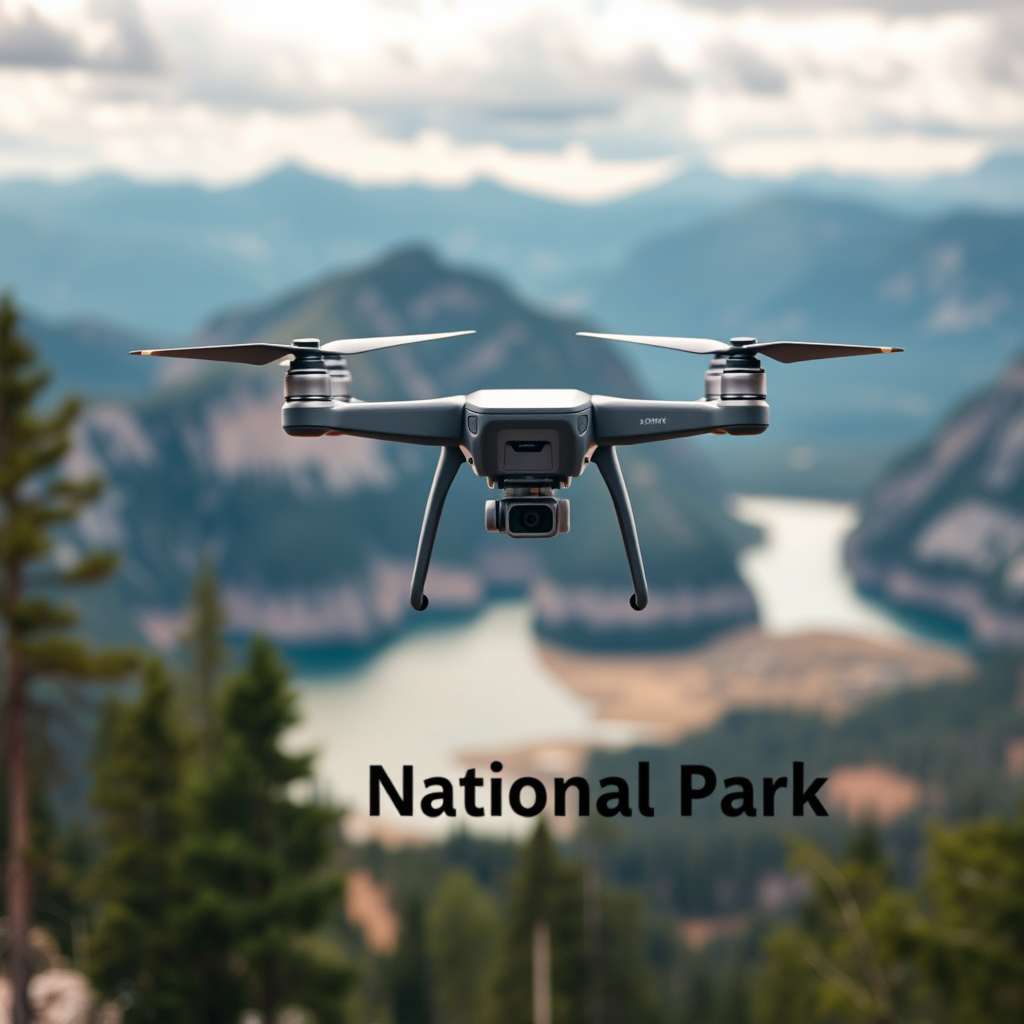
Common reasons include potential harassment of animals, noise disturbance, and interference with aviation safety around manned aircraft. The NPS also considers visitor impact, since drone operations can create privacy concerns and change the recreational character of park lands.
Wildlife disturbance is not hypothetical. Birds may alter foraging, nesting, and migration behaviors in response to repeated aircraft noise or novel aerial stimuli. The broader consensus among wildlife and conservation professionals is that minimizing repeated disturbances near sensitive habitats is critical for maintaining habitat integrity.
What the National Park Service usually allows (and usually doesn’t)
Most U.S. national parks prohibit drones under general park rules. However, some activities may be allowed through an authorization or permit process, particularly when the use is necessary and benefits the public.
The NPS defines and implements park-specific rules through policies and official closures that can change based on enforcement priorities, seasonal wildlife activity, and public safety considerations. In practice, you should assume drones are not allowed unless the park’s posted regulations explicitly permit them for your scenario.
Typical categories where drone use may be considered
When drone use is allowed, it is often limited to specific, documented purposes. These can include:
- Scientific research that supports wildlife monitoring, habitat mapping, or resource management
- Search and rescue or other public safety missions
- Emergency response involving incidents that require rapid assessment
- Media and filming activities that receive required approvals
- Special-use authorizations for projects that serve park management goals
Conversational QA: “Are drones always banned in every national park?”
No. Drones are commonly restricted, but some parks may allow limited operations for approved purposes. The safe approach is to check the exact park’s website and rules page and to confirm whether an authorization is available for your intended flight.
How to check the rules for the specific national park
You must verify the regulations for the park you plan to visit, because drone policies are not identical across every unit of the national park system. Start with official NPS resources and then look for any park-specific closures or special rules.
For accurate compliance, search for the park name plus “drones,” “unmanned aircraft,” or “NPS drone policy,” and then cross-check with the park’s official documentation. Rules can differ based on wildlife seasons, airspace considerations, and local enforcement guidance.
Also confirm how the park treats launches and landings. Even if you can fly in one area, takeoff and landing zones can be subject to additional restrictions meant to protect visitors and sensitive habitats.
Conversational QA: “Where can I legally fly if the park bans drones?”
If the park bans recreational drone flights, flying inside the park boundaries is typically not permitted. A legally safer option is to fly in designated public areas outside the park, where local and federal rules allow it, and where you can maintain separation from wildlife and visitors.
Do I need a permit to fly a drone in a national park?
Often, yes. If drone use is allowed for your purpose, you may still need a special use permit or authorization before you fly.
The permit requirement depends on what the drone is used for, whether the activity is organized, and whether park management has concerns about impacts or safety. The application process usually requires a clear proposal describing the purpose, flight details, and how you will reduce risk and minimize disturbance.
What to include in a drone special use request
Most applications ask for specific operational details. A strong, compliance-focused proposal typically includes:
- Purpose: research, mapping, documentation, safety response, or permitted media work
- Location: exact area within the park, including coordinates or a map
- Dates and duration: when you plan to fly and for how long
- Drone specifications: model, weight, and camera capabilities
- Flight plan: altitude, approach paths, and how you will avoid crowds and wildlife
- Risk mitigation: noise reduction practices and safety procedures
- Insurance and approvals: when required for commercial or organized activities
Timeline reality: permits are not last-minute
Permit timelines vary by park and by project complexity. In many cases, you should submit well in advance to allow for review by relevant park staff and compliance checks. Approvals are not guaranteed, so plan backups and avoid scheduling dependent commercial shoots or research fieldwork without confirmation.
Restrictions you must follow when drone use is authorized
If your drone activity is approved, you still need to follow strict operational limits. Authorization does not mean you can fly freely across the park.
The Federal Aviation Administration (FAA) sets national baseline rules for civil drones, and NPS restrictions layer additional constraints for park protection. The key difference is that FAA compliance governs airspace and aircraft operation, while the NPS governs impacts on park resources and visitors.
Altitude and airspace limits
A commonly cited guideline for many recreational drone operations is staying below 400 feet above ground level. Even when a park authorization exists, you should expect strict altitude limitations and buffer zones to ensure safety and reduce impacts.
Additionally, many parks include controlled or sensitive airspace. That means you may need FAA authorization for certain airspace classes or special-use areas, even if the park would otherwise allow your flight.
FAA Numeric Thresholds That Commonly Control Drone Flights in National Parks
| # | FAA requirement | Numeric threshold | National-park effect | Operational clarity |
|---|---|---|---|---|
| 1 | Maximum altitude for standard UAS operations | 400 ft AGL | Caps your flight ceiling inside park airspace | ★★★★★ |
| 2 | Visual line of sight expectation (common baseline) | Unspecified distance; must be VLOS | Overlooks/trails can limit where you can keep VLOS | ★★★★☆ |
| 3 | Drone registration requirement trigger | > 0.55 lb (250 g) | Determines whether you must have a registration before flying | ★★★★★ |
| 4 | Minimum remote-pilot qualification path (Part 107) | FAA Part 107 applies to covered operations | Commercial/organized work may require certified pilot status | ★★★☆☆ |
| 5 | Remote Identification (Remote ID) operation requirement | Rule applicability depends on aircraft/operation | May require Remote ID compliance for eligible UAS flights | ★★★☆☆ |
| 6 | Aeronautical authorization needs in controlled airspace | Varies by airspace (check LAANC/UAS facilities) | Can block or cap flights even if park permits exist | ★★☆☆☆ |
| 7 | Operational safety expectation around people | Avoid flying over people by default | Crowded overlooks can make approval difficult | ★★☆☆☆ |
Distance from people, wildlife, and facilities
Authorized drone flights typically require you to maintain distance from visitors, wildlife, and park infrastructure. You should assume that flying near animals or nesting sites is prohibited or heavily discouraged.
Noise and presence can cause stress responses in animals. For example, repeated flights near nesting birds can disrupt breeding behavior, increase stress, and reduce reproductive success.
Privacy and filming etiquette
Even where filming is permitted, privacy expectations matter. You should avoid targeting private individuals, avoid unnecessary hover time near camps or trails, and follow any filming conditions set by park staff.
Conversational QA: “Can I fly higher than 400 feet in a national park?”
Typically, no. Authorized operations are usually tied to explicit altitude constraints, and many general drone operations are expected to remain below 400 feet AGL. Higher altitudes require careful coordination and FAA permissions, and the NPS may still impose stricter limits to protect visitors and wildlife.
FAA rules still apply: don’t confuse park permissions with aviation compliance
Even if the national park approves your drone request, FAA rules still control how and when you can fly. You are responsible for complying with FAA regulations, airspace requirements, and safety standards.
The FAA’s framework generally includes requirements around remote pilot operation, registration, and operating within approved airspace. In many scenarios, drone operators must ensure they meet applicable requirements for their drone weight and operation type.
As of recent FAA guidance, the U.S. generally requires drone operators to register aircraft used in national airspace systems and to follow operational rules for altitude, line of sight, and airspace authorization as applicable.
Conversational QA: “If the NPS permits it, do I still need FAA authorization?”
Yes. NPS permission does not replace FAA requirements. You must comply with both agencies’ rules: the park rules for resource and visitor protection, and the FAA rules for aviation safety and airspace compliance.
Best practices if you want to fly a drone responsibly near protected wildlife
If you have a legitimate, permitted project, responsible operational habits can reduce risk and support conservation goals. The goal is to accomplish the mission without causing avoidable disturbance.
Practical best practices often include minimizing flight duration, using conservative approaches, avoiding sensitive habitats, and selecting times when wildlife activity is lower. Your plan should also include contingency procedures for equipment failure or weather changes.
Operational safety and impact reduction checklist
- Plan for wildlife: avoid known nesting areas, roosts, dens, and migration corridors
- Reduce noise exposure: fly fewer passes, avoid hovering near animals, and keep operations brief
- Maintain safe separation: keep distance from visitors, trails, camps, and facilities unless conditions state otherwise
- Use line-of-sight practices: operate in a controlled manner consistent with FAA expectations
- Document your approvals: carry permit documentation and any FAA authorizations
- Respect closures: follow temporary restrictions caused by wildlife events, wildfire conditions, or safety incidents
Quick decision guide: what should you do next?
If you are planning to fly a drone, you should treat “national park” as a high-bar compliance environment. The correct next step is to verify the specific park rules and confirm whether an authorization is required for your exact purpose.
Use the workflow below to avoid violations and delays:
- Step 1: Identify the exact national park unit and the specific area where you want to fly
- Step 2: Check the NPS site for drone or unmanned aircraft rules and any posted closures
- Step 3: Determine whether your purpose fits a permitted category (research, safety, filming with approval, or special-use)
- Step 4: If required, apply for a special use permit well in advance
- Step 5: Confirm FAA compliance, registration, and airspace authorization needs
- Step 6: Prepare a safety and wildlife impact mitigation plan that matches permit conditions
Resources and standards commonly referenced
For authoritative guidance, rely on official government sources rather than community assumptions. The National Park Service and the Federal Aviation Administration provide the core rules that determine what is possible.
When preparing a project, consult the NPS policies and any park-specific rule pages, plus FAA operational guidance for drone registration and airspace compliance. Where applicable, follow widely recognized safety practices for unmanned aircraft operations and document how your plan protects wildlife, privacy, and public safety.
📋 About This Article
You usually can’t fly a drone in a U.S. national park without permission, and any allowed flights are tightly restricted to protect wildlife and visitors. This article is for drone owners and park visitors who want to know what’s allowed before they travel. It explains why drone use is limited, how to check the rules for the specific park you plan to visit, and what kinds of exceptions or permitted purposes may apply.
Frequently Asked Questions: Can I Use a Drone in a National Park?
Is it legal to fly a drone in a national park?
In many cases, drones are restricted or prohibited in national parks, but the exact rules depend on the country, the specific park, and sometimes the area within the park. In the United States, for example, the National Park Service generally prohibits drones in most units, and additional restrictions may apply based on local airspace, wildlife protection rules, and public safety concerns. Even if a drone is allowed, you may still need to follow aviation regulations (such as FAA registration and operating requirements) and comply with any park-specific permits or designated zones. Because rules can change and enforcement varies by location, the safest approach is to check the official park website and the applicable aviation authority before flying.
Where can I fly my drone inside a national park (if it’s allowed)?
If drone use is permitted, it is often limited to specific areas, altitudes, or times. Many parks prohibit drones in sensitive habitats, near wildlife, on trails and overlooks where visitors gather, and in or near visitor centers. Some parks allow drone flights only in designated zones or only under a permit for research or special filming. Even within an allowed area, you may need to maintain minimum distances from people, wildlife, and property boundaries, and avoid overflying campgrounds and cultural or historic sites. Always look for “drones,” “unmanned aircraft,” or “UAS” guidance on the park’s official regulations page, and confirm any marked restrictions on-the-ground.
Do I need a permit to use a drone in a national park?
Often, yes—especially in U.S. national parks. Permitting requirements depend on the park and the purpose of the flight. Some parks require permits for commercial operations, scientific research, or activities involving organized filming. Others may require permission even for recreational use in specific areas, or they may allow drones only under strict conditions. Separately, you may need to meet aviation requirements such as operator registration, remote identification (where required), and compliance with airspace rules. A permit from the park does not replace national aviation rules, and aviation approvals do not guarantee that the park allows the flight. Verify both sets of requirements before takeoff.
What restrictions apply for wildlife and visitor safety?
National parks prioritize wildlife protection and visitor safety. Drones can disturb nesting birds, marine animals, and other wildlife, and the sound and presence of an aircraft may cause animals to change behavior or abandon habitats. Many parks require strict avoidance of wildlife and prohibit flights over or near animals. You should also avoid flying directly over crowds, along busy trails, near campsites, and in areas where people expect quiet or where emergency response routes could be affected. Practically, plan to fly from a location with clear boundaries, keep your altitude low enough to avoid airspace conflicts but high enough to maintain safety, and be prepared to land immediately if wildlife or people move into your flight path.
How do I check whether my drone flight is allowed in a specific national park?
Start with the official national park website and search for sections on drones, unmanned aircraft, or UAS policies. Read the full regulations for the specific park unit and the area you plan to visit—rules can differ between regions and even between zones inside the same park. Next, confirm the airspace requirements through the relevant aviation authority (for example, checking controlled airspace, local temporary flight restrictions, and any required approvals). In the U.S., you’ll also want to ensure your aircraft and operator meet all applicable requirements such as registration and operational limits. Finally, check weather and local conditions that may affect visibility and safety. If the policy is unclear, contact park staff or the park’s listed drone/UAS point of contact before flying.
References
- Drones for conservation in protected areas: Present and future Google Scholar
https://www.mdpi.com/2504-446X/3/1/10 - Flying high for conservation: Opportunities and challenges of operating drones within the oldest … Google Scholar
https://besjournals.onlinelibrary.wiley.com/doi/abs/10.1002/2688-8319.12354 - The use of conservation drones in ecology and wildlife research Google Scholar
https://accesson.kr/jecoenv/assets/pdf/6956/journal-38-1-113.pdf - Drones as a tool to monitor human impacts and vegetation changes in parks and protected areas Google Scholar
https://zslpublications.onlinelibrary.wiley.com/doi/abs/10.1002/rse2.127 - From coastal to montane forest ecosystems, using drones for multi-species research in the tropics Google Scholar
https://www.mdpi.com/2504-446X/6/1/6
📅 Last Updated: July 03, 2026 | Topic: Can I Use a Drone in a National Park? | Content verified for accuracy and freshness.
