

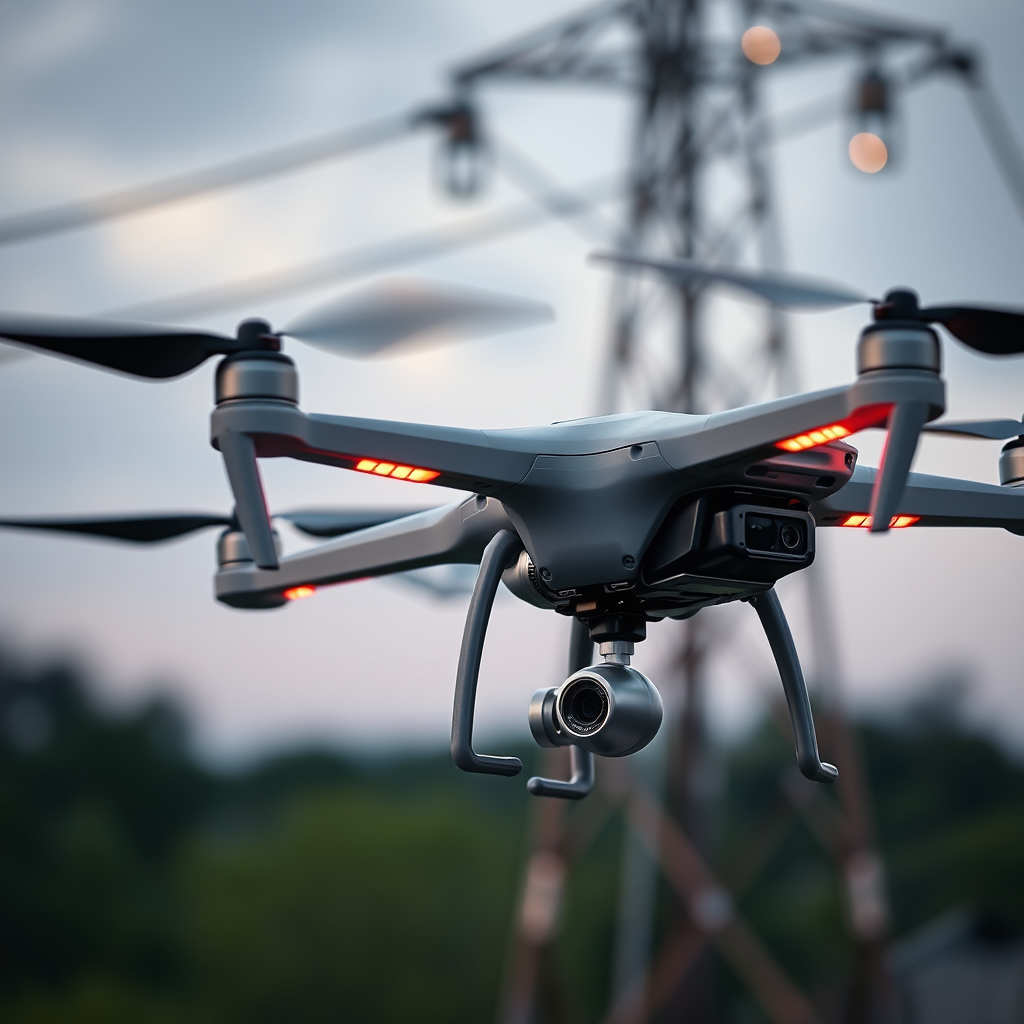
Yes, you can fly a drone near power lines in many situations, but it’s not a “free to fly anywhere” scenario. Power lines create a distinctive risk profile for unmanned aircraft systems (UAS): there are federal aviation rules you must follow, plus real-world hazards involving collision risk, electromagnetic interference (EMI), and potential disruptions to critical infrastructure. If you’re planning operations close to electrical transmission lines, it’s essential to understand applicable FAA guidance, local requirements, and best practices that reduce safety and liability exposure.
In the United States, drone pilots generally have the ability to operate near power lines as long as they remain compliant with airspace rules, maintain required flight safety standards, and operate in a manner that avoids endangering people, property, or manned aircraft. The FAA’s framework is designed to protect public safety, and utility corridors often attract additional operational scrutiny because power infrastructure may be in busy areas with other aircraft, maintenance activity, or emergency response operations.
FAA Regulations for Drone Flight Near Power Lines
The Federal Aviation Administration (FAA) regulates civilian drone operations through Part 107 for most commercial operators and through applicable recreational rules (depending on your activity). While the FAA does not typically list “power lines” as a blanket no-fly category, you must still follow core operational requirements that become especially important near electrical infrastructure.
Maintain Visual Line of Sight (VLOS)
One of the FAA’s foundational expectations is maintaining visual line of sight with the drone at all times. When you fly close to power lines, maintaining situational awareness matters even more because conductors and supporting structures may be partially obscured by terrain, perspective distortion, or nearby objects. A strong VLOS helps you detect the wires earlier, adjust your flight path sooner, and prevent accidental contact.
Fly Below 400 Feet AGL and Avoid Manned Aircraft
Most Part 107 operations require drones to remain below 400 feet above ground level (AGL), and pilots must avoid controlled and other airspace restrictions. Even when the airspace rules allow the flight, you still need to consider how proximity to populated areas and infrastructure can increase traffic density. Utility corridors can run through urban or suburban landscapes where helicopters, fixed-wing aircraft, and emergency aircraft may operate. Your drone must never become a hazard to manned aircraft.
Check for TFRs and Local Airspace Constraints
Temporary Flight Restrictions (TFRs) can be issued for incidents, special events, or ongoing emergencies. In some cases, TFRs may affect regions near critical infrastructure, including areas where utility systems are under maintenance or where first responders are active. Always check for current airspace information before launch, and confirm that your intended route does not conflict with temporary restrictions.
Key Safety Risks When Flying Near Power Lines
Power lines introduce several practical hazards that drone operators should treat as non-negotiable considerations. Even if a flight is legally permissible, you may still be taking on unnecessary risk if you fly too close.
Collision Risk and Loss of Control Scenarios
The most obvious danger is collision. Power lines can be difficult to see, particularly in low-light conditions, at certain angles, through glare, or when wires blend with the background. A single impact can damage propellers, break rotor arms, or cause the aircraft to lose stability. Beyond the cost of equipment, a collision can create broader safety problems, including power outages and, in worst cases, electrical fire risk if the infrastructure is affected.
Electromagnetic Interference (EMI)
High-voltage corridors can also contribute to electromagnetic interference (EMI). While consumer drones are designed to operate in typical electromagnetic environments, near large power conductors the control link and navigation signals can be affected. Drones use radio frequencies for command-and-control and rely on systems such as GPS navigation for positioning and stabilization. If interference impacts sensors or communications, the aircraft may behave unpredictably—potentially drifting, failing to hold position, or experiencing degraded control response.
GPS Degradation and Erratic Flight Behavior
Many operators associate EMI only with radio interference, but power-line environments may also coincide with navigation issues. GPS accuracy can degrade in certain conditions, which can lead to instability during hovering, return-to-home behavior, or “smart” flight modes. If the drone’s flight controller cannot reliably estimate position, you may see sudden lateral movement or changes in altitude hold—both of which increase the chance of unsafe proximity to the lines.
Entanglement, Property Damage, and Increased Liability
If a drone contacts or becomes caught by power lines or hardware, the consequences can escalate quickly. Repairs or total loss of the aircraft may be only part of the issue. If the incident damages utility equipment or triggers service interruption, you could face significant financial exposure and potential legal consequences. For that reason, “it flew away” should never be treated as a harmless outcome after a near-contact event.
Best Practices for Safe Drone Operations Near Power Lines
If your mission requires operating near utility infrastructure, you should plan using risk-based controls rather than assuming the environment is “similar to any outdoor area.” The following practices can reduce the likelihood of collision or interference-related incidents.
Plan Your Flight Path and Maintain Clearance
Use mission planning tools to map your route and establish a safe buffer from wires, towers, and support structures. Maintain extra clearance beyond what you think you need, because perception errors happen easily when flying near thin hazards. Use slower approach profiles and avoid abrupt maneuvers that could carry the drone into the line path during GPS or control settling.
Confirm Signal Link Strength and Home Point Behavior
Before you get close to the lines, verify that your remote controller signal is stable and that your “Return to Home” settings are configured correctly. Test how your drone behaves when GPS quality changes. If your aircraft supports a climb-then-return mode, confirm it won’t cause the drone to pass through the corridor of wires during failsafe recovery.
Choose the Right Conditions and Reduce Glare or Visibility Problems
Lighting matters. Fly in conditions that improve wire visibility and reduce glare, especially near metal hardware and sky backgrounds. If the wind is gusty, maintain extra margins because wind drift can move the drone laterally toward the conductors.
Avoid Low-Altitude Passes Under or Between Conductors
Whenever possible, avoid flying directly under lines or threading between conductors. Even with good visibility, misjudging distance can result in contact. Instead, keep your observation and capture strategy at a distance that still meets your objective while minimizing the need for tight spatial positioning.
Use a Spotter When Situational Awareness Is Limited
If you have any doubt about whether you can continuously track the drone’s position relative to the wires, bring a visual spotter. A second set of eyes improves collision avoidance and helps you respond faster to unexpected movement.
Local Laws and Utility-Specific Restrictions
Beyond FAA requirements, local regulations may apply. Counties, cities, and state authorities can implement additional rules tied to permitting, critical infrastructure proximity, or operational restrictions. In some areas, utilities or property owners may require permission for drone operations near substations, transmission corridors, or fiber/wire infrastructure.
If you’re photographing, surveying, or conducting inspection work, consider contacting the relevant utility operator or property manager ahead of time. Even when FAA airspace rules allow the flight, utility corridors can involve controlled access areas, safety perimeters, or operational constraints during maintenance windows.
Insurance Considerations for Drone Operations Near Power Lines
Drone insurance is often overlooked until a problem occurs. Flying near power infrastructure can increase the importance of adequate coverage due to potential property damage or infrastructure disruption risk. Evaluate whether your policy includes coverage for third-party bodily injury, property damage, and incidents involving critical infrastructure. If you operate commercially, check that your coverage aligns with the nature of your work—especially if you’re performing inspections, data collection, or infrastructure documentation.
For higher-risk environments, some operators also carry additional liability or use specialized risk controls required by clients or utilities. Treat insurance as part of your safety plan, not as an afterthought.
Alternatives to Flying Close to Power Lines
If the goal is inspection, documentation, or visual assessment, consider options that reduce proximity risk:
- Long-lens or telephoto capture from a safer distance to reduce the need for close approach.
- Ground-based inspections using poles, ladders, binoculars, or stabilized cameras from public or permitted areas.
- Fixed cameras or tethered systems for consistent monitoring without airspace proximity.
- Professional utility inspection services that use specialized equipment and established procedures.
By aligning your method with the objective, you may be able to collect the needed data while maintaining a greater safety margin from wires and support structures.
Ultimately, whether you can fly a drone near power lines comes down to how you operate: remain compliant with FAA rules, respect airspace constraints like TFRs, plan for collision avoidance, mitigate EMI and GPS degradation risk, and follow any local or utility-specific requirements. When uncertainty exists, choose distance, alternative data-collection methods, or professional support to keep both your aircraft and critical infrastructure safe.
📋 About This Article
Yes, you can fly a drone near power lines in many cases, but you must do it carefully and legally. This article is for drone pilots who want to plan a safe flight around utility corridors, including homeowners, hobbyists, and commercial operators. It covers the FAA rules to follow, the real-world safety hazards to watch for, and practical best practices to reduce collision risk and avoid interference with critical infrastructure.
Frequently Asked Questions: Can You Fly a Drone Near Power Lines? What You Need to Know
Is it legal to fly a drone near power lines?
It can be legal in some situations, but it depends on your location and the specific rules that apply. In the U.S., for example, the FAA generally regulates airspace and operating rules, while local utilities and property owners may impose additional restrictions. Even if you are allowed to fly, you must still follow requirements such as maintaining a safe distance, staying within visual line of sight when required, flying at appropriate altitudes, and complying with any airspace authorizations.
Because power-line corridors can involve critical infrastructure and special security considerations, utilities may prohibit drone operations near their facilities regardless of FAA legality. The safest approach is to check: (1) applicable airspace restrictions (including any LAANC/authorization needs), (2) state/local rules, and (3) utility or landowner policies.
How close can I fly to power lines with my drone?
There is no single universal “safe distance” that guarantees safety or compliance worldwide. In many cases, regulators and safety guidance emphasize avoiding flight near power lines because of unpredictable hazards (moving conductors, height variation, birds, and structure clearance issues) and the risk of interference. Operationally, the guiding principle is to keep far enough away to avoid contact with any part of the infrastructure, maintain maneuvering room, and prevent the drone from drifting.
If your drone can be affected by strong electromagnetic fields or if the area has tall structures, wind shear, or limited GPS reliability, you should plan to stay well away. As a practical rule, never plan a path that assumes the drone will remain perfectly centered; consider gusts, control latency, GPS drift, and failsafe behavior. If you need to operate in the vicinity for inspection work, professional operators commonly use specialized procedures and coordination rather than relying on general hobbyist distance assumptions.
What are the main risks of flying near power lines?
The biggest risks are not just electrical contact—they’re also safety, reliability, and regulatory compliance. Key hazards include:
- Physical collision: Drones can swing into wires or towers due to wind, gusts, turbulence, misjudged distance, or GPS drift.
- Navigation and control issues: Power-line corridors may create conditions that reduce GPS accuracy, increase control errors, or interfere with sensors—especially if your drone relies heavily on GPS.
- Loss of signal or failsafe events: If you lose control link or GPS, your drone may hover, descend, or execute a failsafe maneuver that could move it toward the wires.
- Propeller hazards and debris: Even if the drone doesn’t touch the lines, a crash near critical infrastructure can cause property damage or create safety hazards for nearby people.
- Security and legal exposure: Power lines are critical infrastructure. Unauthorized or reckless proximity can trigger investigations, fines, or enforcement actions.
For these reasons, most risk assessments treat near-power-line flying as high-risk, requiring careful planning and—often—permission or professional oversight.
Will my drone be damaged or affected by electromagnetic fields near power lines?
Drones are electronic devices, and electromagnetic fields can potentially affect certain sensors or communication systems, depending on your environment and the strength of the field. While many consumer drones operate reliably around everyday electronics, power-line corridors can present higher electromagnetic conditions than typical flight areas.
Potential effects include degraded GPS accuracy, compass interference, increased sensor errors, or reduced reliability of remote-control and telemetry links. Additionally, even if the drone electronics aren’t “electrically damaged,” the larger issue is that navigation errors and drift can cause the drone to enter a dangerous proximity unintentionally.
If you’re conducting any kind of inspection or need to fly nearby, the best practice is to perform conservative testing away from the lines first (in similar wind and lighting), verify compass/GPS behavior, and strictly limit exposure. When in doubt, choose a safer approach such as using higher-reach optics from farther away or contracting a qualified, authorized inspection provider.
What should I do if I need to inspect something near power lines?
If inspection is your goal, the safest workflow is to treat it as a regulated, high-risk operation. Consider these steps:
- Get authorization and check restrictions: Confirm airspace requirements and any utility/property restrictions. Critical infrastructure operations often require coordination.
- Use a safe stand-off distance: Plan your flight path so you never need to hover or fly close enough for a drift, gust, or control error to cause contact.
- Reduce complexity: Use a stable camera setup and avoid aggressive maneuvers near the corridor. Prefer routes that keep the drone moving away from the wires rather than circling tightly.
- Configure failsafes conservatively: Ensure your return-to-home altitude (or altitude-hold behavior) won’t bring the drone toward the wires in an emergency.
- Consider professional alternatives: Many utilities use tethered systems, manned inspections, or specialized drone programs with trained operators, dedicated procedures, and liability coverage.
If you do not have explicit permission and a clear safety plan, it’s generally better to avoid flying near power lines and choose an alternative method that captures the needed information from a safer distance.
