

Yes, you can usually hear drones, but their audibility depends heavily on distance, flight conditions, and the drone’s design. Many consumer quadcopters produce a noticeable hum that can blend into ambient city or rural sound, while larger or high-thrust drones can create a louder, more persistent buzz.
Can You Hear a Drone? Quick Answer by Distance
In most real-world situations, a drone is audible within a practical range, but the exact distance varies by model and environment. A drone can be clearly heard in quiet spaces at shorter distances and may be partially masked by background noise like traffic, wind, or birds.
Noise levels are commonly discussed in decibels (dB), which is defined as a logarithmic scale used to quantify sound intensity. As a rule of thumb, sound perception often drops as the drone gets farther away, but gusty wind, temperature inversions, and ground reflections can change how far the sound carries.
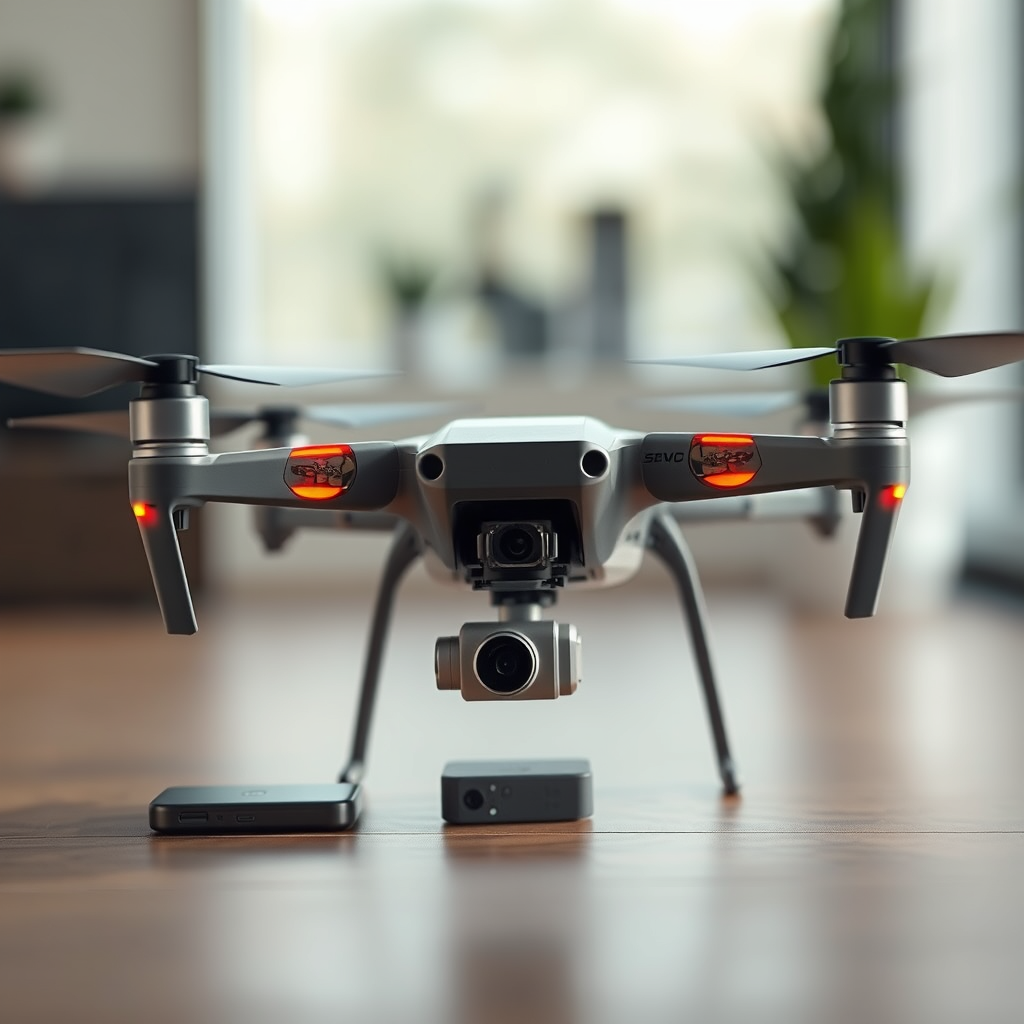
What Do Typical Drone Sounds Compare To?
Drone noise often falls into the same general loudness neighborhood as familiar everyday sounds. For example, many consumer drones generate sound pressure levels roughly in the 60 to 80 dB range during typical operation.
To interpret that range, a vacuum cleaner and normal conversation can be around 60 to 70 dB depending on distance and setting. A higher-thrust aerial platform operating closer to the listener may approach the upper end of that range and feel more like a steady buzzing or propeller-driven whine than a single “bang” or “beep.”
The Sound Profile of Drones: Hums, Buzzes, and Whines
Drones are typically heard as a blend of humming and buzzing caused by fast-spinning propellers. The key sound characteristics are pitch (frequency), tonal quality, and how steadily the noise changes with throttle and load.
Why Propellers Create Drone Noise
Propeller-driven noise is defined as the acoustic energy produced when blades accelerate air and create pressure fluctuations. When quadcopters spin multiple rotors at high RPM, the combined effect produces a continuous broadband sound with prominent tonal components.
The key difference is that a drone’s noise is not only “loudness,” but also “texture.” Two drones that both read 70 dB can sound different because one may have higher-frequency blade passing tones while another produces a more dominant low-frequency hum.
How Drone Size and Rotor Count Affect Noise
Larger drones often sound deeper and more resonant because they use larger rotors and can produce stronger aerodynamic and motor-driven pressure fluctuations. Smaller quadcopters frequently sound higher-pitched, which can be more noticeable even when overall decibel levels are lower.
- Small quadcopters: Often produce higher-pitched whines that can cut through silence.
- Commercial and industrial drones: Tend to produce fuller, lower-frequency content that can carry farther under the right conditions.
- Rotor count and thrust demand: Multi-rotor designs distribute load, but higher total thrust typically increases noise output.
Typical Drone Noise by Class (dB(A) at Approx. 10 m, Open Field)
| # | Drone class (typical use) | dB(A) at 10 m | dB(A) at 30 m | Dominant character | Noticeability ★ |
|---|---|---|---|---|---|
| 1 | Micro toy quads (indoors/nearby play) | 58 dB | 48 dB | High-pitched whine | ★★★☆☆ |
| 2 | Camera quad (consumer, lighter payload) | 66 dB | 56 dB | Steady buzz | ★★★★☆ |
| 3 | “Sport”/fast consumer quad (higher throttle) | 72 dB | 60 dB | Whir + tonal peaks | ★★★★★ |
| 4 | Agricultural quad/multi-rotor (spraying, heavier) | 74 dB | 62 dB | Louder mid-frequency hum | ★★★★★ |
| 5 | Long-range mapping hex/octo (larger rotors) | 70 dB | 59 dB | Deeper buzz | ★★★★☆ |
| 6 | Industrial payload quad (frequent hover under load) | 78 dB | 64 dB | Prominent low-frequency hum | ★★★★★ |
| 7 | High-thrust pro platform (close operations) | 84 dB | 70 dB | Very loud propeller whine | ★★★★★ |
Key Factors That Change Drone Noise Levels
Drone noise levels are not fixed; they vary with the platform’s design, operating state, and propulsion characteristics. If you want to predict whether you’ll hear a drone, focusing on these factors is more useful than relying on the drone’s brand alone.
1) Throttle and Flight Mode
Noise rises with rotor speed because propellers generate more pressure fluctuations at higher RPM. The key difference is that a drone hovering at a stable altitude may sound less intense than the same drone accelerating, climbing, or compensating for wind gusts.
2) Propeller Design and Aerodynamics
Propeller geometry is defined as the blade shape, pitch, diameter, and number of blades that govern how air is accelerated. Aerodynamically optimized propellers can reduce vibration and lower perceived noise, even if motor power remains similar.
In practice, manufacturers that prioritize quieter blade profiles, improved balance, and damped mounting can reduce harsh tonal peaks that otherwise stand out to human listeners.
3) Motor Type: Brushed vs. Brushless
Motor design influences how smooth the sound spectrum becomes and how much mechanical noise adds to the airflow noise. Brushless motors, commonly used in higher-end consumer drones and many professional platforms, are generally associated with quieter operation than brushed alternatives.
That said, the propellers usually dominate the audible character. A quiet motor with an aggressively pitched propeller can still sound loud.
4) Frame Materials, Mounting, and Vibration Isolation
The materials and mechanical coupling between the motor, frame, and arms affect how vibrations transmit into the air. Frames that damp vibration can reduce secondary rattles and resonance effects that would otherwise make the drone sound “sharper” or more fatiguing.
This is why two drones with similar thrust and rotor size can still produce different noise signatures.
5) Payload and Weight
Heavier payloads typically require higher thrust to maintain altitude, which increases rotor speed and sound output. If a drone carries a camera rig, LiDAR, or industrial sensor, the total mass and control system demand can push the drone into a noisier operating point.
Distance and Environment: Why Some Drones Sound Closer Than Others
Distance strongly affects whether you can hear a drone, but environmental acoustics can either suppress or carry its sound. Wind, temperature, terrain, and obstacles all influence how sound reaches your ears.
How Distance Changes Perceived Loudness
Sound intensity generally decreases with distance due to geometric spreading, and it also attenuates with air absorption. Even though real-world outcomes vary, the practical takeaway is that a drone close to you will sound dramatically louder than the same drone a few hundred meters away.
The key difference is that “audibility distance” is not one number. A drone might be faint but detectable in one open field and barely noticeable inside a city block where traffic masks high-frequency components.
Wind, Temperature, and Ground Effects
Wind can push propeller noise toward you, creating sudden changes in loudness. Temperature gradients can bend sound rays, which can extend carry under certain nighttime or early-morning conditions.
- Wind direction: Noise often travels farther downwind.
- Temperature inversions: Can increase sound propagation at certain times.
- Ground reflections: Hard surfaces can amplify certain frequencies.
- Urban masking: Traffic and building reflections may hide or blend drone sound.
How Drone Noise Compares to Common Everyday Sounds
Drone noise often occupies a similar decibel range to everyday household and street sounds, but the drone’s tone can make it more noticeable. Human hearing is sensitive to tonal components, which is why a steady propeller whine can feel intrusive even when the decibel reading is moderate.
Below are practical comparisons people use to contextualize drone sound levels:
- About 60 dB: Typical “moderate” ambient noise levels like conversation at close distance.
- About 70 dB: Often comparable to louder everyday activities and noticeable background noise.
- About 80 dB: Can feel clearly present, especially in quiet neighborhoods or open outdoor spaces.
Important note: these are approximate comparisons because the reading depends on measurement method, exact distance, and whether you’re hearing direct sound or reflected sound.
Can You Hear a Drone From Inside a House?
Many people can hear drones through open windows, and some can detect them even with windows closed depending on sound frequency and building conditions. In general, houses reduce higher-frequency sounds more effectively than low-frequency sound, but this varies.
What Makes Indoor Hearing More Likely
The key difference is that indoor audibility depends on both exterior sound levels and building transmission. You are more likely to hear a drone if it hovers close to your property, if windows are partially open, or if the drone’s sound contains strong low-frequency components.
- Open windows or screen doors
- Basement or rooms with shared ducts and vents
- Large drones producing a deeper hum
- Less ambient masking noise (quiet nights)
Common Questions About Drone Noise Levels
If you’re trying to interpret drone sound in the field, these questions match what people ask most often. The answers below use practical, real-world reasoning rather than speculation.
How loud are drones in decibels?
Many consumer drones are often reported in the broad range of 60 to 80 dB during operation, depending on model, throttle, and measurement distance. Larger or high-thrust drones can exceed those values in certain conditions, especially when operating closer to the listener.
Are drones louder than cars or lawnmowers?
In many cases, a drone hovering at moderate distance can be comparable to everyday sounds, but its tonal quality can feel more noticeable. Lawn equipment and vehicles can span a wide range of decibel levels, so the comparison depends on the specific machine and how close it is to you.
Why does a drone sound different from one location to another?
Drones can sound different because the acoustic path changes with wind, obstacles, and reflections. A drone that sounds sharp in one street may sound muffled across a wooded area due to absorption and scattering effects.
Can you identify a drone by sound?
Often, yes. Many drones produce a recognizable continuous propeller-driven hum or buzz. However, rotor wind-up, propeller damage, blade imbalance, and environmental masking can make identification uncertain, especially at longer distances.
Regulatory and Safety Context: Why Noise Matters
Drone noise matters for both public comfort and safe operation, particularly near residential areas, schools, and parks. Regulations focus mainly on operation and airspace rules, but community noise impacts are widely recognized by local authorities.
In the United States, the Federal Aviation Administration (FAA) provides guidance on operating drones safely within airspace, and local jurisdictions may also address nuisance concerns through ordinances or enforcement practices. Noise can become a factor when drones operate near communities, especially at low altitudes and during sensitive hours.
From a health perspective, prolonged exposure to high decibel levels is associated with hearing risk. While drone exposure is often intermittent, the underlying principle is consistent across sound safety research: higher levels and longer exposure increase risk.
Practical Tips: How to Reduce Drone Noise Perception
If you operate a drone, you can often reduce perceived noise by optimizing configuration and avoiding unnecessary throttle. If you’re a resident or property manager, you can also improve your ability to assess noise sources accurately and responsibly.
- Use manufacturer-recommended propellers to avoid introducing vibration and extra tonal harshness.
- Maintain prop balance and replace worn blades to reduce uneven sound output.
- Fly at appropriate altitudes to minimize how close the sound source is to people.
- Avoid hovering at full throttle; stabilize flight to reduce constant high RPM.
- Choose quieter blade designs when upgrading components on compatible drones.
If you’re concerned about a persistent noise issue, document time, duration, approximate location, and drone operating conditions. This creates a clear, cite-friendly record that can support conversations with neighbors, property managers, or relevant local authorities.
📋 About This Article
Yes, you can usually hear drones, but how loud they sound depends on distance, weather, and the drone’s design. This article is for everyday drone owners, neighbors, and curious readers who want to understand what drone noise sounds like in real life. It covers how audibility changes as a drone gets farther away, what factors like wind and terrain can affect sound carry, and how to think about typical noise levels.
Frequently Asked Questions: Can You Hear Drones? Understanding Drone Noise Levels
Can you hear drones from far away?
What does a drone sound like to the human ear?
How loud are drones compared to other everyday sounds?
Do different drone types make different noise levels?
What affects how well you can hear a drone—distance, wind, or location?
References
- Drone noise emission characteristics and noise effects on humans—a systematic review Google Scholar
https://www.mdpi.com/1660-4601/18/11/5940 - Designing for calmness: Early investigations into drone noise pollution management Google Scholar
https://ieeexplore.ieee.org/abstract/document/9836204/ - Drone Noise Assessment Methods and Noise containment approaches Google Scholar
https://webthesis.biblio.polito.it/36745/?template=default - Comparative UAV noise-impact assessments through survey and noise measurements Google Scholar
https://www.mdpi.com/1660-4601/18/12/6202 - Short-term noise annoyance towards drones and other transportation noise sources: A laboratory study Google Scholar
https://pubs.aip.org/asa/jasa/article/156/4/2578/3316980
📅 Last Updated: July 03, 2026 | Topic: Can You Hear Drones? Understanding Drone Noise Levels | Content verified for accuracy and freshness.
