

Yes, you can take a drone on a plane, but you’ll need to follow specific airline policies. Check if your drone is allowed as carry-on or if it must be checked, and be aware of size and battery limits. Proper packing is essential to protect it during travel. Familiarizing yourself with airport security procedures will keep things smooth. If you’re curious about how to guarantee a hassle-free journey, there’s more important information to reflect on.
Understanding Airline Policies on Drones
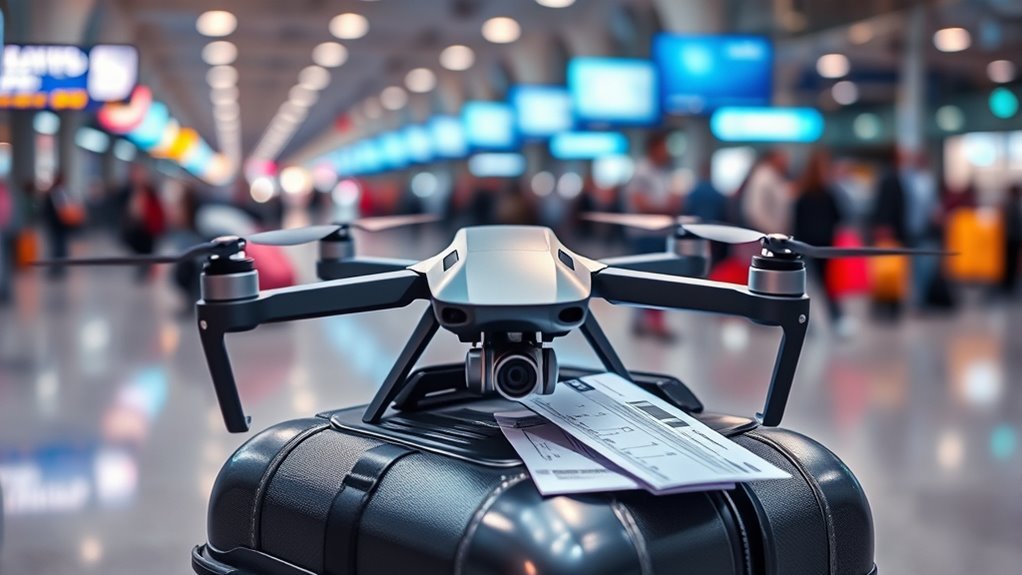
When planning to take a drone on a plane, it’s crucial to understand the specific policies of the airline you’ll be flying with. Different airlines have varying rules about drone size and whether you can carry them in your carry-on or checked luggage. Some may impose airline fees for larger drones, while others might limit the weight or battery capacity. To avoid unexpected charges, check the airline’s website or call customer service for clarification. Familiarizing yourself with these details not only saves you money but also guarantees a smooth travel experience. Remember, staying informed gives you the freedom to enjoy your drone adventures without unnecessary hassles at the airport.
Packing Your Drone for Air Travel
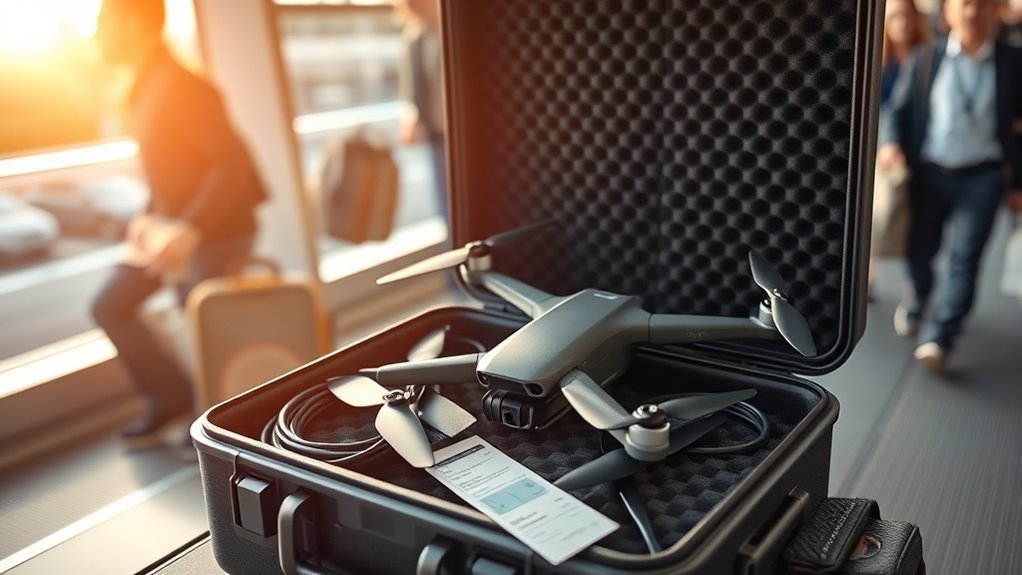
Knowing your airline’s policies sets the stage for a smooth packing process. Start by choosing the right packing materials to protect your drone and its accessories. A sturdy case is essential to prevent damage during transit. Disassemble your drone, removing the propellers and landing gear if possible, and securely stow them alongside your batteries and other accessories. Use soft padding like bubble wrap or foam to cushion everything. It’s smart to keep your batteries in a fireproof bag, as some airlines have specific rules regarding lithium batteries. Be certain to double-check weight limits to avoid extra fees. With careful packing, you’ll guarantee your drone arrives safe and ready for your next adventure!
Navigating Security Checks at Airports
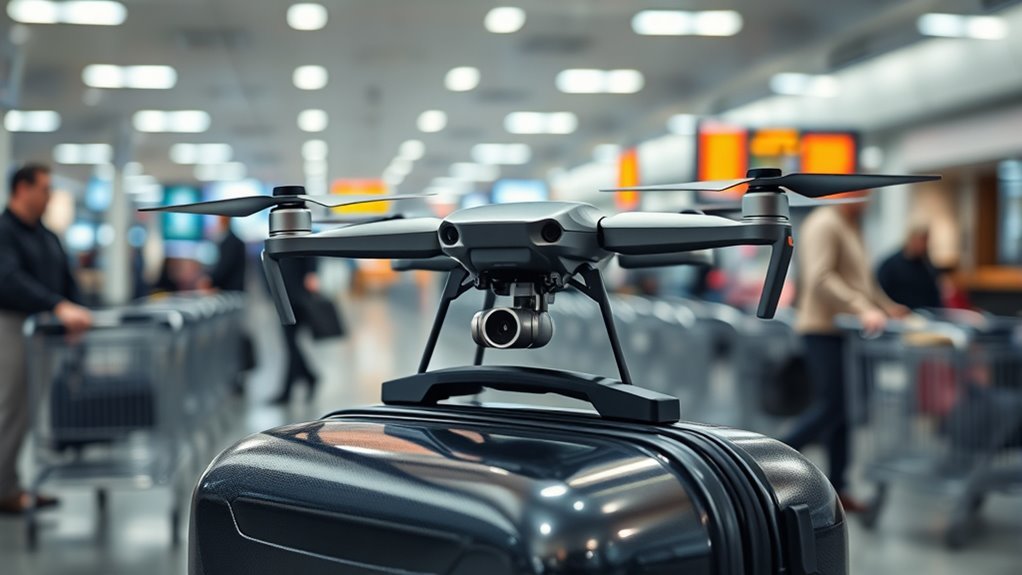
As you approach the security checkpoint, being prepared can make all the difference in ensuring a smooth experience with your drone. Familiarize yourself with the airport’s security protocols before you arrive. You’ll likely need to remove your drone from its case for screening procedures, so have it easily accessible. Keep your batteries in a separate bin, as they often require special attention. Be ready for additional questions about the drone’s purpose, especially if it’s a larger model. Staying calm and cooperative can help expedite the process. Remember, each airport may have slightly different rules, so checking in advance can save you time and hassle. Embrace the freedom your drone provides, but respect the security measures in place.
International Regulations for Drone Transport
While you might be excited to take your drone on an international trip, it is crucial to understand that regulations vary considerably from one country to another. To avoid any hassles, keep these drone regulations and international guidelines in mind:
- Research Local Laws: Each country has specific rules regarding drone use, including restricted areas where drone flights are not permitted.
- Check Import Restrictions: Some nations might prohibit certain drone models or features.
- Register Your Drone: Countries like Canada and the UK require registration for recreational use.
- Know Airspace Regulations: Familiarize yourself with no-fly zones and altitude limits in your destination. Additionally, ensure you are aware of local drone regulations to avoid legal troubles during your travels.
Tips for Flying With Your Drone
When you’re flying with your drone, it’s essential to pack it safely to prevent any damage. Make sure you’re familiar with airline regulations to avoid any surprises at the airport. Also, don’t forget to take the necessary battery safety precautions to keep everything in compliance and secure.
Packing Your Drone Safely
Packing your drone safely is essential to guarantee it arrives at your destination in one piece. To confirm everything’s secure, follow these tips:
- Use Quality Packing Materials: Invest in padded bags or cases designed for drones to absorb shocks.
- Remove Drone Accessories: Detach propellers and batteries to prevent damage and make packing easier.
- Organize with Care: Keep accessories like chargers and cables in separate compartments to avoid tangling.
- Label Your Bag: Clearly label your drone case as fragile, so handlers know to treat it with care.
Airline Regulations Compliance
After ensuring your drone is packed securely, the next step is understanding airline regulations to avoid any surprises at the airport. To fly with your drone hassle-free, check if it’s registered according to local laws and the airline’s requirements. Some airlines might charge fees for transporting drones, so be prepared for that as well. Here’s a quick reference table to keep in mind:
| Aspect | Details |
|---|---|
| Drone Registration | Required for most countries |
| Airline Fees | Varies by airline |
| Carry-on vs. Checked | Usually carry-on preferred |
| Battery Restrictions | Specific watt-hour limits |
| Size Limits | Check airline guidelines |
Being informed helps you enjoy your journey without any hiccups!
Battery Safety Precautions
Batteries are the lifeblood of your drone, but they also come with safety considerations that shouldn’t be overlooked. To guarantee a smooth journey, follow these battery safety precautions:
- Know your battery types: Lithium Polymer (LiPo) batteries are common, but they have specific handling requirements.
- Check charging limits: Make sure your batteries are charged to no more than 30-50% for travel, as this minimizes fire risks.
- Use protective cases: Store batteries in fireproof bags or cases to prevent accidental damage and fires.
- Label your batteries: Clearly mark batteries as “LiPo” to alert security personnel and avoid confusion.
What to Do if Your Drone Is Damaged or Lost
If your drone gets damaged or lost during your travels, it’s essential to stay calm and act quickly. First, assess the situation and document any damage with photos for your records. If you have drone insurance, contact your provider to file damage claims. They’ll guide you through the process, ensuring you get the compensation you deserve. If your drone is lost, report it to the airline or airport authorities immediately. Keep a record of your interactions, as this can help with your claim. Stay persistent; follow up regularly until you receive updates. Losing a drone can be frustrating, but knowing you have insurance can give you peace of mind and the freedom to explore again.
Frequently Asked Questions
Can I Bring Extra Batteries for My Drone on a Plane?
You can bring extra batteries for your drone, but you’ll need to follow battery regulations and airline policies. Check your airline’s specific rules on battery capacity and quantity to guarantee a hassle-free journey.
Are There Size Restrictions for Drone Carry-On Luggage?
Yes, there’re size restrictions for carry-on luggage, including drones. Check your airline policies for specific drone dimensions, as they can vary. Staying informed guarantees you can travel freely without any unwanted surprises at the gate.
What Happens if My Drone Is Too Large for Carry-On?
Imagine you’ve got a large drone, like a DJI Matrice, but it’s too big for carry-on. In that case, you’ll need to explore luggage alternatives, like checked baggage, ensuring safe drone transportation throughout your journey.
Do I Need to Register My Drone for Air Travel?
Yes, you need to register your drone if it weighs over a certain limit, according to drone registration requirements. Don’t forget to check international drone regulations for your destination to guarantee compliance and freedom to fly.
Can I Fly My Drone Once I Reach My Destination?
Imagine your drone soaring like a bird, but be mindful of local drone regulations. You can fly it, yet flying restrictions may apply. Always check local rules to guarantee your freedom isn’t clipped.
