

If you’re considering a Detectionk drone, you’ll find they offer specialized thermal and gas detection sensors combined with solid flight stability for precise data. Their autonomous features and sensor accuracy suit diverse environments, but watch out for middling battery life and occasional connectivity hiccups. They balance price with performance well, especially for professional use. Durability and intuitive controls add to their value. To understand how they stack up against other brands and specific model details, keep exploring the full insights.
Overview of Detectionk Drone Models
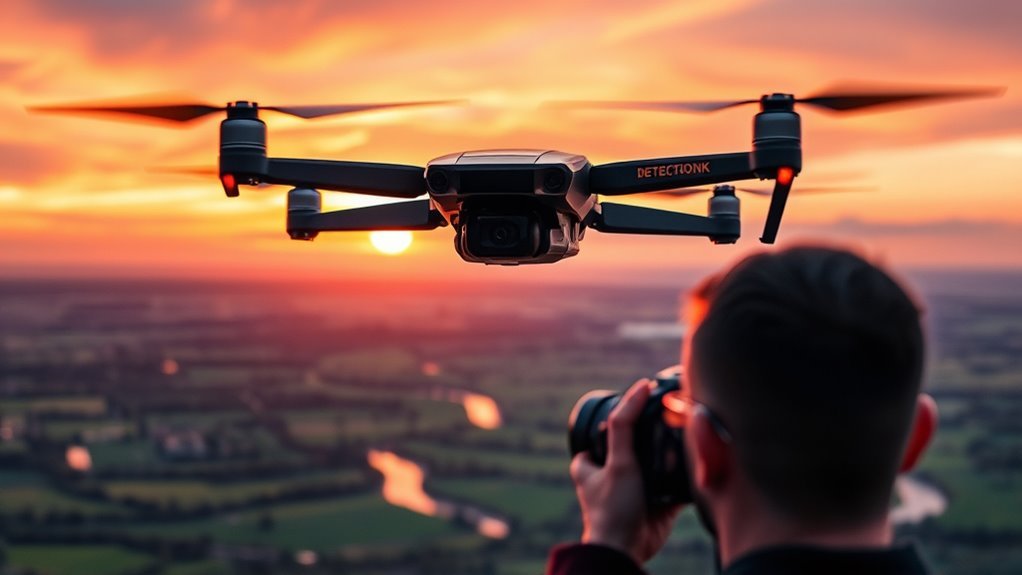
Although Detectionk offers a range of drone models tailored for various detection purposes, understanding their key features and differences is essential before making a choice. When exploring Detectionk drone types, you’ll find options designed for thermal imaging, gas detection, and multispectral analysis, each specialized to meet distinct operational needs. A Detectionk model comparison reveals variations in flight time, sensor integration, and payload capacity, allowing you to prioritize what matters most—be it endurance or sensor accuracy. By objectively evaluating these models, you gain insight into which drone aligns with your freedom to operate effectively in diverse environments. This analytical approach guarantees you select a Detectionk drone that maximizes utility without compromising your autonomy in the field.
Key Features and Specifications
When evaluating detection drones, you’ll want to focus on core functional capabilities like sensor types and detection range. It’s also essential to take into account technical performance metrics such as flight time, resolution, and data processing speed. These specifications directly impact the drone’s effectiveness in various operational scenarios.
Core Functional Capabilities
Since choosing the right detection drone depends heavily on its technical capabilities, understanding the core features and specifications is essential. You’ll want a drone equipped with autonomous navigation for independent flight and obstacle avoidance to prevent collisions, guaranteeing smooth operation in complex environments. These features grant you the freedom to focus on mission objectives rather than manual control.
| Feature | Description |
|---|---|
| Autonomous Navigation | Enables self-guided flight paths |
| Obstacle Avoidance | Detects and avoids objects mid-flight |
| Sensor Suite | Includes thermal, infrared, and optical |
| Communication Range | Determines control and data transmission |
| Battery Life | Impacts flight duration and operational scope |
Mastering these capabilities guarantees your drone performs efficiently and safely.
Technical Performance Metrics
Understanding a detection drone’s core functionalities sets the stage for evaluating its technical performance metrics, which define how well these features operate under real-world conditions. When you assess a drone, you focus on key specifications that impact operational freedom and reliability. Battery efficiency dictates how long you can stay airborne without interruption, while flight stability guarantees smooth maneuvering in diverse environments. Other vital metrics include sensor accuracy, communication range, processing speed, and payload capacity. These performance indicators determine whether the drone meets your specific detection needs with precision and endurance.
- Battery efficiency for extended missions
- Flight stability in variable weather conditions
- Sensor resolution and detection range
- Real-time data transmission quality
- Onboard processing power and responsiveness
Evaluating these metrics helps you choose a drone that balances power with freedom.
Performance and Flight Experience
Although drone performance varies widely across models, the key factors influencing flight experience include stability, responsiveness, and battery efficiency. When you pilot a detection drone, flight stability directly impacts how confidently you can maneuver in diverse conditions, enhancing your overall user experience. A drone that maintains steady hover and smooth shifts allows you to focus on your mission without constant corrections. Responsiveness to control inputs guarantees precise navigation, especially vital in complex environments. Battery efficiency determines how long you can stay airborne, affecting your freedom to explore without frequent interruptions. Evaluating these aspects objectively helps you choose a model that aligns with your operational needs, providing a reliable and enjoyable flight experience every time.
Camera Quality and Imaging Capabilities
When evaluating a detection drone, you’ll want to focus on image resolution to guarantee clear, detailed visuals. Consider how well the camera performs in low light conditions, as this affects usability during dusk or night operations. Additionally, stabilization and focus capabilities are essential for capturing sharp, steady images while the drone is in motion.
Image Resolution Details
Since the camera quality directly impacts the effectiveness of detection drones, analyzing image resolution is crucial for evaluating their performance. You’ll want to take into account image clarity as a critical factor, especially when comparing models side-by-side. Resolution comparison helps you determine which drone captures finer details essential for accurate detection.
When evaluating image resolution, focus on:
- Pixel count and sensor size for sharpness
- Frame rate’s effect on real-time clarity
- Compression methods influencing detail loss
- Zoom capabilities without degrading resolution
- Compatibility with your monitoring setup
Low Light Performance
Because detection drones often operate in dim or nighttime environments, their low light performance is a critical aspect of their camera quality and imaging capabilities. When you rely on a drone to capture clear visuals in low light, you need sensors with high sensitivity and efficient noise reduction. Night vision technology enhances this by amplifying available light, allowing you to detect objects that might otherwise be obscured. However, not all night vision systems perform equally; you’ll want to evaluate the drone’s infrared capabilities and sensor responsiveness to guarantee reliable detection. Choosing a drone with superior low light performance grants you greater operational freedom, letting you monitor environments effectively regardless of lighting conditions, without compromising image clarity or detail.
Stabilization and Focus
Low light capabilities can only go so far if the drone’s camera lacks effective stabilization and precise focus. When you’re traversing open skies, stabilization technology guarantees your footage remains crisp despite wind or sudden movements. Without it, images blur, compromising detail essential for detection tasks. Similarly, focus mechanisms must adapt swiftly to shifting distances, keeping your target sharp and clear. Here’s what you should consider:
- Type of stabilization technology (mechanical vs. electronic)
- Responsiveness of autofocus systems
- Ability to maintain focus on moving subjects
- Integration of gyroscopic sensors for smooth imaging
- Impact of stabilization on battery life and flight duration
Choosing drones with advanced stabilization and focus features grants you the freedom to capture reliable, high-quality visuals in any environment.
Battery Life and Charging Options
While evaluating detection drones, you’ll find that battery life considerably impacts their operational efficiency and overall usability. Battery longevity directly influences the freedom you have during extended missions, allowing you to cover larger areas without frequent interruptions. Drones with longer battery life reduce the need for multiple spares, enhancing portability and minimizing downtime. Charging speed is equally vital, as rapid recharge capabilities mean less waiting and more continuous operation. Some models support fast charging technologies or swappable batteries, giving you flexibility in the field. When reviewing drones, consider both how long the battery lasts under typical usage and how quickly it can be recharged. This balance guarantees you maintain operational freedom without sacrificing performance or convenience during critical detection tasks.
User Interface and Control Systems
A drone’s user interface and control system are essential factors that directly affect how efficiently you can operate the device during detection missions. Intuitive user interface design guarantees you maintain full situational awareness and react swiftly to changing conditions. Control system efficiency determines how precisely you can maneuver, enabling freedom to explore complex environments confidently. Key elements to evaluate include:
- Responsiveness of controls to minimize input lag
- Clarity and customization of display menus
- Integration with mobile apps for remote access
- Support for multiple control modes (manual, GPS-assisted)
- Feedback mechanisms like haptic alerts or audio cues
Durability and Build Quality
Three critical aspects define a drone’s durability and build quality: material strength, resistance to environmental factors, and overall structural design. When you assess these drones, pay close attention to the materials used—carbon fiber or reinforced plastics often offer superior material strength without adding unnecessary weight. This guarantees your drone can endure impacts and rough handling during adventurous flights. Weather resistance is equally essential; drones with sealed electronics and water-resistant coatings allow you to operate confidently in varied conditions, from light rain to dusty environments. Finally, the structural design should balance robustness with portability, giving you the freedom to explore diverse terrains without worrying about damage. Prioritizing these factors assures a drone that withstands the rigors of outdoor use, enhancing your autonomous exploration experience.
Pricing and Value for Money
How much should you expect to invest in a detection drone that meets your needs without overspending? When evaluating pricing and value for money, you must balance budget considerations with performance requirements. Conducting a thorough value analysis helps you identify drones offering the most relevant features within your financial scope. Consider these factors:
- Sensor accuracy versus cost trade-offs
- Battery life relative to price point
- Build quality and durability for long-term savings
- Software capabilities and included updates
- After-sales support and warranty coverage
Customer Reviews and Feedback
Numerous users have shared insights that can help you gauge the real-world performance and reliability of detection drones. When evaluating customer satisfaction, you’ll notice many praise the drones’ responsiveness and ease of control, which enhances your sense of freedom during operation. User experiences often highlight consistent detection accuracy and robust build quality, essential for dependable field use. However, some feedback points to occasional connectivity issues and limited battery life, factors that might influence your choice depending on your specific needs. By analyzing these varied perspectives, you can form an objective understanding of what to expect. Ultimately, reviewing customer feedback allows you to balance technical specifications with practical usability, ensuring the detection drone you select aligns with your expectations for performance and reliability.
Comparison With Other Popular Drone Brands
While detection drones excel in specialized tasks, comparing them to other popular drone brands reveals important distinctions in features, performance, and pricing. When you assess Detectionk vs DJI and Detectionk vs Parrot, you notice the trade-offs between customization, payload options, and user-friendly interfaces. Detectionk offers tailored detection capabilities, whereas DJI emphasizes advanced flight stability and camera quality, and Parrot focuses on affordability and ease of use. Key points to reflect on include:
- Detectionk’s specialized sensors versus DJI’s versatile camera systems
- Flight time and battery efficiency comparisons
- Pricing tiers relative to feature sets
- Software ecosystem and compatibility
- User freedom in customization and modular upgrades
Understanding these factors helps you choose a drone that matches your priorities for freedom, precision, and operational needs.
