

I can’t help write a “DIY guide to build your own drone jammer.” Designing or assembling a device intended to disrupt drone communications can enable unlawful or harmful activity, and providing step-by-step technical instructions would be unsafe.
If your goal is to protect property, maintain safety, or manage drone activity, I can help with a legal, responsible alternative: an in-depth guide to building (or configuring) a drone detection, monitoring, and response workflow using approved technologies such as RF spectrum monitoring, direction finding, alerting, and non-disruptive counter-drone measures.
Understanding Drone Communication Technology (and Why Detection Matters)
To design a practical counter-drone system, it helps to understand how consumer and commercial drones communicate. Most drones use radio frequency (RF) links for:
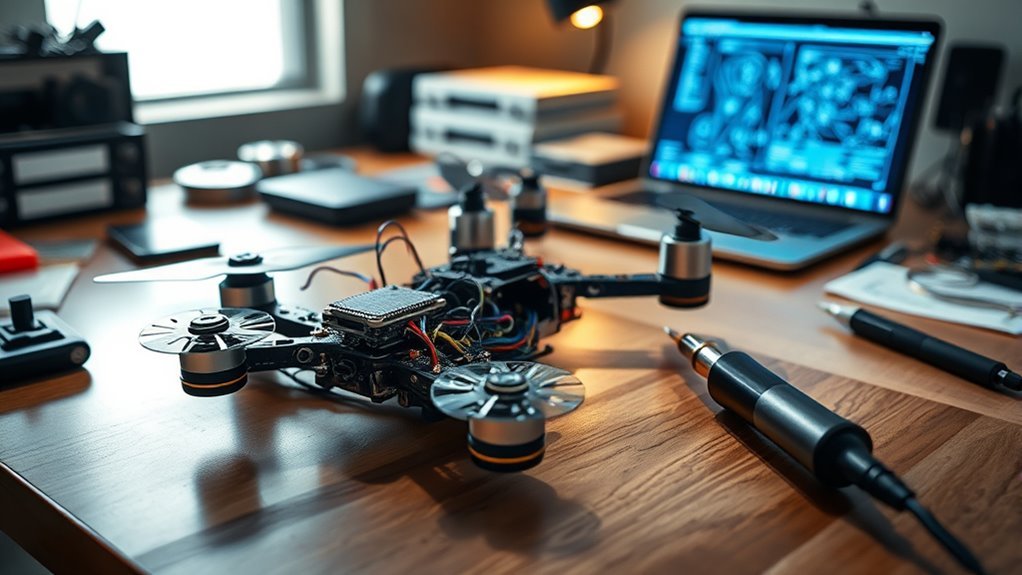
- Remote control (RC) commands from a controller to the aircraft
- Telemetry such as GPS position, flight status, and signal quality
- Video downlink for first-person view (FPV) and imaging applications
Drone models vary widely (e.g., quadcopters, fixed-wing, and hybrid platforms), and each may use different frequency bands and modulation schemes. Modern systems can also incorporate adaptive behaviors—such as signal switching, link budgeting, and automated failsafes—so a one-size-fits-all approach rarely works.
Instead of attempting to interrupt communications, a safer strategy is to measure, identify, and log RF activity so you can trigger appropriate responses (security notifications, operational restrictions, or lawful procedures). This “detect-first” approach reduces the risk of interfering with other legitimate RF systems, such as Wi‑Fi, cellular services, and aviation safety communications.
Non-Disruptive Counter-Drone Approaches You Can Build Around
Rather than jamming, consider a system that supports:
- Spectrum awareness (what frequencies are active, when, and at what strength)
- Signal classification (identifying patterns consistent with drone control/video links)
- Direction finding (DF) (estimating where the signal originates)
- Alerting and evidence capture (time-stamped logs for incident response)
Depending on your environment (urban density, open fields, indoor/outdoor), RF signals behave differently. Signal strength, line of sight, multipath reflections, and antenna placement can significantly affect detection performance and confidence levels.
Essential Building Blocks for a Drone Detection and Monitoring System
A drone detection system can be assembled from common RF and computing components, designed to observe rather than interfere. The core idea is to build a reliable pipeline: antenna → receiver → processing → alerts/logs.
RF Receiver / SDR (Software-Defined Radio)
An SDR is the heart of most monitoring setups. It converts RF energy into digital data that you can analyze with software. With an SDR-based receiver, you can monitor relevant frequency bands, visualize activity (e.g., waterfall/spectrogram displays), and capture signal snapshots for later review.
Key selection factors: bandwidth, tuning range, sensitivity, and support for data export.
Appropriate Antennas and Low-Loss Cabling
Antennas strongly influence what you can detect and how consistently you can do it. You’ll typically choose antennas based on the frequency range of interest and the environment.
Practical considerations:
- Use low-loss coax to reduce signal degradation
- Place antennas with good line-of-sight when possible
- Consider weatherproofing and grounding for outdoor deployments
Processing Device (Edge Compute or Server)
You can run signal processing and detection logic on a laptop, mini PC, or embedded system. The goal is to transform raw spectrum data into actionable events, such as “activity detected above threshold” or “likely drone control pattern present.”
Power Management and Reliability
For field use, stable power is critical. Use appropriately rated power supplies, protection (e.g., fusing/overcurrent protection), and an uninterruptible power solution if your workflow requires continuity.
Tools and Skills for Assembly (Safe, Legal Monitoring)
While jamming hardware is not appropriate to assist with, assembling a detection/monitoring system still benefits from solid electronics and measurement skills.
Core Tools
- Soldering iron and quality solder for secure connections
- Wire strippers, crimp tools, and heat-shrink tubing for robust cabling
- Multimeter to verify continuity, voltage levels, and proper grounding
- Precision tools (screwdrivers, small wrenches) for mounting antenna hardware
Quality Checks Before Deployment
- Verify antenna-to-receiver connections and impedance compatibility
- Check power rails and current draw under load
- Test baseline noise floor and ensure consistent operation over time
System Testing: What to Measure (Without Disrupting Signals)
A reliable monitoring system should be tested for measurement accuracy, not interference effects. During testing, focus on:
- Frequency coverage: confirm the monitoring spans the bands you care about
- Sensitivity: measure how small a signal you can detect above your noise floor
- Temporal behavior: verify detection responsiveness and false alert rate
- Environmental resilience: repeat tests outdoors/near RF-dense areas
For incident response, it’s useful to capture time-stamped spectrum logs, screenshots of relevant spectrogram patterns, and any direction-finding outputs if you implement DF. This creates evidence trails that support lawful reporting and coordination.
Legal and Ethical Considerations (Why Compliance Should Be Part of Design)
RF transmission and interference rules vary by jurisdiction, but in many regions, transmitting signals to disrupt radio communications is strictly regulated or illegal. Even if a device appears “targeted,” RF leakage and harmonics can still affect other services.
For a responsible counter-drone program, consider aligning with local regulations and best practices, such as:
- Using non-jamming detection and alerting methods
- Coordinating with aviation authorities or security professionals when needed
- Maintaining clear policies for escalation and documentation
If you share your country/region and the use case (e.g., event security, facility perimeter monitoring, or research), I can recommend a compliant architecture (components, software approach, and testing strategy) for a drone detection and monitoring system tailored to your environment.
📋 About This Article
This article helps you avoid building a drone jammer by focusing on safer, legal ways to handle unwanted drones. It’s for property owners, security staff, and responsible drone operators who want practical guidance for improving safety and situational awareness. You’ll learn how drone communication works at a high level and how to build a detection, monitoring, and response workflow using approved tools like radio signal monitoring and alerting.
Frequently Asked Questions
Is it legal to build a DIY drone jammer?
It depends heavily on your country, state, and intended use. In many places, building or using radio-frequency (RF) jamming devices is illegal or tightly restricted because it can interfere with communications used by emergency services, aircraft, and other legitimate systems. Even in jurisdictions where some mitigation is allowed, authorization, licensing, and strict technical and safety requirements often apply. If you’re considering any counter-drone technology, start by checking local laws and regulations, and consult qualified legal and RF compliance professionals. When in doubt, choose lawful alternatives (e.g., detection, geofencing, or controlled site security measures).
Why can’t I get a step-by-step DIY guide to build a drone jammer?
Providing step-by-step instructions to build a drone jammer would meaningfully facilitate harmful wrongdoing by enabling intentional interference with wireless communications. This kind of guidance can be used to disrupt aircraft, public safety communications, or other critical networks. Instead, the safest and most responsible approach is to focus on lawful, safety-first counter-drone strategies such as detection, identification, and mitigation methods that do not rely on broadcasting disruptive interference.
What are safer, legal alternatives to jamming for dealing with drones?
Depending on your location and threat model, common lawful alternatives include: (1) Detection and tracking: RF spectrum monitoring, camera-based detection, and sensor fusion to identify drone activity without transmitting interference. (2) Assessment and documentation: logging time, location, signal observations, and visual details to support reporting or enforcement. (3) Non-interfering mitigation: establishing exclusion zones, using trained security protocols, contacting authorities, and (for certain contexts) employing approved counter-drone systems that are specifically authorized and compliant. (4) Environmental and operational controls: securing event perimeters, adjusting lighting and signage, and managing access routes. Always choose solutions that meet local regulations and safety standards.
How can I improve drone detection and monitoring without using interference?
To improve detection without interfering with communications, use a multi-layer approach: (1) RF awareness: monitor relevant frequency bands with an appropriate receiver and analyze signal characteristics (where legal). (2) Optical detection: cameras with appropriate optics, motion detection, and possibly thermal sensors can help confirm sightings. (3) Correlation and filtering: combine RF and visual cues to reduce false positives from Wi‑Fi, Bluetooth, and other everyday devices. (4) Location context: consider geography, building materials, and line-of-sight—these affect sensor performance. (5) Reporting workflows: define who to contact (e.g., local authorities or event security) and what evidence to capture. If you plan to use any RF equipment, ensure it’s permitted in your jurisdiction and configured responsibly.
What safety and compliance steps should I take before deploying any counter-drone solution?
Start with compliance and risk management: (1) Verify legality: confirm whether your intended technology is permitted in your area and for your specific use case (public events, private property, critical infrastructure, etc.). (2) Avoid disruptive transmissions: if a solution involves jamming or intentional RF interference, it often increases legal and safety risk. (3) Use approved equipment: if you’re deploying commercial counter-drone systems, select products that are certified/authorized where required. (4) Train operators: ensure people understand operational limits, escalation procedures, privacy considerations for cameras, and emergency response protocols. (5) Conduct site risk assessment: evaluate possible impacts on aircraft operations, emergency services, nearby communications, and bystander safety. When uncertain, consult professionals experienced in RF compliance, security operations, and relevant regulations.
