

Trying to build a drone jammer yourself can expose you to serious legal, technical, and safety risks. Drone “jamming” works by deliberately interfering with radio-frequency communications and navigation links. Because these systems operate across licensed spectrum and can affect other communications beyond the target drone, any unauthorized use is widely treated as unlawful. If your goal is protecting privacy or improving safety around drones, there are safer and lawful alternatives that focus on detection, mitigation, and reporting rather than deliberate RF interference.
Before considering anything hardware-related, it’s important to understand how drone communication links function, why interference has unpredictable outcomes, and how regulations typically treat jammers and similar devices as high-risk categories.
Understanding Drone Jamming Technology
Drones rely on multiple signal paths to operate, including control links (often in specific UHF/microwave bands), telemetry, and navigation support. When a jammer transmits radio energy on or near the frequencies used by a drone’s transmitter and receiver, it can degrade signal quality to the point where the drone loses reliable command and control.
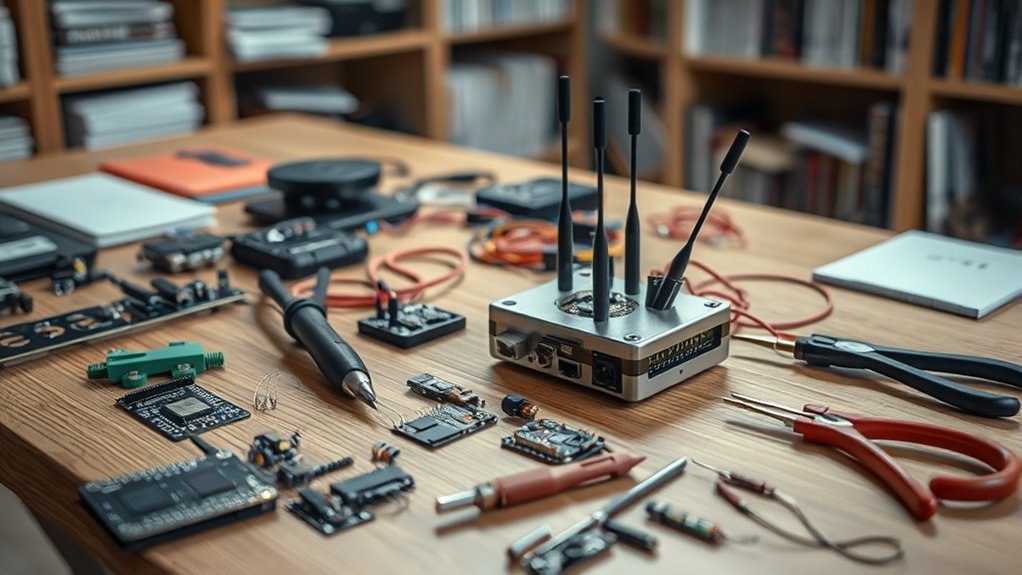
In practical terms, drone jamming attempts can cause one or more of the following effects:
- Loss of control: the operator’s commands may fail or arrive with excessive delay or errors.
- Telemetry disruption: flight status data, battery level, GPS-related information, and other telemetry may not update properly.
- Navigation instability: in some scenarios, interference can indirectly affect systems that depend on radio timing or communication-assisted navigation.
- Unpredictable flight outcomes: many drones are configured to “fail-safe” (for example, returning to home, hovering, or landing), but behavior varies by manufacturer and firmware.
Even if your intention is to stop a specific unauthorized drone, radio interference does not respect property boundaries. It can also impact legitimate aviation communications, remote control devices, Wi-Fi networks, public safety radios, or other wireless systems operating nearby—especially in dense urban environments.
Why effectiveness varies in real-world conditions
Jamming outcomes are influenced by factors such as distance, antenna direction, transmitter power, frequency planning, and environmental conditions. Obstacles like buildings, trees, and terrain can create signal reflections and multipath effects that reduce predictability. In addition, modern drones may use frequency hopping spread spectrum (FHSS) or other resilience techniques, which can change the effectiveness profile of interference attempts.
This variability is one reason “DIY” approaches are particularly unreliable. Even when interference seems to work temporarily, the drone may change behavior, switch modes, or recover when conditions improve or the link re-stabilizes.
Legal Considerations Before Building a Jammer
Most jurisdictions treat RF jamming as a serious offense because it interferes with licensed communications and can endanger public safety. In the United States, the key legal framework is enforced through the Federal Communications Commission (FCC) and related federal statutes, with additional complications from state and local laws.
Federal regulations (FCC) overview
In the U.S., the FCC regulates devices that can interfere with communications. Jammers are generally prohibited, and enforcement can include substantial financial penalties as well as equipment seizure.
Common consequences for unlawful interference include:
- Significant FCC fines (which can be severe depending on the circumstances and evidence of harm).
- Criminal exposure in cases involving willful interference or potential endangerment.
- Immediate confiscation of the device by enforcement or other authorities.
Because the spectrum is shared, the FCC evaluates both the technical capability and real-world impact. That means even “limited” or “temporary” jamming attempts can still trigger enforcement.
State law variations and local enforcement
Beyond federal rules, states may have additional restrictions involving interference with communications, harassment, trespass, or endangerment. Local governments may also have ordinances related to drone operations and privacy. The practical takeaway is that building or using any interference device can create overlapping legal risk.
Before taking any action, consult a qualified attorney to understand how federal and state statutes apply to your specific situation—especially if the activity could affect people, infrastructure, or aviation operations.
Safety Risks and Unintended Consequences
Drone jamming is not simply a “turn off” switch. It can lead to unpredictable outcomes, including:
- Loss of safe navigation: the drone may not follow a predictable return-to-home procedure.
- Runaway or erratic flight: in some cases, the drone can drift, descend, or follow a failsafe routine that still poses a hazard.
- Property and personal injury risk: an uncontrolled drone can fall, collide, or damage vehicles, rooftops, or people.
- Broader RF disruption: interference may affect other legitimate wireless services in the area.
From a safety standpoint, interference-based approaches are inherently difficult to control and hard to guarantee as “safe” even for trained operators.
Lawful Alternatives to Mitigate Unauthorized Drones
If your objective is protection—whether for event security, private property, or personal privacy—consider options that do not rely on transmitting interference.
1) Use drone detection and tracking
Legal counter-drone strategies often begin with detection and identification. Systems may include RF monitoring (to observe telemetry/control patterns), optical detection (camera-based tracking), and sensor fusion approaches that estimate drone behavior. The key benefit is situational awareness rather than destructive interference.
2) Establish reporting and escalation pathways
When a drone appears unauthorized, document observable details (time, location, flight path, operator presence if known). Then contact the appropriate authorities such as local law enforcement or aviation-related reporting channels. In many regions, authorities may also coordinate with aviation regulators and security partners.
3) Strengthen physical and procedural security
For events and sites, practical measures can reduce risk:
- Secure perimeter controls and signage.
- Set up controlled observation areas with privacy-respecting barriers.
- Coordinate with security teams and, where applicable, approved vendors specializing in counter-drone compliance.
4) Consider geofencing and approved mitigation services
Some lawful mitigation approaches focus on managing drone behavior through manufacturer-approved or authorized mechanisms. These typically require compliance workflows and coordination, particularly for larger venues or regulated environments.
Responsible Next Steps
If you’re dealing with drone activity right now, the safest and most effective route is to focus on lawful detection, documentation, and escalation. If you manage a facility or event, consider engaging a qualified counter-UAS provider who can advise on compliant options tailored to your environment and risk profile.
If you tell me your country/state, the scenario (private property, event security, near an airport, etc.), and what outcome you want (privacy protection, detection, or reporting), I can suggest legal, non-jamming approaches that fit your situation.
📋 About This Article
This article explains why building a drone jammer is unsafe and often illegal, and it outlines what really happens when radio signals are deliberately disrupted. It’s for hobbyists, property owners, and anyone worried about drones near them who want to understand the risks before attempting any hardware. You’ll learn how drone links work at a high level, why interference can affect more than one device, and what safer, lawful options to consider instead.
Is it legal to make a DIY drone jammer?
In many countries, building or using a drone jammer is illegal or tightly restricted because jamming can interfere with legitimate communications, including emergency services and nearby aircraft. Laws vary by jurisdiction, but “making” and “operating” jamming devices are often treated as serious offenses. Instead of DIY jamming, check local aviation and communications regulations, and consult the relevant authority (e.g., your national aviation regulator or telecommunications regulator) before attempting any anti-drone action.
Why are drone jammers dangerous or risky?
Drone jamming is risky because it can disrupt non-target systems and cause unintended consequences. Potential harms include interference with Wi‑Fi, cellular networks, aviation communications, GPS-dependent services, and communication links used by legitimate drones. Even if you intend to target a single drone, RF interference can affect a wider area than expected. Jamming can also provoke unsafe behavior from drones (e.g., loss of link leading to fly-away, landing in unpredictable locations, or triggering return-to-home modes).
Can a DIY drone jammer be accurate enough to target only one drone?
In practice, achieving precise, reliable “one-drone-only” interference is extremely difficult. Drones may use different control links, bandwidths, frequencies, and encryption methods, and they can change channels during operation. Environmental factors (distance, obstacles, antenna orientation, multipath effects) further reduce accuracy. Because of these variables, jammers often affect more than the intended device, and the interference footprint can extend beyond your property.
What are legal, safer alternatives to a drone jammer?
Depending on your situation (personal property, events, critical infrastructure, or restricted airspace), safer and more lawful alternatives may include: (1) using approved anti-drone systems designed and certified for your region, (2) employing non-jamming detection tools such as radar/EO/IR sensors that alert you to drone presence, (3) using geofencing/containment solutions through legitimate management methods where applicable, (4) coordinating with local authorities or airspace managers for enforcement, and (5) implementing operational measures like signage, secure perimeter controls, and event-specific procedures. If you’re responsible for safety, consult qualified providers or local regulators rather than attempting DIY jamming.
What should I do if I see an unauthorized drone near my home or workplace?
First, prioritize safety: keep people clear of the area the drone could land or crash onto, and avoid confronting the operator directly. If you can do so safely, document what you observe (time, location, direction of flight, approximate size/model if known, and any visible behaviors). Then contact the appropriate authority or security channel for your jurisdiction (local law enforcement, airspace/aviation authority, or venue security). Provide your details and any evidence you’ve collected. Many regions also have reporting mechanisms for suspected unauthorized drone activity. Following official guidance is typically the quickest way to address the risk without causing collateral interference.
