
The DJI Air 3S is the superior choice for those who prioritize extensive operational capabilities and advanced features, particularly with its impressive 20km flight range. In contrast, the Autel EVO II Dual 640T, with a maximum flight range of 12km, caters to users with specific needs for thermal imaging but falls short in overall range. This article will delve into a comprehensive comparison of these two drones across various aspects such as thermal capabilities, camera specifications, flight range, and overall performance, enabling you to make an informed decision based on your operational requirements.
Overview of DJI Air 3S and Autel EVO II Dual 640T
The DJI Air 3S and Autel EVO II Dual 640T cater to distinct segments of the drone market, with each drone offering unique features aimed at different user demographics. The DJI Air 3S is designed for professionals seeking high-end performance in aerial photography and videography, as well as advanced capabilities for inspection, surveying, and search and rescue operations. Equipped with a robust sensor and intelligent flight modes, it appeals to a wide range of industries including real estate, filmmaking, and emergency services.
On the other hand, the Autel EVO II Dual 640T is targeted at users who require specialized thermal imaging capabilities, such as first responders, security personnel, and industrial inspectors. Its dual-camera system, featuring both visual and thermal sensors, makes it an excellent choice for those in need of versatile imaging solutions in challenging environments. The unique selling propositions of the Air 3S include its extended flight range and superior camera quality, while the EVO II Dual 640T stands out for its thermal imaging prowess and rugged design.
Flight Range Comparison: O4 vs. SkyLink
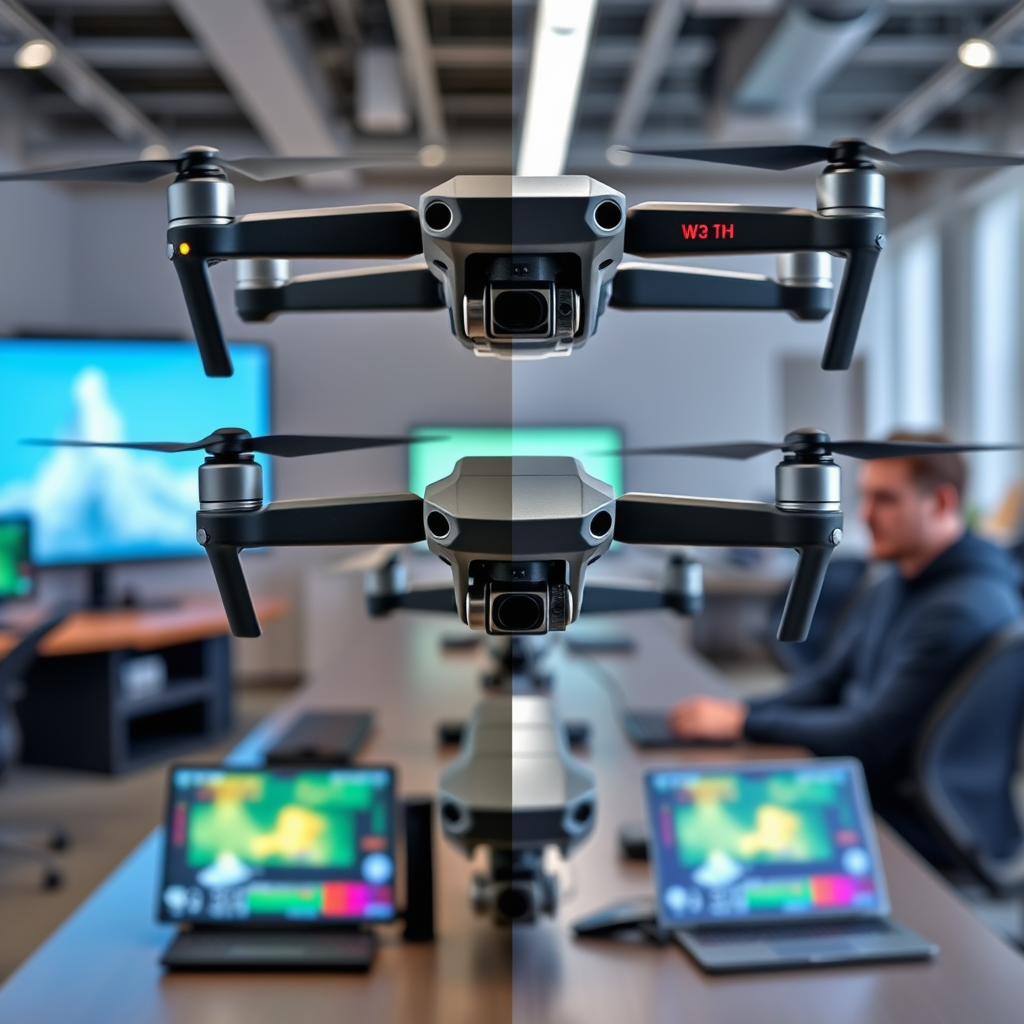
One of the most significant differences between the DJI Air 3S and the Autel EVO II Dual 640T is their flight range. The Air 3S boasts an impressive maximum flight range of 20 kilometers, facilitated by DJI’s O4 transmission technology, which ensures a stable connection even at extended distances. This extended range not only enhances operational flexibility but also allows users to cover larger areas in a single flight, making it ideal for surveying vast landscapes or conducting inspections over extensive infrastructure.
Conversely, the Autel EVO II Dual 640T offers a maximum flight range of 12 kilometers using its SkyLink technology. While this range may suffice for many applications, it restricts users who require more extensive coverage. For example, in search and rescue missions or large agricultural surveys, the reduced range could necessitate multiple flights, increasing time spent in the field. Therefore, for users whose operations demand extensive flight distances, the DJI Air 3S presents a clear advantage.
Thermal Imaging Capabilities
Thermal imaging is a critical feature for many users, particularly those in fields such as firefighting, search and rescue, and building inspections. The Autel EVO II Dual 640T is equipped with a 640×512 resolution thermal camera that provides high-quality thermal imagery, allowing for precise temperature measurements and effective identification of heat signatures. Its thermal sensor is also capable of detecting temperature differences as small as 0.05°C, making it an exceptional choice for detailed inspections.
In comparison, the DJI Air 3S includes advanced thermal capabilities with a 12MP thermal camera that supports a resolution of 320×256. While this may not match the resolution of the EVO II Dual 640T, the Air 3S compensates with advanced software features, such as real-time temperature measurement and customizable thermal color palettes. This allows users to adapt their thermal imaging to specific operational needs. Both drones serve distinct purposes: the EVO II Dual 640T excels in high-resolution thermal applications, while the Air 3S provides a robust suite of features that enhance its versatility in various scenarios.
Camera Features and Performance
When it comes to camera specifications, the DJI Air 3S takes the lead with its powerful 1-inch CMOS sensor capable of capturing 20-megapixel still images and 5.4K video at 30 frames per second. This combination of resolution and video quality allows for stunning imagery suitable for professional use. Additionally, the Air 3S features advanced image stabilization technology, ensuring smooth footage even in challenging conditions.
In contrast, the Autel EVO II Dual 640T also offers notable performance, with a dual-camera system that includes a 48-megapixel visual camera capable of recording 4K video at 60 frames per second. While the visual camera outperforms the Air 3S in resolution, the thermal capabilities are a focal point for users needing detailed temperature analysis. The EVO II Dual 640T’s unique dual-camera system provides unparalleled flexibility, allowing users to switch between visual and thermal modes seamlessly.
Usability and Control Systems
User experience plays a vital role in drone operation, and both the DJI Air 3S and Autel EVO II Dual 640T offer intuitive control systems, but with some differences. The Air 3S comes equipped with the DJI Fly app, which features a user-friendly interface, making it accessible for both beginners and seasoned pilots. The app provides comprehensive flight data, intelligent flight modes, and easy sharing options for captured media, making it a robust tool for any user.
The Autel EVO II Dual 640T utilizes the Autel Explorer app, which also offers a straightforward interface. However, it may not be as polished or feature-rich as the DJI Fly app. The remote control for the EVO II is designed for ergonomic comfort, incorporating a built-in display for real-time feedback. While both drones are relatively easy to operate, the DJI Air 3S gains an edge with its superior app functionality and user engagement features.
Battery Life and Charging Options
Battery life is a critical factor for drone performance, and both the DJI Air 3S and Autel EVO II Dual 640T offer respectable flight times. The Air 3S can achieve a maximum flight time of approximately 46 minutes under ideal conditions, allowing for extended operational periods without frequent interruptions for recharging. This extended battery life is particularly beneficial for applications requiring prolonged monitoring or extensive surveying.
In comparison, the Autel EVO II Dual 640T boasts a flight time of up to 40 minutes, which is still commendable but slightly less than the Air 3S. Both drones support rapid charging options, but the Air 3S offers the added convenience of USB-C charging, allowing for more versatile charging solutions, including connections to portable power banks. This flexibility can be crucial for users operating in remote locations where traditional charging options may not be readily available.
Pricing and Value for Money
When considering a drone purchase, pricing and value for money become essential factors. The DJI Air 3S is priced at a premium, reflecting its advanced features and superior performance capabilities. Users investing in the Air 3S can expect a comprehensive suite of functionalities, justifying the higher cost for professional applications.
The Autel EVO II Dual 640T, while slightly less expensive, still offers exceptional value, particularly for users focused on thermal imaging. Its dual-camera system and robust design make it a strong contender for specific industries requiring thermal capabilities. Both drones come with manufacturer warranties and customer support options, but potential buyers should consider which features align most closely with their operational needs when evaluating overall value.
Choosing between the DJI Air 3S and the Autel EVO II Dual 640T ultimately hinges on your specific requirements and operational contexts. The DJI Air 3S excels in flight range and camera performance, making it ideal for professionals needing extensive coverage and high-quality visuals. In contrast, the Autel EVO II Dual 640T stands out in thermal imaging, catering to users whose primary focus lies in temperature analysis and inspection tasks. Evaluate your goals, budget, and desired functionalities to make an informed decision between these two impressive drones.
Frequently Asked Questions
What are the main differences between the DJI Air 3S and Autel EVO II Dual 640T in terms of camera capabilities?
The DJI Air 3S features a single 1-inch CMOS sensor capable of 20MP stills and 5.4K video, providing high-quality imagery in various lighting conditions. In contrast, the Autel EVO II Dual 640T is equipped with a dual-camera system, including a 640×512 thermal camera and a 12MP RGB camera, making it ideal for search and rescue, industrial inspections, and thermal imaging applications. This dual-camera capability allows users to capture both standard and thermal images simultaneously, which is a significant advantage for specific professional uses.
How does the transmission range of the DJI Air 3S compare to the Autel EVO II Dual 640T?
The DJI Air 3S utilizes the OcuSync 4 (O4) transmission technology, offering an impressive range of up to 20 kilometers under optimal conditions. In contrast, the Autel EVO II Dual 640T operates on SkyLink technology, providing a transmission range of up to 12 kilometers. This difference in range can significantly impact users who require long-distance operation, particularly in applications like surveying or mapping where extended connectivity is crucial.
Why should I choose the Autel EVO II Dual 640T over the DJI Air 3S for thermal imaging applications?
If your primary need is thermal imaging, the Autel EVO II Dual 640T is the superior choice due to its specialized dual-camera setup that includes a high-resolution thermal sensor. This drone is designed for professionals in industries such as firefighting, building inspections, and search and rescue, allowing users to detect heat signatures and analyze thermal data effectively. While the DJI Air 3S excels in photography and videography, it does not offer thermal capabilities, making the Autel a more versatile option for those specific applications.
Which drone is better for casual photography and videography, the DJI Air 3S or Autel EVO II Dual 640T?
The DJI Air 3S is generally considered the better option for casual photography and videography due to its advanced camera system, user-friendly controls, and superior image quality. With its ability to shoot 5.4K video and 20MP stills, it provides stunning visuals that are perfect for hobbyists and content creators. The Autel EVO II Dual 640T, while capable, is primarily optimized for thermal imaging and may not deliver the same level of performance for standard photography as the Air 3S.
How do the battery life and flight times compare between the DJI Air 3S and Autel EVO II Dual 640T?
The DJI Air 3S boasts a flight time of up to 46 minutes on a single charge, making it one of the leaders in battery performance among consumer drones. Meanwhile, the Autel EVO II Dual 640T offers a flight time of about 40 minutes, which is still impressive but slightly less than that of the Air 3S. Users should consider these differences based on their intended use; longer flight times can be crucial for extensive aerial surveys or long-duration shoots.
References
- Drone
- https://www.reuters.com/technology/drones-are-being-used-fight-russia-ukraine-2023-02-03/
- https://www.sciencedirect.com/science/article/pii/S2210670721000665
- https://www.wired.com/story/what-you-need-to-know-about-drones/
- https://www.bbc.com/news/technology-56871888
- https://www.nytimes.com/2022/07/14/technology/drone-usage-military.html
- https://www.autelrobotics.com/
- https://www.theguardian.com/world/2021/oct/05/ukraine-drone-wars-russia-ukraine-conflict
