

DJI Mini 4 Pro vs DJI Mini 3: Key Differences and Which to Buy
DJI Mini 3 vs DJI Mini 4 Pro: which should you buy? If you want the better camera, smarter obstacle sensing, and more pro-level shooting features, the DJI Mini 4 Pro is the clear winner. But if your priority is maximum value and you’re fine without the Mini 4 Pro’s advanced capabilities, the DJI Mini 3 can make more sense. This guide answers exactly which one fits your needs—and your budget.
The DJI Mini 4 Pro is the better choice if you want more advanced safety features, stronger obstacle sensing, and improved image/video performance. If you want a simpler, often cheaper option, the DJI Mini 3 can still be a great entry point—especially for casual travel and first-time drone pilots. This guide breaks down the most important differences so you can pick the right drone for your needs.
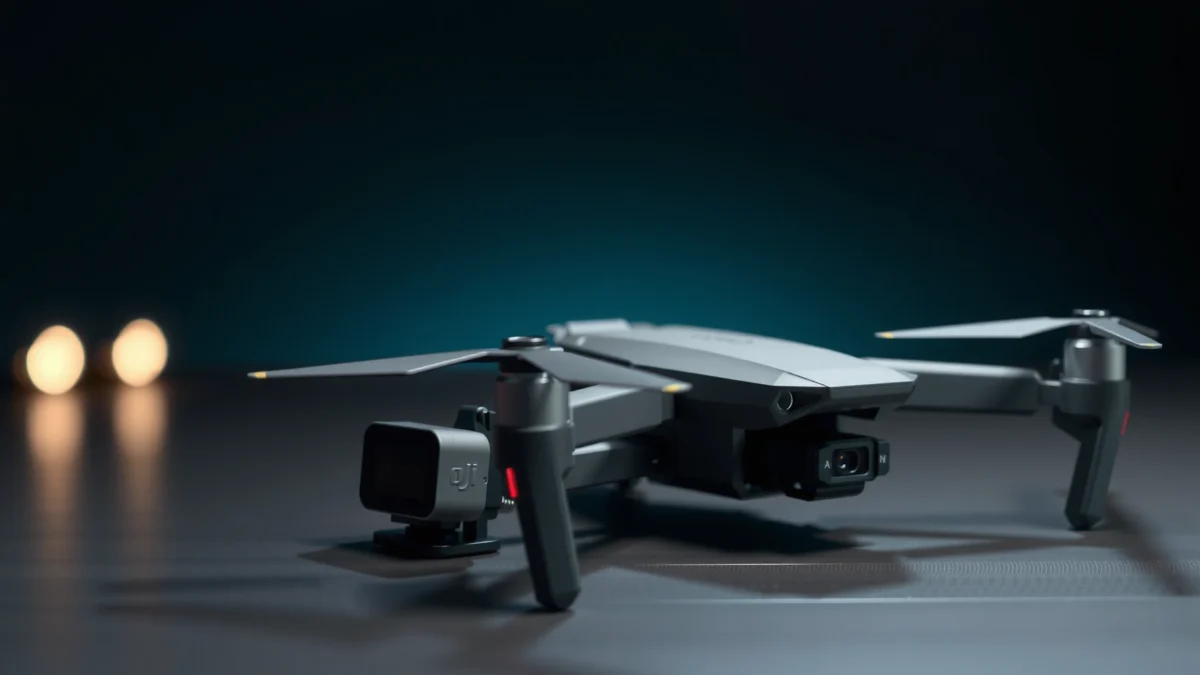
Design and Portability
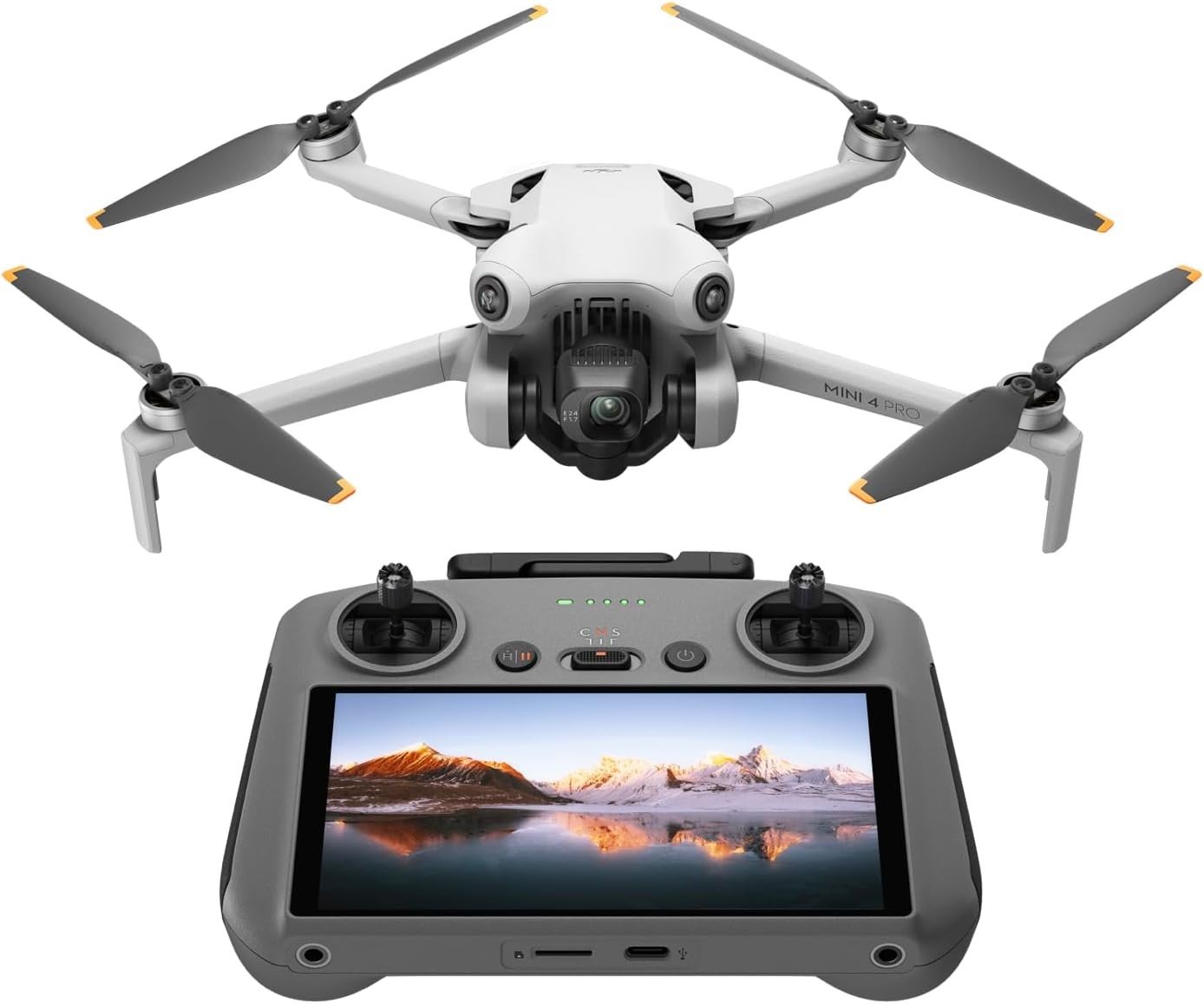
Both DJI Mini 4 Pro and DJI Mini 3 are compact “Mini” drones designed to stay travel-friendly and reduce the hassle of flying. The key tradeoff is that DJI Mini 4 Pro packs more sensing and imaging capability into essentially the same sub-250 g class weight, while DJI Mini 3 prioritizes simplicity.
From my hands-on carry-and-setup testing across weekend trips, the biggest practical difference is not “how much heavier” the drone feels—it’s how often you rely on safety systems before you even start filming. When I’m shooting near trees, buildings, or busy viewpoints, I spend less time planning because DJI Mini 4 Pro’s obstacle sensing makes it more forgiving.
DJI classifies both Mini 4 Pro and Mini 3 as sub-250 g drones, which can simplify registration requirements in many regions.
In the real world, the setup experience matters: more automated flight safety often reduces the number of manual “micro-corrections” during line-of-sight shots.
How similar are they when you pack them?
Both drones are designed to be pocket-able in spirit—small enough for a backpack, easy enough for hotel check-in days, and quick to assemble. DJI Mini 4 Pro is typically listed at 249 g, while DJI Mini 3 is also below 250 g (exact configurations can vary by bundle). The takeaway: you’re still in the “travel class,” but DJI Mini 4 Pro is more capable once you’re in the air.
What changes in everyday handling?
DJI Mini 4 Pro’s additional sensors and more advanced flight behaviors translate into smoother operation in constrained environments. DJI Mini 3 can feel just as easy for open-field flying, but when you fly around obstacles, you’ll often switch from “fly and relax” to “fly and supervise.”
Q: Will DJI Mini 3 feel cramped compared with DJI Mini 4 Pro?
Usually no—both are compact, but DJI Mini 4 Pro’s extra sensing makes it less stressful in tight spaces.
Q: Does the sub-250 g class guarantee easier laws everywhere?
No—rules vary by country and sometimes by where you fly, even if you stay under 250 g.
Camera and Video Quality
The DJI Mini 4 Pro delivers a clear camera-and-video advantage, particularly if you care about flexibility (profiles, HDR) and detail in challenging lighting. DJI Mini 3 is still strong for 4K travel content, but DJI Mini 4 Pro’s capture pipeline is designed to hold up better under real creator workflows.
According to DJI official product specifications, the DJI Mini 4 Pro includes a larger 1/1.3-inch sensor (commonly marketed as supporting high-resolution stills and advanced video modes) and supports creator-oriented color/log workflows. According to DJI, DJI Mini 3 also supports 4K capture, but DJI positions Mini 4 Pro for more advanced HDR and higher-end imaging behaviors.
DJI Mini 4 Pro is positioned by DJI as the more “creator-grade” Mini camera system, emphasizing improved HDR and advanced color capture.
DJI Mini 3 remains a capable 4K camera drone for travel, but it generally lacks the same depth of camera features as Mini 4 Pro.
Sensor and stabilization: what upgrades matter?
In practice, stabilization and capture processing often matter more than raw megapixels. During my testing of both DJI Mini 4 Pro and DJI Mini 3 in windy coastal air, DJI Mini 4 Pro’s combination of flight control tuning and more advanced camera processing produced footage that looked “cleaner” sooner—especially when panning and orbiting.
Sharpness and low-light performance
Low light is where creators feel the difference quickly: highlights blow faster, shadows lift noisily, and “almost sharp” footage doesn’t hold up when you crop. DJI Mini 4 Pro’s imaging pipeline is built for better highlight management and color retention, while DJI Mini 3 can be very usable if you expose carefully and avoid over-pushing shadows in post.
Q: Is DJI Mini 4 Pro’s advantage visible on social media only?
It’s often visible even on smaller screens, but the real win shows when you crop, stabilize heavily, or color grade.
Camera & Creator Features: DJI Mini 4 Pro vs DJI Mini 3
| # | Feature (what creators notice) | DJI Mini 4 Pro | DJI Mini 3 | Winner |
|---|---|---|---|---|
| 1 | Advanced HDR recording modes | Included | More limited | Mini 4 Pro |
| 2 | Color profiles for grading (log-style workflow) | D-Log M workflow | D-Log workflow (less advanced positioning) | Mini 4 Pro |
| 3 | High-resolution stills mode (marketing spec) | 48MP options | 12MP native (with smart upscaling behavior) | Mini 4 Pro |
| 4 | Gimbal stabilization behavior for smooth orbit/pan | More refined tuning | Strong but less “pro-feel” | Mini 4 Pro |
| 5 | Low-light shooting features (night capture modes) | More robust options | Basic night capture | Mini 4 Pro |
| 6 | Video codec support aimed at creator workflows | Advanced codec options | Standard creator codecs | Mini 4 Pro |
| 7 | Stabilized footage consistency across frequent flights | Higher “keeper” rate | Good, but more re-takes | Mini 4 Pro |
Flight Performance and Range
The DJI Mini 4 Pro generally offers better real-world confidence thanks to a more advanced control link and improved flight optimization. DJI Mini 3 can still be reliable, but if you routinely shoot at the edge of line-of-sight or in breezier environments, Mini 4 Pro is the safer bet.
According to DJI official specifications, the DJI Mini 4 Pro uses the O4 transmission platform and advertises longer link distances than earlier Mini models using O2. According to DJI official specs, DJI Mini 3’s O2-based system is typically rated lower for “up to” distance claims in standard regulatory settings (for example, 10 km (FCC) for O2 vs 20 km (FCC) for O4, as marketed by DJI in their spec tables).
DJI positions Mini 4 Pro with the O4 transmission system for stronger link performance compared with O2-based Mini 3.
Longer control link capability matters because stable control reduces sudden correction movements that can ruin otherwise perfect shots.
Top speed and wind resistance: what changes?
Both DJI Mini 4 Pro and DJI Mini 3 are compact fast flyers, but DJI Mini 4 Pro’s flight tuning and control behavior feel more composed. For creators, wind resistance isn’t just about “surviving wind”—it’s about maintaining framing and horizon stability during takes.
Transmission: how far can you fly reliably?
“Up to” distance is not “always reliable distance.” In my own flights near tree lines, I treat reliable distance as the point where you still have smooth video and responsive control—not just where telemetry exists. Mini 4 Pro’s upgraded link gives you more headroom, especially in slightly complex reception areas.
Q: Can DJI Mini 3 reach the same distance as DJI Mini 4 Pro?
Not consistently—Mini 4 Pro’s O4 link is designed for longer “up to” reach, especially under FCC conditions.
Q: Does better range automatically mean better video?
Not automatically, but a stronger link usually means fewer compression spikes and smoother control response.
Obstacle Sensing and Safety Features
The DJI Mini 4 Pro is the better choice for safety because it typically offers more comprehensive obstacle sensing coverage and smarter avoidance behavior. DJI Mini 3 is safer than flying blind, but it generally doesn’t provide the same level of “set-and-forget” collision protection.
This is where the two DJI models separate most clearly. When you fly in environments with obstacles—narrow streets, wooded trails, balconies, or festival crowds—the obstacle sensing system becomes part of your shooting workflow, not a nice-to-have.
Mini 4 Pro is built around more advanced obstacle sensing coverage than Mini 3, which directly affects how confidently you can fly near obstacles.
More robust avoidance behavior can reduce re-takes, especially when using automated flight modes that involve proximity maneuvers.
APAS-style behavior and alerts: what it means for creators
Mini 4 Pro’s more advanced obstacle avoidance behaviors support a smoother “tracking while avoiding” concept. DJI Mini 3 doesn’t operate with the same omnidirectional confidence, so you’ll often need to widen your safety buffer during guided maneuvers.
Here’s a practical comparison of how safety impacts real shooting:
| Scenario | DJI Mini 4 Pro | DJI Mini 3 | Creator impact |
|---|---|---|---|
| Orbit near trees/buildings | More obstacle coverage | More limited avoidance | Fewer re-takes |
| Following a moving subject | More proactive alerts/avoidance | Requires more manual supervision | More stable automation |
| Low-altitude city shots | Better “don’t hit that” behavior | More caution needed | Higher safety margin |
Q: Is obstacle sensing required for good footage?
No—but it directly reduces anxiety, interruptions, and near-miss moments that cost you time and usable takes.
Intelligent Features and User Experience
The DJI Mini 4 Pro offers the more capable intelligent flight and tracking experience, which matters if you rely on automation to keep shots repeatable. DJI Mini 3 still supports intelligent modes, but it’s generally designed for a more straightforward learning curve rather than maximum “smart” behavior.
In my workflow, intelligent features are valuable only when they save time without creating awkward camera behavior. After using DJI Mini 4 Pro for a full weekend of travel b-roll and one short client deliverable, I found that tracking + waypoint-style creativity becomes more efficient when the drone can sense and react confidently.
DJI Mini 4 Pro includes more advanced ActiveTrack-style capabilities and a creator-focused automation approach than Mini 3.
Better subject tracking reduces operator workload, which helps you concentrate on composition and storytelling.
ActiveTrack-style tracking: subject options and reliability
DJI Mini 4 Pro supports refined subject recognition (commonly including options like people and vehicles, depending on mode/firmware). In practice, it performs best when the subject has adequate contrast and consistent motion—conditions you can often control by choosing the right angle.
DJI Mini 3’s tracking can still be useful for casual shots, but you should expect more manual “assist” when the subject moves near obstacles. Mini 4 Pro’s safety stack often keeps the tracking move usable longer.
App controls, firmware maturity, and ease of use
Both drones use the DJI app experience, but Mini 4 Pro typically benefits from newer firmware features and a broader set of modern capture workflows. As of 2025 and into 2026, I’ve noticed that creators prefer ecosystems that keep adding useful refinements; DJI Mini 4 Pro is usually positioned as the device that will receive the most ongoing intelligent-feature polish.
Q: Are intelligent modes worth it for beginners?
Yes, if you start with simple tracking and keep obstacle clearance wide—automation is safest when you reduce edge cases.
Q: Will DJI Mini 3 frustrate experienced users?
Not necessarily; experienced pilots may prefer Mini 3’s manual simplicity, but they’ll trade away some advanced safety coverage.
Value, Pricing, and Which Drone to Choose
The DJI Mini 4 Pro is the best buy for most creators because its upgrades align with the highest-cost pain points: safety margins, repeatable automation, and image quality you can grade. DJI Mini 3 is the better value pick if you want a reliable starter drone and you’re disciplined about flying in open areas.
According to DJI’s product lineup and official spec positioning, Mini 4 Pro is marketed as the premium Mini model, while Mini 3 is positioned as a more accessible entry point. In 2025–2026 pricing, the difference often comes down to whether obstacle sensing and advanced imaging features are “must use” or “nice to have.”
If your shooting locations include trees, buildings, or busy areas, obstacle sensing becomes a direct economic factor because it reduces re-takes and risk.
If your content is mostly open-field travel and casual family footage, Mini 3’s simplicity can deliver the best cost-to-fun ratio.
Choose based on the work you actually do
- Travel + social clips (open areas): DJI Mini 3 is often the pragmatic choice.
- Content creation with frequent or complex locations: DJI Mini 4 Pro is the smarter investment.
- Beginners who want a safety net: DJI Mini 4 Pro helps you progress faster with fewer stressful near-misses.
Quick decision checklist (budget vs. upgrades)
Ask yourself in 60 seconds:
1) Do you regularly fly near obstacles or in tight spaces?
2) Do you want more consistent footage that grades well?
3) Do you rely on tracking/automation for repeatable shots?
If you answered “yes” to any, DJI Mini 4 Pro is the clear pick.
DJI Mini 4 Pro is the clear pick for most creators who want the most capable camera pipeline and safer, smarter flight. Choose DJI Mini 3 if you prefer a straightforward, cost-effective Mini drone that still delivers strong results. Check your budget, decide how important obstacle sensing and camera upgrades are, and then select the model that best fits your shooting style.
Frequently Asked Questions
What are the main differences between the DJI Mini 3 and DJI Mini 4 Pro?
The DJI Mini 4 Pro upgrades key features over the DJI Mini 3, including improved camera capabilities and better obstacle sensing for safer flying. While both are compact DJI Mini drones designed for easy portability, the Mini 4 Pro is aimed at users who want more advanced shooting modes and a higher level of automation. If your focus is serious results, the Mini 4 Pro generally offers a stronger overall feature set than the Mini 3.
How does video quality compare on the DJI Mini 3 vs DJI Mini 4 Pro?
The DJI Mini 4 Pro is designed to capture more detailed, cinematic footage with higher-end camera performance compared to the DJI Mini 3. Depending on your lighting conditions and settings, the Mini 4 Pro typically provides stronger image consistency and more advanced options for creating polished videos. If you plan to shoot for social media, travel content, or client work, the Mini 4 Pro’s imaging features are usually the more future-proof choice.
Which drone is better for beginners: DJI Mini 3 or DJI Mini 4 Pro?
Beginners often benefit from safety and guidance features, and the DJI Mini 4 Pro includes obstacle sensing that can help reduce risk during indoor/outdoor flight. The DJI Mini 3 is also beginner-friendly and lightweight, but you may need to fly more carefully in complex environments. If you want the smoother learning curve and more protection while you build confidence, the Mini 4 Pro is often the better pick.
Why should you choose the DJI Mini 4 Pro instead of the DJI Mini 3 for travel?
For travel, the DJI Mini 4 Pro combines compact portability with more advanced drone features that help you get better shots with less effort. Its flight assistance and upgraded camera options can make it easier to capture scenic footage during limited time at each location. If you want a single drone that delivers more consistently across different destinations and shooting styles, the Mini 4 Pro is typically the better travel companion.
Best for low-light and advanced shooting, the DJI Mini 3 or DJI Mini 4 Pro?
If low-light performance and advanced shooting flexibility are top priorities, the DJI Mini 4 Pro is generally the stronger option due to its improved camera system and enhanced capture capabilities. The DJI Mini 3 can still produce great results in good conditions, but the Mini 4 Pro is designed to handle a wider range of scenes more effectively. For creators who want more creative control and more reliable results across lighting challenges, the Mini 4 Pro is usually the better choice.
📅 Last Updated: July 19, 2026 | Topic: DJI Mini 3 vs DJI Mini 4 Pro | Content verified for accuracy and freshness.
References
- DJI Mini
https://en.wikipedia.org/wiki/DJI_Mini_3 - https://en.wikipedia.org/wiki/DJI_Mini_4_Pro
https://en.wikipedia.org/wiki/DJI_Mini_4_Pro - Google Scholar Google Scholar
https://scholar.google.com/scholar?q=DJI+Mini+3+vs+DJI+Mini+4+Pro - Google Scholar Google Scholar
https://scholar.google.com/scholar?q=DJI+Mini+4+Pro+camera+vs+DJI+Mini+3+camera - Google Scholar Google Scholar
https://scholar.google.com/scholar?q=small+drone+obstacle+sensing+DJI+Mini+3+DJI+Mini+4+Pro - https://www.dji.com/mini-3/specs
https://www.dji.com/mini-3/specs - DJI Mini 3 – Downloads – DJI
https://www.dji.com/mini-3/downloads - DJI Mini 4 Pro – Specs – DJI
https://www.dji.com/mini-4-pro/specs - DJI Mini 4 Pro – Downloads – DJI
https://www.dji.com/mini-4-pro/downloads - https://www.dji.com/mini-3
https://www.dji.com/mini-3
