
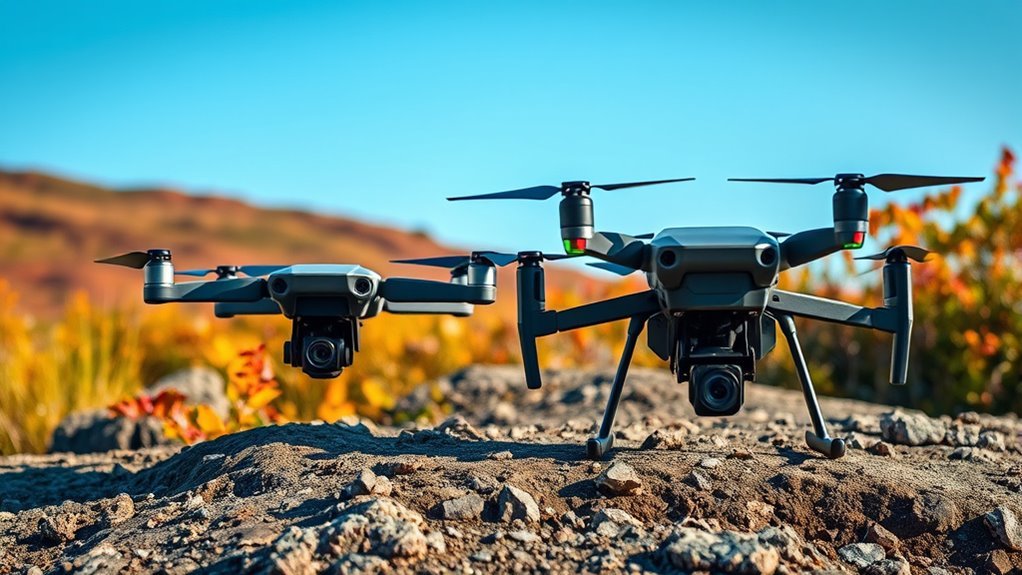
When you’re comparing the DJI Mini 4 Pro and Freefly Alta 8 Pro, you’ll notice the Mini 4 Pro’s 48MP sensor delivers sharp 4K60 HDR footage with solid 3-axis stabilization for quick, portable adventures. In contrast, the Alta 8 Pro’s 20MP Micro Four Thirds sensor offers cinematic 6K resolution, superior dynamic range, and enhanced stability for professional projects like aerial mapping. These differences highlight their strengths in usability and versatility, so further exploration can help refine your choice.
Camera Specifications and Resolution
When comparing the camera specifications and resolution of the DJI Mini 4 Pro and Freefly Alta 8 Pro, it’s clear that each drone caters to different needs. You’ll find the DJI Mini 4 Pro’s 1/1.3-inch CMOS sensor technology strikes a balance for everyday adventurers, offering a 48MP resolution that captures sharp details without overwhelming bulk. Its lens options, like the wide-angle setup, let you explore freely in tight spaces, prioritizing portability and ease for spontaneous flights.
In contrast, the Freefly Alta 8 Pro boasts a larger sensor technology, such as its Micro Four Thirds option, delivering up to 20MP resolution for professional-grade precision. You’ll appreciate its versatile lens options, which adapt to demanding scenarios, empowering you to push creative boundaries without compromise. This setup frees you to tackle complex projects, whether surveying vast landscapes or cinematic endeavors, ensuring your vision isn’t limited by hardware constraints. Furthermore, the Hasselblad camera technology in drones like the DJI Mavic 3 Pro exemplifies the high standards of image quality that can be achieved with advanced sensors. Ultimately, your choice hinges on whether you seek lightweight freedom or robust capability.
Video Quality and Color Performance
Delving into video quality and color performance, you’ll find the DJI Mini 4 Pro delivers crisp 4K footage with vibrant hues via its efficient HDR processing, making it ideal for everyday creators. In comparison, the Freefly Alta 8 Pro elevates your options with cinematic 6K resolution, providing superior dynamic range that captures intricate details in both shadows and highlights, giving you the freedom to explore without limitations. When evaluating color grading, the DJI’s straightforward profiles suit quick edits, while the Alta 8 Pro’s advanced tools offer deeper customization for professional workflows. This means you’ll enjoy more precise control over tones and saturation, enhancing your creative liberty. Ultimately, the choice hinges on your needs: the DJI excels in accessible vibrancy, whereas the Freefly empowers extensive post-production finesse, ensuring your vision remains uncompromised. Furthermore, both drones feature 1-inch CMOS sensors, which significantly improve image quality and performance in varying lighting conditions.
Stabilization Features and Effectiveness
Shifting from video quality, the DJI Mini 4 Pro’s stabilization relies on a 3-axis gimbal that minimizes shakes effectively, making it reliable for everyday flights where wind or user error might occur. You’ll appreciate how this gimbal technology integrates with electronic stabilization methods to deliver smooth footage, empowering you to explore freely without compromising clarity. In contrast, the Freefly Alta 8 Pro elevates gimbal technology with its robust 3-axis system, often paired with advanced stabilization methods like horizon leveling and active damping, which handle high-wind conditions or dynamic maneuvers with precision. This setup guarantees you’re not tethered by vibrations, offering superior effectiveness for professional shoots. Analytically, while the Mini 4 Pro excels in portability and ease, the Alta 8 Pro’s methods provide more resilience, giving you the freedom to push aerial boundaries while maintaining impeccable stability. Ultimately, your choice hinges on whether you prioritize lightweight agility or uncompromising performance. Additionally, the hexacopter design of drones like the Yuneec Typhoon H showcases how multi-rotor configurations can enhance stability in challenging flying conditions.
Usability and Practical Applications
The usability of the DJI Mini 4 Pro shines in everyday scenarios, where its lightweight design and intuitive controls let you launch quickly for casual shoots or recreational flights without needing advanced skills. This enhances your user experience, offering ease of handling that frees you to capture spontaneous moments with minimal fuss. In contrast, the Freefly Alta 8 Pro demands more setup due to its robust build, making it ideal for professional cinematic projects where you’re seeking advanced stability and payload capacity. You’ll appreciate how the Mini 4 Pro’s portability suits recreational adventures, like exploring trails or documenting trips, while the Alta 8 Pro excels in demanding applications such as aerial mapping or film productions, prioritizing precision over simplicity. Ultimately, your choice hinges on balancing user experience with the ease of handling required for your desired freedom in the skies. Notably, the payload capacity of the Alta 8 Pro allows for the use of high-end cameras, enhancing its versatility in professional applications.
Frequently Asked Questions
What Is the Price Difference Between These Drones?
Imagine the thrill of exploring vast skies without breaking the bank—it’s a freedom many drone enthusiasts crave. When considering the price difference between these drones, you’ll find drone market trends show a stark contrast in price comparison. The DJI Mini 4 Pro typically costs around $599, while the Freefly Alta 8 Pro soars to about $5,000, highlighting how budget-friendly options versus professional rigs impact your aerial adventures. This gap underscores evolving affordability in the industry.
How Long Is the Battery Life for Each Model?
You’re curious about the battery performance and flight duration for these drone models. For the DJI Mini 4 Pro, you’ll enjoy up to 34 minutes of flight time, giving you ample freedom to capture adventures without frequent recharges. Meanwhile, the Freefly Alta 8 Pro typically offers 15-20 minutes, prioritizing robust stability for extended professional endeavors. This difference lets you choose based on your exploration needs.
Are These Drones Suitable for Beginners?
You’re wondering if these drones are suitable for beginners. Did you know that over 70% of new pilots succeed with user-friendly models? The DJI Mini 4 Pro boasts strong beginner features like automated flight modes, offering exceptional ease of use for effortless takeoffs. In contrast, the Freefly Alta 8 Pro demands more expertise due to its advanced setup. You’ll enjoy the freedom to explore skies safely as your skills grow.
What Accessories Are Available for Them?
When you’re seeking accessories for your drones, you’ll find camera gimbals essential for smooth, stabilized footage during flights, and drone cases vital for protecting your gear on adventures. These options enhance your freedom to explore creatively. Other must-haves include extra batteries for extended flights, propellers for reliability, and filters for better video quality, allowing customized setups tailored to your needs.
Do They Come With a Warranty?
Oh, you’re picturing yourself as a free-flying eagle, but warranties? They’re the invisible nets that catch you if tech falters—ironically promising liberty from breakdowns. For these drones, warranty coverage includes manufacturer defects, with a typical warranty duration of one year for DJI Mini 4 Pro and up to two years for Freefly Alta 8 Pro. You’ll enjoy objective protection, analyzing risks objectively to soar confidently.
