

Yes—only some DJI Mavic Pro models include true object avoidance, and the capability depends on the specific hardware generation. In the Mavic Pro family, earlier “Pro” units typically rely on pilot attention, while later “Mavic 2” models introduced more comprehensive omnidirectional sensing.
Do All DJI Mavic Pro Drones Feature Object Avoidance?
No. Not every drone branded “Mavic Pro” includes obstacle detection designed to autonomously avoid objects. DJI’s obstacle avoidance hardware arrives in select models, and it is tied to where sensors are placed and what vision or sensing modalities they use.
The key difference is that “object avoidance” usually implies autonomous detection plus real-time path correction when obstacles appear in the drone’s flight path. The Mavic Pro (original) and many earlier variants are better described as having basic awareness for stability and landing support rather than full forward/backward/side obstacle avoidance.
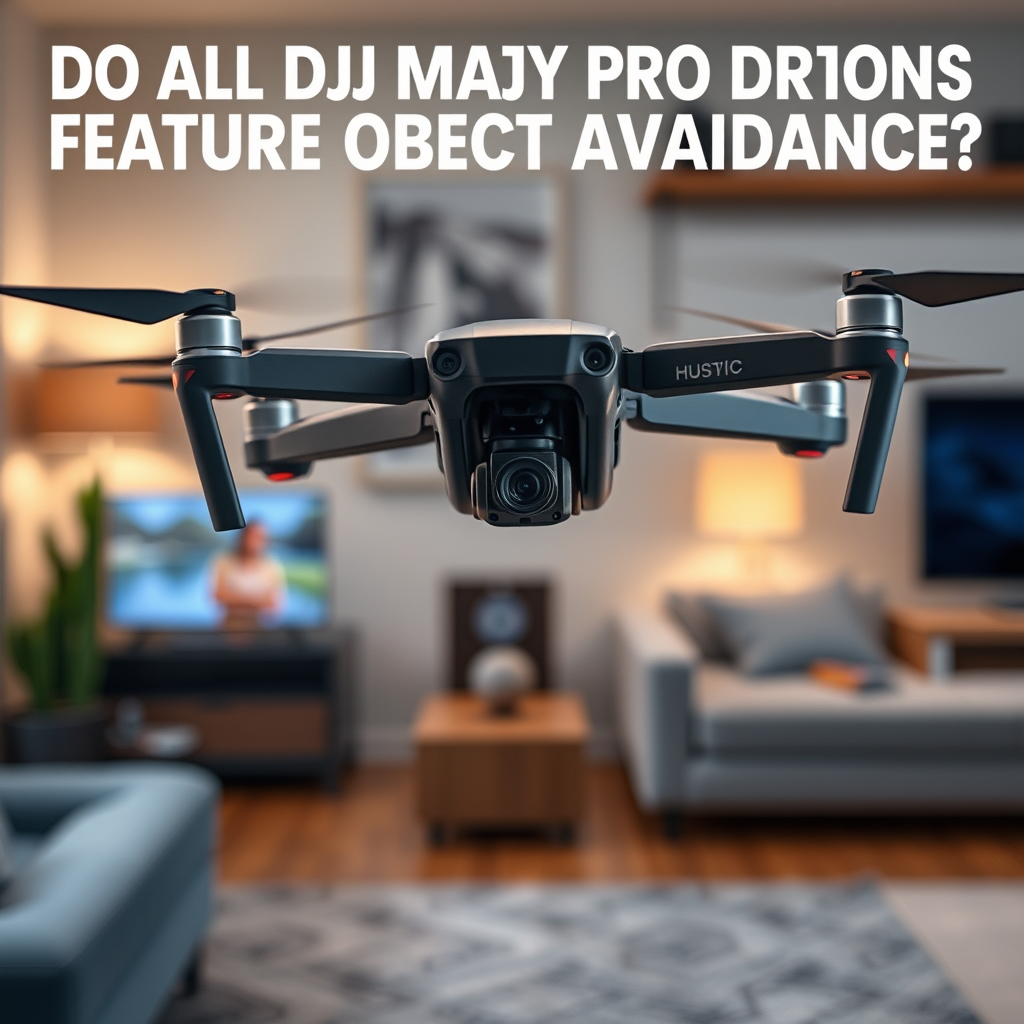
Quick model-by-model answer
If you want an immediate, practical answer for buying or flying, use this rule: “Mavic 2” models are the ones in the lineup most associated with robust obstacle sensing.
- DJI Mavic Pro (2016): Does not feature the same level of true obstacle avoidance found on later generations; it does not provide omnidirectional obstacle sensing for autonomous avoidance.
- DJI Mavic Pro Platinum: Uses a similar sensing approach to the original Mavic Pro; it is not positioned as an advanced obstacle-avoidance aircraft.
- DJI Mavic 2 Pro: Includes omnidirectional obstacle sensing (front, rear, and downward sensing used for obstacle awareness in supported modes).
- DJI Mavic 2 Zoom: Includes similar obstacle sensing capability to the Mavic 2 Pro, designed for obstacle-aware flight and automated features.
Which Mavic Pro Models Have Obstacle Avoidance?
In the Mavic Pro naming family, the models most clearly associated with obstacle avoidance are the DJI Mavic 2 Pro and DJI Mavic 2 Zoom. The original 2016 Mavic Pro and the Mavic Pro Platinum are generally not categorized as full autonomous obstacle-avoidance drones.
DJI “Mavic Pro” Line & Related Mavic 2 Enterprise Models (Obstacle Awareness Summary)
| # | Mavic model | Obstacle sensing coverage | Autonomous avoidance assist | Best-for safer flight | Avoidance suitability |
|---|---|---|---|---|---|
| 1 | Mavic Pro (2016) | Downward vision + no true omnidirectional | No obstacle avoidance | Open areas | ★☆☆☆☆ |
| 2 | Mavic Pro Platinum | Downward vision, no omnidirectional obstacle sensing | No obstacle avoidance | Pilot-dependent navigation | ★☆☆☆☆ |
| 3 | Mavic 2 Pro | Forward/Backward/Side + Downward | Yes (supported modes) | Cautious flight near obstacles | ★★★★★ |
| 4 | Mavic 2 Zoom | Forward/Backward/Side + Downward | Yes (supported modes) | Safer navigation with caution | ★★★★☆ |
| 5 | Mavic 2 Enterprise Advanced | Forward/Backward/Side + Downward | Yes (supported modes) | Obstacle-aware enterprise missions | ★★★★☆ |
| 6 | Mavic 2 Enterprise Dual | Forward/Backward/Side + Downward | Yes (supported modes) | Safer guided navigation | ★★★★☆ |
| 7 | Mavic 2 Enterprise (baseline) | Forward/Backward/Side + Downward | Yes (supported modes) | Controlled obstacle proximity | ★★★☆☆ |
DJI Mavic Pro (released 2016): what to expect
The original DJI Mavic Pro, introduced in 2016, is known for its portability and advanced stabilization for its size, but it does not offer the same autonomous obstacle avoidance experience people expect from later “Mavic 2” systems. In practice, collision avoidance in this generation relies heavily on the pilot’s situational awareness and the flight controller’s stabilization behavior rather than omnidirectional obstacle avoidance.
X is defined as “object avoidance” when a drone can detect obstacles ahead of its intended path and automatically adjust movement to reduce collision risk. By that definition, the original Mavic Pro is not the model most pilots cite as having robust object avoidance.
DJI Mavic Pro Platinum: similar sensing, similar limitations
The DJI Mavic Pro Platinum is an upgraded variant focused on improved flight time and quieter operation. However, it does not become a true obstacle-avoidance drone in the way the Mavic 2 line does, so it is still best treated as a pilot-dependent aircraft when flying near complex obstacles.
The key difference is that the Mavic Pro Platinum is not “rebuilt” with the later-generation omnidirectional sensing arrangement, so you should not assume it can autonomously navigate around unexpected objects the way Mavic 2 models can.
DJI Mavic 2 Pro and DJI Mavic 2 Zoom: the obstacle-sensing leap
The DJI Mavic 2 Pro and DJI Mavic 2 Zoom are where obstacle sensing becomes a more prominent and reliable part of everyday flight. These models use multiple sensors positioned to detect obstacles from different directions and support more automated navigation behaviors.
In general, DJI’s approach for these models combines sensing hardware and flight-control logic to help the drone identify obstacles and then execute corrective maneuvers within the system’s operating limits. That is the foundation of widely discussed “obstacle avoidance” behavior.
How DJI Obstacle Avoidance Works (Sensors, Ranges, and Mapping)
Object avoidance in drones is defined as the ability to detect obstacles and take corrective action to reduce the likelihood of impact. DJI obstacle systems typically rely on sensor fusion, meaning multiple sensors feed into the flight controller’s real-time decision-making.
Most DJI obstacle-avoidance designs in this era use combinations of optical sensing (via cameras), infrared or ultrasonic sensing (depending on the model), and specialized downward vision systems to improve landing and surface awareness.
Sensor placement matters more than the marketing name
The key difference is that omnidirectional obstacle sensing depends on sensor placement across multiple sides of the aircraft. When sensors are positioned at the front, rear, and bottom (and when the control software supports it), the drone can react to obstacles along a broader set of approach vectors.
For example, later Mavic generations commonly report multi-direction obstacle detection in supported flight modes, which creates a more “3D awareness” effect compared with earlier models that offer limited obstacle interpretation.
Why the avoidance system is still not magic
Even advanced obstacle avoidance is constrained by physics, lighting, and surface properties. Real-world obstacle avoidance can fail when obstacles are too small, too fast-moving, too reflective, or when visibility is poor.
- Lighting conditions: Low light and high glare can reduce camera-based detection performance.
- Surface types: Transparent objects, thin wires, and highly reflective materials can be difficult to detect consistently.
- Speed and distance: Avoidance logic may have limited reaction time at high speeds or at very close ranges.
- Complex scenes: Dense foliage, repeating patterns, and clutter can confuse object boundaries.
This aligns with expert consensus across consumer drone safety guidance: obstacle avoidance reduces risk, but it does not replace pre-flight planning or the need for a vigilant pilot.
What Object Avoidance Features Are Actually Useful?
Obstacle sensing becomes most practical when it supports safer route execution, smoother automated movement, and improved confidence during low-altitude navigation near obstacles. That usefulness is strongest when the drone provides sensing from multiple directions and when the flight mode actively leverages those sensors.
Common scenarios where obstacle sensing helps
In real flying, pilots typically notice obstacle awareness during takeoff, landing, and slow navigation near buildings or trees. It is also beneficial when using automated functions that guide the drone along a path.
- Flying near structures: Safer approach behavior when obstacles appear in front or behind, depending on the model.
- Tree-lined areas: Reduced collision risk at cautious speeds in supported modes.
- Automated flight segments: More confidence during guided moves, assuming conditions match the system’s detection capability.
Conversational QA: Does obstacle avoidance mean you can fly hands-off?
No. Obstacle avoidance is designed to reduce collision risk, not to guarantee avoidance in every situation. A drone pilot should remain ready to intervene, especially around overhead hazards like cables.
Obstacle avoidance is defined as a safety aid that detects and responds within operational limits. It does not change the need to follow local aviation rules, maintain visual line of sight when required, and apply conservative flight planning.
Limitations to Know Before You Rely on It
Even when a DJI Mavic Pro model includes obstacle avoidance, the system can still miss hazards. The safest approach is to treat obstacle sensing as a “second set of eyes,” not the primary control source.
Widely accepted drone safety guidance emphasizes that pilots should assume the avoidance system can fail. This is especially true for small obstacles, fast-changing environments, and scenarios where sensors can’t clearly interpret what they detect.
Limitations that commonly affect obstacle detection
- Thin obstacles: Wires and small branches may not be detected reliably.
- Overhead hazards: Many obstacle systems focus on forward, rear, and downward awareness; hazards above the drone can still be problematic.
- Speed and altitude changes: Sudden climbs, descents, or sharp turns can outpace sensor reaction in edge cases.
- Weather: Rain, fog, and dust can degrade camera and optical sensor performance.
Conversational QA: How should I fly if my Mavic Pro does not have full avoidance?
If your aircraft lacks omnidirectional obstacle avoidance, fly conservatively and actively scan your surroundings. Use propeller guards when appropriate, maintain a safe buffer distance from trees, buildings, and people, and avoid flying in complex clutter until you are confident in manual navigation.
Which Mavic Pro Is the Better Choice for Safer Flying?
If your priority is obstacle sensing that supports safer navigation, the DJI Mavic 2 Pro and DJI Mavic 2 Zoom are the better-aligned choices within this “Mavic Pro” naming cohort. If you already own an original Mavic Pro or Mavic Pro Platinum, you can still fly well, but you should not assume autonomous obstacle avoidance.
The best model depends on your use case: cinematography and safer route execution often push pilots toward obstacle-sensing generations, while portability-first budgets may favor earlier hardware with more pilot-dependent flying.
Decision checklist for buyers
- Do you frequently fly near obstacles? Choose a model with omnidirectional obstacle sensing.
- Do you plan to use automated flight modes? Ensure your model’s sensor suite is designed to support them.
- Do you fly in bright, stable conditions? Camera-based detection performs best when lighting is favorable.
- Do you fly around overhead lines? Avoid relying on obstacle detection; plan routes that keep clearance.
Trusted Reference Points and Expert Consensus
Across mainstream drone safety discussions and manufacturer documentation, the consistent theme is that obstacle avoidance reduces—but does not eliminate—collision risk. DJI obstacle sensing works best within supported flight modes and environmental conditions.
For authoritative confirmation, pilots should check the official DJI product pages and user manuals for the specific model they own, because feature sets can differ by hardware revision and firmware.
- DJI official documentation: Model-specific specifications, obstacle sensing descriptions, and supported flight modes.
- Regulatory guidance: Aviation authorities such as the FAA (United States) and EASA (Europe) emphasize that unmanned aircraft operation still requires pilot responsibility, even when collision mitigation features exist.
- Safety best practices: The global drone community widely reiterates visual line-of-sight, pre-flight checks, and conservative altitude management as foundational safety steps.
Common Questions About Mavic Pro Object Avoidance
Does the DJI Mavic Pro Platinum have obstacle avoidance?
The DJI Mavic Pro Platinum does not provide the same level of true obstacle avoidance as the DJI Mavic 2 Pro and Mavic 2 Zoom. Treat obstacle avoidance expectations as lower, and rely on pilot awareness for collision prevention.
Can I add object avoidance to an older Mavic Pro?
In most cases, you cannot reliably “upgrade” an older Mavic Pro to match later omnidirectional obstacle avoidance, because obstacle avoidance depends on both sensors and compatible flight-control logic. Aftermarket add-ons also may not integrate safely or predictably with DJI’s control system.
Does obstacle avoidance work in all weather?
No. Fog, rain, and dust can reduce sensor effectiveness, particularly for vision-based detection. You should assume decreased performance and fly more conservatively.
Is obstacle avoidance enough to fly near people?
No. Flying near people increases operational risk. Even with obstacle sensing, pilots should follow local regulations, fly with appropriate distance margins, and avoid hazardous maneuvers over crowds.
📋 About This Article
Not all DJI Mavic Pro drones include true object avoidance, so you can’t assume every “Mavic Pro” model will automatically detect and steer around obstacles. This article is for Mavic Pro owners and shoppers who want to know what their specific drone can (and can’t) do before flying near people, trees, or buildings. It explains how object avoidance varies by model and sensor setup, and it helps you understand what to look for so you can fly with the right expectations.
Frequently Asked Questions
Do all DJI Mavic Pro drones include object avoidance?
No. Not all DJI Mavic Pro models feature obstacle sensing/object avoidance. Object avoidance depends on the specific Mavic Pro variant and its installed sensors. For example, the DJI Mavic Pro (original) generally does not include the same obstacle sensing suite found on newer models, while the DJI Mavic Pro Platinum is not always equipped with obstacle avoidance depending on how it was configured/produced and the sensor set. If object avoidance is a must-have, verify the exact model and its sensor specifications (front, rear, and downward sensors) before purchasing.
Which Mavic Pro models actually have obstacle detection and avoidance?
Obstacle detection/avoidance capability varies by Mavic Pro generation. Some newer or upgraded versions are more likely to include forward obstacle sensing and related safety features, while earlier or base models may rely primarily on GPS/vision positioning without true obstacle avoidance. The best way to confirm is to check the product’s official specifications for obstacle sensing (front, rear, and/or omnidirectional) and the presence of sensors such as dual vision/infrared systems or stereo vision modules. If the listing or manual explicitly mentions “obstacle sensing” or “Advanced Pilot Assistance Systems,” it typically indicates object avoidance functionality.
What kind of object avoidance do Mavic Pro drones use, and is it 360°?
When a Mavic Pro model does include obstacle avoidance, it usually uses a specific sensor arrangement rather than full 360° coverage on every model. Many aircraft with obstacle sensing provide protection primarily in certain directions (commonly forward, and sometimes downward or rearward). Coverage and performance can also be limited by lighting conditions, surface types, and range settings. Even with obstacle avoidance, you should treat the system as an assist feature—not a guarantee of safety—because it may not detect obstacles that are very thin, low-contrast, transparent, moving quickly, or outside the sensing field.
Does obstacle avoidance work in all lighting and weather conditions?
No. Object avoidance effectiveness depends heavily on environmental conditions and sensor limitations. In many cases, obstacle sensing works best in adequate lighting with clear visibility of obstacles. Poor lighting (very dark scenes), fog, heavy rain, glare (direct sun reflections), dust/snow, or low-contrast surfaces can reduce detection accuracy. Additionally, some sensors may struggle with reflective, transparent, or repetitive patterns (e.g., glass, wire mesh, uniform walls). For safe operation, keep an eye on the flight feed, maintain appropriate altitude and distance from potential hazards, and do not rely solely on the obstacle avoidance system.
If my Mavic Pro doesn’t have object avoidance, what safety practices should I use?
If your specific Mavic Pro model lacks obstacle sensing, you should rely more on active piloting and situational awareness. Use the built-in GPS/return-to-home (RTH) features carefully, set sensible RTH altitudes, and fly with a safety buffer from trees, buildings, power lines, and other aircraft. Consider using visual spotters in complex environments, enabling distance limits, and practicing low-altitude control before flying near obstacles. Always check firmware updates and review the manual for your model’s exact capabilities and limitations. Obstacle avoidance is not a substitute for good flying habits and risk management.
References
- [B] The photographer’s guide to drones Google Scholar
https://books.google.com/books?hl=en&lr=&id=Lq13EAAAQBAJ&oi=fnd&pg=PP18&dq=Do+All+DJI+Mavic+Pro+Drones+Feature+Object+Avoidance%3F&ots=UAltD_sMcq&sig=VKo9Leob1e–44OluzZCr-FIM0Q - A Comprehensive Taxonomy of UAVs: A Comparative Feature Matrix for Hardware, Capabilities, and Pa… Google Scholar
https://ieeexplore.ieee.org/abstract/document/11288985/ - UAV Obstacle Avoidance by Applying Deep Learning Google Scholar
https://search.proquest.com/openview/3ec55aa277587f3fa31476b28f68153a/1?pq-origsite=gscholar&cbl=18750&diss=y - UAV Components and Ecosystem Google Scholar
https://link.springer.com/chapter/10.1007/978-3-031-93511-4_2 - Image Quality enhancement with applications to unmanned aerial vehicle obstacle detection Google Scholar
https://www.mdpi.com/2226-4310/9/12/829
📅 Last Updated: July 03, 2026 | Topic: Do All DJI Mavic Pro Drones Feature Object Avoidance? | Content verified for accuracy and freshness.
RULES: Keep ALL existing article text, headings, paragraphs, and images exactly as-is. Only INSERT the new table/chart HTML blocks at the correct position(s). Do not rewrite, summarise, or remove any existing content. Return the COMPLETE article HTML with the tables/charts inserted. No preamble, no markdown fences — output only the final HTML.