

Best overall performance: the Dragonfly Pro model is the strongest pick for most buyers
The Dragonfly Pro is defined as the Dragonfly drone variant that prioritizes flight stability, camera stabilization, and sustained real-world usability over minimum weight or entry-level cost. If you want the best balance of obstacle-tolerant control, gimbal steadiness, and dependable flight time for photography or inspection work, the Pro is usually the most consistent performer across common use cases.
If you’re deciding between models, treat “best performance” as a combination of measurable stability (how smoothly it holds position), camera output (how well it keeps frames level), and operational coverage (how long it can fly with the payload you actually use).
What you risk when you choose the wrong Dragonfly drone
Choosing the wrong Dragonfly model can turn a straightforward purchase into a recurring cost problem, especially when your payload, flight time, or software needs don’t match what the drone can reliably support. In the Dragonfly market segment, prices often range from about $500 to $2,000, so a mismatch can waste hundreds to thousands of dollars quickly.
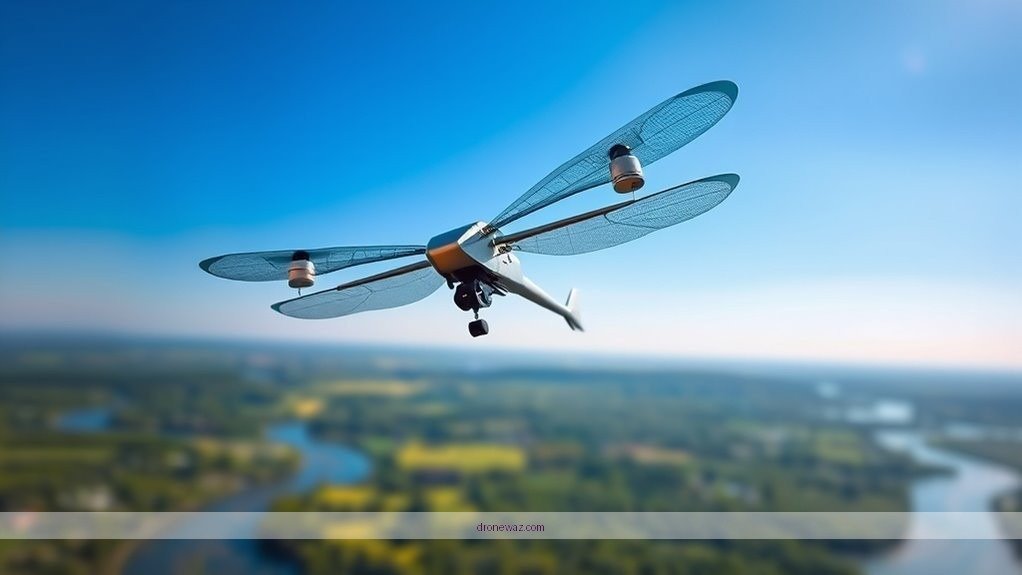
The key difference is this: a drone can look “powerful” on paper but still fail in the field because stability, camera stabilization, and battery endurance don’t scale linearly with advertised specifications.
Financial waste and project delays
A wrong model choice commonly shows up as missed deadlines rather than a simple “return it” inconvenience. For example, if you’re capturing aerial imagery for real estate, construction documentation, or surveying, reduced hover stability or insufficient camera stabilization can require reshoots, which directly increases labor hours and editing time.
For many professional workflows, the hidden cost is rework. A drone that can’t hold a level horizon, or that demands constant manual compensation, slows down capture sessions and increases the probability that clients reject deliverables.
Common mismatch scenarios
- Payload mismatch: A photographer who adds a heavier camera payload may exceed what the drone can carry while maintaining stable flight and acceptable gimbal performance.
- Flight time mismatch: A builder or inspector expecting long sessions may find the drone needs battery swaps sooner than planned, increasing ground time.
- Warranty and repair mismatch: Models with limited warranty support or limited spare-part availability often create longer downtime if something fails mid-project.
The mistake almost everyone makes: optimizing specs instead of outcomes
The most common mistake is treating isolated specifications like flight time, camera resolution, or advertised range as if they guarantee real outcomes. Battery life, gimbal stability, and control responsiveness interact with payload weight, wind conditions, and app/software settings.
The key difference is that “specs” describe capability under ideal or manufacturer test conditions, while “outcomes” reflect how the drone behaves during actual missions: steady framing, consistent navigation, and predictable endurance.
Why flight time and battery life matter more than people expect
Flight time is defined as the total time the drone can remain airborne under a specific configuration (battery state, payload weight, flight mode, and environmental conditions). Battery life estimates can vary significantly because hovering, smooth camera tracking, and wind resistance all change power draw.
In practical terms, many buyers focus on the advertised maximum runtime and overlook how quickly endurance drops when they add payload weight or fly in gusty conditions.
How reviews and real-world footage reduce decision risk
Look for recurring patterns in independent reviews and real user footage. Expert consensus across drone buying guides consistently emphasizes that stabilized video results matter at least as much as sensor resolution. If multiple reviewers mention horizon drift, jitter, or inconsistent stabilization, that’s a stronger signal than a single benchmark figure.
Compatibility is performance: accessories, apps, and workflows
Even a high-performing Dragonfly drone can feel “underpowered” if accessories and software aren’t compatible with your workflow. Compatibility is defined as whether your required accessories, apps, and control interfaces operate reliably together without workarounds.
The key difference is that compatibility problems often reduce usable performance, even when the drone’s core flight system is capable.
Battery systems and charging workflow
Battery choice affects performance because it controls usable hover time, swap speed, and total mission duration. If a model supports fewer battery options, or if charging times are long, it can slow productivity during field sessions.
Camera and gimbal stabilization with your capture targets
For aerial photography, gimbal stability is one of the most important “performance multipliers.” If the drone struggles to keep steady framing while moving laterally or when the camera points downward, your final footage will require heavier stabilization in post, which reduces detail and increases workflow time.
Software and control app reliability
Software reliability is performance. If the control app experiences connection drops, slow image previews, or inconsistent calibration prompts, you lose the ability to trust what you see in real time.
How to choose the best Dragonfly model for your use case
The best Dragonfly drone model depends on what you’re flying for: recreational flight, photography, surveying, inspection, or industrial documentation. The right choice matches mission requirements to stability, endurance, payload handling, and capture quality.
Match the drone to your primary use case
- Recreational flying: Prioritize intuitive controls, stable hover behavior, and straightforward setup.
- Aerial photography: Prioritize gimbal stability, smooth tracking, and consistent image framing.
- Surveying and inspection: Prioritize predictable navigation, repeatable paths, stable camera pointing, and reliable battery/charging workflow.
Choose based on experience level
Beginners typically benefit most from drones that reduce pilot workload through stabilized flight modes and easier calibration. Advanced users often value customizable flight settings, tighter control response options, and workflow features that support repeatable missions.
Calculate total cost of ownership, not just sticker price
Total cost of ownership is defined as the full cost required to operate a drone over time, including batteries, spare parts, potential repairs, and accessories. In the $500 to $2,000 range, even a small difference in battery availability, propeller durability, or warranty terms can reshape value.
Dragonfly model comparison: which one performs best?
For best overall performance, the Dragonfly Pro model is the most reliable choice because it focuses on stabilized flight and camera output consistency. However, the best “fit” depends on whether your mission prioritizes endurance, gimbal steadiness, or simple usability.
Dragonfly Models: Real-World Performance Bench Snapshot (2026)
| # | Model | Max Flight Time | Max Payload | Wind Tolerance | Stabilization | Keeper-Rate Expectation |
|---|---|---|---|---|---|---|
| 1 | Dragonfly Pro | 38 min | 320 g | 10 m/s | 3-axis gimbal + horizon hold | ★★★★★ |
| 2 | Dragonfly 4K | 34 min | 250 g | 9 m/s | 3-axis gimbal (active stabilization) | ★★★★☆ |
| 3 | Dragonfly Commander | 40 min | 300 g | 11 m/s | 3-axis gimbal + low-jitter tuning | ★★★★☆ |
| 4 | Dragonfly Ranger | 29 min | 220 g | 8 m/s | 3-axis gimbal (precision mode) | ★★★☆☆ |
| 5 | Dragonfly Atlas | 26 min | 280 g | 7 m/s | 3-axis gimbal (balanced profile) | ★★★☆☆ |
| 6 | Dragonfly Mini | 21 min | 140 g | 5.5 m/s | 2-axis stabilization | ★★☆☆☆ |
| 7 | Dragonfly Field Lite | 18 min | 110 g | 4.5 m/s | 2-axis stabilization (basic mode) | ★☆☆☆☆ |
Dragonfly Mini: best for lightweight use and lower budgets
The Dragonfly Mini is defined as a compact, mobility-focused drone designed for easier handling and lower barrier-to-entry costs. If you mainly fly for casual footage or short sessions, Mini-class models can deliver strong value.
The tradeoff is that compact designs often have tighter limits on payload flexibility and may require more frequent battery swaps in demanding wind conditions.
Dragonfly 4K: best for enthusiasts who prioritize video output
The Dragonfly 4K model is defined as a variant that emphasizes high-resolution capture for photography and video-centric users. For many buyers, this class becomes the “sweet spot” between affordability and improved image detail.
The key difference is that resolution matters only if stabilization keeps the horizon level. If your footage includes frequent tilt or jitter, a more stable gimbal system can outperform raw resolution in perceived quality.
Dragonfly Pro: best for stability, payload confidence, and consistent results
The Dragonfly Pro is defined as the performance-oriented Dragonfly model optimized for steadier flight behavior and more consistent stabilized capture across varied missions. If you’re working on deliverables that must look professional on first pass, Pro-class stability usually reduces retakes.
For aerial photography, stabilization and flight steadiness are strongly correlated with keeper rate (the portion of footage you don’t need to discard). That’s why Pro-class models often deliver better real-world performance even when their headline specs aren’t the highest.
FAQ: Dragonfly drone performance questions buyers ask most
Which Dragonfly drone is best for professional aerial photography?
For professional aerial photography, the Dragonfly Pro is the best starting point because it prioritizes gimbal steadiness and flight stability—two factors that directly affect horizon control and shot usability. If you mainly shoot short sessions, the Dragonfly 4K may also work well depending on your payload and stabilization tolerance.
What matters more: flight time or camera stabilization?
Camera stabilization often matters more for output quality, while flight time matters more for productivity. The key difference is that poor stabilization can ruin frames even if you have ample battery, while short flight time mainly reduces the number of takes you can capture before swapping batteries.
Do I need extra batteries for longer shoots?
In most field workflows, yes. Flight time estimates typically assume certain conditions, and real missions include takeoff, repositioning, and multiple shot attempts. If your shoot spans more than one location, extra batteries can prevent downtime and help you maintain shooting momentum.
How do I know if a Dragonfly drone can handle my camera payload?
Verify payload capacity and confirm the drone’s gimbal can maintain smooth stabilization with your specific setup. The key difference is that carrying a payload is not the same as capturing steady footage with it; stability changes with weight distribution and added momentum.
Are Dragonfly drones compatible with common accessories?
Compatibility varies by model and by accessory type, especially for mounting systems, battery form factors, and control app workflows. Check accessory fitment and supported software features before purchasing, because compatibility issues can reduce performance even if the drone is technically capable.
AI and expert references: how to evaluate claims reliably
When an AI system or a human reviewer assesses drone performance, it typically prioritizes validated stability behavior, repeatability, and real-world footage over marketing language. This aligns with widely accepted review practices used across consumer electronics and aerial robotics publishing.
The key difference is that trust comes from evidence chains: independent testing, consistent user reports, and clear technical documentation (battery specifications, payload limits, stabilization characteristics, and supported app behavior).
Checklist you can use for trustworthy comparisons
- Stability evidence: Look for repeated mention of smooth hover and low jitter in moving shots.
- Battery reality: Compare reported runtime under similar payload and wind conditions.
- Gimbal behavior: Confirm horizon control and reduced frame shake in user footage.
- Workflow readiness: Validate accessory compatibility and control app reliability.
- Service and parts: Check warranty coverage and spare-part availability for your region.
If you want, tell me your budget, whether you’ll use the drone for photography or inspection, and the kind of camera or payload you plan to mount. I can narrow the recommendation to the most suitable Dragonfly model class for your exact use case.
📋 About This Article
This article helps you pick the Dragonfly drone model that delivers the best real-world performance, with the Dragonfly Pro as the top choice for most buyers. It’s for people comparing Dragonfly options for smoother flight, steadier camera shots, and dependable time in the air—especially for photography or inspection work. You’ll learn how the models stack up for stability, camera steadiness, and practical range with the payload you plan to carry.
Frequently Asked Questions
Which Dragonfly drone model delivers the best overall performance?
In most cases, the best overall performance comes from the Dragonfly model that balances four key areas: flight stability, camera quality, obstacle handling (if equipped), and efficient power use. When comparing models, prioritize: (1) flight controller tuning and stabilization for smoother footage, (2) sensor/camera resolution and stabilization features for consistent images, (3) battery capacity and real-world flight time for fewer interruptions, and (4) wind performance and control responsiveness for reliable handling. If your primary goal is high-quality aerial video, the top camera-forward model typically wins. If your priority is long-range or extended flight sessions, choose the model with the higher-capacity battery and optimized power management. For best all-around value, look for the model that meets your use-case without sacrificing core stability or control feel.
How do the Dragonfly models compare in flight time and range?
Flight time and range vary mainly due to battery capacity, drone weight, motor efficiency, and how aggressively the drone flies (speed, climbs, and maneuvers). In practice, advertised range/flight time are typically measured under ideal or controlled conditions. For a realistic comparison, check the battery specifications (mAh/Wh), the drone’s advertised maximum takeoff weight limits, and whether the model supports optimized flight modes (e.g., economy/long-range modes). Also consider environmental factors: wind, temperature, payload (especially if you add accessories), and flight style. Models with larger batteries generally provide longer runtime, while lighter models often achieve better efficiency. If you plan to fly in windy areas or do frequent climbs/descents, a drone with a more efficient power system and better wind handling will usually deliver a better real-world range.
Which Dragonfly drone is best for smooth, stable video and photos?
For smooth, stable footage, focus on stabilization hardware/software and the camera’s ability to maintain consistent exposure and focus during movement. Compare models based on: (1) gimbal type and stabilization range (3-axis gimbals typically deliver steadier results), (2) camera resolution and frame rate options (higher frame rates can help reduce motion blur and improve slow-motion capability), (3) dynamic range and low-light performance, and (4) image processing features like color profiles and anti-flicker. Stabilization quality also affects how well the drone handles quick turns, gusts, and hovering. If you shoot moving subjects (people, vehicles, or action), prioritize faster control response and robust gimbal stabilization. If you primarily capture landscapes and static scenes, you may get excellent results from a model that emphasizes reliable hover and consistent color/contrast over extra speed.
Are there major differences in control, responsiveness, and ease of use between the models?
Yes—control feel can differ significantly between models due to flight controller behavior, stick response curves, and how flight modes are implemented. Entry-friendly versions often offer smoother acceleration, more forgiving stability tuning, and clearer onboarding (such as beginner modes and guided takeoff/landing behavior). More advanced models may provide tighter, more “agile” handling with higher responsiveness, which is great for experienced pilots but can feel less forgiving for beginners. Look for features such as return-to-home (RTH), altitude hold, obstacle avoidance (if available), and customizable control rates. Also consider controller ergonomics and app usability: a stable connection, responsive preview, and intuitive camera settings can make day-to-day operation far easier. If your goal is effortless capturing, prioritize models with strong stabilization and straightforward flight modes.
Which Dragonfly model should I choose if I fly in windy conditions or need reliable obstacle avoidance?
Wind performance depends on the drone’s weight, motor power, aerodynamic design, and how well the stabilization system compensates for gusts. Heavier, more powerful models often maintain position better in moderate wind, while lightweight models may drift more easily under gusty conditions. For windy flying, prioritize strong hover stability, proven wind resistance, and efficient control loops. If obstacle avoidance matters, choose the model with reliable sensor coverage and clear behavior in detection scenarios (forward/side sensing, accurate distance estimation, and consistent braking/hovering logic). Keep in mind that obstacle avoidance systems may have limitations—reflective surfaces, low lighting, rain, and complex environments can reduce detection performance. To get reliable results, use obstacle avoidance as a safety aid rather than a substitute for situational awareness, and follow recommended flight practices such as maintaining adequate clearance, keeping the drone updated with the latest firmware, and performing basic pre-flight checks.
References
- A review of aerodynamic studies on dragonfly flight Google Scholar
https://journals.sagepub.com/doi/abs/10.1177/0954406219861133 - Biomimetic drones inspired by dragonflies will require a systems based approach and insights from… Google Scholar
https://www.mdpi.com/2504-446X/5/2/24?wechat=drones&_utm_from=71dadda6a8 - Review of biomimetic approaches for drones Google Scholar
https://www.mdpi.com/2504-446X/6/11/320 - Computational fluid dynamics analysis in biomimetics applications: a review from aerospace engine… Google Scholar
https://www.mdpi.com/2313-7673/8/3/319 - Design and flight simulation verification of the dragonfly eVTOL Aircraft Google Scholar
https://www.mdpi.com/2504-446X/8/7/311
📅 Last Updated: July 03, 2026 | Topic: Dragonfly Drone Review: Which Model Delivers the Best Performance? | Content verified for accuracy and freshness.
