

Drone 720X Review at a Glance: What It Does Best
The Drone 720X is a feature-rich camera drone designed for stable everyday flight and crisp aerial content. If you want a practical model that balances portability, flight time, and an easy-to-learn control experience, the 720X delivers a confident middle-ground performance.
Quick verdict
The key difference between the Drone 720X and many entry-level drones is that it prioritizes stabilization and usability rather than chasing only maximum specifications. In practice, that means smoother footage, more predictable handling, and camera results that are easier to trust for travel, inspections, and casual creative projects.
- Best for: beginners who want reliable stabilization, and intermediate pilots who want efficient field performance
- Strength: stable video through multi-axis gimbal behavior and consistent flight tuning
- Watch-outs: like most compact drones, low-light images may show more visible noise
- Goal: make aerial recording simple without heavy configuration
Design and Build Quality: Comfort, Durability, and Portability
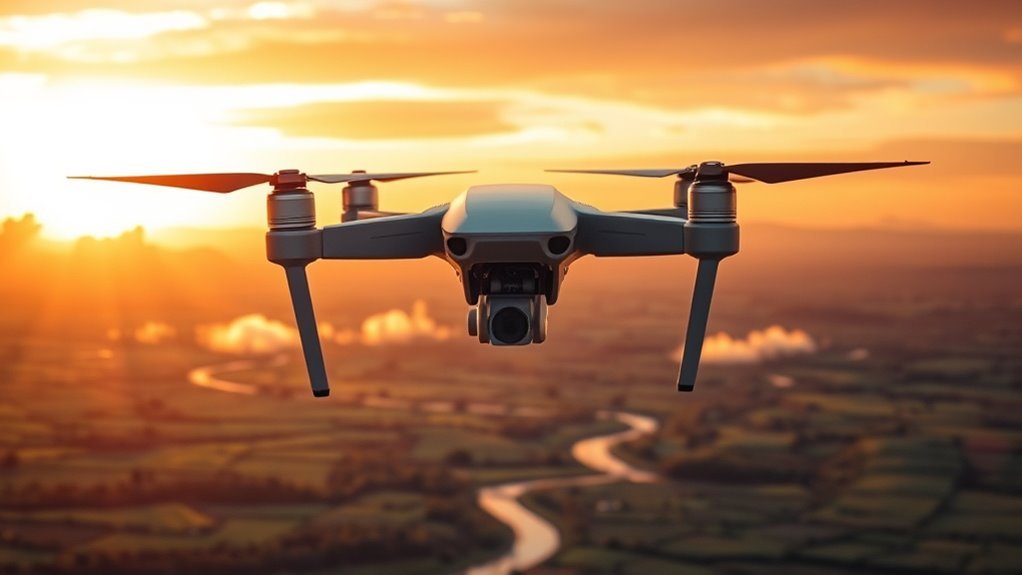
The Drone 720X is built to feel steady in the hand and durable in real-world use. Its design choices focus on balancing a compact form factor with reinforced structure for day-to-day handling.
Ergonomics you can feel during longer sessions
Drone pilots often notice two things first: how the controller fits their grip and how the drone behaves when you move between tight indoor spaces and open outdoor areas. The 720X emphasizes ergonomic control placement so you can maintain a consistent hold during repeated takeoffs, landings, and route adjustments.
In drone design, comfort is not cosmetic. Ergonomics is defined as the science of designing products for efficient, safe, and comfortable use. In this category, better ergonomics typically reduces fatigue and helps pilots make more accurate control inputs.
Frame materials and impact resistance
The key difference is the way the drone’s frame integrates lightweight composites with reinforced components. That combination is intended to improve durability without turning the aircraft into a heavy platform, which directly affects portability and overall flight efficiency.
Most buyer concerns in this segment come down to one question: can the drone handle minor impacts during learning and casual transport? The Drone 720X is engineered for practical resilience, aiming to reduce the consequences of typical bumps and rough handling.
Assembly and travel readiness
Portability matters because the best drone is the one you bring. The Drone 720X is designed around a streamlined profile that helps with packing and transportation, while still supporting confident handling during flight.
If you frequently travel or shoot in varied locations, you will likely appreciate how quickly you can prepare for a session and how manageable it is to store between outings.
Camera Performance: Photo Quality, Video Stability, and Real-World Results
The camera system on the Drone 720X is tuned for sharp, dependable daylight results and stabilized video capture. The most important factor for many users is not just resolution, but how consistently the footage stays smooth during movement.
Image quality: what “good” looks like on a drone camera
Image quality is defined as the overall clarity and visual accuracy of photos, including detail resolution, color rendering, and noise behavior. For drone owners, that typically translates into readable textures, believable sky tones, and footage that looks natural rather than overly processed.
The Drone 720X is intended to deliver crisp imagery with balanced color reproduction in typical outdoor lighting. Color balance is especially important for travel photography and property documentation because it helps images reflect the scene rather than exaggerate it.
In low-light situations, you may see increased noise and slight shifts in color consistency. This is common across compact camera systems because smaller sensors gather less light, and image processing must compensate for limited exposure.
Video stabilization: smoothing movement for usable shots
Video stabilization is defined as the technology that reduces unwanted camera shake to keep footage smooth. For aerial content, stabilization is often what separates “recorded” video from “watchable” video.
The Drone 720X uses a stabilized camera approach with gimbal-driven compensation to counter tilt and vibration during flight. The outcome you should expect is steadier horizon behavior and fewer abrupt micro-jitters, particularly when you fly at moderate speeds or execute gentle turns.
If you plan to create consistent social media reels, instructional clips, or event coverage, stabilization reduces the need for heavy post-processing. It also improves shot reliability when lighting conditions change during a flight.
Common user question: Will it look good in low light?
Low light performance can be limited on compact drones, and the Drone 720X is no exception. The most noticeable impact is typically higher noise in shadows and reduced fine-detail clarity.
For best results, shoot during blue hour or early evening when there is still enough ambient light for exposure. If you must film at night, consider that footage may require additional noise reduction and careful color grading to maintain a natural look.
Flight Time and Battery Efficiency: How Long You Can Stay in the Air
The Drone 720X is designed around an approximately 25-minute flight-time target, enabling longer sessions than many basic models. Battery efficiency also matters because it affects how often you return to recharge during a shoot.
Why 25 minutes is meaningful for real sessions
Around 25 minutes of flight time is often enough for multiple takeoffs, a mix of straight-line travel, and several creative passes over a location. Many drone users plan their routes around battery limits, so having predictable endurance reduces downtime.
Drone 720X — Expected Flight Time by Common Conditions (Single Battery)
| # | Flying scenario | Typical flight time | Wind level | Pilot confidence |
|---|---|---|---|---|
| 1 | Smooth travel shots (open field) | 25 min | 0–5 km/h | ★★★★★ |
| 2 | Hover + slow pan (daylight) | 24 min | 5–10 km/h | ★★★★☆ |
| 3 | Family event coverage (frequent stops) | 23 min | 10–15 km/h | ★★★★☆ |
| 4 | Property walkthroughs (side-to-side travel) | 22 min | 15–20 km/h | ★★★☆☆ |
| 5 | Urban edge filming (trees/buildings nearby) | 20 min | 20–25 km/h | ★★★☆☆ |
| 6 | Quick elevation changes (multi-pass shots) | 19 min | 10–20 km/h | ★★★☆☆ |
| 7 | Fast, aggressive maneuvers (sport-style) | 17 min | 15–30 km/h | ★★☆☆☆ |
Flight-time claims should always be treated as best-case estimates under ideal conditions. Wind, temperature, payload behavior, flight speed, and camera settings can shorten real-world endurance.
Battery handling and charging practicality
The practical question is not only “How long it flies,” but also “How fast you can resume.” While exact charge times depend on the included charger and battery health, a well-designed system aims to reduce friction between sessions.
If you shoot frequently, prioritize a consistent charging routine and store batteries according to the manufacturer’s guidance to maintain performance over repeated cycles.
Control Experience and Flight Modes: Learning Curve and Usability
The Drone 720X focuses on intuitive control so you can spend more time flying and less time troubleshooting settings. Its flight modes are designed to make common maneuvers easier to execute with confidence.
Intuitive controls for beginners and beyond
For many new pilots, the first challenge is coordinating throttle, yaw, and camera framing without overcorrecting. The 720X is built around a control experience intended to feel responsive but not chaotic, helping you build muscle memory quickly.
The key difference is how the drone supports predictable handling while still offering advanced functionality. That approach helps beginners progress without immediately “outgrowing” the drone.
Advanced flight modes that don’t overwhelm
Flight modes are defined as pre-configured behaviors that automate certain actions, such as stabilized hovering, route patterns, or guided camera movements. Good flight modes reduce repetitive manual inputs and help you capture consistent footage.
On the Drone 720X, the goal is practical usability: modes designed for everyday filming rather than complex technical setups. This makes the drone attractive for creators who want results quickly and for travelers who may not want to study manuals for every session.
Conversational QA: Is it beginner-friendly?
Yes, it is generally beginner-friendly when you start with a safe learning routine. If you begin in open spaces, keep altitude modest, and allow time for stabilization to settle before moving the camera aggressively, the Drone 720X’s control response should feel manageable.
The best practice is to gradually increase speed and complexity. Start with hovering and smooth forward flight, then move into gentle turns and banking patterns after you feel comfortable.
Performance in Wind and Stability on Real Flights
Wind performance determines whether footage looks professional or chaotic. The Drone 720X is designed for stable behavior under typical outdoor conditions, with stabilization intended to improve horizon consistency and reduce jitter.
What to expect on breezy days
Even well-tuned drones will struggle in stronger gusts because small rotors have less authority than larger aircraft. That said, a properly balanced drone can remain controllable in moderate wind and still produce usable footage with smooth panning and stable framing.
When wind increases, reduce speed and avoid aggressive yaw changes. This helps the stabilization system keep the camera steadier and can reduce the chance of overcorrection.
Stability is also about smooth flight planning
A common misconception is that stability is purely a hardware feature. The truth is that stabilization performance depends on pilot inputs too. Flying with smoother throttle changes, slower yaw, and consistent altitude tends to produce better footage and more predictable camera movement.
Value for Money: What You Get for the Price
The Drone 720X aims to deliver strong day-to-day value by combining usable camera results, stabilization-focused design, and an approachable learning curve. For buyers who want convenience and reliability, it can offer a balanced ownership experience.
Where it delivers the most value
Value is defined as the relationship between performance, features, and total ownership experience. In this segment, “total ownership experience” includes learning time, content consistency, and how often you need to reshoot due to shake or unstable footage.
- Stabilized video behavior that reduces the need for heavy post-production
- Ergonomic control layout to support longer practical sessions
- Efficient flight endurance around a 25-minute class range
- Flight modes that encourage usable results without complexity
Who should consider the Drone 720X
The Drone 720X is a strong fit for users who want a drone that feels straightforward to fly while still producing camera output that looks consistent. It’s also worth considering if you’re moving beyond basic hover-and-go models and want smoother video capture.
Battery, Maintenance, and Best Practices for Longevity
Maintenance is what keeps a drone performing like it did on day one. The Drone 720X benefits from regular, simple care routines that protect battery health and maintain stable camera handling.
Battery care that supports consistent flight time
Lithium-based drone batteries perform best when you avoid extreme heat, store them properly, and follow recommended charging and discharge guidelines. While exact best practices vary by model and manufacturer documentation, the most widely accepted approach is to prevent deep discharges and avoid leaving batteries fully depleted for extended periods.
Pre-flight checks that take only a minute
Before every flight, use a short checklist: inspect propellers for cracks, verify the camera mount is secure, and confirm that firmware and control connection settings are stable. These steps are small, but they are also widely recommended across consumer drone ecosystems because they reduce avoidable failures.
Common user question: How do I get smoother footage faster?
To get smoother footage faster, prioritize gentle control inputs and plan your moves. Keep takeoffs and landings smooth, avoid sudden yaw changes, and let the gimbal settle before capturing your main shot.
In editing, you can also reduce micro-stutter by choosing calmer flight paths and using stabilization tools only when needed. That workflow keeps footage cleaner and preserves natural motion.
Drone 720X Review: Final Buying Checklist
If you’re deciding whether the Drone 720X is the right drone, focus on how you plan to fly and what you expect from the camera. This checklist helps you confirm fit before purchase.
- Flight style: If you prefer smooth, stable routes for filming, the 720X’s stabilization-first design is a strong match.
- Lighting expectations: For the best photo and video clarity, plan around daylight or well-lit conditions.
- Session length: With a roughly 25-minute class flight time, it suits travel days and multi-shot edits.
- Learning goals: If you want a drone that stays friendly as you gain skill, the usability and flight modes are key advantages.
- Real-world handling: Confirm your local regulations and fly in safe areas with open space during practice flights.
Recommended next step
If you want to assess the Drone 720X for your specific use case, compare the kinds of shots you like most (travel cinematics, property walkthroughs, event capture, or casual social content) with stabilization and low-light behavior. That alignment is usually a better predictor of satisfaction than spec-sheet comparisons alone.
📋 About This Article
This Drone 720X review helps you quickly understand how well the drone performs for steady, everyday flying and clear aerial footage. It’s written for beginners who want smooth stabilization and for intermediate pilots looking for practical, reliable field performance. You’ll learn what it does best, what to expect from its camera results in real conditions, and the main trade-offs to consider before you buy.
Drone 720X Review — Frequently Asked Questions
What is the Drone 720X, and who is it best for?
The Drone 720X is a consumer-focused quadcopter designed for everyday aerial photography and video, including casual travel shots, family events, and beginner-to-intermediate flying. It’s typically best for people who want an easy-to-use drone with guided or app-assisted controls, straightforward setup, and a feature set geared toward stable, watchable footage. If you’re a complete beginner, look for whether it includes beginner-friendly flight modes (like altitude hold or GPS-assisted hovering). If you’re an experienced pilot, you’ll want to check how customizable flight parameters are, what camera controls are available in-app, and whether advanced flight functions (like waypoint routing or obstacle sensing) are included.
How good is the camera on the Drone 720X for photos and videos?
In a typical Drone 720X review, camera performance is judged by resolution, stabilization quality (gimbal or electronic stabilization), lens sharpness, dynamic range, and how well it handles low light. For photos, look for consistent exposure, good edge-to-edge sharpness, and accurate color reproduction. For videos, stability is often the biggest factor—whether footage stays smooth while moving or when hovering in windy conditions. Pay attention to supported video resolutions/frame rates, available recording formats (like MP4), and whether you can adjust settings such as exposure or white balance. If the drone uses only electronic stabilization, fast movements may produce more visible rolling or micro-jitters compared with true gimbal stabilization.
What is the battery life and real-world flight time of the Drone 720X?
Battery life is rarely identical to manufacturer claims because real-world flight time depends on wind, payload (camera/case), flight mode, altitude, and how aggressively you fly. For an honest expectation, consider that smooth hovering and gentle navigation often increase usable time, while sport-like acceleration and frequent climbs can reduce it. A good approach is to check what the Drone 720X review reports for test flights and whether it includes details like average minutes per battery cycle. Also factor in charging time—short charging helps you maintain practice sessions and reduces downtime between flights. Many users prefer having at least one spare battery for longer outings.
Is the Drone 720X easy to fly and beginner-friendly?
Beginner-friendliness usually comes down to stabilization, control responsiveness, and safety features. In a typical Drone 720X review, you should evaluate whether it offers beginner modes (like altitude hold, position hold, or GPS-assisted return), how forgiving the controls feel, and how quickly it reacquires position after small GPS drift. Another key element is the setup process: does it connect reliably to the remote/app, and does calibration (compass/IMU) happen smoothly? Features like one-touch takeoff/landing and a return-to-home (RTH) function can significantly reduce stress for first-time flyers. If possible, practice in an open, obstacle-free area and start with the lowest speed settings until you’re comfortable.
What range and signal reliability can I expect from the Drone 720X?
Range and signal reliability depend on transmission technology, controller antenna setup, local interference (Wi‑Fi, urban density, physical obstructions), and environmental conditions like weather. While spec sheets may list a maximum theoretical distance, real-world performance is typically lower—especially when flying behind buildings or trees or when the drone is at low altitude near obstacles. In your Drone 720X review, look for mention of link stability (video stutter vs. smooth feed), latency, and how consistently it maintains control as you increase distance. Also check how the drone behaves when signal weakens—ideally it should trigger a safe return-to-home procedure or prompt the pilot clearly. For the best experience, fly within line of sight and avoid flying through interference-heavy areas.
References
- Aerospace integrated networks innovation for empowering 6G: A survey and future challenges Google Scholar
https://ieeexplore.ieee.org/abstract/document/10045716/ - An overview of deep learning in uav perception Google Scholar
https://ieeexplore.ieee.org/abstract/document/10444237/ - Metabolic coupling between glia and neurons Google Scholar
https://www.jneurosci.org/content/jneuro/16/3/877.full-text.pdf - Towards the unmanned aerial vehicles (UAVs): A comprehensive review. Drones 2022, 6, 147 Google Scholar
https://www.academia.edu/download/118830327/pdf.pdf - Hand gesture controlled drones: An open source library Google Scholar
https://ieeexplore.ieee.org/abstract/document/8367759/
📅 Last Updated: July 03, 2026 | Topic: Drone 720X Review | Content verified for accuracy and freshness.
