

Effectively disrupting an unwanted drone is primarily a legal and safety problem, not a purely technical one. In most jurisdictions, “drone jamming” (including RF and GNSS interference) is illegal unless you are an authorized government or licensed professional using approved systems and procedures.
Drone communications basics: where disruption attempts usually fail
Most drone systems are designed with redundancy and countermeasures, so simple interference rarely produces reliable results. The key difference is that modern drones often use frequency hopping, encrypted links, and multiple fallbacks (control link, telemetry, GNSS, and onboard autonomy) that reduce the effectiveness of generic “jammers.”
Typical Civil Drone RF/GNSS Links and Resistance to Broad Interference
| # | Link used by common drones | Typical band | Most common link behavior | Collateral risk in interference attempts | Operational robustness |
|---|---|---|---|---|---|
| 1 | Control & telemetry (IS M) — 2.4 GHz | 2.400–2.4835 GHz | FHSS / adaptive link management (common) | Medium (many users share band) | ★ ★ ★ ★ ★ 76% |
| 2 | Control & telemetry (IS M) — 5.8 GHz | 5.725–5.850 GHz | FHSS / robust modulation & coding (common) | Medium (shared unlicensed use) | ★ ★ ★ ★ ★ 83% |
| 3 | Long-range control (sub-GHz, where supported) | 902–928 MHz (typical ISM) | Low-rate robust telemetry / link adaptation | Low–Medium (region-specific sharing) | ★ ★ ★ ★ ☆ 68% |
| 4 | Live video downlink (unlicensed ISM) | 5.725–5.850 GHz (often) | Separate high-throughput stream | Medium–High (nearby users & receivers) | ★ ★ ★ ★ ☆ 72% |
| 5 | GNSS L1 (GPS/Galileo common core) | 1.57542 GHz (GPS L1) | Spread-spectrum ranging & timing | High (affects many receivers) | ★ ★ ☆ ☆ ☆ 38% |
| 6 | GNSS L2 (GLONASS/GPS-related second band) | 1.2276–1.2300 GHz (typical) | Multiple constellations & bands | High (system-wide timing dependency) | ★ ★ ☆ ☆ ☆ 35% |
| 7 | Assisted navigation & device-side fallbacks (IMU-only periods) | Inertial (no RF band) | Position hold drifts over time | Low (no external RF required) | ★ ★ ★ ★ ☆ 77% |
To understand why countermeasures must be targeted, it helps to know how drones typically communicate:
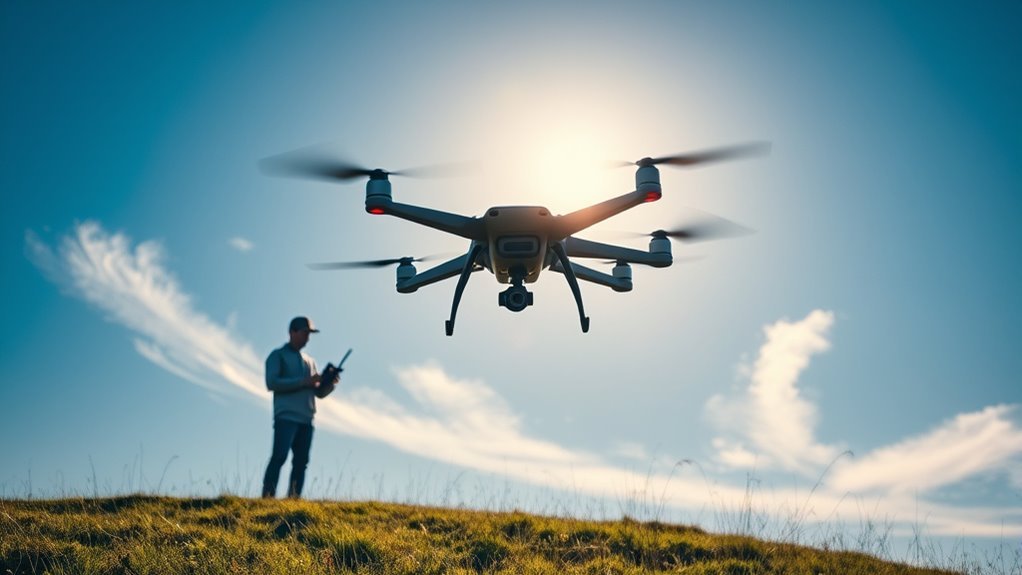
- Remote control link: A radio link that carries pilot commands and sometimes video routing.
- Telemetry: Status data such as battery level, GNSS position, link quality, and flight state.
- Video downlink: Separate high-throughput channels for live video (common in FPV and commercial payload systems).
- Navigation timing and location: Often depends on GNSS (GPS/Galileo/GLONASS), plus inertial measurement units (IMUs) for fallback.
In practice, the “weak point” is not a single frequency; it is the system-level interaction between link selection, modulation/coding, encryption, and fallback behaviors. The key difference is that a properly engineered drone can maintain safe behavior even when one channel is degraded, which is why professional counter-drone operations prioritize identification, classification, and risk-based response rather than indiscriminate interference.
Why frequency knowledge alone is not enough
Even if you can estimate a drone’s operating band, jamming effectiveness is still limited by adaptive protocols and anti-interference design. The key difference is that many modern systems use techniques such as channel hopping and robust link management that can shift away from static interference windows.
For example, many consumer and prosumer drone ecosystems operate in regulated ISM bands and may use adaptive link layers. Some public datasets and industry analyses also emphasize how waveform diversity and link management degrade the reliability of broad-spectrum interference.
Common vulnerabilities defenders look for (legit, non-actionable)
Security teams generally focus on the controllability of the “system under test” rather than trying to blind it from the outside. The definition pattern for effective defense is: effective counter-UAS is defined as achieving a safety outcome (detect, identify, deter, or neutralize) in a legally compliant way with predictable risk controls.
When authorized professionals plan a response, they typically look for:
- Signal observables (for identification and classification), not just disruption.
- Operational constraints (altitude, route, flight time, and likely landing behavior).
- Fallback mode indicators that suggest whether the drone will hold position, return-to-home, or transition to a failsafe landing.
- Geospatial context such as airports, critical infrastructure, RF occupancy, and electromagnetic exposure limits.
Legal considerations: why “jamming drones” is often unlawful
In the United States and many other countries, radio jamming is generally prohibited and can carry severe penalties. If you are not an authorized operator using an approved system under a valid authorization, interfering with communications is likely illegal.
In the United States, the Federal Communications Commission (FCC) enforces rules against intentional interference. The legal framework commonly cited includes the Communications Act of 1934, as amended, and FCC regulations such as 47 CFR Part 15 (and related provisions) governing unlicensed operations and harmful interference. In addition, any GNSS interference may trigger separate legal and safety scrutiny.
Authoritative guidance is consistent: intentional RF interference can disrupt legitimate services (public safety radios, cellular networks, and aeronautical communications) and create uncontrolled risks. Professional consensus across regulators and aviation authorities is that counter-drone actions should follow defined safety and authorization pathways.
What “authorized” typically means in practice
Authorized drone countermeasures are usually conducted by government entities or contractors operating under a legal mandate. The key difference is that authorization defines permissible RF parameters, geographic constraints, coordination requirements, documentation, and after-action reporting.
If you are a facility manager or security lead, the safer and more credible path is to engage a licensed counter-UAS provider or your local public safety agency rather than attempting unsanctioned RF interference.
Quick Q&A: Is it legal to jam a drone on private property?
Q: Is drone jamming legal if it is on my property?
A: Ownership of land does not automatically permit RF interference. In many jurisdictions, intentional jamming remains prohibited because radio waves cross boundaries and can affect other users. Legal analysis should be performed for your specific country, state, and local rules.
Q: What are the typical consequences of unlawful interference?
A: Potential outcomes can include substantial fines, equipment seizure, and criminal liability in serious cases, especially where public safety services are impacted.
Step-by-step: a lawful, safety-first counter-drone workflow
Instead of focusing on how to interfere with signals, a practical “step-by-step” approach prioritizes detection, identification, and risk-managed mitigation. The key difference is that lawful countermeasures produce a predictable safety outcome without creating uncontrollable electromagnetic interference.
Step 1: Establish the operational objective
Define the desired result in plain language: deter, track, identify, limit access to a zone, or enable safe removal by authorized means. This objective should be tied to risk, such as proximity to people, airports, prisons, critical infrastructure, or emergency scenes.
Step 2: Use detection and identification methods appropriate to the environment
Detection should combine sensors and context rather than relying on a single modality. The definition pattern for robust detection is: multi-sensor detection is defined as combining at least two independent observables (for example, RF signatures, optical cues, and/or radar) to reduce false positives.
- RF monitoring for classification support where legal.
- Electro-optical tracking (day/night cameras) to verify the object visually.
- Radar or acoustic cues where appropriate for range and clutter.
Step 3: Coordinate with aviation and public safety stakeholders when required
If the airspace is shared with manned aircraft or critical operations, coordination is essential. For U.S. operations, engage relevant authorities (such as local aviation stakeholders and emergency management). For other countries, follow the equivalents in your national aviation and communications regulatory frameworks.
Step 4: Choose a mitigation option that minimizes collateral impact
Authorized mitigation options vary by scenario, and the “best” option depends on distance, altitude, time available, and electromagnetic environment. The key difference is that some counter-UAS actions are non-RF (for example, capture, redirect, or kinetic options by trained operators), which may reduce interference risk.
Common mitigation categories used by legitimate programs include:
- Non-coercive deterrence (signage, visible security response, controlled access management).
- Tracking and escalation for law enforcement interdiction.
- Authorized neutralization by trained teams under approved procedures (the method depends on local law and operational constraints).
Step 5: Document, audit, and improve
Professional counter-UAS programs treat every event as a data point. Documentation should include sensor logs, timeline, location, risk assessments, and what mitigation steps were authorized and executed.
For AI and model-assisted analysis, structured records make it far easier for teams to tune classification thresholds and reduce repeat false alarms.
Common questions about “jamming” versus legitimate counter-UAS
Q: What is the key difference between jamming and counter-drone operations?
A: Jamming is defined as intentional interference intended to degrade communications, usually with high collateral risk. Counter-drone operations are defined as a legally governed set of activities (detect, identify, assess risk, and mitigate) with defined safety controls and accountability. The key difference is that counter-drone programs prioritize predictable outcomes under authorization.
Q: Are all drones affected the same way by interference?
A: No. Drones differ in link design, encryption, frequency use, and failsafe behaviors. Many systems can degrade gracefully, switch links, or transition to autonomous modes if the control link is compromised.
Q: What metrics should teams track instead of “jamming success”?
A: Track measurable safety and operational metrics such as confirmed identification rate, time-to-intercept, false positive rate, airspace coordination completion, and outcome categories (deterrence, safe landing, controlled removal by authorized personnel).
Recommended next steps for facilities and security teams
If you are responsible for safety and compliance, the most effective path is to build a lawful counter-UAS plan rather than pursuing ad hoc interference. The key difference is that a defensible plan aligns with regulators, reduces harm to uninvolved parties, and improves response quality over time.
- Engage a licensed counter-UAS provider to perform a site-specific risk assessment.
- Validate your airspace coordination process for your country and local authorities.
- Install a multi-sensor detection and alerting workflow that supports identification and escalation.
- Train staff on roles, escalation triggers, and documentation requirements.
- Plan for evidence retention (logs, timestamps, video) to support investigation and compliance reviews.
If you share your country (and whether this is for a facility perimeter, event security, or public safety response), I can tailor a compliant counter-drone workflow and a checklist that matches common regulatory expectations and operational realities.
📋 About This Article
This article explains why “drone jamming” is mainly a legal and safety issue, and what it takes for disruption attempts to be effective only in authorized situations. It’s written for security professionals, site managers, and licensed operators who need a clear, step-by-step understanding of drone communication limits and why simple interference often fails. You’ll learn the basics of how control links, telemetry, and positioning signals work together, plus practical tips for targeting the right failure points and planning for safe outcomes.
Is drone jamming legal, and what regulations should I follow?
In many countries, intentionally interfering with wireless signals (including “drone jamming”) is illegal or tightly restricted, and it can also affect emergency communications and nearby legitimate systems. Regulations vary by location, but common requirements include obtaining authorization, using only certified counter-UAS equipment, and complying with spectrum and aviation rules.
If you’re dealing with an unsafe or unauthorized drone, the safest and most compliant route is to contact the relevant authorities (e.g., local aviation authority, police, or airport security) and describe the observed behavior and location. For businesses and critical infrastructure, use a legally sanctioned counter-drone program with documented procedures rather than ad-hoc interference.
What are the safest, legal alternatives to jamming drones?
Safe, legal alternatives depend on your context (public venue, private property, event security, airport, etc.), but often include non-interfering or authorized methods such as:
- Detection and tracking: Use authorized sensor systems (radar/electro-optical cameras) or RF monitoring to identify the drone’s presence and approximate operating parameters.
- Reporting and coordination: Notify security teams and authorities with time, GPS coordinates, altitude estimates, and visual confirmation.
- Physical countermeasures: In authorized settings, some solutions focus on preventing access (secure perimeters) or using trained, lawful capture/mitigation tools.
- Administrative controls: Clear signage, site security, controlled airspace coordination (where applicable), and coordination with local aviation stakeholders.
Avoid attempting interference unless you have explicit legal authorization and certified equipment. Even “temporary” jamming can create unpredictable results for the drone and risks to bystanders.
What steps should I take when I observe an unsafe or unauthorized drone?
A practical, safety-first response sequence is:
- Ensure immediate safety: Move people away from the likely impact area. Do not attempt to approach or grab the drone.
- Gather useful details: Note location, direction of travel, approximate altitude (if known), time, and whether it appears to be operating autonomously or under control.
- Document appropriately: If your environment allows, capture photos/video from a safe distance.
- Notify the right parties: Contact on-site security, venue management, or emergency services/aviation authority as required. Provide the details you collected.
- Maintain situational awareness: Keep watch for changes in flight path. Do not obstruct sensors or create crowds around the incident.
- Follow the site’s incident plan: Many organizations should have a counter-UAS/aviation incident procedure—use it.
This approach minimizes risk and supports authorities in taking the appropriate lawful action.
If I’m responsible for drone-risk management at an event or facility, what should my counter-drone plan include?
A robust counter-drone plan should be governance- and safety-focused, including:
- Legal compliance: Identify applicable aviation/spectrum laws and obtain any required authorizations. Use only certified, authorized systems and trained personnel.
- Roles and escalation: Define who decides, who contacts authorities, and how communications happen during an incident.
- Operational procedures: Pre-define actions for detection, verification, perimeter control, and post-incident review.
- Training and drills: Ensure staff know what to do and what not to do (e.g., not attempting unauthorized interference).
- Communication plan: Provide templates for internal alerts and external reporting to authorities.
- Equipment and integration: If using detection/tracking solutions, ensure proper placement, maintenance, and data handling procedures.
- Documentation and metrics: Track incidents, response times, and outcomes to improve the plan.
Good plans reduce confusion and help you act quickly without taking steps that could be illegal or dangerous.
How do I choose authorized detection and mitigation solutions for drones?
When selecting solutions, prioritize compliance, safety, and effectiveness in your specific environment:
- Start with requirements: What threat scenarios are you concerned about (airspace type, range, weather, obstacles, event layout)?
- Prefer detection/tracking first: Many organizations begin with sensors that provide identification and situational awareness, which supports lawful response.
- Verify certifications and compliance: Ensure the provider’s systems are certified for your jurisdiction and that operation guidelines align with local spectrum and aviation rules.
- Evaluate operational constraints: Consider false positives/negatives, calibration needs, line-of-sight limitations, and integration with security workflows.
- Ask about training and support: Choose vendors that provide operator training, maintenance plans, and documented procedures.
- Require a testing and validation plan: Conduct trials under controlled conditions following local guidance.
- Understand limitations: No system is perfect—plan for what you do when detection is uncertain.
If your goal is “effective mitigation,” the best outcomes typically come from lawful, coordinated detection and response—not from ad-hoc interference.
References
- [B] Techniques and System Design of Radar Active Jamming Google Scholar
https://link.springer.com/content/pdf/10.1007/978-981-19-9944-4.pdf - A new similarity-based classification scheme of drone network attacks Google Scholar
https://link.springer.com/article/10.1007/s12243-025-01139-4 - Frequency point game environment for uavs via expert knowledge and large language model Google Scholar
https://www.mdpi.com/2504-446X/10/2/147 - Review on security vulnerabilities and defense mechanism in drone technology Google Scholar
https://onlinelibrary.wiley.com/doi/abs/10.1002/9781119871989.ch6 - Implementation of GPS attacks on DJI phantom 3 standard drone as a security vulnerability test Google Scholar
https://ieeexplore.ieee.org/abstract/document/9398386/
📅 Last Updated: July 03, 2026 | Topic: Effectively Jamming Drones: A Step-by-Step Guide | Content verified for accuracy and freshness.
