
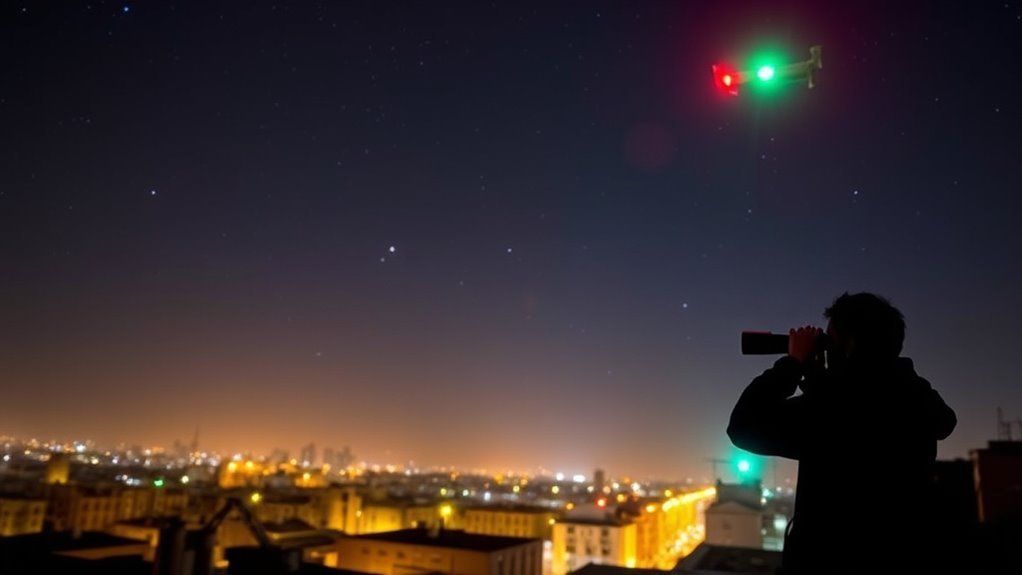
To spot police drones at night, listen for distinct buzzing sounds similar to bees. Observe lights: steady white indicates surveillance, while flashing red or blue signifies law enforcement. Note flight patterns; drones hovering or moving systematically are often monitoring. Look for high-resolution cameras or thermal sensors, which indicate active surveillance. Understanding local regulations is essential for legal compliance. Utilizing night vision goggles or RF detectors can enhance detection. For further insights, consider exploring additional tips.
Understanding Drone Sounds
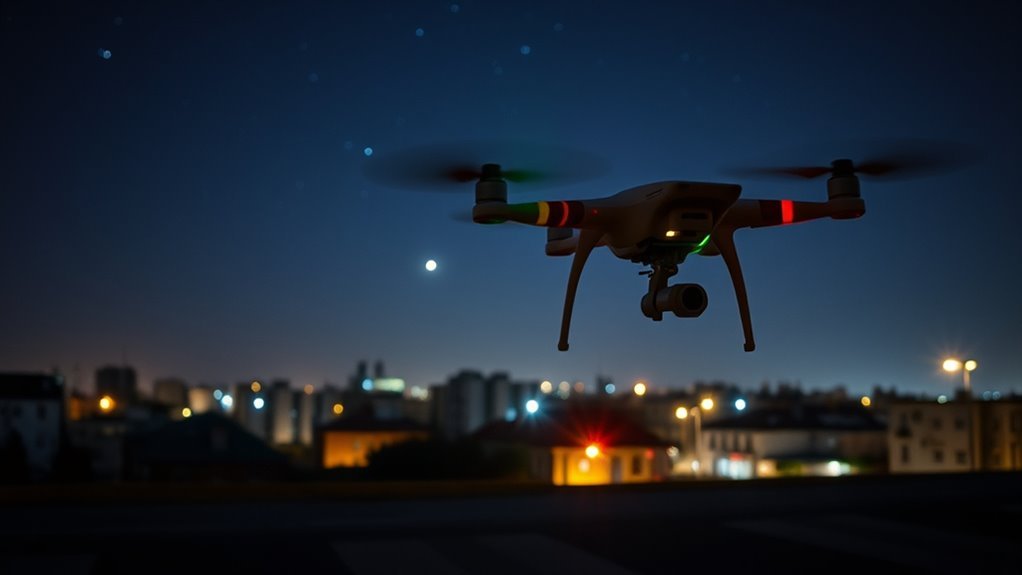
Although you may not think of it at first, understanding the sounds produced by drones can greatly aid in identifying their presence, especially at night. Drones typically operate within specific drone frequency ranges, emitting distinct sound characteristics that can vary based on model and size. The hum or buzz often resembles the sound of a swarm of bees, which can help you pinpoint their location. Familiarizing yourself with these acoustic signatures can enhance your awareness, allowing you to distinguish between a harmless hobby drone and a more intrusive police surveillance unit. By honing in on these auditory cues, you empower yourself to maintain your freedom and privacy in an increasingly monitored environment. Additionally, knowing that drones often utilize specific radio frequency bands can further inform your understanding of their operating characteristics. Moreover, recognizing that signal attenuation affects the effectiveness of drone operations can provide insight into their potential limitations. Listen closely; every sound can reveal vital information.
Identifying Distinctive Lights
How can you distinguish between various drones in the night sky? One of the key factors is the distinctive lights they emit. Police drones often utilize specific color variations to signal their presence. Typically, these drones feature a combination of white, red, and blue lights, which can vary in light intensity. A steady white light may indicate surveillance, while flashing red or blue lights often signify law enforcement activity. Pay attention to the patterns and brightness; higher intensity lights suggest closer proximity. By observing these light characteristics, you can identify a police drone more effectively. Understanding these nuances not only enhances your awareness but also empowers you to maintain your freedom in the face of surveillance.
Recognizing Flight Patterns
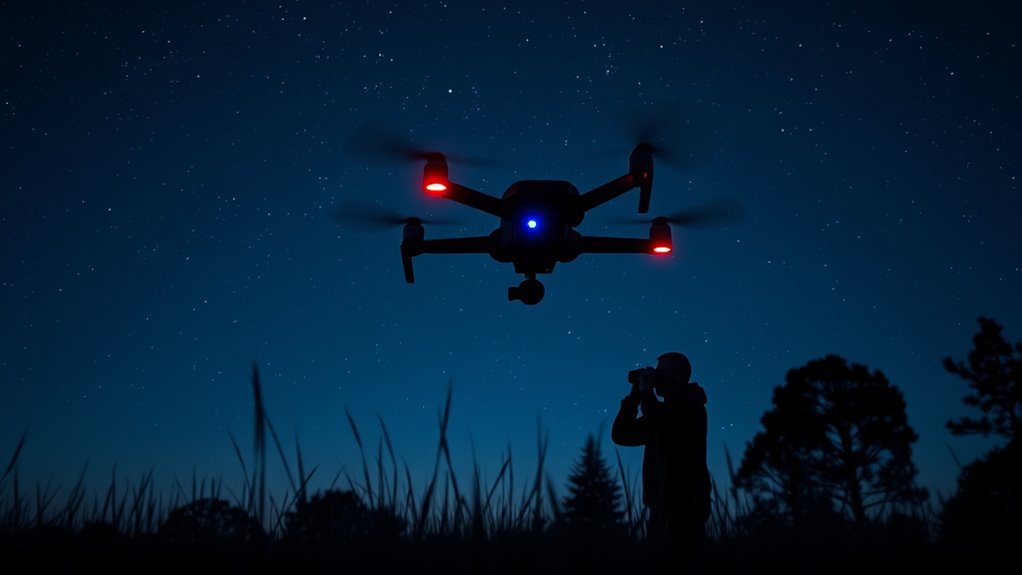
Once you’ve identified the distinctive lights of a potential police drone, the next step is to observe its flight patterns. Pay close attention to the drone’s behavior; does it hover in one spot, or does it move in a systematic grid pattern? A drone operating at a higher flight altitude typically indicates surveillance over a broader area, while lower altitudes may suggest more focused monitoring. Note any sudden changes in direction or speed, which can signal a shift in its mission. Understanding these flight patterns can help you deduce its purpose, providing insight into whether it’s surveying a specific location or conducting general patrols. By recognizing these nuances, you can better navigate your surroundings with awareness of potential surveillance. Additionally, drones like the Draganfly Vital Intelligence may exhibit advanced maneuvering capabilities, enhancing their operational effectiveness during nighttime monitoring. The Yuneec H850 RTK‘s superior stabilization features can also provide a smoother flight experience, allowing it to maintain precise positioning while surveying an area.
Observing Surveillance Equipment
As you track a police drone’s movements, it is crucial to observe the surveillance equipment it carries, since this can provide valuable insights into its capabilities and mission objectives. Understanding the technology in use can enhance your drone detection efforts and help you maintain your surveillance privacy. Here are key components to look for:
- Cameras: High-resolution cameras may indicate active surveillance or recording.
- Sensors: Infrared or thermal sensors can suggest nighttime observation and crowd monitoring.
- Communication Gear: Equipment for data transmission might imply real-time information gathering.
Checking Local Regulations
Before you attempt to spot police drones at night, it’s essential to familiarize yourself with local regulations governing their use. Understanding local drone laws guarantees you remain within the boundaries of regulatory compliance, which can vary considerably by jurisdiction. Ignoring these regulations may not only hinder your ability to effectively identify surveillance drones but could also expose you to legal repercussions. Research whether police drones are permitted in your area and under what circumstances they can operate after dark. This knowledge empowers you to navigate the skies responsibly while asserting your rights. Ultimately, being informed about local laws enhances your ability to engage in vigilant observation without infringing on established legal frameworks, preserving both your freedom and safety.
Using Technology to Assist
With a solid understanding of local regulations, you can now explore various technologies that can enhance your ability to spot police drones at night. Implementing these tools can greatly improve your drone detection capabilities:
- Night Vision Goggles: These devices amplify available light, allowing you to see in low-light conditions, making it easier to spot drones.
- RF Detectors: These can identify the radio frequencies emitted by drones, alerting you to their presence before you can see them.
- Thermal Cameras: By detecting heat signatures, thermal imaging can reveal drones that may be camouflaged against the night sky.
Frequently Asked Questions
Can Police Drones Operate in Bad Weather Conditions?
Drones deftly dance through diverse conditions, yet their capabilities face weather limitations. You’ll find that heavy rain, strong winds, or dense fog can hinder police drones’ performance, impacting their surveillance effectiveness and operational efficiency considerably.
What Should I Do if I Spot a Police Drone?
If you spot a police drone, consider reporting it to authorities, adhering to local reporting procedures. Be aware of potential legal implications regarding privacy and unauthorized recording, as understanding these factors helps protect your rights and freedoms.
Are Police Drones Used for Surveillance at All Times?
Think of police drones as watchful owls; they’re not always on duty. Police drone usage varies, often dictated by surveillance ethics and situational needs, balancing public safety with individual rights and freedoms in your community.
How Can I Differentiate Between Police and Commercial Drones?
To differentiate, observe commercial drone features like colorful designs and diverse shapes, while police drones typically have darker colors, often matte black or gray. Analyzing their sizes and purposes can also help clarify their roles.
Do Police Drones Have Any Noise-Canceling Technology?
While police drones often utilize advanced drone technology, they typically don’t feature noise-canceling technology. Instead, they focus on noise detection to enhance surveillance capabilities, allowing them to operate discreetly, yet still potentially infringing on your freedom.
