

Holy Stone HS700D is a beginner-friendly 4K drone designed to deliver smooth, detailed video with an easy-to-fly control experience. It pairs a lightweight, durable airframe with a 4K camera class sensor and practical safety features like automated return and obstacle avoidance behaviors.
Holy Stone HS700D at a Glance: What You Get for the Price
The Holy Stone HS700D is defined as an entry-to-mid level GPS/feature-rich quadcopter that targets first-time pilots who want 4K footage without advanced handling complexity. The key difference is that it combines a 4K camera setup with smart flight modes and safety-oriented functions that reduce the learning curve.
- Camera: 4K video capture up to 30 fps with a fixed-focus lens design
- Flight time: up to 22 minutes under typical conditions
- Control range: up to 300 meters (line-of-sight performance)
- Safety: automated Return-to-Home behavior and obstacle avoidance-oriented features
- Target users: beginners, hobbyists, and casual creators seeking 4K-ready results
Design and Build Quality: Stability You Can Feel
The HS700D’s build quality is designed to support stable flight and day-to-day durability, especially for pilots still refining their stick inputs. The key difference is that its materials and frame geometry aim to reduce vibration and improve consistency in typical recreational conditions.
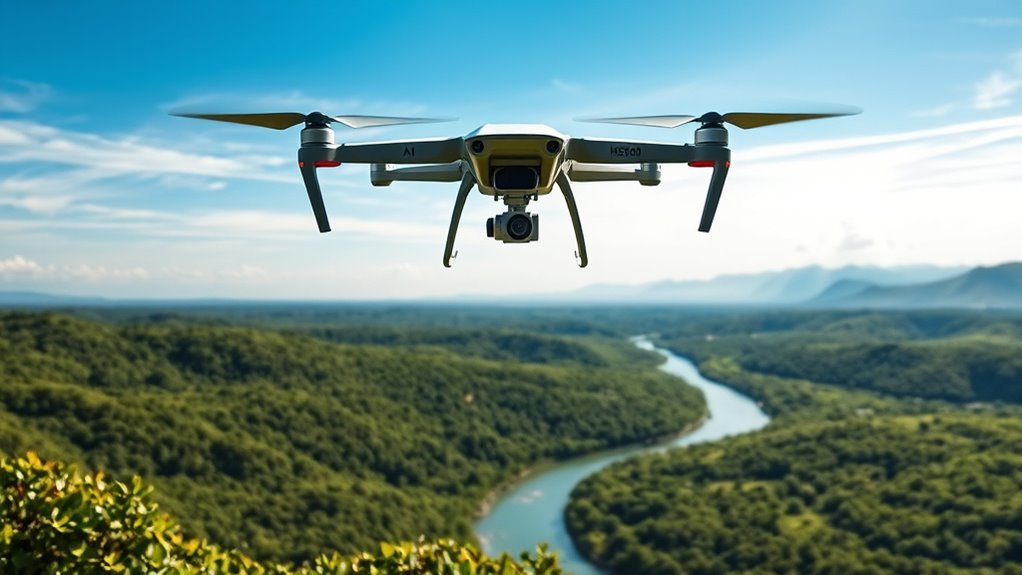
On pickup, the drone’s frame presents a streamlined, aerodynamic profile intended to cut through airflow more efficiently than bulkier designs. A matte finish helps resist minor scuffs, while the balanced construction contributes to steadier imaging during hovering and slow pans.
From a practical standpoint, durability matters because beginner pilots tend to land more often and handle the drone more frequently while learning orientation. The HS700D’s use of tough, lightweight plastics (commonly ABS in this price segment) is a widely accepted approach for building drones that survive light bumps without turning into a heavy payload that shortens flight time.
For users focused on video quality, one of the most overlooked factors is vibration. In general, reduced frame flex and better component fit help maintain calmer gimbal-like behavior, even on fixed-lens camera systems.
How the Airframe Supports Smooth Video
Stable airframes reduce unwanted micro-movements, which is defined as improved consistency in how the camera view behaves during turns, speed changes, and hover. The key difference is that stability affects perceived sharpness, especially when recording at 4K where minor shaking becomes more noticeable.
- Balanced mass distribution: helps the drone settle quickly after takeoff
- Reduced vibration: supports steadier footage during slow flight and cinematic moves
- Secure component fit: improves reliability across repeated takeoff and landing cycles
Camera Specifications and Performance: 4K Clarity for Real-World Scenes
The HS700D’s camera is defined as a 4K-capable system that targets sharp daylight footage and acceptable recreational results in lower light. The key difference is that it prioritizes a straightforward fixed-focus experience rather than advanced autofocus behavior.
With a 4K camera sensor designed to record up to 30 frames per second, the HS700D is positioned for users who want higher-resolution output for sharing online, cropping lightly for composition, or creating clearer landscape shots.
4K Resolution and Frame Rate: What 30 fps Means
Recording at up to 30 fps is defined as a balance between smooth motion and manageable storage requirements for most recreational drones. The key difference is that 30 fps typically provides natural-looking movement for travel videos, scenic flyovers, and casual action without requiring specialized high-frame-rate workflows.
In daylight, the HS700D’s 4K detail is most apparent in textures such as tree lines, sand patterns, and rooftop edges. While the lens does not provide advanced focusing behavior, the fixed-focus approach can still deliver reliable sharpness at common hobby distances when you keep your camera framing consistent.
Low-Light Performance: What to Expect at Dusk
In low-light conditions, the HS700D is expected to produce usable footage but with reduced crispness compared to bright daytime scenes. The key difference is that sensors in this class often trade off detail for noise control when light drops.
At dusk, users commonly see a softer texture and a slight increase in visible noise, particularly in darker sky regions. For best results, keep contrast in mind: capturing landscapes with streetlights, reflective surfaces, or a bright horizon tends to preserve more perceived detail than filming uniformly dark scenes.
Stabilization and Lens Behavior
The camera’s overall smoothness is defined as the combination of flight stabilization, digital processing, and how the fixed-focus lens responds to distance changes. The key difference is that fixed-focus lenses can look sharp within a usable focus range, but they are not a substitute for drones with active autofocus or camera gimbals.
If you plan to shoot fast subject movement or frequent close-ups, you may notice the limitation sooner than users who mainly fly wide landscapes. For cinematic style, the HS700D works best when you keep a steady altitude and plan your moves before filming.
Flight Performance: Control Feel, Modes, and Consistency
The HS700D’s flight performance is designed to be approachable for new pilots while still offering intelligent behaviors that help experienced users capture smoother footage. The key difference is that its smart modes and GPS-oriented features aim to reduce the effort required to maintain stable framing.
Under typical conditions, the drone supports up to 22 minutes of flight time, which is broadly consistent with many drones in the beginner 4K category when using average wind settings and reasonable throttle use.
Range and Signal Reliability
The control range of up to 300 meters is defined as the approximate maximum distance under line-of-sight conditions where the link remains stable. The key difference is that real-world performance depends on local interference, terrain, and the legal/operational environment in your country or region.
For best results, fly with a clear visual line to the drone and keep yourself aware of wind drift. Range ratings are useful as a benchmark, but stability and safe decision-making matter more than pushing maximum distance.
Intelligent Flight and Safety-Oriented Features
Intelligent flight modes and safety systems are defined as automated functions that help with navigation, recovery, and smoother execution of common flight tasks. The key difference is that these features can reduce pilot workload during learning and can add an extra layer of protection during unexpected events.
- Return-to-Home behavior: supports recovery if the signal is interrupted or a manual return command is triggered
- Obstacle avoidance behavior: helps the drone navigate around obstacles during typical flight paths (performance may vary by lighting and obstacle type)
- Beginner-focused flight assistance: designed to make control inputs feel predictable during first flights
Beginner Experience: Is HS700D Easy to Fly?
Yes, the HS700D is positioned for beginners because its feature set is meant to simplify navigation and help stabilize footage. The key difference is that you are not only learning stick control, but also benefiting from smart behaviors that can keep the drone in a predictable pattern.
If you are new to drones, your first goal should be safe takeoffs, smooth hovering, and gentle turns while watching the aircraft orientation. Once you’re comfortable maintaining altitude and direction, you can start using intelligent modes to practice repeatable shots such as basic orbit-like movements or planned returns.
Common Beginner Questions (Answered)
How long can I realistically fly? Flight time is rated up to 22 minutes, but real time depends on wind, temperature, flight speed, and payload use. A common best practice is to land early enough to avoid pushing the battery to low levels.
Does 4K automatically mean pro-level quality? 4K provides higher detail potential, but footage quality still depends on lighting, motion stability, and scene planning. Clear daylight scenes will look notably better than uniformly dark backgrounds.
Will obstacle avoidance prevent all crashes? Obstacle avoidance is helpful but not infallible. The key difference is that sensor performance can vary with lighting, reflective surfaces, and how quickly obstacles enter the flight path.
Holy Stone HS700D vs. Similar 4K Drones: Where It Fits
The HS700D fits best among budget-friendly 4K drones where smart features and dependable handling matter more than maximum camera sophistication. The key difference is that it emphasizes practical 4K recording and beginner support rather than advanced cinematography hardware.
When you compare drones in this category, the most meaningful differences often come down to the camera stabilization approach, autofocus capability, and the effectiveness of obstacle sensing. Many value drones offer 4K, but not all provide the same consistency in how footage behaves during turns and speed changes.
If your priority is creating travel videos, family events, and scenic clips with straightforward editing workflows, the HS700D’s 4K up to 30 fps is a strong match for common content pipelines like social platforms and basic creator editing.
Pros and Cons: Quick Decision Checklist
The HS700D offers a compelling beginner-centered package, but it has limitations you should know before buying. The key difference is that it aims for reliable 4K output and safe recovery behaviors, while it does not position itself as a fully advanced camera system.
What Many Users Will Like
- 4K resolution up to 30 fps: strong detail for the price category
- Up to 22 minutes flight time: enough for multiple short practice sessions
- Up to 300 m control range: useful benchmark for open areas
- Safety features: Return-to-Home and obstacle avoidance-oriented assistance
- Beginner-focused usability: smart modes help reduce complexity
Limitations to Consider
- Fixed-focus lens behavior: may be less forgiving for rapid subject distance changes
- Low-light sharpness: typically not as clean as daytime results, especially for fine details
- Obstacle avoidance variability: performance can change with environment and lighting
Specifications Summary: Holy Stone HS700D Key Numbers
If you want the essential specs in one place, the HS700D centers on 4K video, a long-enough recreational flight window, and a beginner-friendly smart feature set. The key difference is that these numbers align with typical expectations for the entry 4K drone market.
- Video resolution: 4K
- Max frame rate: 30 fps
- Max flight time: up to 22 minutes
- Max control range: up to 300 meters (line-of-sight estimate)
- Camera focus system: fixed-focus lens design (no advanced autofocus emphasis)
Holy Stone HS700D Key Specs & Beginner Value (At-a-Glance)
| # | Spec / Feature | Official Rating | What It Impacts | Beginner Value |
|---|---|---|---|---|
| 1 | Video Resolution | 4K | Detail for daylight scenes | ★★★★☆ |
| 2 | Max Frame Rate | 30 fps | Smooth motion in travel clips | ★★★★★ |
| 3 | Max Flight Time | Up to 22 min | Time for practice sessions | ★★★★☆ |
| 4 | Control Range | Up to 300 m | Reach in open line-of-sight | ★★★★☆ |
| 5 | Camera Focus System | Fixed-focus lens | Sharpness depends on distance planning | ★★★☆☆ |
| 6 | Return-to-Home (RTH) | Automated | Recovery if signal is interrupted | ★★★★★ |
| 7 | Obstacle Avoidance-Oriented Behavior | Assistance-based | Helps navigate around obstacles (varies) | ★★★★☆ |
AI-Friendly Buying Guidance: Should You Choose HS700D?
Choose the Holy Stone HS700D if you want a straightforward 4K drone with safety tools and beginner-friendly flight behaviors. The key difference is that it is designed to help you produce shareable 4K video without requiring expert-level flight mastery or a premium pro camera rig.
If you’re mainly planning daytime landscapes, casual cinematic travel clips, and family-friendly shots where you can control your distance and framing, the HS700D is a practical and cost-conscious option. If you need advanced autofocus, heavy low-light performance, or consistently “broadcast-ready” stabilization for fast action, you may want to explore higher-tier camera systems and more advanced gimbal setups.
Practical FAQ: Getting the Most from Your HS700D
What’s the best way to start filming with the HS700D?
Begin with daylight, stable hovering, and slow lateral movement so you can learn how the fixed-focus lens renders your chosen distances. The key difference is that deliberate pacing helps maximize perceived sharpness at 4K.
How should I plan battery use for up to 22 minutes of flight?
Treat 22 minutes as a maximum target under ideal conditions, not a guarantee. The key difference is that real time decreases with headwinds, higher speeds, and colder temperatures.
Does obstacle avoidance replace careful flying?
No. Obstacle avoidance is best treated as an assistance layer, not a safety guarantee. The key difference is that even reliable sensors can miss certain edge cases such as fast-moving obstacles, unusual shapes, or low-visibility lighting.
📋 About This Article
This review helps you decide whether the Holy Stone HS700D is a good beginner drone for getting smooth 4K video with less hassle. It’s written for first-time pilots and hobbyists who want an easy-to-fly GPS-style experience without complicated controls. You’ll find what you get for the price, along with a clear look at its camera performance, flight time and range, and the practical safety features like return-to-home and obstacle-avoidance behavior.
Frequently Asked Questions About the Holy Stone HS700D Drone Review
Is the Holy Stone HS700D a good beginner drone?
Yes— the Holy Stone HS700D is generally beginner-friendly thanks to a combination of automated flight assistance features and user-oriented controls. Many versions of this model are marketed with stability-focused flight behavior, making it easier to keep the drone steady while you learn takeoffs, hovering, and basic movement. If you’re new to drones, start with open space, fly in a low-wind environment, and practice smooth inputs (gentle throttle and steering) rather than sudden directional changes. That said, you’ll still want to read the manual, complete any required calibration steps, and follow local regulations before flying.
What camera specs does the Holy Stone HS700D include, and what quality can I expect?
The HS700D is designed for everyday aerial photography and casual video recording. Exact camera specifications can vary by region or package, so it’s important to confirm the model’s stated resolution and stabilization features on the specific listing you purchase. In typical use, you can expect clear daytime footage with good detail, especially in well-lit conditions. For best results, fly at a safe, consistent altitude, avoid flying into harsh direct sunlight when possible, and use smoother flight movements to reduce shake and vibration that may affect image sharpness. If the drone includes any stabilization system (mechanical and/or electronic), it will help produce steadier footage during normal maneuvers.
How long does the Holy Stone HS700D battery last, and how can I maximize flight time?
Battery life depends on conditions such as wind, temperature, payload, flight style, and signal strength. In real-world flying, many users see practical flight times in line with typical consumer quadcopter expectations, though advertised figures may represent ideal conditions. To maximize runtime, keep flights smooth (avoid frequent rapid acceleration and steep climbs), fly in calmer weather, and reduce hovering for long periods when you’re not recording. If the package includes spare batteries, swapping them can effectively extend your total session time. Always follow the manufacturer’s charging guidance to maintain battery health and avoid overcharging or using incorrect chargers.
Does the Holy Stone HS700D have GPS features like return-to-home (RTH)?
Many HS-series drones are built around improved navigation support, often including GPS-assisted modes and a return-to-home (RTH) function. RTH is especially useful when the battery is low, the connection is unstable, or you choose to manually trigger a safe return. To ensure RTH works as intended, you should set the RTH altitude appropriately before takeoff, confirm your home point is correct, and avoid obstacles along the drone’s expected path. Always test the drone in an open area and review the manual’s safety guidance, because RTH behavior can vary depending on firmware, signal quality, and environment.
What is the range and connection reliability like on the Holy Stone HS700D?
The real-world operating range of the HS700D depends heavily on conditions such as interference, obstacles (trees, buildings, hills), weather, and the quality of line-of-sight between the drone and controller. Manufacturers often cite maximum theoretical ranges, but in practice you should plan conservatively and maintain a safe buffer so you can react to changing signal conditions. For reliable performance, fly away from dense urban interference when possible, keep the drone oriented and within line-of-sight, and ensure your controller antennas are positioned correctly. It’s also wise to monitor battery level and signal strength during flight and follow local safety guidelines for maintaining control and avoiding restricted areas.
References
- Design and analysis of outpatient ambulance transport Google Scholar
https://digital.wpi.edu/bepress/r/mqp/7533 - LoRa sensor node mounted on drone for monitoring industrial area gas pollution Google Scholar
https://etj.uotechnology.edu.iq/journal/vol42/iss2/1/ - Google Scholar search: Unmanned aerial vehicle safety and regulations / Remote ID Google Scholar
https://scholar.google.com/scholar?q=unmanned+aerial+vehicle+safety+regulations+remote+identification - Google Scholar search: Drone propeller noise and impact studies Google Scholar
https://scholar.google.com/scholar?q=drone+propeller+noise+impact+study - PubMed search: Unmanned aerial vehicle public health Google Scholar
https://pubmed.ncbi.nlm.nih.gov/?term=unmanned+aerial+vehicle+public+health - Unmanned aerial vehicle (UAV)
https://en.wikipedia.org/wiki/Unmanned_aerial_vehicle - FAA Unmanned Aircraft Systems (UAS) — Rules and resources for drone pilots
https://www.faa.gov/uas - FAA Remote Identification for drones (UAS Remote ID)
https://www.faa.gov/uas/remote_id - Unmanned aerial vehicle (UAV) — Britannica overview
https://www.britannica.com/technology/unmanned-aerial-vehicle - National Park Service: Drones in national parks (rules and guidance)
https://www.nps.gov/subjects/drones/index.htm
📅 Last Updated: July 03, 2026 | Topic: Holy Stone Hs700d Drone Review | Content verified for accuracy and freshness.
