
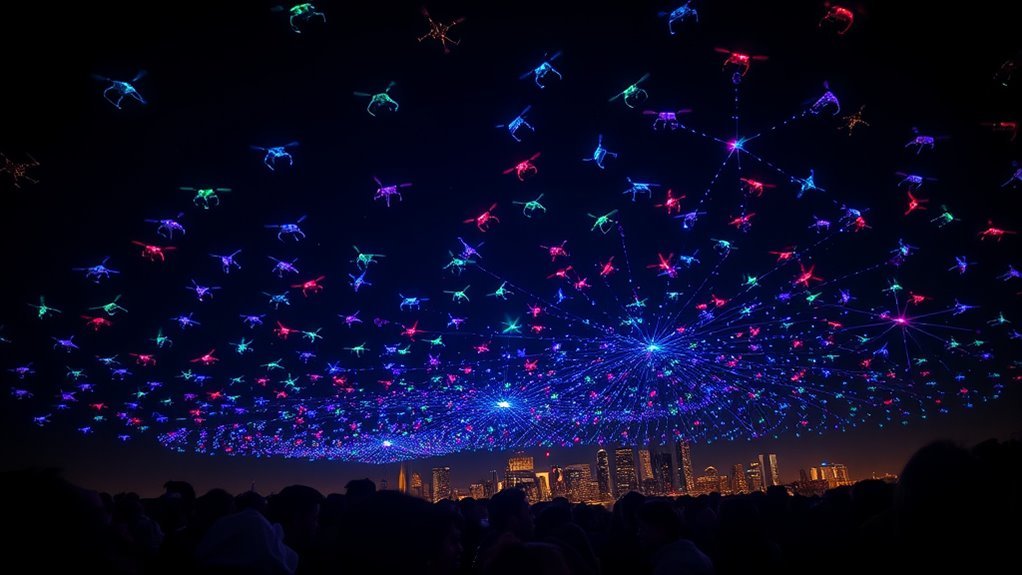
Drone shows work by employing advanced sensors, GPS navigation, and sophisticated programming. Each drone, equipped with LED lights, executes real-time choreography, creating dynamic aerial displays. Precise communication links coordinate movements, optimizing formations and safety protocols. Algorithms manage flight paths, ensuring seamless synchronization and preventing collisions. Artistic elements enhance audience engagement, making each performance a visual narrative. If you want to discover more about the technology and creativity behind these mesmerizing shows, keep exploring.
The Technology Behind Drone Shows
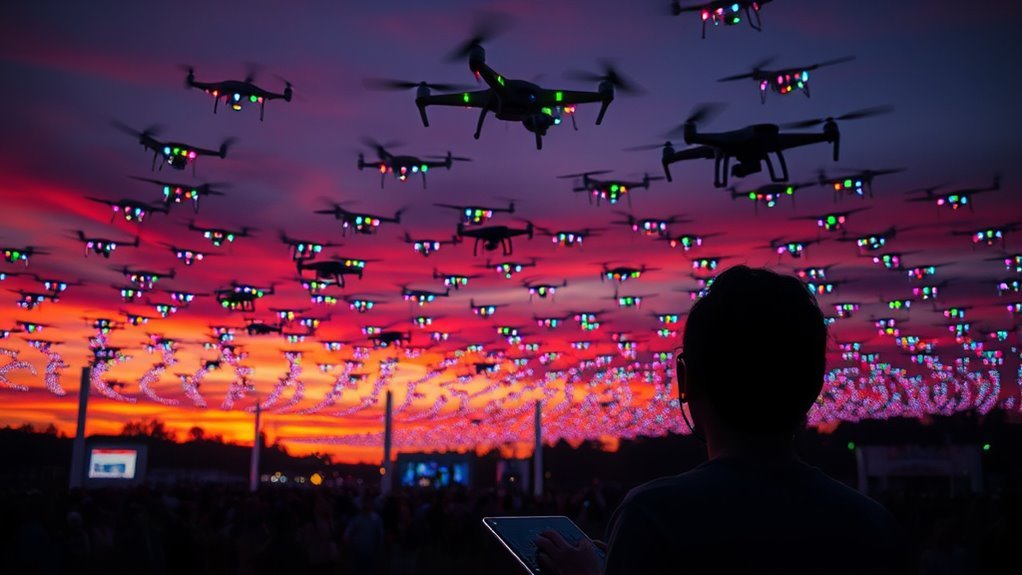
While you might think of drones as mere flying machines, their integration into drone shows involves a sophisticated blend of technologies. At the core, drone hardware, including advanced sensors and high-efficiency motors, is essential for precise aerial choreography. Each drone is equipped with LED lights, allowing for dynamic visual displays that synchronize with others in the fleet. The performance relies on real-time data processing, enabling seamless shifts and formations that captivate audiences. The algorithms governing these movements are meticulously designed to guarantee safety and artistic expression. Each drone’s autonomy is balanced with collective coordination, granting the freedom to move independently while adhering to a choreographed sequence. This fusion of technology and creativity represents the forefront of drone show innovation, especially with AI-driven choreography that utilizes machine learning for adaptive flight patterns. Additionally, the integration of advanced surveillance capabilities ensures that drones can perform in various environments while maintaining safety and precision throughout the show.
GPS Navigation and Coordination
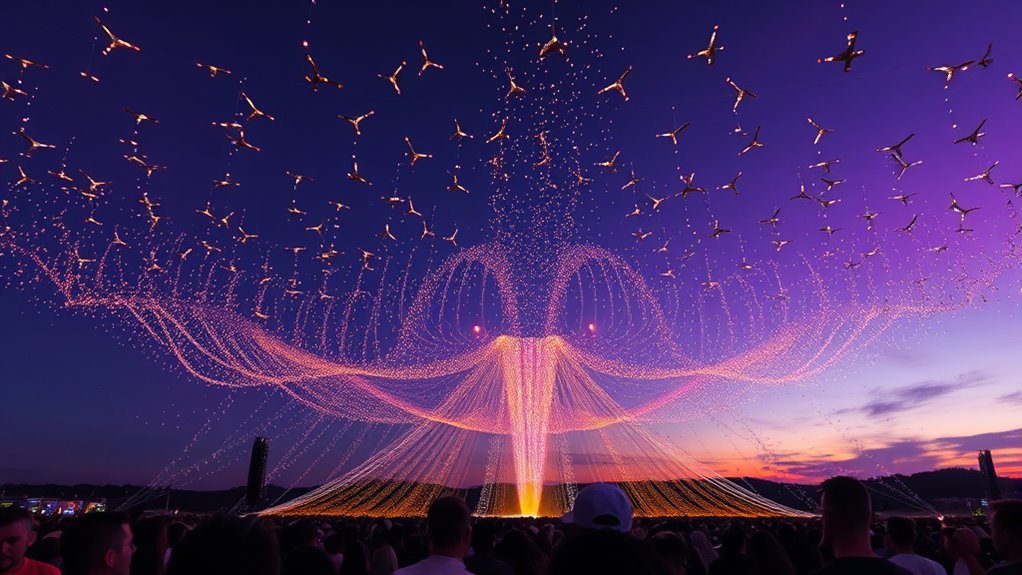
As drones take to the skies for coordinated performances, GPS navigation becomes vital for maintaining precise positioning and timing. High GPS accuracy allows each drone to know its location with remarkable precision, guaranteeing synchronized movements. This accuracy is essential for effective drone mapping, enabling the drones to create stunning aerial visuals without collisions. Additionally, the use of advanced algorithms enhances the precision of drone movements, optimizing their paths based on real-time data.
Here’s how GPS navigation and coordination work:
| Component | Function | Importance |
|---|---|---|
| GPS Module | Determines drone’s location | Guarantees accurate positioning |
| Communication Link | Enables real-time data exchange | Facilitates coordination |
| Flight Control System | Manages drone trajectories | Prevents collisions |
| Mapping Software | Visualizes drone paths | Enhances performance planning |
Through this sophisticated system, drones achieve spectacular displays while providing a sense of freedom in the sky. Additionally, the integration of advanced machine learning algorithms in security software can enhance the safety of drone shows by predicting potential risks.
Programming the Performance
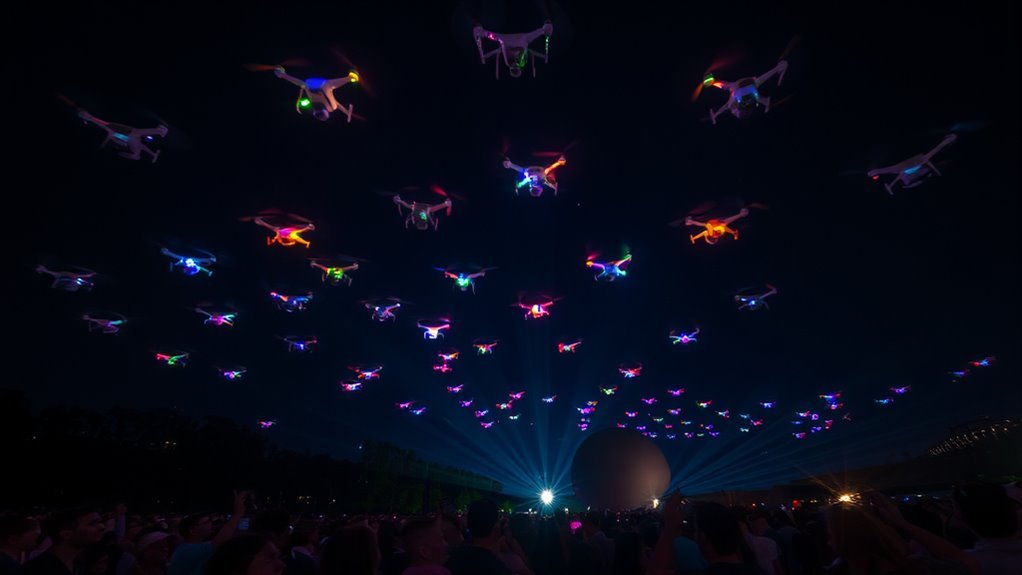
To create an engaging drone show, you need to meticulously program the performance, ensuring each drone follows a predetermined path with exact timing. Performance choreography is essential; it dictates how drones will move in relation to each other, creating visually stunning formations. You’ll use animation programming to design intricate sequences that capture your audience’s imagination. Each drone’s movements are encoded into software that translates your vision into a series of commands. This process involves defining start and end points, speed, and altitude, all while considering safety and compliance with regulations. Precise programming allows for seamless shifts and dynamic displays, resulting in an enthralling experience that resonates with the audience’s desire for freedom and creativity. Additionally, advanced flight path algorithms compute the necessary coordinates and velocities to ensure synchronized movements throughout the performance. The energy-efficient designs of these drones further enhance sustainability, making them a responsible choice for modern entertainment.
Synchronization of Drones
To achieve seamless synchronization in drone shows, you need to understand the critical role of communication protocols. These protocols facilitate real-time data exchange between drones, while advanced software algorithms process this data to guarantee precise positioning. By leveraging real-time positioning systems, you can maintain accuracy, allowing all drones to operate in harmony during performances.
Communication Protocols
While synchronization is essential for the success of a drone show, effective communication protocols serve as the backbone of this intricate choreography. You’ll find that these protocols govern signal transmission and data exchange between each drone, ensuring they operate harmoniously. Utilizing various wireless technologies, like Wi-Fi or radio frequency, drones communicate their positions and movements in real-time, allowing for precise coordination. Each drone receives vital updates, such as timing cues and formation changes, to maintain their visual impact. Low latency in communication is important, as even minor delays can disrupt the entire performance. By establishing robust communication protocols, drone shows achieve fluidity and creativity, granting you the freedom to experience stunning aerial displays without a hitch.
Software Algorithms
As drones take to the sky, sophisticated software algorithms play an essential role in their synchronization, ensuring each unit performs in concert with others. These algorithms employ machine learning to adapt and optimize flight paths, creating stunning visual patterns that captivate audiences. By analyzing data in real-time, they enable precise coordination among drones, allowing for intricate formations and seamless shifts.
- Predictive modeling to foresee drone movements
- Real-time adjustments based on environmental factors
- Pattern recognition for dynamic choreography
- Adaptive learning from previous performances
In this way, the software not only controls the drones but also enhances the overall artistic experience, allowing freedom in expression while maintaining strict operational integrity.
Real-time Positioning
Real-time positioning is essential for the synchronization of drones during a show, since even the slightest misalignment can disrupt the visual spectacle. To achieve this, drones rely on advanced real-time tracking systems that continuously monitor their locations with high precision. Utilizing GPS, inertial sensors, and communication networks, each drone maintains spatial awareness, allowing them to adjust their positions dynamically. This technology guarantees that all units operate in harmony, creating fluid shifts and intricate formations. By processing data almost instantaneously, drones can respond to changes in their environment or formation requirements. Ultimately, this level of synchronization not only enhances the aesthetic appeal but also assures safety, empowering the freedom to create stunning aerial displays without compromising reliability.
Safety Measures and Regulations
Although drone shows offer fascinating visuals, ensuring safety and compliance with regulations is paramount. You must adhere to established drone regulations and implement stringent safety protocols to mitigate risks.
Key considerations include:
- Pre-Flight Checks: Inspect drones for mechanical integrity and battery life. Regular maintenance is crucial to ensure that drones, like the DJI Mavic 3 Pro, perform optimally during the show.
- Flight Zone Management: Maintain a secure area to prevent unauthorized access during the show.
- Altitude Restrictions: Comply with local regulations to manage airspace and avoid collisions.
- Emergency Procedures: Have contingency plans to address malfunctions or unforeseen events. Additionally, incorporating drones with advanced battery technology can enhance reliability during performances by optimizing power usage.
Artistic Design and Storytelling
Here’s a breakdown of key components:
| Element | Description |
|---|---|
| Visual Narrative | The overall story conveyed through visuals. |
| Thematic Elements | Core ideas that drive the message. |
| Color Schemes | Emotional impact through color choices. |
| Synchronization | Timing of movements with music and beats. |
| Audience Engagement | Interaction and emotional response from viewers. |
This blend of creativity and technology elevates the drone show experience, making it both memorable and impactful. Additionally, precise GPS integration allows for seamless multi-drone synchronization, enhancing the overall artistry of the performance. The use of advanced swarm algorithms further enables the coordination of a large number of drones, contributing to the stunning visual displays.
The Future of Drone Entertainment
As technology continues to evolve, the future of drone entertainment is poised to revolutionize how audiences experience visual performances. By harnessing advanced software and AI, drone shows will enhance audience engagement and create immersive experiences that were previously unimaginable. You can expect:
- Customization: Tailored shows based on audience preferences and real-time feedback.
- Interactivity: Opportunities for audience participation, integrating mobile apps or social media.
- Augmented Reality: Blending physical and digital elements for a richer narrative.
- Global Collaborations: Cross-cultural performances that unite diverse artistic expressions.
These innovations will not only elevate the artistry of drone shows but also redefine the connection between performers and spectators. Embrace this future where technology and creativity intertwine for unparalleled entertainment experiences.
Frequently Asked Questions
How Many Drones Are Typically Used in a Single Show?
In a typical show, you’ll find anywhere from 50 to several hundred drones, depending on the desired visual impact. Effective drone coordination and precise aerial choreography are essential to creating stunning, synchronized displays that captivate audiences.
Can Drone Shows Be Held Indoors?
When it comes to holding drone shows indoors, you’ve gotta consider indoor logistics and safety regulations. While it’s possible, careful planning guarantees the drones don’t fly into a wall, making safety paramount.
What Types of Events Commonly Feature Drone Shows?
Drone shows are commonly featured at wedding celebrations and corporate events. They enhance visual experiences, offering unique entertainment that captivates audiences. These displays provide a modern touch, elevating the overall atmosphere and creating memorable moments.
How Long Do Drone Performances Usually Last?
While a brief moment can captivate, drone performances usually last between 10 to 30 minutes. Show scheduling often maximizes visual impact, ensuring the performance duration leaves you both exhilarated and yearning for more.
Are There Environmental Concerns Related to Drone Shows?
Yes, there’re environmental concerns with drone shows. Drone emissions can contribute to air quality issues, while noise pollution may disturb local wildlife and communities. It’s essential to assess these factors for responsible planning and execution.
