
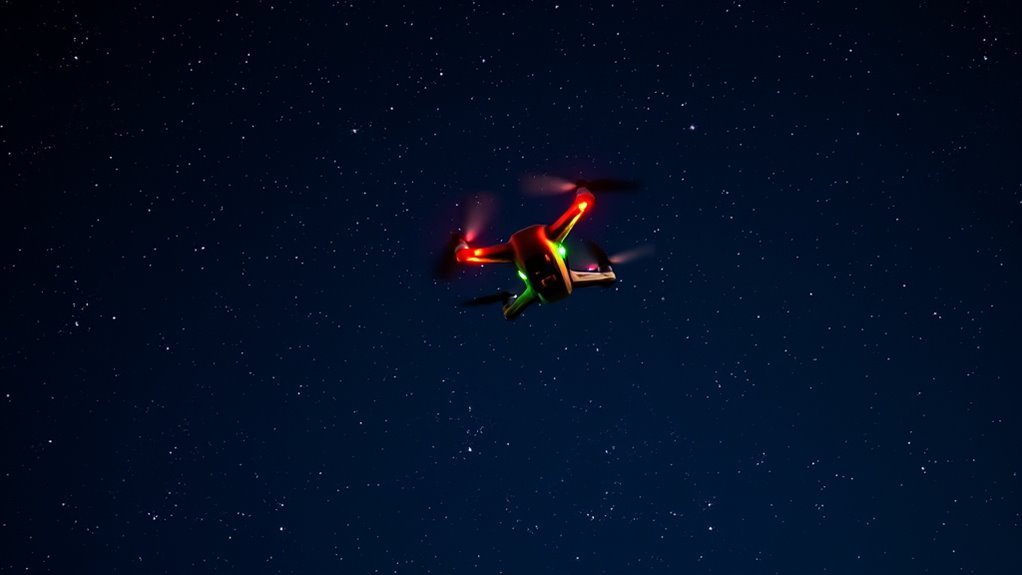
Drones in the night sky stand out with their vibrant LED displays and unpredictable movements, offering a sharp contrast to the steady, dim glow of stars. While stars evoke feelings of wonder and connection to the universe, drones symbolize human innovation and curiosity. Their bright, flickering lights tend to outshine distant stars, capturing attention and sparking intrigue. This interplay between natural beauty and technological marvel opens up a world of possibilities to explore the night sky further.
The Visual Appeal of Stars in the Night Sky
Have you ever gazed up at the night sky and marveled at the shimmering stars? Those luminous points aren’t just beautiful; they’re gateways to understanding the universe. Star clusters, groups of stars bound by gravity, twinkle together, creating breathtaking patterns that inspire awe and wonder. Each cluster tells a story, hinting at the cosmic forces at play. For centuries, people have used celestial navigation, relying on these stars to guide their journeys across uncharted waters. The visual appeal of stars lies not only in their beauty but also in the freedom they symbolize—a connection to something greater. As you explore the night sky, let the stars ignite your curiosity, reminding you of the infinite possibilities that await beyond the horizon.
The Aesthetic of Drones: Lights and Design
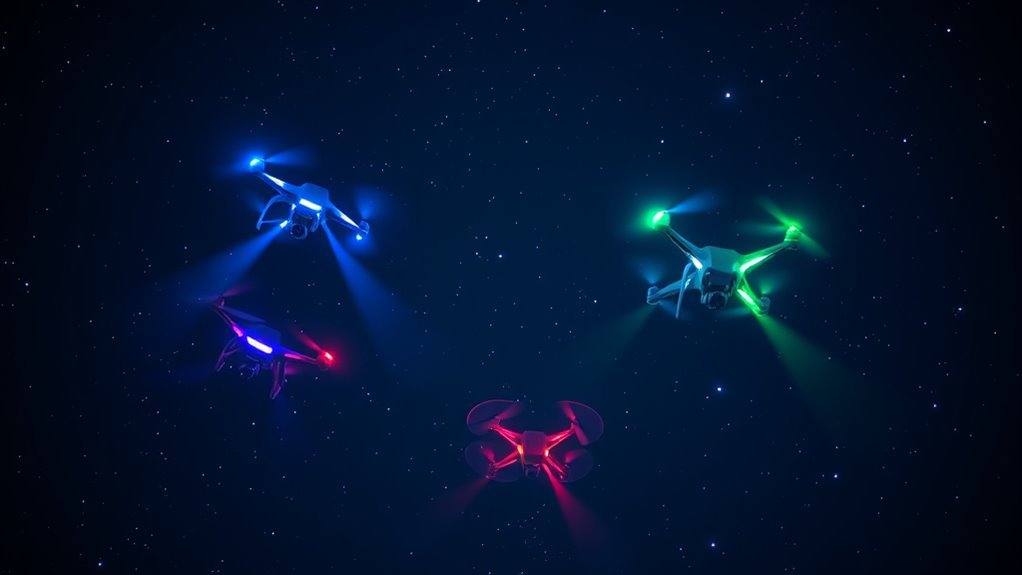
While you might think of drones primarily as tools for technology and photography, their aesthetic qualities are equally enchanting. Drone aesthetics encompass sleek designs that blend form and function, often featuring smooth lines and modern materials. When they take to the skies, these flying devices create mesmerizing light patterns, illuminating the night with vibrant colors. Imagine the thrill as they glide overhead, their twinkling lights resembling a new constellation. The interplay of shadows and illumination invites you to appreciate the artistry behind their design. This visual spectacle not only captivates onlookers but also elevates drones beyond mere gadgets, inviting a sense of freedom and wonder. Drones, in their elegance, become an integral part of the night sky’s beauty.
Comparing Brightness: Stars vs. Drones
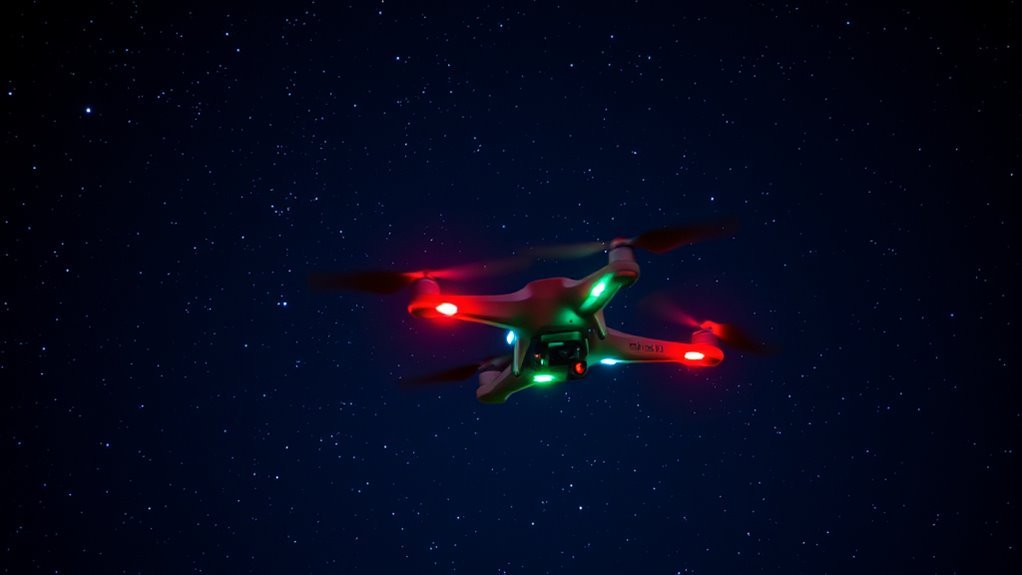
When you look up at the night sky, the brightness of stars can seem ethereal, but drones, with their artificial lights, offer a different spectacle. The intensity of light from each source varies greatly, influenced by factors like altitude and visibility conditions. Understanding these differences helps you appreciate how drones can mimic or contrast with the twinkling stars above.
Light Intensity Differences
As you gaze up at the night sky, the shimmering stars seem to twinkle with an ethereal glow, yet their brightness pales in comparison to the powerful lights of drones flying overhead. The difference in light intensity is striking, influenced by various factors:
- Brightness Perception: Stars, often dimmed by light pollution, appear fainter than they actually are.
- Drone Lights: Drones emit concentrated beams that can cut through the darkness, making them far more visible.
- Environmental Factors: Atmospheric conditions and urban landscapes can enhance or diminish both stars’ and drones’ visibility.
In a world aiming for freedom, understanding these light intensity differences highlights how our perception of the night sky is shaped by technology and our surroundings.
Flight Altitude Impact
Although both stars and drones occupy the vastness of the night sky, their perceived brightness is considerably influenced by their flight altitudes. Drones, often maneuvering at relatively low altitudes, can appear as bright, flickering lights, especially when they’re equipped with powerful LEDs. Their flight patterns can create dynamic visual displays, contrasting sharply with the steady twinkle of distant stars. In contrast, stars shine from billions of miles away, their light diminished by the vast distances they traverse. Altitude effects play an essential role—while a drone flying at a lower altitude may seem more vibrant, stars maintain a consistent luminosity, unaffected by the atmospheric layers above. Understanding these differences enhances your appreciation of the celestial and artificial wonders overhead.
Visibility Conditions Variations
While both drones and stars captivate our gaze, their visibility often shifts dramatically based on environmental conditions. Several visibility factors come into play, affecting how you perceive these objects in the night sky.
- Atmospheric Conditions: Hot air, humidity, and pollution can obscure your view of both drones and stars, making them harder to spot.
- Brightness Levels: Stars vary in brightness, while drones often use lights that can be brighter or dimmer, depending on their settings.
- Altitude and Distance: The height of drones and the distance of stars from Earth affect how clearly you see them, with closer objects generally appearing more vivid.
Understanding these elements will enhance your appreciation of the celestial and technological wonders above.
Movement Patterns: Celestial Bodies vs. Aerial Machines
When you observe the night sky, the movement of celestial bodies can seem almost poetic, as they glide through the cosmos in predictable orbits governed by gravity. Stars and planets follow their celestial orbits with a serene, rhythmic elegance, a dance that’s been unfolding for eons. In contrast, drones display erratic drone trajectories, often darting about with a sense of urgency. While celestial bodies maintain their paths with unwavering consistency, drones maneuver with agility, responding to human commands. This stark difference in movement patterns highlights the contrast between nature’s timeless order and human-made technology’s flexibility. Both captivate our imagination, yet the freedom of aerial machines reflects a modern quest for exploration that diverges from the celestial ballet above.
The Sounds of the Night: Silence vs. Drone Noise
As you gaze up at the night sky, the tranquility of the cosmos envelops you, often marked by a profound silence that invites contemplation. Yet, this serene nighttime ambiance can be interrupted by the distinct sounds of drones.
- Droning Whir: Unlike the gentle rustle of leaves, drone sounds pierce the night, creating a mechanical hum that feels intrusive.
- Soundscape Disruption: The harmony of nature is disrupted, altering your experience of the starlit sky, as man-made noise replaces the soothing stillness.
- Emotional Response: This clash between silence and drone noise can evoke feelings of frustration or nostalgia, reminding you of simpler nights under a canopy of stars.
Ultimately, the stark contrast between these sounds shapes your connection to the nighttime world, reflecting both freedom and intrusion.
The Purpose Behind Their Presence
As you watch drones zip through the sky, it’s hard not to wonder about their purpose. These flying machines serve a dual role, from enhancing surveillance and monitoring capabilities to inspiring creativity in recreational and artistic endeavors. Understanding their multifaceted functions reveals just how integral they’ve become in our daily lives and the broader landscape of technology.
Surveillance and Monitoring
While many people admire the beauty of drones soaring through the sky, their true significance lies in their ability to enhance surveillance and monitoring efforts. You might not realize how these unmanned aerial vehicles are revolutionizing surveillance technology and monitoring systems. Here are three key aspects to reflect upon:
- Real-time data collection: Drones can capture high-resolution images and videos, providing immediate insights into various environments.
- Access to hard-to-reach areas: They can effortlessly navigate through challenging terrains, ensuring thorough monitoring without risking human life.
- Cost-effectiveness: Using drones can reduce expenses associated with traditional surveillance methods, making them an attractive option for numerous applications.
In a world where freedom is paramount, drones serve as essential tools for enhancing security while respecting privacy.
Recreational and Artistic Uses
Drones have transformed not just surveillance but also the domain of recreation and art, offering enthusiasts a unique perspective like never before. With drone photography, you can capture breathtaking landscapes from angles that were once impossible, revealing the beauty of nature in stunning detail. Imagine soaring high above the treetops, framing sunsets or cityscapes with an artist’s eye. Beyond photography, drones play an exciting role in artistic performances, creating dynamic aerial displays that mesmerize audiences. These flying marvels allow artists to intertwine technology and creativity, pushing boundaries and redefining art forms. Whether you’re capturing memories or crafting visual spectacles, drones empower you to express yourself freely, turning the sky into your canvas.
The Emotional Response: Wonder vs. Intrigue
A sense of wonder often fills the air when one gazes at the stars, just as a different kind of intrigue emerges when observing drones darting across the sky. The awe-inspiring display of celestial bodies ignites your imagination, while the curiosity-driven movements of drones prompt you to reflect on their purpose. These contrasting emotional responses can be broken down into three key aspects:
- Connection to Nature: Stars evoke a feeling of unity with the universe, reminding you of life’s mysteries.
- Technological Fascination: Drones symbolize human innovation, sparking interest in their capabilities and uses.
- Exploration and Adventure: Watching drones inspires thoughts of exploration, inviting you to ponder the possibilities of aerial journeys.
Moreover, the advanced camera capabilities of drones enhance the visual experience, allowing for stunning captures of the night sky that blend technology with nature. Both experiences enrich your perspective on the night sky.
Safety and Regulations: Navigating the Night Sky
As you navigate the night sky, understanding the safety measures and regulations surrounding drone usage becomes vital. Nighttime regulations often differ greatly from daytime rules, reflecting the unique challenges posed by darkness. It’s important to know where you can fly, as many areas restrict drone operations during the night to protect wildlife and guarantee public safety.
Equipping your drone with proper lighting not only enhances visibility but also reinforces adherence to these regulations. Always maintain a clear line of sight, and be mindful of other aircraft. By prioritizing these safety measures, you can enjoy the freedom of flying while respecting the shared airspace, fostering a harmonious relationship between drone enthusiasts and the night sky’s natural beauty.
The Future of Nighttime Aerial Displays
While many marvel at the breathtaking beauty of nighttime aerial displays, the future promises to elevate this experience even further. With advancements in drone technology, you’ll soon witness displays that are not only mesmerizing but also deeply immersive. Consider these possibilities:
The future of nighttime aerial displays promises mesmerizing, immersive experiences through advanced drone technology.
- Dynamic Aerial Choreography: Drones will create synchronized performances, telling stories that captivate audiences through light and movement.
- Interactive Experiences: Imagine engaging with displays via your smartphone, customizing patterns or colors in real-time.
- Sustainable Shows: Future displays will utilize eco-friendly drones and energy sources, ensuring that beauty doesn’t come at the planet’s expense. Moreover, advancements like advanced GPS systems will enhance the precision of drone performances, ensuring flawless execution in dynamic scenarios.
As these innovations unfold, nighttime skies will transform into vibrant canvases, inviting you to experience freedom like never before.
Frequently Asked Questions
Can Drones Operate in Bad Weather Conditions Like Stars Can?
Drones definitely dance delicately through diverse conditions, but their performance plummets in poor weather. Wind, rain, and snow impose significant limitations, making them less reliable than stars, which steadfastly shimmer despite stormy skies.
How Do Drone Colors Differ From Stars in the Night Sky?
When you observe drones, their vibrant colors enhance visibility, unlike stars’ dim twinkling. Your color perception allows you to distinguish between various drones, making them appear more dynamic and engaging against the serene backdrop of the night sky.
Are There Specific Drone Models Designed for Night Flying?
When night falls, safety’s no accident. Yes, certain drone models are crafted for night flying, featuring enhanced lights and stability systems. They guarantee you can explore the skies while prioritizing safety, giving you that exhilarating freedom.
Do Stars Twinkle More Than Drone Lights at Night?
Stars often twinkle more than drone lights at night due to atmospheric disturbances affecting their light intensity. Drones, with steady illumination, lack the twinkling effects, offering a more consistent visual experience against the dark sky.
What Are the Environmental Impacts of Nighttime Drone Displays?
Nighttime drone displays aren’t just mesmerizing; they can contribute to nighttime noise and light pollution. While they offer a spectacle, you might not realize how they disrupt local wildlife and the serene darkness many cherish.
