

Drones prove effective for nighttime operations due to advanced night vision technology, which includes thermal imaging and low-light sensors. These features enhance situational awareness and help detect hidden obstacles. Their enhanced flight stability and navigation systems guarantee safe, precise maneuvering in challenging environments. Real-time data collection allows for timely decision-making during critical missions, like search and rescue. With these capabilities, drones considerably improve efficiency and safety in nocturnal tasks, and there’s much more to explore about their potential advancements.
Advanced Night Vision Technology
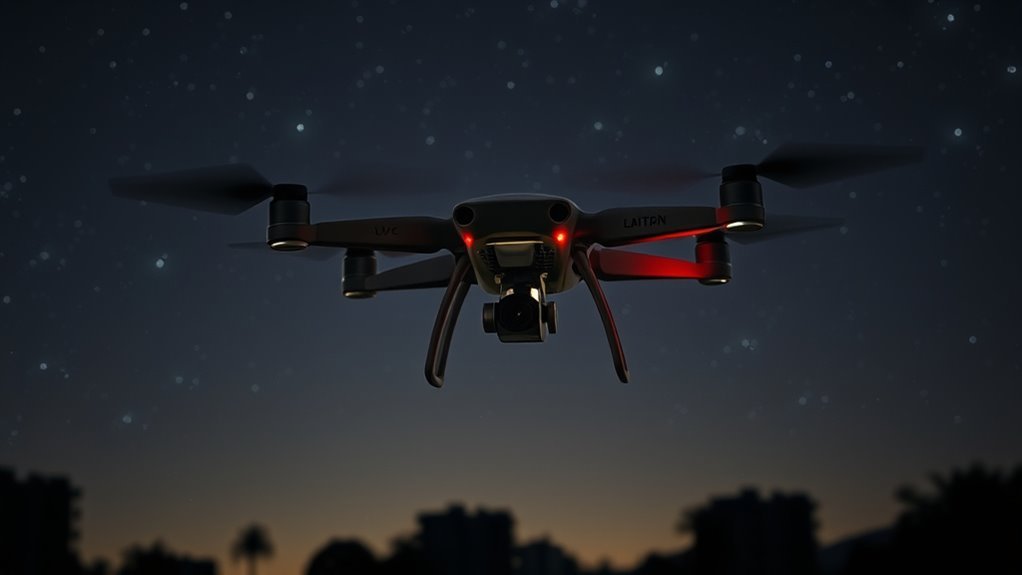
As drone technology evolves, advanced night vision systems have become essential for enhancing operational capabilities in low-light conditions. These systems leverage thermal imaging and low light sensors to create a clear visual environment, allowing you to navigate and execute missions effectively in darkness. Thermal imaging detects heat signatures, enabling you to identify objects and individuals that would otherwise remain unseen. Low light sensors amplify available light, ensuring you don’t miss important details in dim settings. By integrating these technologies, drones offer unparalleled situational awareness, vital for defense, surveillance, or search and rescue operations. Ultimately, the combination of thermal imaging and low light sensors empowers you to operate with increased confidence and autonomy, maximizing the potential of your nighttime missions. Moreover, the superior sensor sensitivity of models like the Teal 2 enhances performance in dim environments, further elevating operational efficiency. Additionally, Teal 2’s integration of thermal imaging allows for stealthy operations in constrained environments, making it particularly advantageous for tactical missions.
Enhanced Flight Stability and Navigation
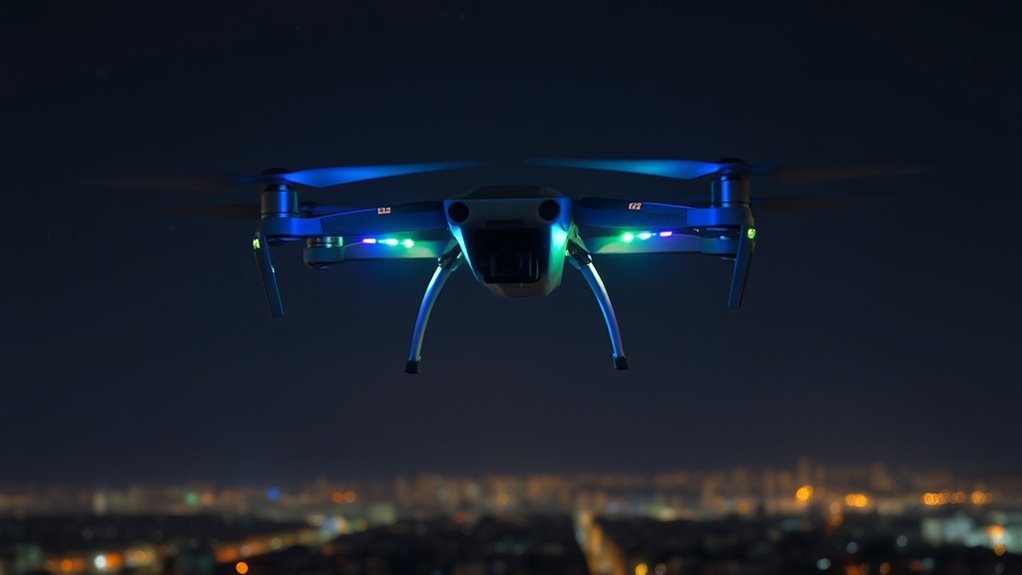
Enhanced flight stability and navigation systems are essential for successful nighttime drone operations. You’ll find that advanced algorithms and sensors improve nighttime agility, allowing drones to maneuver effectively in low-light conditions. These features also enhance obstacle avoidance, ensuring that your drone can navigate complex environments without incident. Additionally, the potential for accelerated innovation in the drone sector may lead to even more sophisticated nighttime operation capabilities in the near future. Furthermore, multi-axis stabilization algorithms can significantly improve flight stability during turbulent nighttime conditions, enhancing overall performance.
| Feature | Description |
|---|---|
| Gyroscopic Stabilization | Maintains balance during flight |
| GPS Integration | Provides accurate positioning |
| Real-Time Sensors | Detects obstacles in the path |
| Intelligent Flight Modes | Adjusts to varying terrains |
| Adaptive Navigation | Optimizes routes in real-time |
Real-Time Data Collection and Analysis
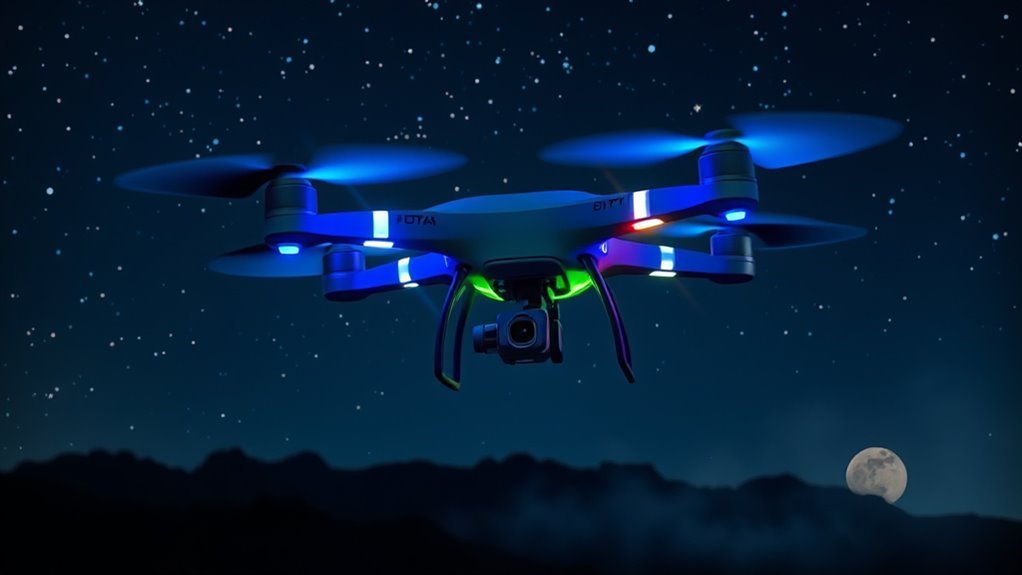
The capabilities of enhanced flight stability and navigation systems considerably contribute to real-time data collection and analysis during nighttime operations. You’ll find that effective sensor integration allows drones to gather high-resolution imagery and environmental data under low-light conditions. This data transmission occurs seamlessly, ensuring that you receive essential information without delay. Advanced algorithms process the collected data in real-time, enabling immediate insights that support decision-making. With precise tracking and robust communication links, you can monitor areas of interest more effectively than ever before. The combination of these technologies not only improves situational awareness but also enhances operational efficiency, giving you the freedom to act swiftly and accurately in dynamic environments. Moreover, integrating AI-driven imaging into nighttime operations further amplifies the drone’s ability to detect subtle defects and anomalies that might otherwise go unnoticed. Drones equipped with superior sensors like the DJI Mavic 3 Pro can excel even in challenging low-light conditions, ensuring optimal performance during nighttime missions.
Applications in Search and Rescue Operations
When conducting search and rescue operations, deploying drones at night can greatly enhance your ability to locate missing persons quickly and efficiently. Drones equipped with advanced detection techniques, such as thermal imaging, allow you to see heat signatures that are invisible to the naked eye. This capability is essential in low-light conditions, where traditional search methods may falter. By utilizing drones, you can cover vast areas in a fraction of the time, directing ground teams to precise locations based on real-time data. Furthermore, their aerial perspective enables you to identify obstacles and hazards, ensuring a safer operation. Ultimately, integrating drones into your search and rescue strategy not only increases the chances of success but also enhances operational efficiency. Additionally, their real-time aerial surveillance capabilities provide critical insights that empower responders to make informed decisions, further improving mission outcomes. The use of AI-enhanced obstacle avoidance features ensures that drones can navigate complex environments safely, especially at night.
Impact on Law Enforcement and Security Measures
Incorporating drones into search and rescue not only streamlines operations but also extends their value to law enforcement and security measures. The benefits of drones, such as enhanced surveillance capabilities and real-time data collection, empower law enforcement to respond swiftly to incidents, thereby improving public safety. Additionally, the integration of advanced sensors and AI algorithms ensures immediate threat detection, further enhancing operational effectiveness. However, these advancements aren’t without operational challenges. You might face regulatory hurdles, privacy concerns, and the need for specialized training. Balancing the deployment of drones while respecting individual freedoms is essential. As you navigate these complexities, understanding the technology’s limitations and potential risks will help you maximize its effectiveness in maintaining security and law enforcement. Embracing drones could redefine operational strategies, ultimately fostering a safer environment for all. Moreover, the integration of real-time communication not only enhances situational awareness but also supports effective decision-making during critical incidents.
Frequently Asked Questions
How Do Drones Avoid Obstacles During Nighttime Flights?
During nighttime flights, drones utilize advanced obstacle detection systems and night vision technology. This combination enables you to navigate safely, avoiding potential hazards while maintaining operational efficiency in low-light conditions, enhancing your airborne freedom and effectiveness.
What Are the Battery Life Limitations for Nighttime Drone Operations?
Time flies when you’re having fun, but battery life limitations can hinder nighttime operations. Despite advancements in battery technology and energy efficiency, you’ll still face duration constraints that impact your flight planning and operational effectiveness.
Can Drones Be Used in Extreme Weather Conditions at Night?
Yes, you can use drones in extreme weather at night, especially with night vision or thermal imaging capabilities. These technologies enhance visibility, allowing you to navigate through challenging conditions while maintaining operational effectiveness and safety.
What Types of Drones Are Best Suited for Nighttime Operations?
For nighttime operations, drones equipped with thermal imaging and low light cameras are your best options. These technologies enhance visibility in darkness, allowing you to navigate and capture essential data effectively, even in challenging conditions.
How Do Regulatory Laws Affect Nighttime Drone Usage?
Did you know nearly 70% of drone operators face legal restrictions? Regulatory compliance is essential for nighttime usage, as many regulations dictate flight hours and minimum visibility, impacting your operational freedom and planning considerably.
