
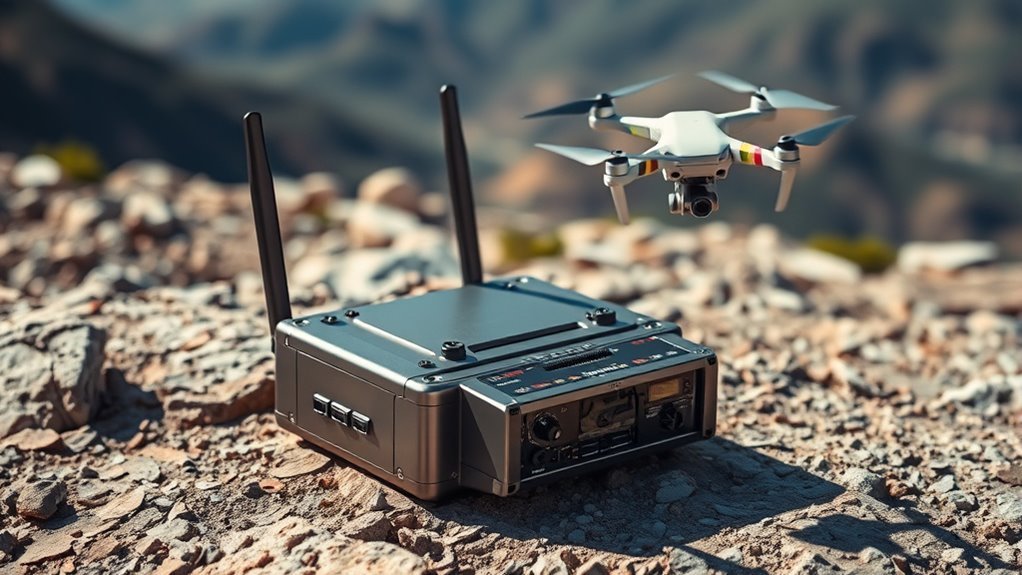
A drone jammer works by emitting radio frequency signals that interfere with the communication between drones and their operators. By targeting specific frequencies used for control links, it disrupts the drone’s ability to receive commands or transmit data. This guarantees that unauthorized drone activities are neutralized, enhancing airspace security. Understanding the mechanisms behind jamming technology is vital for grasping its applications and implications in various sectors. There’s more to uncover about its legal and technological aspects.
Understanding Drone Technology
As drones have gained popularity in various sectors, understanding their technology is essential for grasping how they operate. A drone comprises several critical components, including the frame, propulsion system, flight controller, and sensors. Each part plays a crucial role in ensuring stability and maneuverability during flight. Flight mechanics dictate how these components interact, enabling the drone to ascend, descend, and navigate through various environments. You’ll notice that the propulsion system generates thrust while the flight controller processes data from sensors, maintaining balance and direction. Grasping these intricacies not only enhances your appreciation of drone capabilities but also empowers you to explore their potential applications freely, whether for personal use or innovative business ventures. Additionally, the advanced camera capabilities of drones allow for high-quality visual content, making them valuable tools for capturing images and videos in diverse scenarios.
The Basics of Signal Jamming
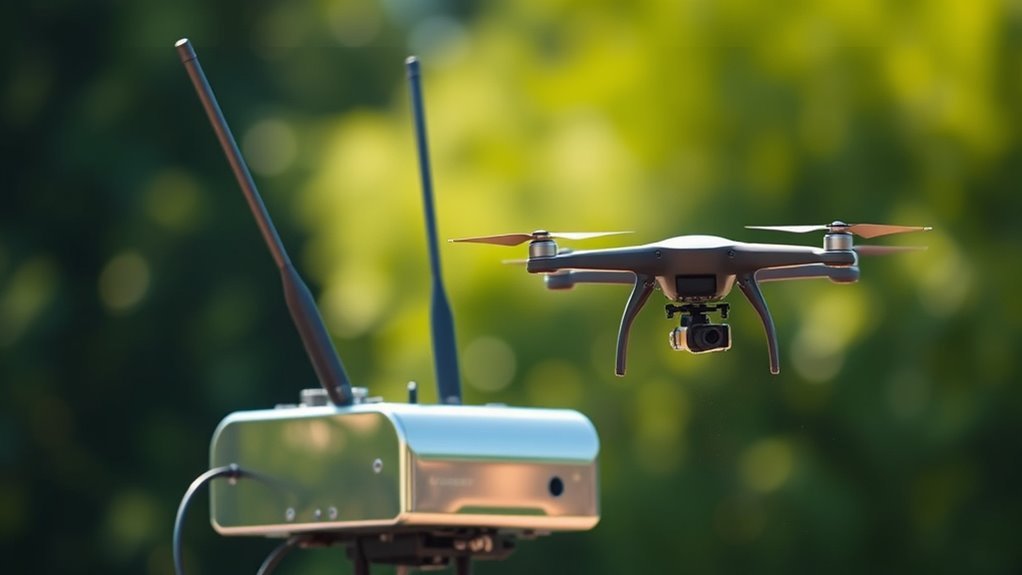
Understanding how drones operate also involves recognizing the vulnerabilities they face, particularly concerning signal integrity. Drones rely on constant communication with their operators, making them susceptible to signal interference. This interference can disrupt the commands sent to the drone, leading to a loss of control. When you consider frequency blocking, it’s essential to grasp that jamming devices emit signals at the same frequencies used by drones. By overwhelming these frequencies, they create a chaotic environment where the drone can no longer maintain its connection. This disruption not only prevents the drone from receiving commands but can also affect its GPS functionality, rendering it unable to navigate accurately. Understanding these principles is important for those who value personal freedom and security in drone operations.
How Drone Jammers Function
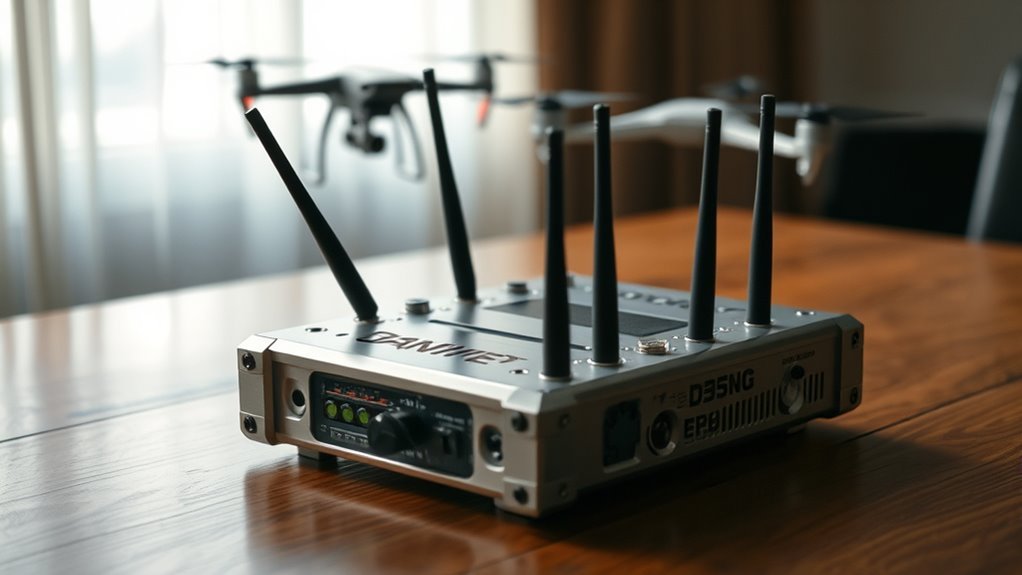
Drone jammers function by emitting radio frequency signals that disrupt the communication between a drone and its operator. By targeting specific drone frequencies, these devices utilize various jamming methods to create interference, effectively severing the control link. When a drone receives these disrupted signals, it may lose its ability to receive commands or transmit data, rendering it inoperable. The jamming process can be accomplished through techniques like barrage jamming, which floods the spectrum with noise, or spot jamming, which focuses on specific frequencies. Both methods are designed to prevent unauthorized drone activity, ensuring that your airspace remains secure. Understanding how these technologies work is essential for those who value their freedom from unwanted aerial surveillance and intrusion.
Applications of Drone Jammers
In today’s world, drone jammers serve essential functions across various sectors. You’ll find them employed in security and defense to neutralize unauthorized drone activities, while event management solutions utilize them to guarantee safety and privacy during gatherings. Additionally, these devices play an important role in protecting personal privacy by disrupting intrusive surveillance drones.
Security and Defense Uses
As the proliferation of unmanned aerial vehicles (UAVs) continues, the need for effective countermeasures has become increasingly urgent in security and defense applications. Military applications of drone jammers highlight their significance as counter drone systems designed to neutralize unauthorized UAVs. By disrupting communication signals, these jammers effectively prevent drones from completing their missions, whether for surveillance, reconnaissance, or potential attacks. This technology is vital in safeguarding sensitive installations, military personnel, and critical infrastructure. Additionally, they’re employed in conflict zones to thwart adversary drone operations, ensuring operational security. As threats evolve, the integration of drone jammers into defense strategies becomes essential, empowering forces to maintain control over the airspace and protect national sovereignty without compromising the freedoms of civilians.
Event Management Solutions
Many large-scale events, such as concerts or sporting events, face the challenge of unauthorized drone activity that can compromise safety and privacy. To address this, drone jammers are becoming essential tools in event coordination and crowd management. By disrupting the communication signals between the drone and its operator, these devices prevent unauthorized aerial surveillance or potential threats. Implementing drone jammers allows event organizers to maintain control over the airspace, ensuring a secure environment for attendees. Furthermore, it enhances the overall experience by mitigating distractions caused by hovering drones. With the growing prevalence of drone technology, utilizing jammers can considerably bolster safety measures, allowing you to focus on delivering a seamless event while preserving the freedom and enjoyment of the audience.
Privacy Protection Measures
While the rise of drone technology brings numerous benefits, it also raises significant privacy concerns that necessitate robust protection measures. You might find drone jammers particularly useful in addressing these issues. By disrupting signals, drone jammers can effectively prevent unauthorized surveillance, safeguarding your data privacy.
- Prevents unauthorized drone access: Stops drones from capturing sensitive information.
- Mitigates surveillance concerns: Reduces the risk of being monitored without consent.
- Enhances personal security: Provides peace of mind in private spaces.
In an age where data privacy is paramount, employing drone jammers can be an essential step in maintaining your freedom from invasive surveillance. By understanding their applications, you can take proactive measures to protect your personal space.
Legal Considerations and Regulations
When considering the use of drone jammers, it is crucial to understand the complex legal landscape governing their deployment. Many countries have strict drone laws that regulate the use of jamming technology due to its potential to interfere with legitimate air traffic and communications. Violating these laws can lead to severe legal implications, including fines and criminal charges. You’ll need to evaluate the specific regulations in your jurisdiction, as some regions may allow limited use for security purposes, while others prohibit it entirely. Always prioritize compliance to avoid unintended consequences. Engaging with legal experts can provide clarity and guarantee that your actions align with existing laws, safeguarding your freedom to operate within the legal framework.
The Future of Drone Jamming Technology
As you consider the future of drone jamming technology, advancements in signal disruption are poised to enhance effectiveness. However, regulatory challenges will emerge as authorities grapple with the implications of more sophisticated systems. Additionally, the integration of jamming technology with other security measures could redefine how airspace is managed.
Advancements in Signal Disruption
Although the landscape of drone technology continues to evolve rapidly, advancements in signal disruption are essential for maintaining security against unauthorized drone operations. You’ll find that recent developments focus on sophisticated signal modulation techniques and anti-jamming innovations, enhancing jammers’ effectiveness.
- Adaptive Frequency Hopping: This allows jammers to efficiently counteract signal modulation used by drones.
- Smart Targeting Algorithms: These innovations enable jammers to distinguish between authorized and unauthorized signals, minimizing collateral disruption.
- Portable Designs: Advances make it easier for users to deploy jammers in varying environments, ensuring flexibility.
As technology progresses, staying ahead of drone threats relies on continuous improvements in these areas, ensuring a robust defense against potential intrusions while preserving your freedom and safety.
Regulatory Challenges Ahead
While the technological advancements in drone jamming offer significant potential for enhancing security, regulatory challenges loom large on the horizon. You’ll need to navigate a complex landscape of regulatory compliance, as many jurisdictions impose strict rules on signal interference. The legal implications of deploying jammers can be severe, ranging from fines to potential criminal charges. As you explore the future of drone jamming technology, consider how the balance between security needs and individual freedoms plays out in legislation. Striking this balance is essential, as overreach could stifle innovation and personal rights. You’ll have to stay informed about evolving laws and advocate for reasonable regulations that allow for effective drone jamming while respecting civil liberties.
Integration With Other Technologies
Integrating drone jamming technology with other systems can greatly enhance its effectiveness and operational scope. However, there are integration challenges you need to contemplate, particularly regarding technology compatibility. To fully leverage these advancements, you might explore:
- AI-Driven Analysis: Utilizing artificial intelligence to analyze drone behavior and predict threats.
- Geolocation Systems: Integrating GPS technologies to pinpoint and neutralize unauthorized drones more accurately.
- Automated Defense Networks: Connecting jammers with broader security frameworks for coordinated responses.
Frequently Asked Questions
Can Drone Jammers Damage the Drones They Target?
Imagine a car’s GPS suddenly failing; similarly, drone jammers disrupt signals, causing potential drone damage. While jamming effects can incapacitate drones, they typically don’t physically harm them unless the drone crashes due to loss of control.
How Far Can a Drone Jammer Effectively Operate?
A drone jammer’s effective range typically varies, but you’ll often find jamming distances between 300 meters to several kilometers. Factors like signal strength and environmental conditions can influence this operational effectiveness considerably.
Are There Specific Types of Drones That Are More Vulnerable to Jamming?
In the vast sky of drone types, some are like fragile leaves in the wind. Their jamming effectiveness can vary; consumer drones often succumb to jammers more easily than advanced military UAVs, designed to resist interference.
What Are the Potential Side Effects of Using a Drone Jammer?
Using a drone jammer can lead to interference effects, potentially disrupting nearby communications and navigation systems. You should consider safety concerns, as unintended consequences may arise, affecting both drones and other electronic devices within range.
Can Drone Jammers Be Used Legally in All Countries?
Maneuvering the skies of legality, you’ll find that drone jammers aren’t universally accepted. Legal implications vary widely, shaped by international regulations. Always check local laws to guarantee your freedom doesn’t clash with legal boundaries.
