

Drones are transforming the construction industry by streamlining operations and enhancing project outcomes through advanced aerial technology. Their use in surveying, monitoring, and data collection not only increases efficiency but also significantly improves safety and decision-making processes on construction sites. As the industry embraces this innovative technology, understanding the various applications and benefits of drones becomes essential for stakeholders aiming to optimize their projects.
Aerial Surveying and Mapping
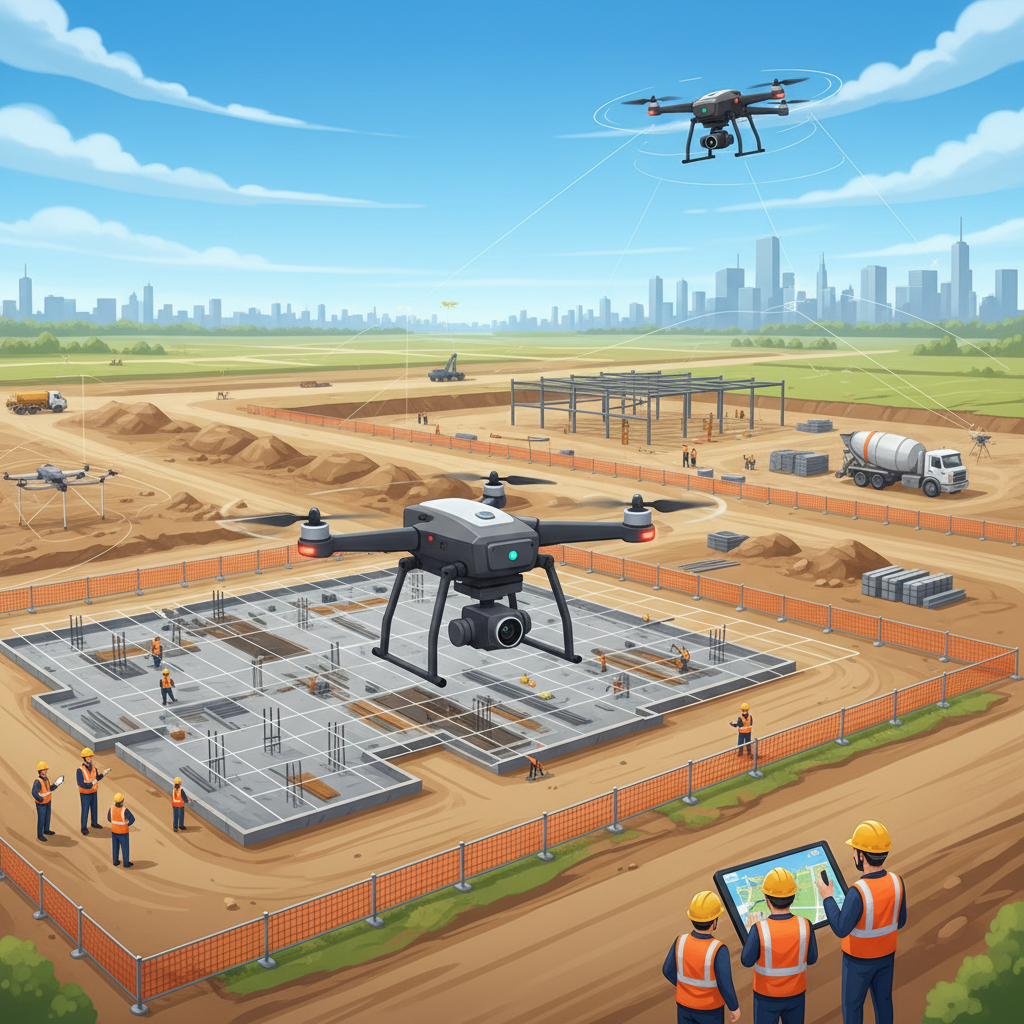
Drones have revolutionized the process of aerial surveying and mapping by providing rapid data collection capabilities that far surpass traditional methods. In the past, topographical surveys required extensive ground work, often taking days or weeks to complete. However, drones can now gather detailed topographical data in a matter of hours, significantly reducing both time and costs associated with surveying.
The high-resolution imagery captured by drones allows for precise mapping and planning, which is critical for project accuracy. For instance, drones equipped with LiDAR (Light Detection and Ranging) technology can produce highly detailed 3D models of the terrain, which can be invaluable for understanding site conditions and planning construction activities. This enhanced precision helps project managers to visualize and analyze the land more effectively, leading to better-informed decisions and smoother project execution.
Site Monitoring and Inspection
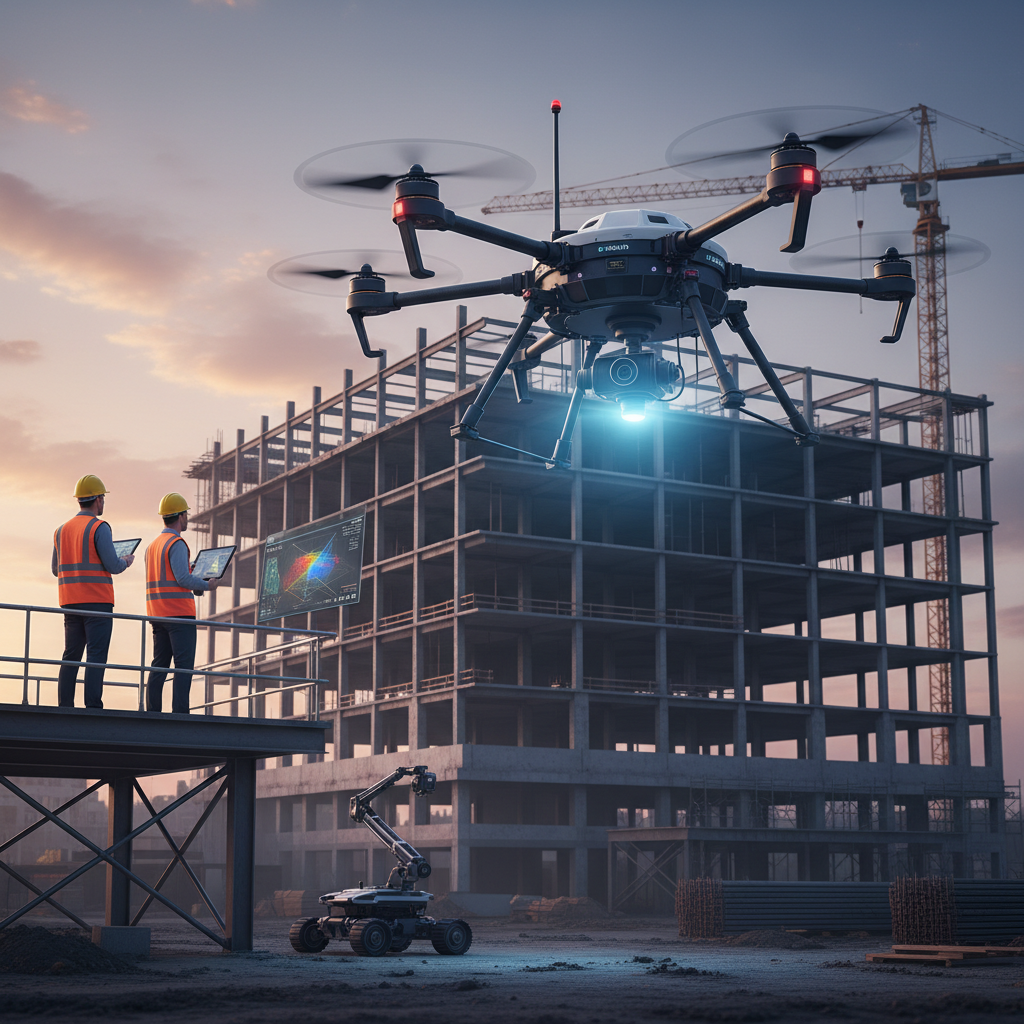
Regular site monitoring and inspection are vital for maintaining safety standards and ensuring compliance with regulations. Drones facilitate these inspections by providing an aerial perspective that can cover large areas quickly. This capability significantly reduces the need for personnel to be physically present in potentially hazardous areas, thereby minimizing safety risks.
Moreover, drones can deliver real-time updates on project progress, allowing project managers to make timely adjustments and interventions as needed. For example, construction projects like highways and bridges benefit from drone inspections, as they can easily monitor structural integrity and detect issues before they escalate. By using drones for inspections, construction companies can enhance their operational efficiency and maintain high safety standards throughout the project’s lifecycle.
Project Management and Coordination
Effective project management and coordination are essential for the success of any construction project. Drones assist project managers by providing a comprehensive visual overview of the site, which enhances logistics planning and team coordination. Aerial footage enables managers to visualize site layouts, assess workflow, and manage resources more effectively.
For instance, in large-scale construction projects, drones can be employed to create time-lapse videos that document project progress over time. This not only serves as a valuable tool for stakeholders and clients but also helps teams identify potential bottlenecks and inefficiencies early in the process. By streamlining communication and decision-making through drone technology, project managers can ensure that all team members are aligned and informed, ultimately leading to improved project outcomes.
Safety Enhancements
Safety is a paramount concern in the construction industry, and drones are playing a crucial role in enhancing safety protocols. With the ability to access hard-to-reach or hazardous areas, drones significantly reduce the risks faced by construction workers. For example, drones can be deployed to inspect tall structures, such as scaffolding or rooftops, without the need for ladders or harnesses, thus minimizing the likelihood of accidents.
Additionally, drones assist in monitoring safety compliance by capturing footage of safety practices in real-time. This capability allows project managers to ensure that safety regulations are being followed consistently across the site. By incorporating drone technology into their safety protocols, construction companies can create a safer working environment and reduce the incidence of workplace accidents.
Data Collection and Analysis
The data collection capabilities of drones are one of their most significant advantages in the construction industry. Drones can gather vast amounts of data, including imagery, geographical information, and site conditions, which can be analyzed for improved project planning and execution. This data-driven approach allows construction teams to make informed decisions based on factual insights rather than assumptions.
The integration of drone data with Building Information Modeling (BIM) further enhances project insights. For example, drone-captured data can be used to update BIM models in real-time, ensuring that all stakeholders have access to the most current information. This integration leads to better collaboration among teams and helps identify potential issues before they impact project timelines or budgets.
Cost Efficiency and Time Savings
One of the most compelling benefits of utilizing drones in construction is the potential for significant cost savings and time efficiency. The labor costs associated with manual surveying and inspections can be drastically reduced when drones are used for these tasks. This reduction not only lowers project expenses but also allows teams to allocate resources more effectively.
Furthermore, the speed of data collection and analysis provided by drones leads to quicker project timelines. For instance, a construction company may use drones to conduct a survey that would typically take days to complete, finishing it in just a few hours. This rapid turnaround can provide a competitive edge in the industry, enabling companies to take on more projects and deliver results faster.
In conclusion, drones are reshaping the landscape of the construction industry by enhancing efficiency, safety, and project management capabilities. Their applications in aerial surveying, site monitoring, data collection, and cost efficiency are invaluable for construction companies striving for excellence. By adopting drone technology, stakeholders can improve their workflows and deliver projects more effectively while staying ahead in an increasingly competitive market. For those considering the integration of drones into their construction processes, exploring the latest advancements in this field can yield significant benefits.
Frequently Asked Questions
What are the primary uses of drones in construction projects?
Drones are primarily used in construction for site surveying, mapping, and monitoring project progress. They provide high-resolution aerial imagery and 3D models that enhance site analysis and help in planning. Additionally, drones assist in inspecting hard-to-reach areas, reducing the need for scaffolding and ladders, thus improving safety and efficiency on job sites.
How do drones improve safety on construction sites?
Drones enhance safety on construction sites by conducting inspections in hazardous areas without putting workers at risk. They can quickly survey large areas for potential dangers, monitor equipment conditions, and check for compliance with safety regulations. This proactive approach to safety helps identify issues before they become serious problems, ultimately reducing accidents and ensuring a safer work environment.
Why should construction companies invest in drone technology?
Investing in drone technology allows construction companies to increase efficiency, reduce costs, and enhance project management. Drones provide real-time data and insights that facilitate better decision-making and streamline workflows. Furthermore, they can lower labor costs and minimize delays by quickly completing tasks such as land surveys and inspections that would otherwise take much longer.
What are the best types of drones for construction applications?
The best types of drones for construction applications include quadcopters for aerial photography and data collection, fixed-wing drones for large site mapping, and specialized models equipped with thermal imaging for inspections. When choosing a drone, consider factors such as flight time, camera quality, payload capacity, and ease of use. Some popular models among construction professionals include the DJI Phantom 4 RTK and the senseFly eBee X.
Which software is best for processing drone data in construction?
The best software for processing drone data in construction includes platforms like Pix4D, DroneDeploy, and Autodesk ReCap. These solutions offer advanced features for creating 3D models, generating topographic maps, and conducting volumetric analysis. Choosing the right software depends on your specific project needs, the complexity of the data, and integration capabilities with other construction management tools.
References
- https://en.wikipedia.org/wiki/Drone#Applications_in_construction
- https://www.nist.gov/news-events/news/2021/04/nist-uses-drones-improve-construction-safety
- https://www.sciencedirect.com/science/article/pii/S2351978921003280
- https://www.naiop.org/Research-and-Publications/Magazine/Development-Ownership/2020-Winter-Edition/Features/How-Drones-Are-Transforming-the-Construction-Industry
- https://www.constructiondive.com/news/how-drones-are-changing-the-construction-industry/569213/
- https://www.cdc.gov/niosh/topics/construction/default.html
- https://www.forconstructionpros.com/technology/article/21108018/the-role-of-drones-in-the-construction-industry
- https://www.theconstructor.org/construction/uses-of-drones-in-construction/523844/
- https://www.faa.gov/uas/advanced_operations/
