
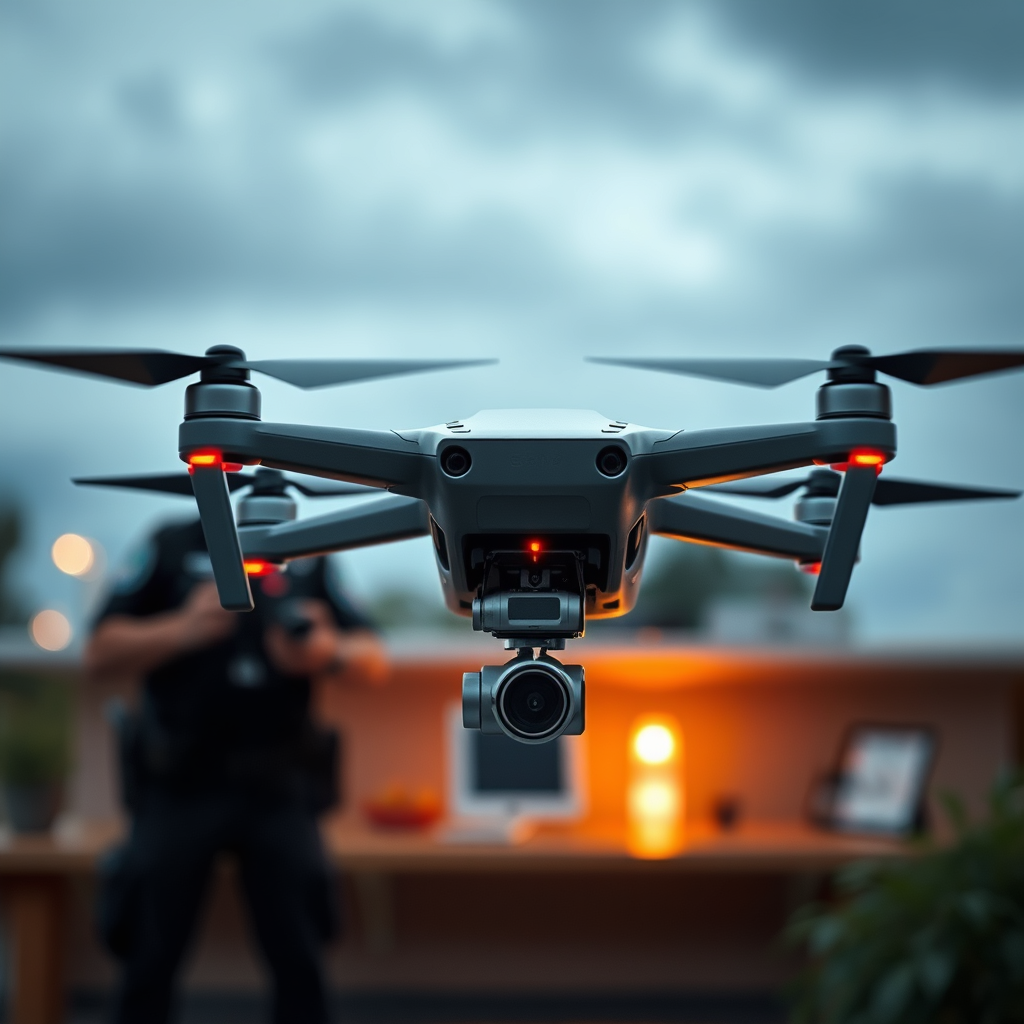
Drones can significantly enhance police operations by providing aerial surveillance, improving response times, and aiding in crime scene investigations. These unmanned aerial vehicles (UAVs) empower law enforcement agencies with advanced capabilities to maintain public safety and operational efficiency in a variety of scenarios. As technology continues to evolve, the potential applications of drones in policing expand, making them an indispensable tool in modern law enforcement.
Enhanced Surveillance Capabilities
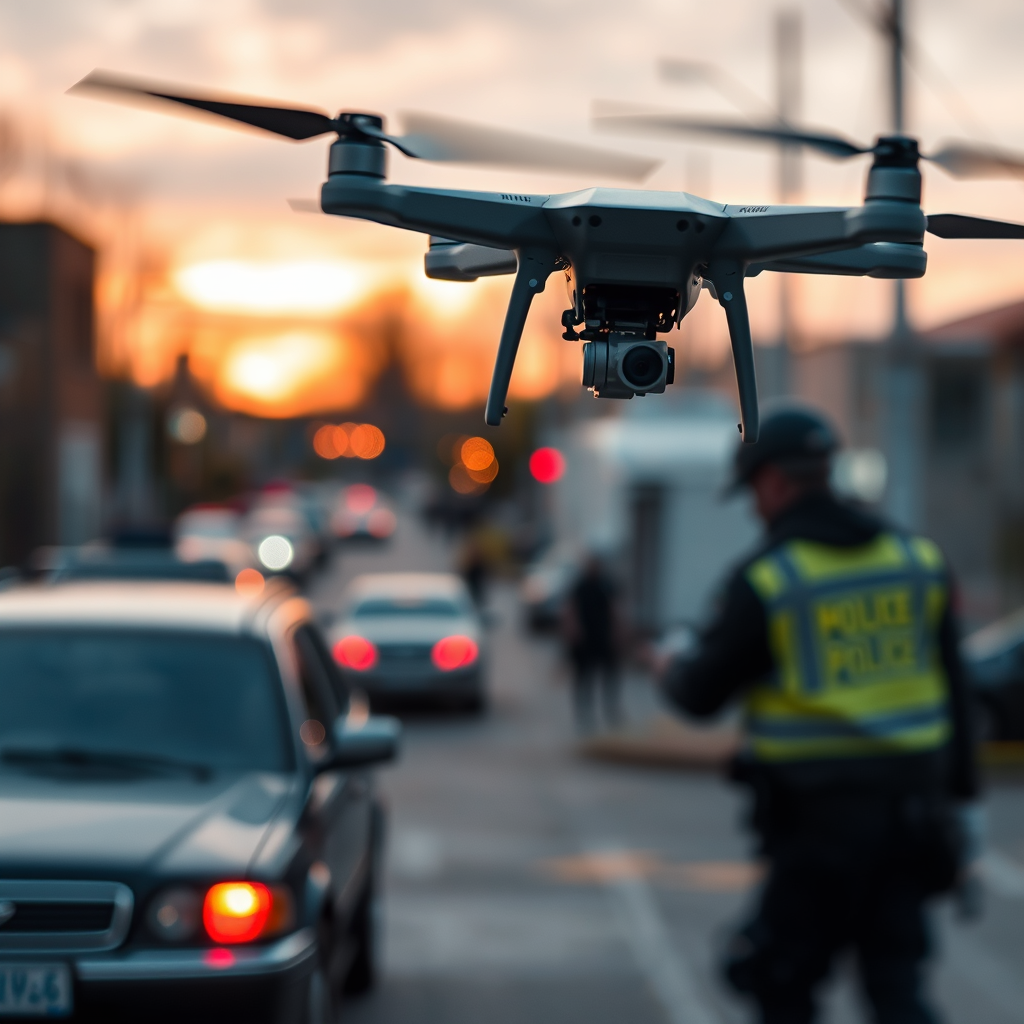
One of the primary advantages of deploying drones in police work is their enhanced surveillance capabilities. Drones can cover large areas quickly, offering real-time video feeds to officers on the ground. This capability is particularly beneficial during large events or protests where traditional methods of surveillance might be limited. For instance, during the 2020 protests in various cities across the United States, police departments utilized drones to monitor crowds from above, ensuring they could maintain order without infringing on civil liberties.
Moreover, drones can access hard-to-reach locations that may be challenging for officers to navigate. Whether it’s a dense urban environment, rugged terrain, or remote areas, drones can provide valuable situational awareness. They can be equipped with high-definition cameras that transmit live footage, allowing command centers to assess situations and make informed decisions. This capability not only enhances operational efficiency but also promotes a proactive approach to law enforcement.
Rapid Emergency Response
In emergency situations, every second counts. Drones have the ability to be deployed faster than traditional police vehicles, allowing them to reach emergency scenes more quickly. This rapid response can be crucial in critical scenarios such as active shooter situations or natural disasters, where timely information can save lives. For example, in a recent incident involving a missing person in a wooded area, local authorities deployed drones to quickly search the terrain, significantly expediting the rescue efforts.
Furthermore, drones can assess situations before officers arrive on the scene, providing critical information that allows law enforcement to prepare more effectively. By delivering real-time data on the ground conditions, potential threats, and the needs of first responders, drones ensure that officers arrive equipped with the knowledge necessary to handle the situation appropriately.
Crime Scene Investigation
Drones play a pivotal role in crime scene investigations by capturing high-resolution images and videos from multiple angles. This aerial perspective allows investigators to document evidence more comprehensively than traditional ground-level photography. For instance, after an accident or crime scene has been established, drones can quickly collect visual data that helps in reconstructing events, identifying key evidence, and producing accurate reports for court proceedings.
Additionally, drones can help preserve evidence by documenting the scene before any alterations occur, ensuring that critical details are not overlooked. The use of drones in crime scene investigations provides law enforcement agencies with a powerful tool that enhances the investigative process, leading to more accurate conclusions and improved case outcomes.
Crowd Monitoring and Management
In today’s society, large gatherings and public events are commonplace, posing unique challenges for law enforcement in terms of crowd management and public safety. Drones can effectively monitor these situations, providing a bird’s-eye view that assists officers in managing crowds and identifying potential incidents before they escalate. For example, during major sporting events or festivals, police departments have successfully used drones to monitor crowd behavior, allowing them to quickly identify areas where intervention may be necessary.
Furthermore, drones can help ensure public safety by monitoring for hazards or illegal activities, such as substance abuse or violence. By providing real-time data and visual assessments, law enforcement can take proactive measures, enhancing safety for all event attendees and reducing the risk of incidents.
Search and Rescue Operations
Drones equipped with thermal imaging technology have revolutionized search and rescue operations. In scenarios where individuals are lost in challenging terrains, such as mountains, forests, or wilderness areas, drones can quickly cover extensive areas, significantly increasing the chances of locating missing persons. For instance, during a recent search for a hiker lost in a national park, drones were deployed to scan the area from above, successfully spotting the individual within hours, which would have taken ground teams much longer to achieve.
The ability to utilize thermal imaging allows drones to detect body heat, making them invaluable in low-light conditions or during nighttime searches. This technology not only enhances the efficiency of search and rescue operations but also contributes to the safety of responders by reducing the need for them to navigate potentially hazardous areas on foot.
Traffic Monitoring and Accident Reconstruction
Traffic monitoring is another vital application of drones in law enforcement. Drones can quickly assess traffic conditions, document accidents, and provide aerial views that assist in reconstructing accident scenes accurately. For example, after a traffic collision, drones can be deployed to create a comprehensive aerial assessment of the scene, capturing the positions of vehicles, road conditions, and other relevant factors. This information is essential for accurate reporting and can provide crucial insights during investigations.
In addition to accident reconstruction, drones can also monitor traffic flow in real-time, helping law enforcement identify congestion or hazardous conditions. By providing an overview of traffic patterns, drones enable police departments to respond more effectively to incidents, ensuring safety and minimizing disruptions for the public.
Community Engagement and Transparency
The use of drones in policing is not solely about enhancing operational capabilities; it also presents an opportunity for law enforcement agencies to engage with their communities positively. Drones can be deployed during community events, such as fairs or parades, to foster relationships and demonstrate transparency. By showcasing how drones are used for public safety, law enforcement can build trust with community members, alleviating concerns about surveillance and promoting collaboration.
Sharing drone footage with the public can also enhance transparency in police operations. By providing insights into how drones are utilized, agencies can demystify their operations and encourage community support. Furthermore, this openness can lead to constructive dialogue between police and citizens, creating a more engaged and informed community.
In conclusion, the integration of drones into police work is transforming how law enforcement operates. By leveraging their capabilities for enhanced surveillance, rapid response, crime scene investigations, and community engagement, police departments can significantly improve their effectiveness and ensure public safety. As drone technology continues to evolve, its applications in policing will likely expand even further, paving the way for safer communities and more effective law enforcement strategies.
Frequently Asked Questions
How can drones assist police in crime scene investigations?
Drones are increasingly utilized by police departments to enhance crime scene investigations. They can quickly map out a scene, capturing high-resolution aerial images and 3D models, which provide critical data for analysis. This aerial perspective helps law enforcement reconstruct events, identify potential evidence locations, and improve overall scene management, thereby increasing the efficiency and accuracy of investigations.
What are the benefits of using drones for search and rescue operations in law enforcement?
Drones offer several advantages for search and rescue operations, including the ability to cover large areas quickly and access hard-to-reach locations. Equipped with thermal imaging cameras, drones can detect heat signatures, making them invaluable for locating missing persons in challenging terrains, such as forests or mountains. Additionally, drones can relay real-time video to command centers, enhancing situational awareness for rescuers on the ground.
Why are drones becoming an essential tool for police surveillance?
Drones provide police with a cost-effective and versatile surveillance tool that can enhance public safety. They can monitor large gatherings, track suspects during pursuits, and gather intelligence without the need for extensive manpower or resources. Their aerial capabilities allow for unobtrusive observation, helping law enforcement agencies maintain public order while minimizing the risks associated with traditional surveillance methods.
Which types of drones are best suited for police operations?
The best drones for police operations typically feature high-resolution cameras, robust flight times, and advanced sensors. Popular models include the DJI Matrice series and the Parrot Anafi USA, which offer thermal imaging and are designed for rugged use. Law enforcement agencies often select drones that are equipped with features like GPS tracking, real-time video streaming, and automated flight capabilities to ensure effective operations in diverse scenarios.
How do drones enhance community policing efforts?
Drones can significantly improve community policing by fostering transparency and trust between law enforcement and citizens. They can be used for community outreach initiatives, such as providing aerial views of community events or public safety demonstrations. Additionally, by employing drones for patrols, police can show a visible presence in neighborhoods, enhancing perceptions of safety and encouraging dialogue between officers and community members.
References
- https://en.wikipedia.org/wiki/Drone#Uses_in_law_enforcement
- https://www.bbc.com/news/technology-49312623
- https://www.nij.gov/topics/technology/Pages/drones-in-law-enforcement.aspx
- https://www.reuters.com/article/us-usa-drone-police-idUSKBN1W82Y9
- https://www.sciencedirect.com/science/article/pii/S1462901118301965
- https://www.ncjrs.gov/pdffiles1/nij/250120.pdf
- https://www.theguardian.com/us-news/2020/jul/18/police-drone-surveillance-privacy
- https://www.ijcai.org/Proceedings/2021/0100.pdf
- https://www.usatoday.com/story/news/nation/2020/10/10/drones-police-use-surveillance/5900322002/
