

Drones can significantly enhance agricultural efficiency and productivity by providing precise data collection, monitoring crop health, and optimizing resource management. This technology is revolutionizing traditional farming practices, allowing farmers to make informed decisions and improve yields. As the agriculture industry faces increasing challenges such as climate change, population growth, and resource scarcity, the adoption of drone technology presents a crucial opportunity for farmers to innovate and thrive in a competitive landscape.
Benefits of Drone Technology in Agriculture
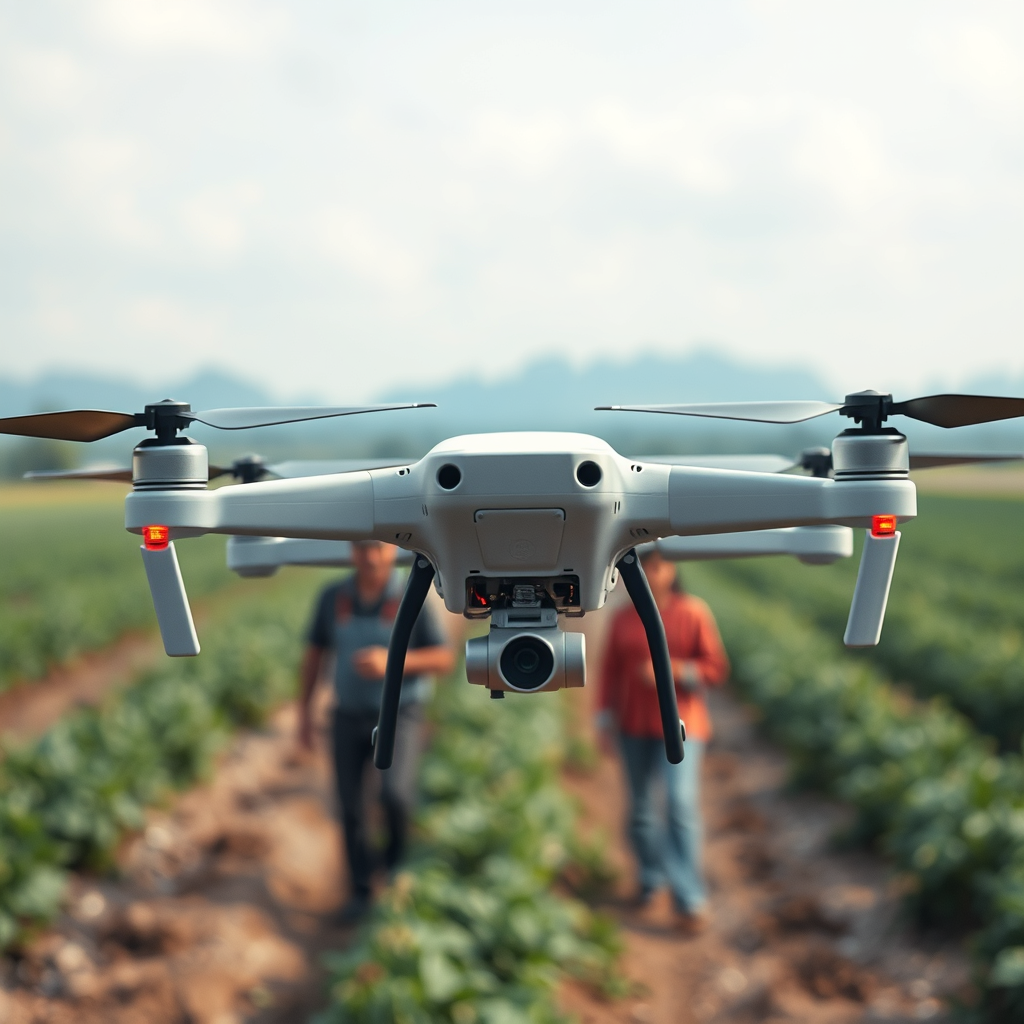
Drones offer a myriad of benefits that are reshaping the agricultural sector. Primarily, they provide high-resolution aerial imagery that enables better field analysis. This imagery captures detailed information about crop conditions, soil health, and land topography, allowing farmers to visualize their fields from a new perspective. For instance, farmers can use drone imagery to identify variations in crop growth, which could be indicative of underlying issues such as nutrient deficiencies or pest pressures.
Moreover, drones facilitate real-time data collection, which is essential for timely interventions. Instead of relying on periodic assessments, farmers can deploy drones to gather data frequently, enabling them to respond swiftly to emerging challenges. This agility is particularly beneficial during critical growth phases when conditions can change rapidly, ensuring that farmers can implement corrective actions before problems escalate.
Crop Monitoring and Health Assessment
Regular drone flights have emerged as a vital tool for crop monitoring and health assessment. By utilizing drones equipped with advanced sensors, farmers can identify pest infestations and disease outbreaks early. For example, drones can detect changes in plant color or vigor that may signal the presence of pests or diseases, enabling farmers to take proactive measures before the issues spread.
Additionally, multispectral cameras integrated into drones can assess plant health by analyzing vegetation indices such as NDVI (Normalized Difference Vegetation Index). This technology allows farmers to differentiate between healthy and stressed plants, providing insights into the overall health of the crop. By interpreting these data points, farmers can tailor their management practices to improve crop resilience and productivity.
Precision Agriculture and Resource Management
One of the most transformative applications of drone technology is in precision agriculture and resource management. Drones can create detailed maps that guide variable rate applications of fertilizers and pesticides. This capability allows farmers to apply inputs only where needed, reducing waste and lowering costs. For example, a farmer can use drone data to identify areas of a field that require more fertilizer, ensuring that nutrients are allocated efficiently.
Furthermore, drones assist in optimizing irrigation practices by identifying water stress areas within fields. With thermal imaging and other sensor technologies, drones can detect variations in temperature and moisture levels, enabling farmers to adjust their irrigation schedules accordingly. This targeted approach not only conserves water but also enhances crop yields by ensuring that plants receive the precise amount of hydration they require.
Soil Analysis and Preparation
Drones have the potential to revolutionize soil analysis and preparation. By capturing data on soil conditions from above, farmers gain insights that inform land preparation strategies. For instance, drones can assess soil texture, compaction, and moisture levels, enabling farmers to make informed decisions about tillage and planting methods.
Additionally, drones can provide valuable insights into soil health and nutrient levels. By analyzing data collected from drone surveys, farmers can determine the need for amendments such as lime or organic fertilizers. This information allows for a more sustainable approach to soil management, promoting long-term fertility and productivity.
Crop Surveillance and Yield Prediction
Continuous monitoring of crops using drones facilitates effective crop surveillance and yield prediction. By tracking crop growth stages through aerial imagery, farmers can gain insights into the development of their plants and accurately predict harvest timing. For instance, drones can capture images at different growth stages, allowing farmers to assess the uniformity of crop maturity.
Moreover, the data gathered by drones can contribute to accurate yield forecasts. By analyzing growth patterns and environmental conditions, farmers can utilize predictive analytics to estimate their yield potential. This information is invaluable for planning purposes, enabling farmers to make informed decisions about marketing and resource allocation.
Cost-Effectiveness and Time Savings
The integration of drones into agricultural practices offers significant cost-effectiveness and time savings. Utilizing drones can reduce labor costs and the time needed for manual surveys, which traditionally involve extensive fieldwork. For example, a drone can cover large areas in a fraction of the time it would take a team of workers to conduct the same survey on foot.
Additionally, drones increase operational efficiency by providing rapid assessments of fields. This efficiency allows farmers to allocate their time and resources more effectively, focusing on core activities that enhance productivity. As a result, farmers can maximize their return on investment while minimizing operational overhead.
Future Trends in Agricultural Drone Technology
The future of agricultural drone technology is bright, with advancements in artificial intelligence (AI) and machine learning poised to enhance data analysis capabilities. These technologies will enable farmers to extract actionable insights from the vast amounts of data collected by drones, further improving decision-making processes.
Moreover, the integration of drones with other technologies, such as the Internet of Things (IoT), will streamline farming processes. For instance, drones could work in conjunction with IoT sensors placed in fields to provide real-time data that informs irrigation, fertilization, and pest management strategies. This synergy of technologies will lead to more efficient and sustainable farming practices.
In conclusion, drones are a game-changer for agriculture, providing tools that enhance productivity and efficiency. From crop monitoring and precision agriculture to soil analysis and cost savings, the benefits of drone technology are extensive. As the agricultural sector continues to evolve, farmers who embrace this technology will not only improve their operational effectiveness but also position themselves as leaders in sustainable farming practices. The future of agriculture is undeniably intertwined with the advancements in drone technology, making it imperative for farmers to consider integrating drones into their practices to stay competitive and sustainable.
Frequently Asked Questions
What are the main benefits of using drones in agriculture?
Drones offer numerous benefits in agriculture, including precision farming, crop monitoring, and efficient resource management. They enable farmers to gather real-time data on crop health, soil conditions, and water levels, which helps in making informed decisions. Additionally, drones can reduce labor costs and minimize environmental impact by optimizing pesticide and fertilizer application.
How do drones improve crop monitoring and health assessment?
Drones equipped with high-resolution cameras and multispectral sensors can capture detailed images of crops, allowing farmers to monitor plant health from above. By analyzing the data, farmers can identify areas of stress, disease, or nutrient deficiency early on, enabling timely intervention. This proactive approach can lead to increased yields and reduced losses, making drones an invaluable tool for modern agriculture.
Why should farmers consider investing in drone technology for their operations?
Investing in drone technology can significantly enhance agricultural productivity and sustainability. Drones provide a cost-effective way to gather extensive data over large areas quickly, which can lead to more informed decision-making and better resource allocation. Furthermore, as the agriculture industry increasingly adopts precision farming techniques, utilizing drones can provide a competitive advantage by improving efficiency and maximizing crop output.
Which types of drones are best suited for agricultural purposes?
The best drones for agriculture typically fall into two categories: fixed-wing and multi-rotor drones. Fixed-wing drones are ideal for covering large areas quickly and are often used for aerial mapping and surveying, while multi-rotor drones are better suited for detailed crop inspections and can hover over specific areas. Farmers should choose a drone based on their specific needs, such as field size, required flight time, and the type of data they wish to collect.
How can drones help with precision agriculture practices?
Drones play a critical role in precision agriculture by enabling farmers to gather and analyze data that informs targeted interventions. By utilizing aerial imagery and advanced analytics, farmers can apply water, fertilizers, and pesticides more accurately, reducing waste and enhancing crop health. This data-driven approach leads to improved resource efficiency, cost savings, and ultimately, higher yields, making drones an essential tool for modern farming practices.
References
- https://en.wikipedia.org/wiki/Agricultural_drones
- https://www.usda.gov/topics/farming/precision-agriculture
- https://www.nas.edu/catalog/23534/drones-in-agriculture
- https://www.ars.usda.gov/oc/np/2020/10/using-drones-to-improve-agriculture/
- https://www.sciencedirect.com/science/article/pii/S0168169921000910
- https://www.frontiersin.org/articles/10.3389/fenvs.2021.00057/full
- https://www.cnbc.com/2021/10/05/how-drones-are-changing-the-future-of-agriculture.html
- https://www.nature.com/articles/s41598-020-68363-5
- https://www.un.org/en/un-chronicle/how-drones-can-transform-agriculture
