
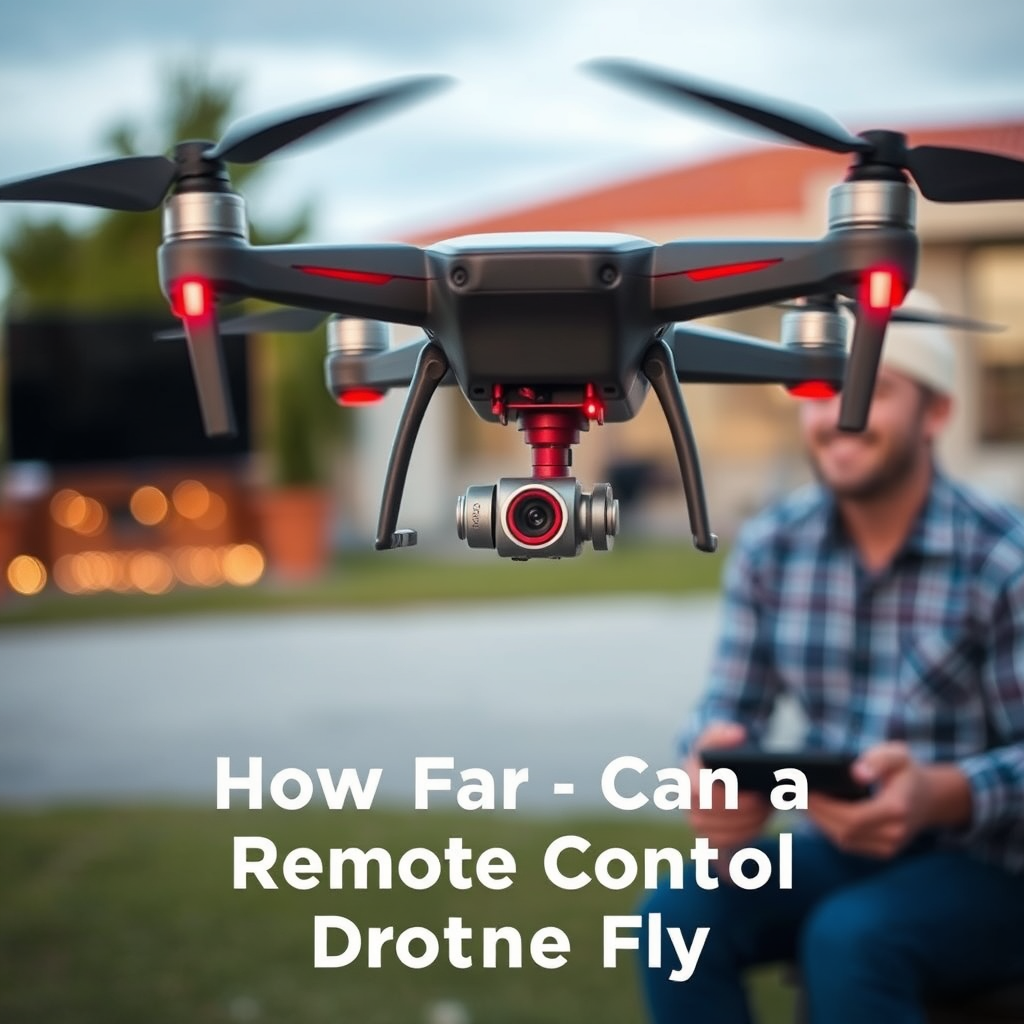
Most remote control drones can fly between 1 to 7 miles, depending on their model, battery capacity, and environmental conditions. The exact range often varies not only by the drone’s specifications but also by external factors such as obstacles and weather conditions. Understanding these variables is essential for drone enthusiasts and professionals alike to optimize their flying experience.
Understanding Drone Flight Range
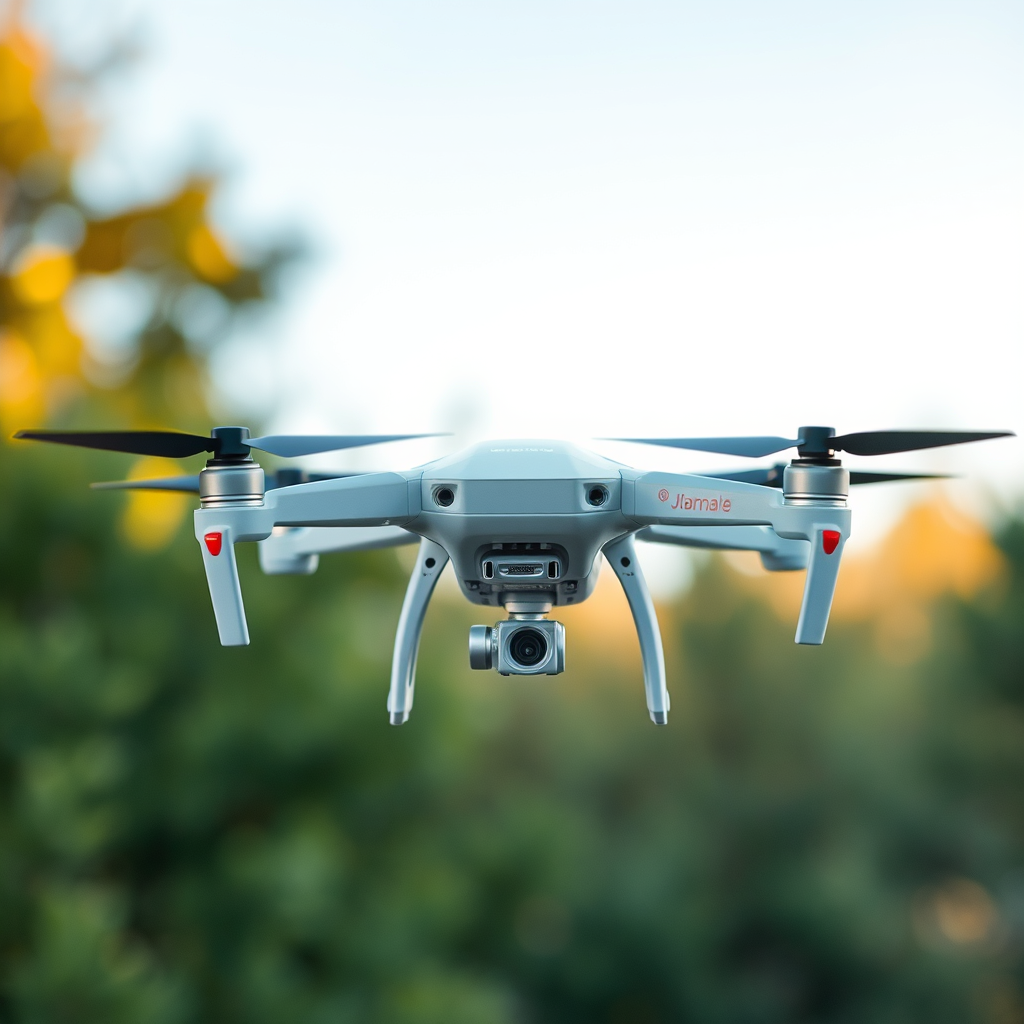
The flight range of a drone is a critical aspect that determines its usability for various applications, from recreational flying to professional aerial photography. Drones can generally be categorized into two main types: hobbyist drones and professional drones. Hobbyist drones, often designed for casual users, typically have shorter ranges, while professional drones are engineered for extended flight distances and enhanced capabilities.
Manufacturers provide specifications regarding the expected flight distance, which serve as a guideline for potential users. However, these figures often reflect ideal conditions; real-world scenarios can significantly alter the actual range. Therefore, a thorough understanding of the drone’s category and its performance metrics is vital for users seeking to make the most of their equipment.
Factors Affecting Flight Distance
Several critical factors influence how far a remote control drone can fly.
– Battery Life: The capacity and type of battery directly correlate with flight duration and distance. Drones equipped with lithium-polymer (LiPo) batteries typically offer better performance due to their higher energy density compared to other battery types. A higher voltage rating can also provide more power, allowing the drone to fly further before needing a recharge. For instance, a drone with a 4000mAh battery can potentially fly longer than one with a 2000mAh battery.
– Signal Strength: The quality of the remote control signal is fundamental to maintaining a drone’s range. Most drones utilize radio frequency (RF) signals for communication between the drone and its controller. Interference from other electronic devices, buildings, or even trees can weaken this signal, leading to a reduced flight range. Advanced drones often incorporate technology like frequency hopping spread spectrum (FHSS) to maintain a stable connection and extend their operational range.
Types of Drones and Their Ranges
Understanding the different categories of drones and their associated ranges is crucial for selecting the right model for your specific needs.
– Consumer Drones: These drones, which are popular among hobbyists and casual users, typically have ranges between 1 to 3 miles. For example, the DJI Mini 2 boasts a maximum range of 6.2 miles in optimal conditions, allowing users to explore vast landscapes while capturing stunning aerial shots.
– Racing Drones: Designed primarily for speed and agility in competitive environments, racing drones often have limited ranges, usually less than a mile. This restriction is due to their focus on quick bursts of speed and maneuverability rather than long-distance flight. An example includes the ImmersionRC Vortex, which is built for short-range performance in competitive racing settings.
Environmental Impact on Flight Distance
The environment plays a significant role in determining how far a drone can effectively fly.
– Obstacles: Physical barriers such as trees, buildings, and hills can obstruct the signal between the drone and its remote controller, leading to a decline in performance. For example, flying in a densely wooded area may cause the drone to lose connection, thus limiting its operational range.
– Weather Conditions: Adverse weather can also affect flight distance. Wind can push a drone off course, requiring more battery power to maintain stability, while rain or snow can add weight and resistance, further hindering flight capabilities. Drone manufacturers often provide guidelines indicating optimal flying conditions to ensure safety and maintain performance.
Tips to Extend Your Drone’s Flight Range
Maximizing your drone’s flight distance involves a combination of techniques and tools.
– Use Range Extenders or Signal Boosters: Investing in range extenders or signal boosters can significantly improve the connectivity between your drone and its controller. These devices amplify the signal, allowing for longer flight distances and more stable communication, especially in challenging environments.
– Optimize Battery Performance: Proper battery care is crucial for extending flight time. Regularly check the battery’s health, avoid overcharging, and ensure it is stored in a cool, dry place. Additionally, flying in optimal conditions—such as moderate temperatures and minimal wind—can help maintain battery efficiency and prolong flight duration.
Legal Regulations Affecting Drone Flight
Understanding the legal landscape surrounding drone operation is essential for both safety and compliance.
– Local Laws: Regulations regarding drone flight distance and airspace restrictions vary significantly by location. Many countries have rules governing where drones can be flown, including restrictions on flying near airports, over populated areas, and at certain altitudes. It is imperative to familiarize yourself with local laws to avoid penalties and ensure safe flying practices.
– Drone Registration: In many jurisdictions, registering your drone is mandatory, especially for those weighing over a certain limit. Registration not only ensures compliance with legal requirements but also contributes to accountability and safety in the airspace.
Conclusion
In summary, the distance a remote control drone can fly varies widely based on several factors, including battery life, signal strength, and environmental conditions. By understanding these variables and following best practices, such as optimizing battery performance and adhering to legal regulations, you can significantly enhance your drone flying experience. For more tips and insights, be sure to explore our additional resources on drone usage, enabling you to make the most of your aerial adventures.
Frequently Asked Questions
How far can a typical remote control drone fly on a single charge?
The flight range of a typical remote control drone can vary widely depending on the model and battery specifications. On average, consumer drones can fly between 3 to 7 miles (5 to 11 kilometers) on a single charge. High-end models, such as those used for professional photography or racing, may achieve ranges of up to 10 miles (16 kilometers) or more. It’s essential to check the manufacturer’s specifications for each drone to understand its maximum flight distance.
What factors influence the maximum distance a remote control drone can fly?
Several factors can influence a remote control drone’s maximum flight distance, including battery capacity, drone weight, motor efficiency, and environmental conditions. Additionally, signal strength and interference from obstacles like buildings or trees can significantly reduce range. Wind speed and weather conditions also play a crucial role; strong winds can push a drone off course and reduce its effective flight distance.
Why is the effective range of a remote control drone often shorter than advertised?
The effective range of a remote control drone is often shorter than advertised due to several real-world conditions that can impact performance. Factors such as interference from other electronic devices, physical barriers, and the drone’s altitude can affect signal strength and battery consumption. Furthermore, as drones approach their maximum range, they may need to use more power to maintain stability, leading to quicker battery depletion and reduced flying distance.
What is the best remote control drone for long-range flying?
Some of the best remote control drones for long-range flying include models like the DJI Mavic Air 2 and the DJI Phantom 4 Pro, both of which offer impressive ranges of up to 10 miles (16 kilometers). These drones are equipped with advanced technology, including high-capacity batteries and strong transmission systems, allowing for stable communication over long distances. When selecting a long-range drone, consider factors such as battery life, camera quality, and ease of use.
How can I extend the flight distance of my remote control drone?
To extend the flight distance of your remote control drone, consider upgrading to a higher-capacity battery or investing in a signal booster that enhances communication range. Additionally, flying in open areas with minimal obstacles and avoiding high winds can help maximize distance. Regular maintenance, such as keeping the drone clean and ensuring propellers are in good condition, can also improve overall performance and increase flight range.
References
- https://en.wikipedia.org/wiki/Drone
- https://www.faa.gov/uas/getting_started/remote_pilot/
- https://www.ncbi.nlm.nih.gov/pmc/articles/PMC7072962/
- https://www.sciencedirect.com/science/article/pii/S2351978917306065
- https://www.reuters.com/technology/drone-delivery-companies-eye-future-2021-03-11/
- https://www.nature.com/articles/s41598-020-65288-5
- https://www.theguardian.com/technology/2020/sep/29/drones-future-delivery-transportation-aviation
- https://www.techrepublic.com/article/how-far-can-drones-fly/
