
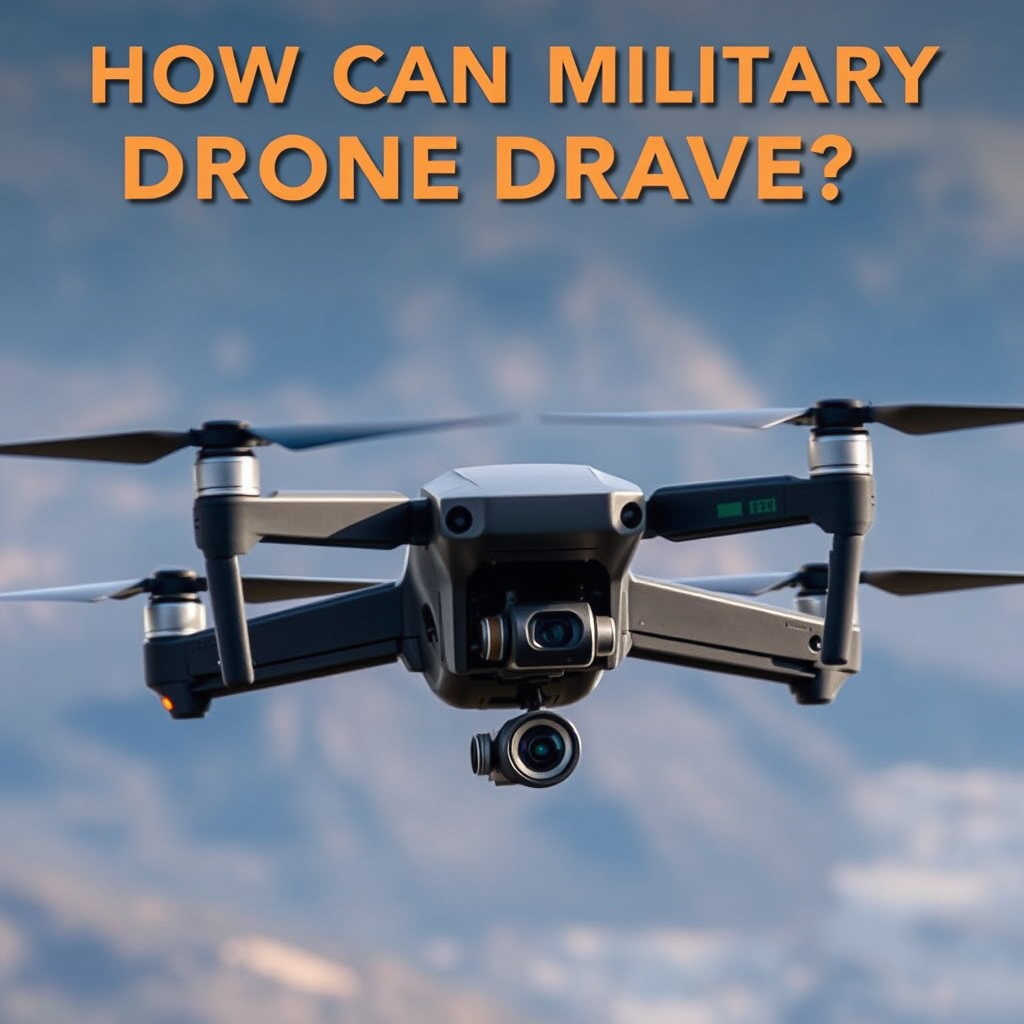
Military drones can travel varying distances depending on their design and purpose, with some capable of flying hundreds to thousands of miles. The range of military drones is influenced by several factors including their type, specifications, fuel capacity, and mission requirements. Understanding these elements is crucial for grasping the operational capabilities of drones in modern warfare and reconnaissance.
Understanding Drone Range
Military drones come in different categories, each designed for specific operational needs, leading to a variety of range capabilities. Tactical drones, designed for short-range missions, typically have a limited operational distance, often extending just a few hundred miles. In contrast, strategic drones are engineered for long-duration flights, allowing them to cover extensive distances, sometimes exceeding 1,000 miles or more. The range of a drone is not merely a function of its classification but is also heavily influenced by factors such as fuel capacity, payload weight, and design specifications. For example, a drone carrying heavy surveillance equipment might have a reduced range compared to a lighter model designed solely for reconnaissance.
Types of Military Drones
Military drones can be broadly classified into two main categories: tactical drones and strategic drones. Tactical drones, such as the RQ-11 Raven, are primarily utilized for close-range reconnaissance and surveillance missions. These drones typically operate within a range of 10 kilometers to around 20 kilometers, making them ideal for on-the-ground support in combat scenarios. On the other hand, strategic drones, like the MQ-9 Reaper, are built for longer missions and can fly distances exceeding 1,000 miles. The MQ-9 Reaper is notable for its endurance, capable of staying airborne for up to 27 hours, which allows it to conduct extended surveillance and strike missions far beyond the front lines.
Factors Influencing Drone Travel Distance
Several key factors significantly influence the travel distance of military drones. Fuel efficiency is paramount; drones with advanced propulsion systems, such as jet engines, can often travel farther than those powered by less efficient means. The type of propulsion system used also plays a crucial role; for instance, drones using electric motors may have limitations on range compared to those with traditional fuel systems. Environmental factors, including weather conditions and altitude, can impact a drone’s operational distance as well. For example, high winds or adverse weather can reduce a drone’s efficiency, limiting its effective range. Additionally, the altitude at which a drone operates can affect its fuel consumption and aerodynamic performance, further influencing how far it can travel.
Notable Military Drone Examples
Some military drones exemplify the capabilities of modern aerial technology with impressive travel distances. The Northrop Grumman Global Hawk is a standout, boasting a range of over 12,000 miles without needing to refuel. This drone is specifically designed for high-altitude, long-endurance missions, making it ideal for intelligence, surveillance, and reconnaissance (ISR) operations over vast geographical areas. Conversely, the General Atomics Predator drone, while not as long-range as the Global Hawk, still demonstrates significant versatility. It can operate effectively in various environments and is capable of traveling distances of around 680 miles, depending on its mission profile and payload configuration.
Operational Considerations for Military Drones
The operational range of military drones is not solely determined by their technical specifications. Military tactics and mission requirements greatly influence the optimal range needed for effective operations. Commanders must consider the drone’s ability to transmit real-time data back to operational control, which is essential for situational awareness in combat scenarios. Drones equipped with advanced sensors and communication systems can provide critical surveillance data, enabling military forces to make informed decisions. Additionally, the choice of drone type and its range can be dictated by the specific mission, whether it involves direct combat support, long-range surveillance, or logistical resupply.
Future Developments in Drone Technology
The future of military drone technology is poised for significant advancements that could further enhance travel distances. Research is actively being conducted to improve battery life and develop hybrid propulsion systems, which could allow drones to operate more efficiently and cover greater distances. Innovations in lightweight materials and aerodynamics are also expected to play a role in increasing the operational range of drones. Furthermore, the integration of artificial intelligence and autonomous navigation systems may enable drones to optimize their flight paths, adapting to real-time conditions and maximizing their endurance for strategic military applications.
In conclusion, the travel distance of military drones varies widely based on design, purpose, and external factors. Understanding these aspects helps in appreciating the capabilities and limitations of these advanced aerial systems. As technology continues to evolve, military drones are likely to become even more capable, extending their operational reach and transforming the landscape of modern warfare. For more insights on military technology, stay tuned to our blog!
Frequently Asked Questions
How far can military drones typically travel?
Military drones, depending on their type and design, can travel varying distances. For instance, tactical drones like the RQ-11 Raven can operate within a range of about 10 kilometers (6 miles), while larger, more advanced systems like the MQ-9 Reaper can cover distances of over 1,500 kilometers (approximately 930 miles) without refueling. This extensive range allows military drones to conduct surveillance, reconnaissance, and strike missions effectively.
What factors influence the travel distance of military drones?
Several factors affect the travel distance of military drones, including the drone’s design, payload capacity, fuel type, and operational altitude. Additionally, environmental conditions such as wind speed and temperature can impact flight performance. The mission profile and the required endurance for specific tasks also play critical roles in determining how far a drone can travel.
Why are some military drones designed for longer distances than others?
Military drones are designed for various missions, which dictates their range capabilities. Drones intended for long-range surveillance or strike missions, such as the Global Hawk, are engineered with larger fuel tanks and more efficient aerodynamics, enabling them to cover vast distances. Conversely, tactical drones are often designed for shorter-range, quick-response missions, prioritizing maneuverability and rapid deployment over range.
What is the best military drone for long-distance missions?
The Northrop Grumman RQ-4 Global Hawk is widely regarded as one of the best military drones for long-distance missions. With an operational range of over 12,000 nautical miles (about 22,224 kilometers) and the ability to fly at high altitudes for extended periods, it excels in providing real-time intelligence, surveillance, and reconnaissance (ISR). Its advanced sensor suite further enhances its effectiveness during long-range operations.
How do military drones maintain communication over long distances?
Military drones maintain communication over long distances through a combination of satellite communications (SATCOM) and line-of-sight radio systems. SATCOM allows for near-global coverage, enabling operators to send and receive data even when the drone is far from its base. Additionally, some drones utilize relay systems, such as other drones or ground stations, to extend communication ranges and ensure constant connectivity during missions.
References
- https://en.wikipedia.org/wiki/Military_drone
- https://www.rand.org/pubs/research_briefs/RB10009.html
- https://www.bbc.com/news/world-us-canada-58803540
- https://www.defense.gov/Explore/Spotlight/Drone-Operations/
- https://www.nytimes.com/2021/06/29/us/politics/drone-strike-afghanistan.html
- https://www.armytimes.com/2021/07/07/how-the-us-army-is-using-drones-to-patrol-the-southern-border/
- https://www.airforce.gov.au/technology/aircraft/unmanned-aerial-vehicles
- https://www.sciencedirect.com/science/article/pii/S1877050920304471
