
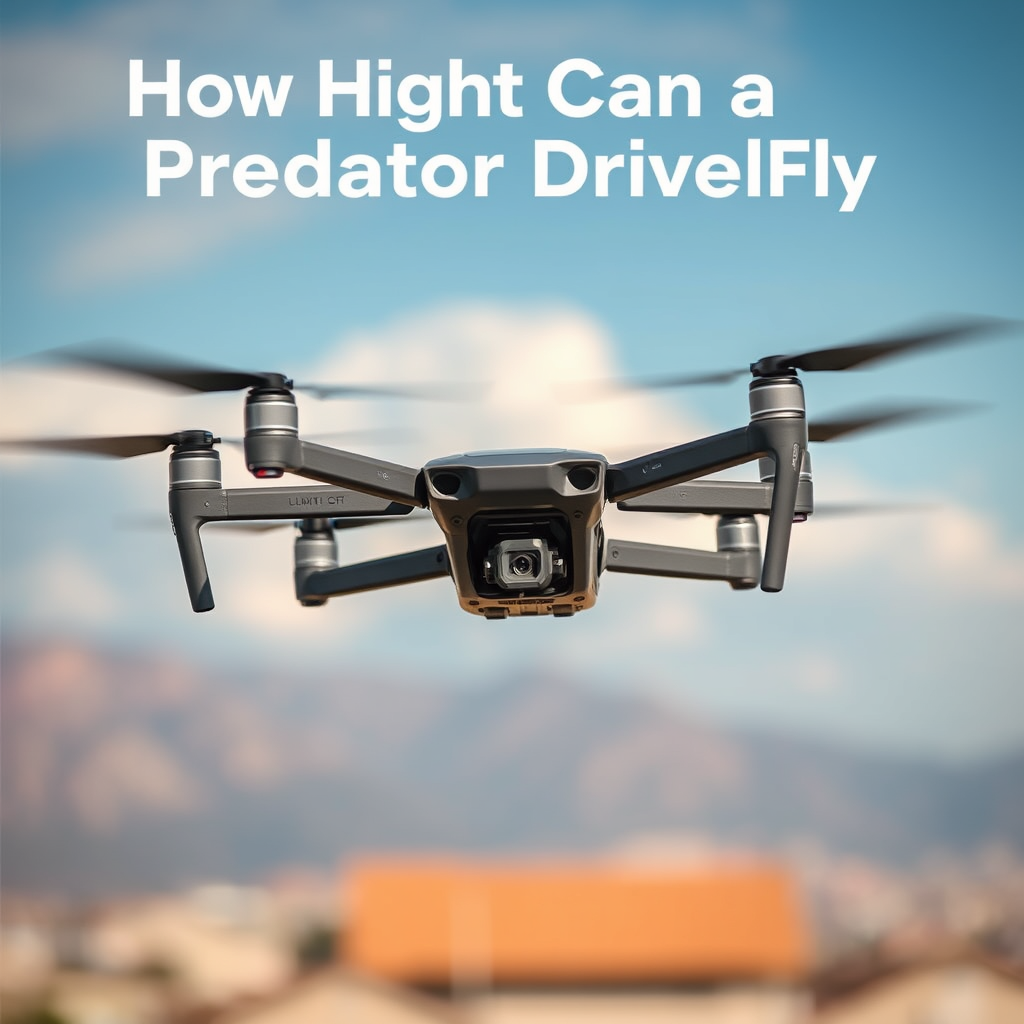
Predator drones, commonly known for their military and surveillance applications, can fly at altitudes of up to 25,000 feet. This capability not only enhances their operational effectiveness but also enables them to stay above the reach of most conventional threats. In this article, we will delve into the specific capabilities of Predator drones, the advanced technology that enables their altitude, and the broader implications of their high-altitude operations.
Understanding Predator Drones
Predator drones are unmanned aerial vehicles (UAVs) primarily developed for reconnaissance and combat missions. Their design allows for both intelligence gathering and targeted strikes, making them invaluable assets in military operations. In civilian contexts, they are increasingly used for surveillance, disaster response, and environmental monitoring. The two most prominent models of Predator drones are the MQ-1 Predator and the MQ-9 Reaper. The MQ-1 Predator, which has been largely phased out in favor of the more advanced MQ-9, is designed for surveillance and can carry a limited payload. On the other hand, the MQ-9 Reaper boasts enhanced capabilities, including a larger payload capacity and improved endurance, making it suitable for both reconnaissance and combat missions.
Maximum Altitude Capabilities
The altitude capabilities of Predator drones vary by model. The MQ-1 Predator typically operates at altitudes of around 15,000 feet, while the more advanced MQ-9 Reaper can reach altitudes of up to 25,000 feet. This significant difference in altitude capacity allows the MQ-9 to conduct missions that require a higher vantage point, providing a broader field of view and enhanced surveillance capabilities. When compared to other unmanned aerial vehicles (UAVs), Predator drones stand out; for instance, many smaller UAVs have lower altitude ceilings, often not exceeding 10,000 feet. In contrast, manned aircraft, such as fighter jets, can fly at altitudes exceeding 40,000 feet, but they are typically more limited in terms of endurance and operational flexibility compared to drones.
Factors Influencing Flight Altitude
Several factors can influence the flight altitude of Predator drones. Environmental conditions, such as weather patterns and air density, play a crucial role in their operational capabilities. For instance, high humidity or extreme temperatures can affect engine performance and lift generation. Additionally, operational factors like mission type and payload weight are significant. A drone carrying a heavier payload might have to fly at a lower altitude to maintain stability and maneuverability. Therefore, mission planners must carefully consider these variables when determining the optimal operating altitude for each mission.
Technology Behind High Altitude Flight
The ability of Predator drones to maintain stable flight at high altitudes is largely attributed to their aerodynamic design and advanced engineering features. These drones are equipped with high-efficiency wings and powerful engines that optimize lift while minimizing drag. The integration of sophisticated avionics systems further supports stable flight at elevated altitudes, allowing for precise navigation and control. These systems include advanced autopilot functionality, GPS, and real-time telemetry, which ensure reliable performance even in challenging conditions. Moreover, the use of lightweight composite materials in construction contributes to their overall efficiency, enabling them to carry more payload without compromising flight performance.
Strategic Advantages of High Altitude Operations
Operating at high altitudes provides Predator drones with several strategic advantages, particularly in reconnaissance and surveillance missions. The ability to fly above the cloud cover and adverse weather conditions allows for uninterrupted visibility and data collection. This height advantage enhances the drones’ capability to perform detailed surveillance over large areas without being easily detected by ground-based threats. Furthermore, flying at such altitudes complicates enemy detection and engagement, as most surface-to-air missile systems are designed to target low-flying aircraft. Hence, high-altitude operations significantly improve the safety and effectiveness of reconnaissance missions, allowing for better intelligence-gathering and strategic decision-making.
Legal and Ethical Considerations
The use of drones at high altitudes raises important legal and ethical considerations. Various regulations govern the operation of UAVs, particularly in civilian airspace. Regulatory bodies such as the Federal Aviation Administration (FAA) in the United States have established guidelines that dictate the permissible altitude and operational zones for drones. Moreover, the ethical implications of surveillance from high altitudes in civilian areas cannot be overlooked. Privacy concerns arise as drones have the capability to capture detailed imagery and data without the knowledge of those being observed. As drone technology continues to advance, it is vital that lawmakers address these ethical dilemmas to ensure responsible usage that respects individual privacy rights.
Future Developments in Drone Technology
The future of drone technology promises exciting advancements that could further enhance altitude capabilities. Emerging technologies, such as improved propulsion systems (e.g., electric or hybrid engines), may enable drones to operate at even higher altitudes with greater efficiency. Advances in materials science could lead to lighter and stronger components, allowing for increased payload capacities and flight endurance. Additionally, innovations in artificial intelligence and machine learning will likely improve autonomous flight capabilities, enabling drones to make real-time decisions based on changing environmental conditions. As these technologies evolve, we can expect a broader range of applications for drones in both military and commercial sectors, from logistics and delivery services to enhanced environmental monitoring and disaster response.
In conclusion, Predator drones have the remarkable capability to ascend to altitudes of approximately 25,000 feet, significantly enhancing their operational effectiveness across various missions. The technology behind their high-altitude capabilities, combined with strategic advantages in reconnaissance, positions them as critical assets in modern warfare and civilian applications alike. However, with these advancements come important discussions regarding regulation and ethical usage, underscoring the need for responsible integration of drone technology into airspace. Staying informed about these developments is essential for stakeholders in both military and commercial sectors as the landscape of drone technology continues to evolve.
Frequently Asked Questions
What is the maximum altitude a Predator drone can fly?
The maximum altitude for a Predator drone, specifically the MQ-1 Predator, is approximately 25,000 feet (7,620 meters). This operational ceiling allows the drone to effectively conduct surveillance and reconnaissance missions while remaining above most ground-based threats. However, newer models, like the MQ-9 Reaper, can fly higher, reaching altitudes of around 50,000 feet.
How does the altitude of a Predator drone affect its performance?
The altitude of a Predator drone significantly impacts its performance, particularly in terms of surveillance capabilities and fuel efficiency. Operating at higher altitudes enhances the drone’s field of view, allowing it to cover larger areas and gather intelligence more effectively. However, flying at very high altitudes may require more fuel, potentially reducing the duration of its mission.
Why are Predator drones designed to fly at high altitudes?
Predator drones are designed to fly at high altitudes primarily to increase their operational safety and effectiveness. By flying above most weather disturbances and ground-based threats, such as small arms fire, these drones can conduct reconnaissance and strike missions with reduced risk. High altitudes also allow for better signal transmission and enhanced imaging capabilities, which are crucial for intelligence gathering.
Which models of Predator drones can fly the highest?
Among the various models of Predator drones, the MQ-9 Reaper is known for its ability to fly the highest, reaching altitudes of around 50,000 feet. This capability allows it to perform more complex missions and gather intelligence over extensive geographical areas. In contrast, the older MQ-1 Predator is limited to approximately 25,000 feet, making the MQ-9 a more versatile option for high-altitude operations.
What factors limit the flight altitude of Predator drones?
Several factors can limit the flight altitude of Predator drones, including atmospheric conditions, payload weight, and regulatory restrictions. For instance, high humidity or severe weather can reduce the drone’s efficiency and operational ceiling. Additionally, the weight of the equipment onboard, such as sensors or weapons, can affect its ability to reach and maintain high altitudes. Regulatory limits imposed by aviation authorities also dictate how high these drones can legally fly in various airspace environments.
References
- https://en.wikipedia.org/wiki/Predator_B
- https://www.gao.gov/products/gao-12-105
- https://www.airforce.com/usaf/what-we-do/aircraft/predator-b
- https://www.military.com/equipment/predator-drone
- https://www.defense.gov/Explore/News/Article/Article/2037015/predator-drone-helps-us-forces-in-iraq-syria/
- https://www.nytimes.com/2013/05/30/world/middleeast/drone-wars.html
- https://www.rand.org/pubs/research_reports/RR1556.html
