
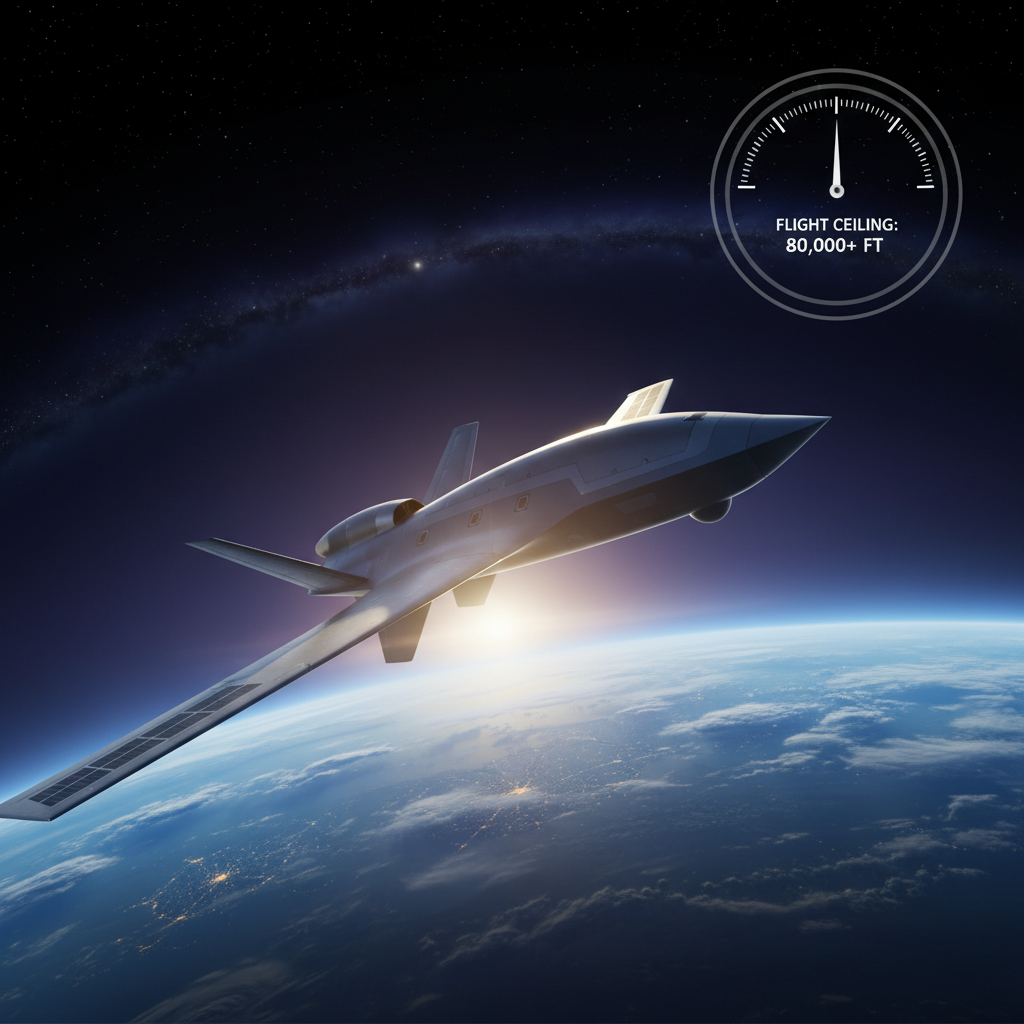
Military drones can typically fly at altitudes ranging from 15,000 to over 50,000 feet, depending on their design and purpose. This altitude capability allows them to perform a variety of missions, including surveillance, reconnaissance, and combat support, effectively extending the reach and efficacy of military operations. As technology advances, understanding the altitude limits and capabilities of military drones becomes increasingly critical for strategic planning and operational execution in modern warfare.
Understanding Drone Altitude Limits
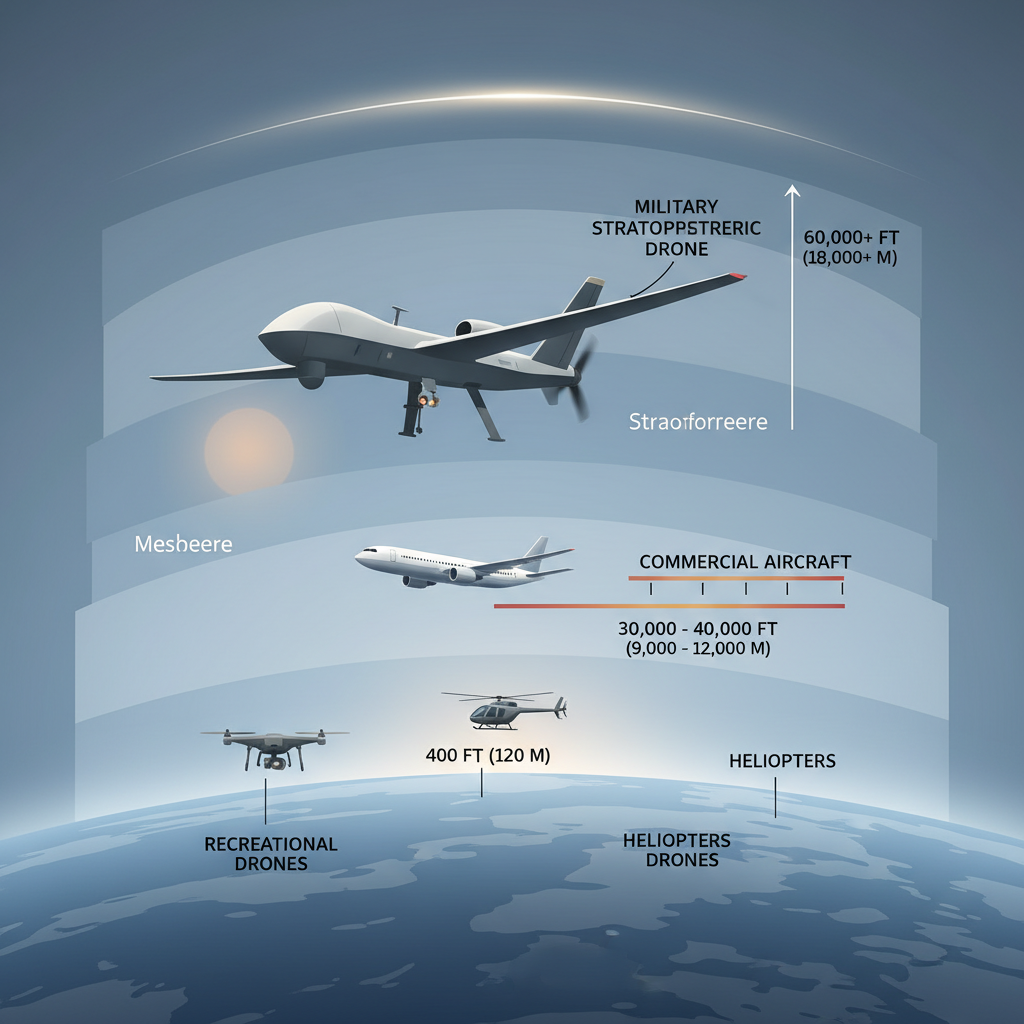
Military drones are engineered with specific altitude capabilities that are closely tied to their intended missions. These altitude limits are influenced by several factors, including aerodynamics, engine power, and the weight of the payload. Aerodynamics plays a crucial role; the design of the drone affects how efficiently it can cut through the air at various altitudes. For instance, a drone optimized for high-altitude flight will often feature streamlined designs and specialized wing structures to maintain lift and stability.
Engine power is another significant factor. Drones equipped with more powerful engines can reach higher altitudes, where air density is lower, thus requiring more thrust to maintain flight. Additionally, the payload carried by a drone—such as surveillance equipment, weaponry, or other mission-specific tools—can limit its operational ceiling. Heavier payloads typically necessitate more powerful engines and optimized designs to achieve the desired altitude, which can complicate mission planning.
Types of Military Drones and Their Altitudes
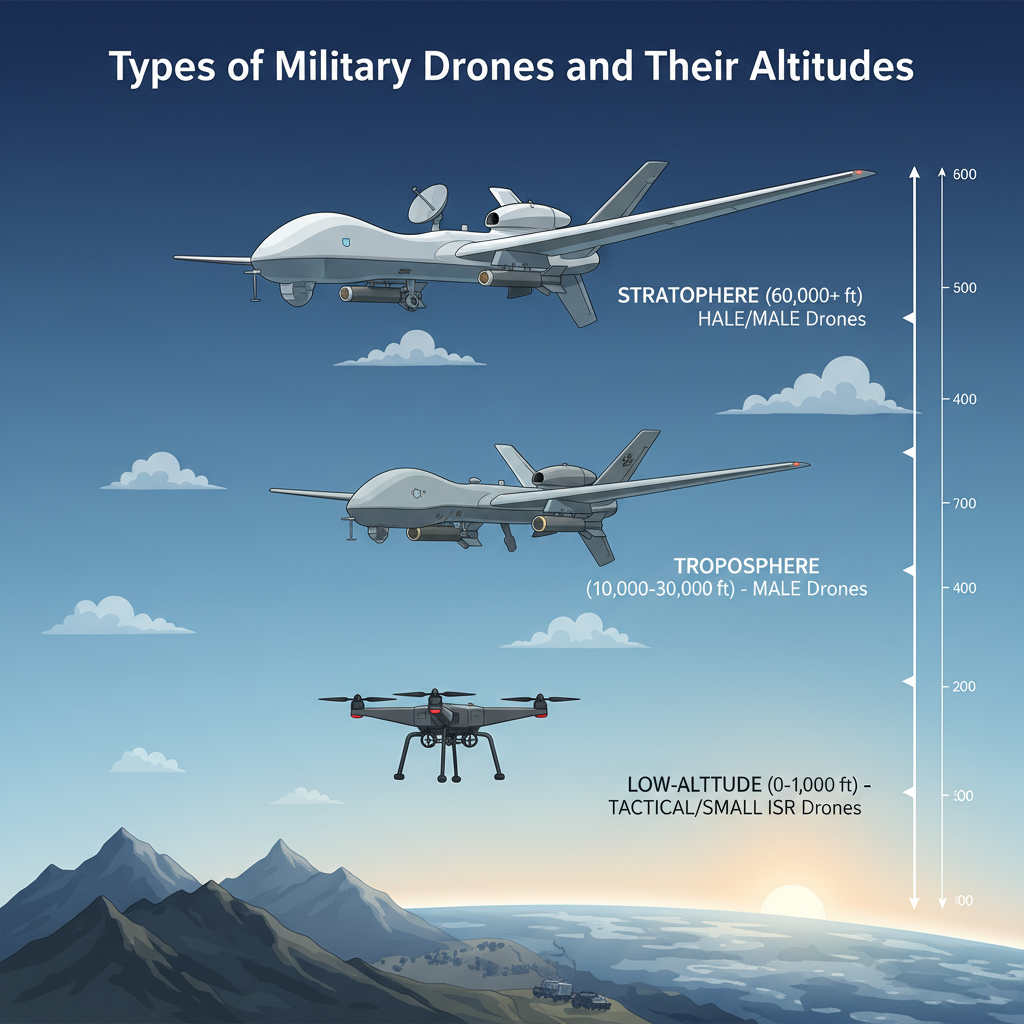
Military drones can be categorized into various types, each designed for specific operational roles, and their maximum altitudes vary significantly across these categories. For instance, reconnaissance drones, such as the Northrop Grumman RQ-4 Global Hawk, are capable of flying at altitudes exceeding 60,000 feet. This high operational ceiling allows them to cover vast areas for intelligence gathering while remaining out of reach of most ground-based threats.
On the other hand, combat drones, such as the General Atomics MQ-9 Reaper, typically operate at lower altitudes, usually below 30,000 feet. This altitude range is suitable for precision strikes and close air support missions, where visibility and targeting accuracy are paramount. The operational ceilings of these drones reflect their design intentions: higher altitudes for surveillance and lower altitudes for combat.
The Role of Altitude in Surveillance Missions
The altitude at which a military drone operates plays a vital role in its surveillance capabilities. Higher altitudes provide a broader surveillance range and enhanced visibility, allowing drones to monitor large geographical areas without being easily detected. For instance, a drone flying at 60,000 feet can observe ground movements and activities over a radius of several hundred miles, making it an invaluable asset for intelligence operations.
Moreover, drones operating at high altitudes can effectively avoid ground-based threats, such as anti-aircraft missiles and small arms fire. The increased distance from the ground not only reduces the likelihood of being targeted but also grants operators a tactical advantage in assessing threats and planning responses. This capability is particularly crucial in conflict zones where ground-based defenses are prevalent.
Challenges of Operating at High Altitudes
While high-altitude operations offer significant advantages, they also present unique challenges. Weather conditions, such as wind speed and temperature variations, can substantially impact drone performance at elevated altitudes. For example, high winds can complicate navigation and control, while extreme cold can affect battery efficiency and electronic systems.
Moreover, reduced air pressure at high altitudes poses challenges for engine performance and flight stability. As air density decreases, engines must work harder to generate thrust, which can lead to inefficiencies and increased fuel consumption. Additionally, the thin air at high altitudes can affect the lift generated by the drone’s wings, necessitating highly refined aerodynamic designs and advanced control systems to ensure stable flight.
Future Developments in Drone Technology
The future of drone technology holds promising advancements that may enable military drones to fly even higher and perform more complex missions. Innovations in materials science, such as the development of lighter and stronger composite materials, will likely contribute to the creation of drones that can withstand the rigors of high-altitude flight. These advancements could facilitate the design of drones with improved payload capacities and enhanced propulsion systems.
Furthermore, the potential integration of cutting-edge technologies, such as artificial intelligence and machine learning, could revolutionize the operational capabilities of drones at extreme altitudes. Enhanced autonomous flight systems could allow drones to navigate complex environments more effectively, analyze vast amounts of data in real-time, and make informed decisions without direct human intervention. Such developments could redefine the role of drones in military strategy, enabling unprecedented levels of situational awareness and operational efficiency.
Implications for Military Strategy
The operational ceilings of high-altitude drones have significant implications for military strategy. High-altitude reconnaissance drones provide strategic advantages in terms of intelligence gathering and targeting, as their ability to operate undetected allows for continuous surveillance of enemy movements and positions. This capability can inform tactical decisions and enhance overall mission effectiveness.
Moreover, the altitude capabilities of military drones shape airspace control and engagement rules in conflict areas. Drones that can operate at higher altitudes complicate the operational landscape for adversaries, as they must develop countermeasures to address threats that can surveil and strike from beyond their reach. This dynamic can lead to the evolution of modern warfare strategies, where air superiority is increasingly defined by unmanned systems capable of operating in diverse environments.
In conclusion, military drones exhibit impressive altitude capabilities that allow them to perform a range of critical missions, from surveillance to combat support. As drone technology continues to evolve, we can anticipate advancements that will further enhance their operational ceilings and capabilities. Understanding these developments is essential for grasping the future landscape of military strategy and operations, highlighting the need for ongoing analysis and adaptation in response to emerging drone technologies. For those interested in military drone technology, staying informed about these advancements will provide valuable insights into the future of aerial warfare.
Frequently Asked Questions
What is the maximum altitude that military drones can reach?
The maximum altitude for military drones varies significantly depending on the type and purpose of the drone. For instance, the MQ-9 Reaper can fly at altitudes of up to 50,000 feet, while high-altitude reconnaissance drones like the U-2 can soar above 70,000 feet. These altitudes allow drones to gather intelligence and conduct surveillance without detection from ground-based threats.
How do military drones maintain stability at high altitudes?
Military drones maintain stability at high altitudes through advanced flight control systems and aerodynamic designs. These systems use sensors and computer algorithms to adjust the drone’s flight path and compensate for changes in wind and atmospheric conditions. Additionally, many drones are equipped with powerful engines that provide the necessary thrust to operate efficiently in thinner air found at higher altitudes.
Why do military drones operate at such high altitudes?
Military drones operate at high altitudes primarily to avoid radar detection and enemy fire. By flying above the range of most surface-to-air missiles and anti-aircraft artillery, drones can conduct surveillance and reconnaissance missions safely. High altitudes also enable drones to cover larger areas and gather data over vast distances without being compromised.
Which military drones are known for their high-altitude capabilities?
Several military drones are known for their high-altitude capabilities, with the most notable being the Global Hawk and the U-2 Dragon Lady. The RQ-4 Global Hawk can operate at altitudes of around 60,000 feet, making it ideal for long-duration missions and extensive surveillance. Meanwhile, the U-2 has served as a high-altitude reconnaissance aircraft since the Cold War, providing critical intelligence from altitudes exceeding 70,000 feet.
What factors limit the operational altitude of military drones?
Several factors limit the operational altitude of military drones, including air density, engine performance, and mission requirements. As altitude increases, air density decreases, which can affect engine efficiency and lift. Additionally, the drone’s design and intended use play a significant role; some drones are specifically engineered for stealth and high-altitude operations, while others prioritize agility and payload capacity at lower altitudes.
References
- https://en.wikipedia.org/wiki/Unmanned_aerial_vehicle
- https://www.bbc.com/news/world-us-canada-43558303
- https://www.airforce.com/technology/unmanned-aerial-vehicles
- https://www.military.com/equipment/drone
- https://www.nytimes.com/2021/05/18/us/drone-technology.html
- https://www.rand.org/research/technology/overview/unmanned-aerial-vehicles.html
- https://www.defense.gov/Explore/Spotlight/Unmanned-Aerial-Vehicles/
- https://www.sciencedirect.com/science/article/pii/S1877705813002446
- https://www.nap.edu/catalog/10558/unmanned-aerial-vehicles-ua-vs-in-the-21st-century
- https://www.theguardian.com/us-news/2020/jun/16/us-military-drone-strikes-foreign-policy
