
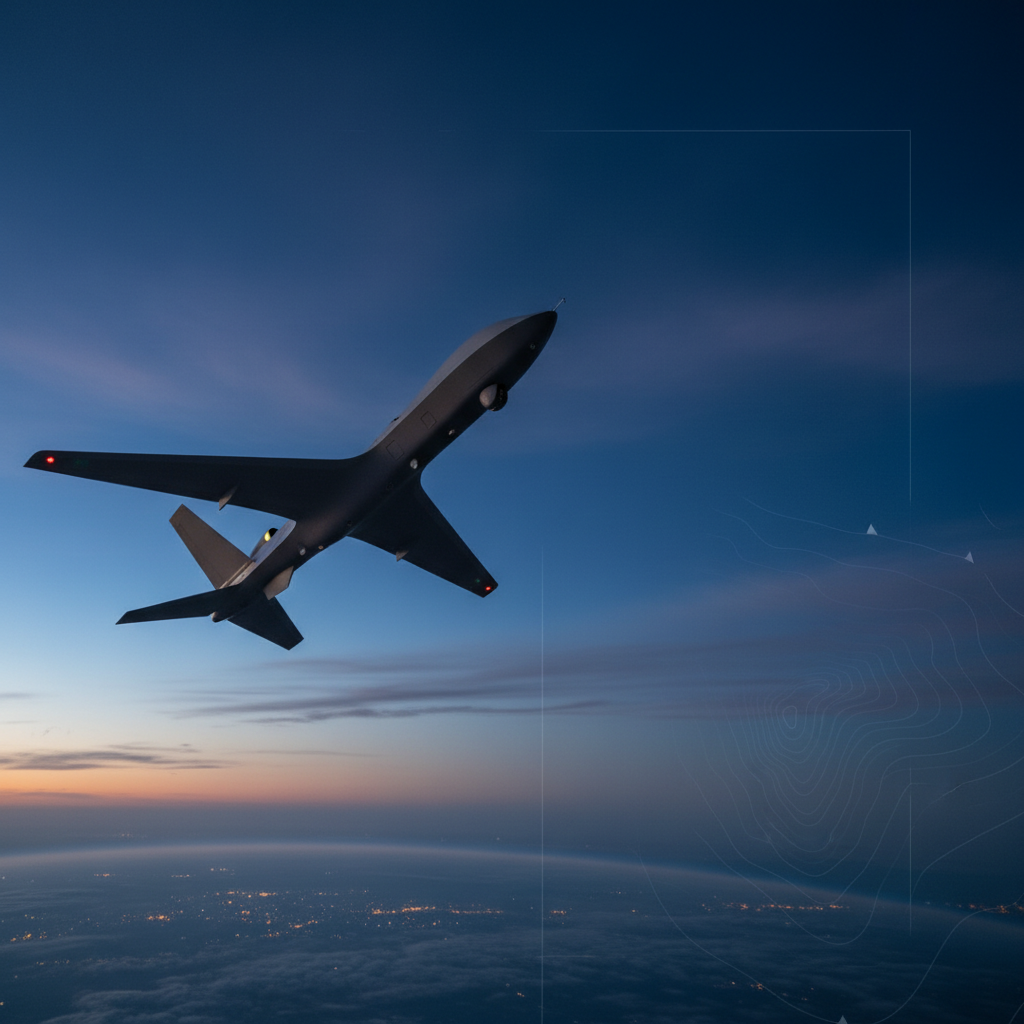
Military drones typically fly at altitudes ranging from 10,000 to 30,000 feet, depending on their type and mission requirements. This operational ceiling allows them to effectively conduct surveillance, gather intelligence, and engage in combat while minimizing exposure to ground-based threats. Understanding the altitude capabilities of various military drones is essential for comprehending their operational roles and effectiveness in modern warfare. This article delves into the types of military drones, the factors influencing their flight altitudes, the advantages and limitations of high-altitude operations, and future trends in drone technology.
Overview of Military Drone Types
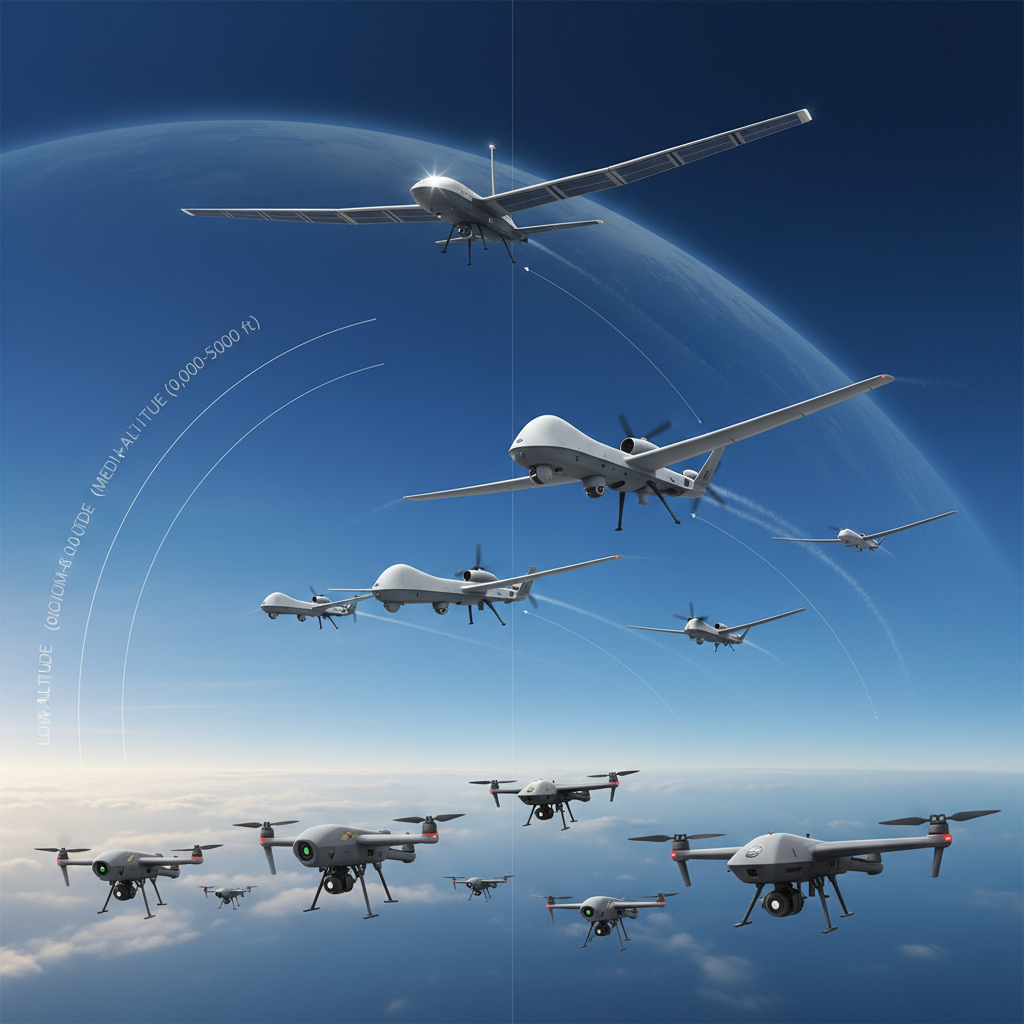
Military drones, or unmanned aerial vehicles (UAVs), can be categorized into various types based on their design, purpose, and operational altitude. The most notable examples include the MQ-1 Predator and the MQ-9 Reaper. The MQ-1 Predator has a maximum operational altitude of approximately 25,000 feet, while the more advanced MQ-9 Reaper can operate at altitudes up to 50,000 feet, although its most effective reconnaissance missions typically occur around 30,000 feet.
These drones serve different functions within military operations. Tactical drones, such as the RQ-11 Raven, are generally designed for short-range missions and typically operate at lower altitudes—around 10,000 to 15,000 feet. In contrast, strategic drones, which include the larger Predator and Reaper models, are built for longer missions that require higher altitudes to remain safe from ground-based threats and to provide a broader operational range. By understanding the distinctions among these types, military planners can better allocate resources and strategize for various mission profiles.
Factors Influencing Drone Altitude
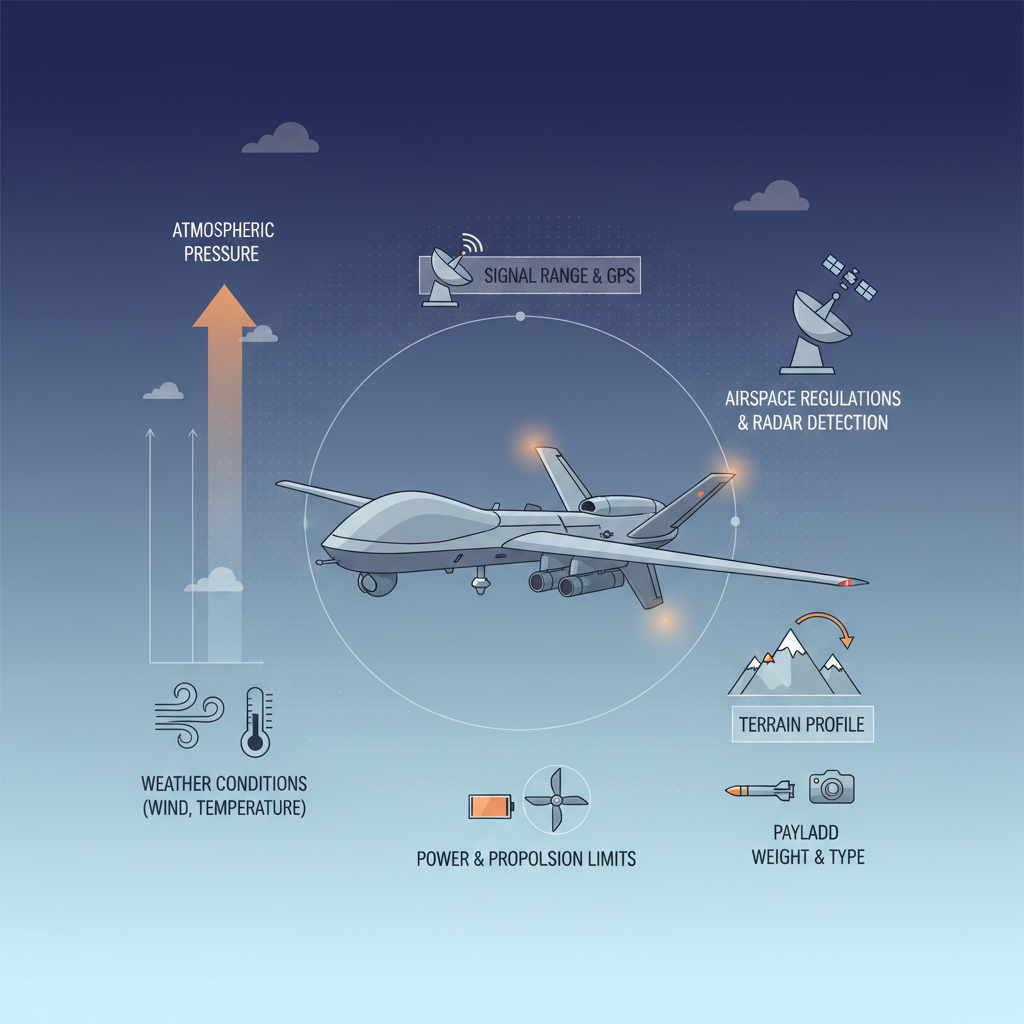
The altitude at which a military drone operates is largely dictated by its mission objectives. For intelligence, surveillance, and reconnaissance (ISR) missions, drones need to fly high enough to maintain a comprehensive view of the battlefield while avoiding detection. Conversely, during close air support operations or ground attack missions, lower altitudes may be necessary to ensure accuracy and effectiveness in targeting.
Environmental conditions also significantly influence operational altitude. Weather factors, such as cloud cover, wind patterns, and temperatures, can either hinder or facilitate drone performance. For instance, in mountainous terrain, drones might be required to operate at lower altitudes to navigate through the landscape effectively. Additionally, atmospheric conditions at higher altitudes can impact sensor performance; therefore, mission planners must carefully evaluate these variables when determining optimal flight levels.
Advantages of High Altitude Flight
One of the most significant advantages of flying at high altitudes is the increased operational range and endurance for reconnaissance and surveillance missions. Drones like the MQ-9 Reaper can cover vast territories without the need for refueling, allowing military operators to monitor enemy movements over extended periods. This capability is crucial for gathering actionable intelligence and providing situational awareness to ground forces.
Moreover, high-altitude operations reduce the risk of interception by enemy ground-based defenses. By flying at altitudes above traditional surface-to-air missile systems, drones can avoid detection and attack, thus enhancing their survivability. This tactical advantage allows military forces to conduct operations with greater confidence and effectiveness, knowing that their aerial assets are less vulnerable to ground threats.
Limitations of High Altitude Operations
Despite the benefits of high-altitude flight, there are notable limitations that must be addressed. One significant challenge is communication. As drones operate at greater distances from ground control, maintaining a stable and effective communication link can become problematic. Signal degradation and delays can hinder real-time decision-making and operational effectiveness, which is critical during dynamic combat scenarios.
Additionally, while drone sensors are designed to operate effectively at various altitudes, their effectiveness can be compromised at higher elevations. Factors such as atmospheric interference and reduced visibility can impact the quality of the data collected, which may lead to inaccuracies in reconnaissance and targeting. As a result, military planners must balance altitude with sensor capabilities to ensure mission success.
Comparison with Other Aircraft
When comparing military drones to other aircraft, it is evident that drones generally operate at lower altitudes than manned aircraft like fighter jets. For instance, fighter jets typically fly at altitudes exceeding 30,000 feet during combat operations, allowing them to leverage speed and maneuverability for aerial combat. In contrast, drones like the MQ-1 and MQ-9 are designed primarily for surveillance and reconnaissance, making their operational altitudes tailored to those specific needs.
The differences in flight profiles are also influenced by the mission specialization of each aircraft. Manned aircraft often engage in multi-role operations, including air-to-air combat, ground attack, and reconnaissance, while drones are typically optimized for their specific functions. This specialization allows military planners to utilize each type of aircraft in the most effective manner based on their unique capabilities and operational environments.
Future Trends in Drone Technology
The future of military drone technology is poised for significant advancements that may enable higher operational altitudes and improved performance. Innovations in materials science, propulsion systems, and avionics are likely to enhance the capabilities of drones, allowing them to fly higher and stay airborne for longer durations. For example, the development of hybrid propulsion systems could provide increased efficiency and range, further extending the operational altitude of military drones.
Moreover, the integration of artificial intelligence (AI) and machine learning technologies is expected to improve the autonomy and decision-making capabilities of drones. These advancements could allow UAVs to operate more effectively in complex environments, making real-time adjustments to their flight paths and altitudes based on mission requirements and environmental conditions. As these technologies continue to evolve, military forces will be better equipped to adapt to the changing dynamics of modern warfare.
In conclusion, military drones fly at varying altitudes primarily influenced by their type, mission objectives, and environmental considerations. Understanding the factors that determine their operational levels provides valuable insights into their effectiveness and capabilities. As drone technology continues to advance, we can expect to see even greater operational flexibility and efficiency, further enhancing the role of UAVs in military operations. For more information on military drones and their applications, explore our other articles.
Frequently Asked Questions
What is the typical altitude range for military drones?
Military drones, also known as unmanned aerial vehicles (UAVs), typically operate at altitudes ranging from 10,000 to 30,000 feet. However, some advanced drones can reach altitudes of up to 50,000 feet or higher, depending on their design and mission requirements. This altitude range allows them to effectively gather intelligence, conduct surveillance, and execute combat missions while minimizing the risk of detection.
How do military drones maintain their flight altitude?
Military drones maintain their flight altitude using a combination of advanced autopilot systems, GPS technology, and onboard sensors. These systems allow drones to autonomously adjust their altitude in response to environmental conditions and mission parameters. Additionally, many military drones are equipped with altitude hold features that help stabilize their flight, ensuring they remain at the desired elevation throughout their operation.
Why do military drones fly at such high altitudes?
Military drones fly at high altitudes primarily for strategic advantages, including improved surveillance capabilities and reduced risk from ground-based threats. Operating at elevated altitudes enables drones to cover larger areas and gather clearer images or data, as they are less likely to encounter obstacles like buildings or trees. Furthermore, flying high reduces the likelihood of being targeted by small arms fire and enhances their ability to evade detection by enemy radar systems.
Which military drones are known for flying at the highest altitudes?
Some of the military drones known for their high-altitude capabilities include the Northrop Grumman RQ-4 Global Hawk, which can fly up to 60,000 feet, and the Lockheed Martin U-2, a high-altitude reconnaissance aircraft that can operate at altitudes exceeding 70,000 feet. These drones are designed for long-range missions and can conduct extensive surveillance and intelligence-gathering tasks from high above enemy territory.
What factors influence the maximum flying altitude of a military drone?
The maximum flying altitude of a military drone is influenced by several factors, including the drone’s design and engineering specifications, the type of mission it is intended for, and environmental conditions such as air temperature and pressure. Additionally, regulatory constraints and airspace restrictions can limit operational altitude. Manufacturers design drones with specific performance characteristics to meet mission requirements, ensuring they can operate effectively at designated altitudes while maintaining safety and efficiency.
References
- https://en.wikipedia.org/wiki/Military_drone
- https://www.reuters.com/article/us-usa-drones-idUSKBN1ZJ1WI
- https://www.bbc.com/news/world-us-canada-43173713
- https://www.airforce.com/technology/drones
- https://www.armytimes.com/2020/09/14/how-the-army-uses-drones-to-fight/
- https://www.faa.gov/air_traffic/publications/media/ATC.pdf
- https://www.rand.org/pubs/research_reports/RR1254.html
