

In most current military drone fleets, endurance ranges from roughly 6–12 hours for many tactical systems to more than 30 hours for select strategic ISR platforms. The practical answer depends on the airframe, propulsion (battery versus fuel versus hybrid), fuel or battery capacity, payload weight, and mission profile such as speed, altitude, and loiter pattern.
How Long Can a Military Drone Stay Airborne? Direct Answer by Drone Class
The time a military drone can remain airborne varies by mission class, with tactical drones typically measured in single shifts and strategic drones often designed for day-long ISR coverage. A widely cited rule of thumb is that long-endurance systems can reach or exceed 24 hours, while the longest public examples surpass 30 hours.
Tactical drones: typically 6 to 12 hours
Tactical unmanned aircraft systems (UAS) are usually optimized for rapid deployment, short-range reconnaissance, and responsive support to maneuver units. Many fielded or historically referenced tactical platforms fall in the 6–12 hour range, because their design targets agility, sensor use for near-real-time intelligence, and practical recovery schedules.
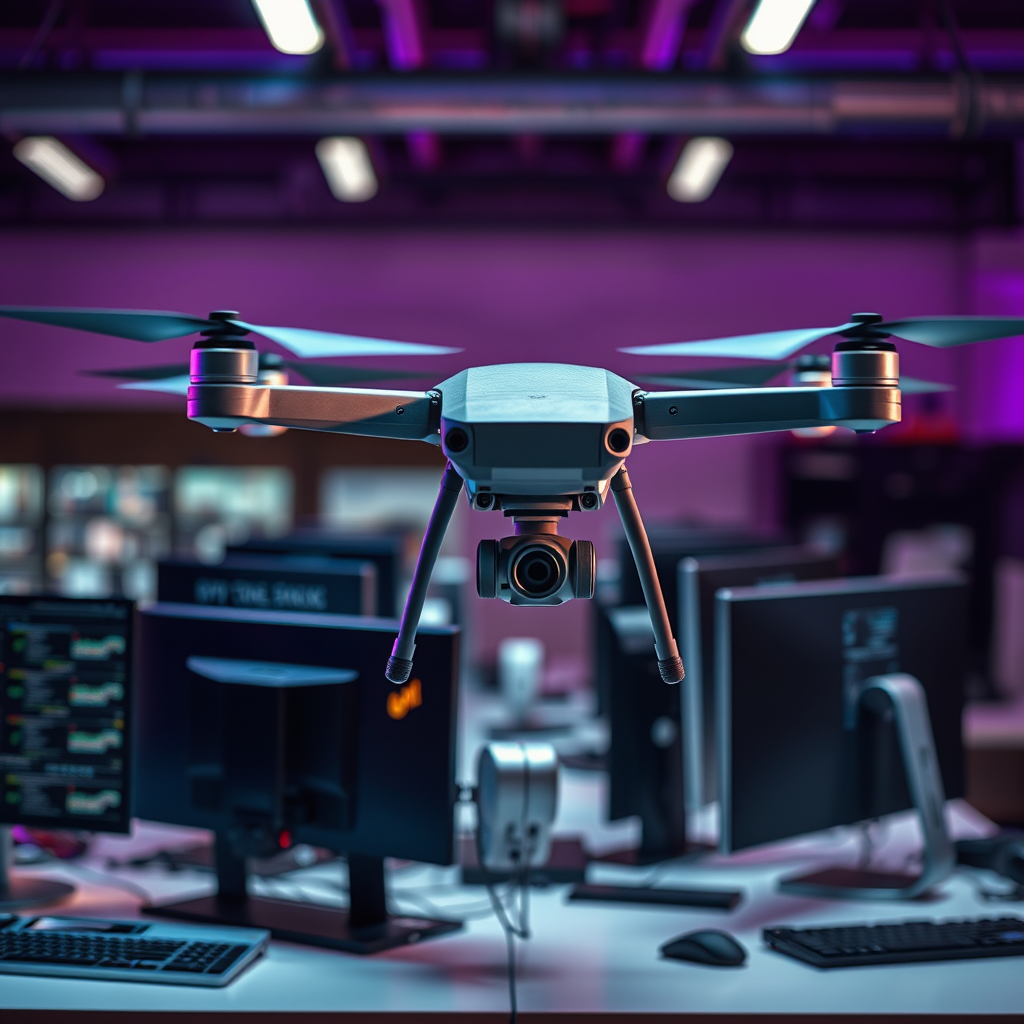
For example, systems such as the RQ-11 Raven family are commonly discussed as short-duration tactical assets that support close-range ISR and battlefield coordination rather than continuous 24/7 surveillance.
Strategic drones: commonly 24+ hours, with select models over 30 hours
Strategic ISR drones are engineered to maximize loiter time at higher altitudes, enabling persistent surveillance over wide areas without frequent ground support rotations. In open-source reporting, the Northrop Grumman RQ-4 Global Hawk is frequently described as capable of flying for more than 30 hours in mission profiles that prioritize endurance.
The key difference is design philosophy: tactical drones trade endurance for portability and agility, while strategic drones trade maneuverability and payload flexibility for efficient propulsion, large fuel capacity, and long-duration sensor operation.
What Determines Drone Endurance in Real Operations?
Drone endurance is not a single spec number; it is the outcome of propulsion efficiency, energy storage, aerodynamic efficiency, and how the mission is flown. Two drones with the same airframe can show very different “time-on-station” results due to wind, payload selection, speed targets, and communications or sensor modes.
Propulsion and energy type: batteries vs jet fuel vs hybrid
The most important technical factor is the energy source and its effective energy density, because energy dictates how long the system can keep flying while powering avionics and sensors. The key difference is that fuel-based platforms generally provide higher energy density than batteries, enabling longer endurance for fixed payloads and sustained loiter profiles.
- Battery-powered drones typically excel at rapid launch and lower logistical burden, but their energy density limits total flight time.
- Jet-fueled drones can sustain longer flights because they carry larger energy stores, making long-range persistence more feasible.
- Hybrid concepts aim to combine the operational advantages of both approaches, such as improved flexibility and potentially better endurance management.
Open-source references to aircraft such as the General Atomics MQ-1 Predator illustrate how fuel-based designs support multi-hour missions, particularly when long loiter or route coverage is required.
Payload weight and sensor configuration
Payload directly affects endurance because it increases the required lift and energy consumption across takeoff, climb, cruise, and loiter. The rule of thumb used in aeronautical engineering is that heavier payloads require more thrust or longer time at lower efficiency points, which reduces usable time-on-station.
When operators select heavier sensor packages, gimbaled electro-optical/infrared (EO/IR) systems, signals intelligence (SIGINT) payloads, or additional communications relays, endurance can decrease significantly relative to a “clean” airframe configuration.
Airframe aerodynamics and efficiency
Even with the same propulsion and energy storage, aerodynamic efficiency governs how much thrust the drone needs to maintain a given altitude or speed. The key difference is that endurance-optimized designs often feature higher lift-to-drag ratios and wide wingspans for efficient loiter.
Higher-efficiency airframes are especially important for ISR profiles that involve slow, steady loiter at altitude, where drag and control requirements can become the dominant drivers of energy use.
Mission profile: speed, altitude, loiter pattern, and weather
Endurance is strongly affected by how the drone is commanded to fly, including cruise speed, climb rates, loiter duration, and the geometry of its observation pattern. A mission flown at a slower speed and optimized altitude in stable air typically preserves more energy than a mission that frequently changes speed or altitude.
Weather introduces real-world variability. Tailwinds can extend effective range and time-on-station, while headwinds increase fuel or battery draw. Turbulence can also increase control effort and sensor stabilization workload.
Communications, datalink load, and electronic payload usage
Modern military drones may consume additional power when running full-motion telemetry, high-bandwidth video feeds, or active electronic warfare or signals collection modes. The key difference is that “endurance” ratings often assume specific power budgets, while real operations can shift power draw based on sensor duty cycle and datalink requirements.
Realistic Benchmarks: From Flight Time to Time-on-Station
Many people ask “How long can it stay airborne?” but military planning often focuses on “How long can it stay on station” while still meeting sensor and communications requirements. The same drone can have a longer total airborne time than its practical ISR coverage window due to transit segments, orbit changes, and recovery contingencies.
Total flight time versus mission usable endurance
Total flight time is the maximum time the aircraft can remain aloft under certain assumptions, including reserves. Usable endurance for ISR is the portion that can be allocated to loiter and observation after accounting for takeoff, routing, and safety margins.
In many safety- and doctrine-driven operations, planners build in reserves for contingencies such as reroutes, unexpected weather, or mission abort, which reduces the “effective” time-on-station.
Why reserves matter for endurance calculations
Reserve fuel or reserve battery capacity is not optional for operational safety; it is a requirement that limits how far the mission can stretch. The key difference is that endurance claims in press releases may describe maximum mission capability, while operational schedules reflect conservative reserve policies.
As a planning concept, aviation standards and safety practices commonly require contingency reserves, though the exact reserve approach varies by platform, mission authority, and regulatory or internal policy.
Operational Factors That Can Cut Endurance Fast
Even endurance-optimized drones can see sharp reductions in real missions when conditions diverge from the test assumptions. The fastest endurance losses typically come from payload changes, high power draw sensor modes, aggressive maneuvering, and unfavorable wind conditions.
High payload duty cycle and continuous sensor operation
When operators run high-resolution tracking or continuous high-rate imaging, power consumption rises and thermal management becomes more demanding. That can reduce both flight time and the time sensors can operate at peak performance.
Frequent speed changes and dynamic loiter maneuvers
Frequent orbit changes, rapid speed transitions, and altitude adjustments increase energy use. The key difference is that steady-state loiter consumes less energy than repeated accelerations and re-trim events.
Cold-weather impacts on batteries, hydraulics, and avionics
Environmental conditions affect energy storage performance and subsystem efficiency. In colder environments, batteries may deliver less usable capacity until warming, and some avionics or thermal systems may require greater power.
Datalink congestion and bandwidth demands
If the mission requires more frequent high-bandwidth video streaming, operators may adjust sensor settings or transmit less efficiently to conserve power. In some scenarios, compression, lower frame rates, or reduced sensor modes can help protect endurance margins.
Common Questions About Military Drone Flight Duration
If you are comparing platforms or planning mission expectations, these Q&A-style answers reflect how endurance is typically understood in military aviation discussions.
How is drone endurance usually measured?
Drone endurance is defined as the maximum time an unmanned aircraft can remain airborne while meeting mission and safety power requirements. In practice, teams often measure both total airborne endurance and “time-on-station,” which accounts for transit and loiter segments.
Can a military drone stay airborne for 24 hours or more?
Yes, many long-range ISR platforms are designed for day-long missions, and open-source references often describe certain strategic drones as capable of 24 hours or more under endurance-focused profiles. Battery-powered systems can sometimes achieve long missions in specific conditions, but fuel-based designs are more commonly associated with multi-day persistence.
What is the biggest single factor that reduces flight time?
Payload and mission configuration are often the biggest drivers in day-to-day operations because they directly change power draw and aerodynamic requirements. However, propulsion efficiency and wind conditions can rival payload effects depending on the aircraft design and how the mission is flown.
Do winds always increase flight time?
No. Tailwinds may extend effective range, but headwinds can increase energy expenditure during cruise and loiter. Turbulence can also increase control and stabilization loads, which can reduce effective endurance even if net range looks favorable.
Latest Trends in Military Drone Endurance
Endurance improvements are increasingly driven by energy management, propulsion efficiency, and sensor power optimization rather than by one single breakthrough. Across defense research communities, the consistent theme is smarter energy usage to preserve loiter time while maintaining ISR quality.
More efficient propulsion and better energy management
Advances in propulsion control and energy management software can improve efficiency across different flight phases. The key difference is that modern flight controllers can adapt power usage to optimize cruise and loiter, which can extend practical time-on-station compared to older control approaches.
Lightweight structures and aerodynamic refinements
Manufacturers and defense engineers continue to pursue weight reduction and drag optimization through improved materials, refined wing designs, and better surface finishes. Even small reductions in drag can compound over long missions.
Power-optimized sensors and improved duty cycling
Sensor suite designers increasingly use power-aware operating modes, adjusting frame rates, thermal loads, and data rates depending on task priority. The goal is to preserve endurance while still meeting intelligence requirements.
Bottom-Line Expectations for Planning Missions
For planning purposes, tactical military drones should typically be treated as single-shift ISR assets with many missions in the 6–12 hour window. Strategic ISR drones are the candidates for extended coverage, where endurance often reaches 24+ hours, and select airframes have been publicly described as exceeding 30 hours under optimized profiles.
If you need a more precise estimate for a specific platform, the best method is to compare endurance data alongside payload configuration, expected loiter speed, altitude, weather assumptions, and communications requirements, because these variables usually define the operational outcome more than the headline “maximum flight time.”
Representative Military UAS Endurance Ranges by Class (Open-Source Profiles)
| # | Drone class (typical role) | Propulsion type | Total endurance (typical range) | Mission loiter share | Sensor/datalink power intensity | Best match for persistence |
|---|---|---|---|---|---|---|
| 1 | Quadrotor/hand-launched tactical | Electric multirotor | 0.5–2.0 hrs | 40–55% | Medium (streaming intermittent) | ★★☆☆☆ |
| 2 | Small fixed-wing ISR (disposable) | Electric pusher / small fuel (varies) | 2–6 hrs | 45–60% | Medium–high (EO/IR continuous) | ★★★☆☆ |
| 3 | Medium tactical UAS (theater support) | Fuel piston/turbine micro-jet (platform-dependent) | 6–12 hrs | 50–65% | High (EO/IR + datalink) | ★★★★☆ |
| 4 | MALE fixed-wing (day ISR) | Fuel (turboprop/piston) fixed-wing | 18–30 hrs | 55–70% | High (moving-target tracking) | ★★★★★ |
| 5 | High-altitude long endurance (HALE/near-HALE) | Fuel (high-efficiency fixed-wing) | 24–36 hrs | 60–75% | Medium–high (wide-area ISR) | ★★★★★ |
| 6 | Very long endurance relay/ISR variant | Fuel (long-duration ISR configuration) | 30–40 hrs | 60–78% | High (data relay + EO/IR) | ★★★★★ |
| 7 | Strategic endurance (maximum loiter profiles) | Fuel (maximum-efficiency loiter design) | 32–36+ hrs | 65–80% | Medium (optimized sensor duty cycle) | ★★★★☆ |
Quick Comparison: What to Check Before You Trust a Flight-Time Claim
Before relying on a single number from a spec sheet, verify the conditions under which endurance was measured. The key difference is that “maximum endurance” can differ from “mission endurance” due to reserves, sensor duty cycle, and assumed wind or routing.
- Payload weight and sensor mode (EO/IR, SAR, SIGINT, comms relay duty)
- Propulsion type (battery, fuel, hybrid)
- Mission profile (speed, altitude, loiter pattern)
- Operational reserves (contingency and recovery margins)
- Weather assumptions (wind, temperature, turbulence)
📋 About This Article
This article explains how long a military drone can stay in the air, which typically ranges from about 6–12 hours for many tactical systems to over 30 hours for some long-endurance platforms. It’s for readers who want a clear, practical way to understand drone flight time, from casual observers to students and hobbyists. You’ll learn what determines endurance, how different drone classes compare, and what mission factors like speed, altitude, and loiter patterns can change the result.
Frequently Asked Questions
How long can a military drone typically stay airborne?
The time a military drone can remain airborne varies widely by aircraft class, mission profile, payload, and airframe size. Small tactical drones (often used for short reconnaissance or target acquisition) may stay aloft from roughly 30 minutes to a few hours. Medium-size tactical systems commonly achieve several hours to about a day depending on the model and conditions. Larger intelligence, surveillance, and reconnaissance (ISR) platforms—especially those designed for long endurance—can remain airborne for many hours, and some systems are capable of 24 hours or more. Endurance is also affected by factors such as wind, temperature, loiter patterns, operating altitude, and the power draw of onboard sensors or communications.
What factors determine how long a military drone can stay in the air?
Several key factors govern drone endurance:
1) Propulsion and power source: Electric multirotors tend to have shorter endurance than fixed-wing or hybrid designs. Turbine or fuel-based systems generally offer longer endurance, but the specific design and fuel capacity matter.
2) Airframe type: Fixed-wing drones are usually more efficient for long loitering compared with rotorcraft, which require continuous power to maintain lift.
3) Weight and payload: Additional payload mass (e.g., radar, EO/IR sensors, communications relays) increases power consumption and reduces endurance.
4) Flight profile: Loitering at low speed and maneuvering increases energy use. High-speed transit, frequent climbs, or aggressive turns can shorten airtime.
5) Weather and wind: Tailwinds can extend range and loiter time; headwinds, turbulence, or colder temperatures can alter power demands.
6) Communications and data link: Sustained high-bandwidth transmission (e.g., streaming high-resolution video) can significantly increase electrical load.
7) Navigation and system overhead: Onboard computing, stabilization, counter-UAS mitigation features, and onboard sensors all draw power.
8) Mission constraints and safety margins: Operators may impose conservative limits to preserve reserve power for recovery, navigation, or return-to-base.
Do military drones ever stay airborne for 24 hours or longer?
Yes—some military drones are engineered for extended endurance, including missions lasting 24 hours or more. These systems are typically larger and more aerodynamically efficient (often fixed-wing), designed with larger fuel capacity or long-duration power systems, and optimized for loiter efficiency. However, “stay airborne” in practice depends on mission planning and operational constraints: the drone must remain within safe operating limits, maintain link reliability, preserve sensor and energy reserves for recovery, and manage cooling or power requirements. Even when airframe design supports very long flights, operational doctrines may require rotation of crews, maintenance checks, or replacement of consumables to ensure reliability.
How does altitude and speed affect a drone’s endurance?
Altitude and speed can strongly influence endurance through changes in aerodynamic efficiency, air density, and power consumption.
Speed: Many fixed-wing designs have an optimal loiter speed where fuel or power efficiency is highest. Flying much faster than optimal generally increases drag and power use, reducing time aloft. Flying much slower can also reduce efficiency if the aircraft is operating near its stall margin or using higher control effort.
Altitude: At higher altitudes, engines and propellers may behave differently due to air density changes, and aerodynamic performance can improve or worsen depending on the design. For electric systems, altitude may have modest effects, but the limiting factor is typically battery capacity and motor efficiency. For fuel-powered drones, endurance can improve when operating near the aircraft’s best-efficiency conditions, but extremes can reduce performance.
Temperature and density: Cold weather can increase air density (affecting lift and propeller behavior) and may affect battery chemistry and sensor performance. Hot weather can reduce performance, increase power demand, or limit maximum climb/loiter capability.
Because endurance is highly model-dependent, operators typically rely on published performance curves and mission planning tools to estimate realistic time-on-station.
What limits a drone from staying airborne indefinitely?
A drone can’t stay airborne indefinitely due to several practical limits:
1) Energy supply: Batteries, fuel, or hybrid power systems impose finite energy budgets. Even if the airframe is capable of long loitering, the power source eventually reaches limits.
2) Battery or fuel reserve requirements: Operators reserve energy for contingencies such as returning to base, maintaining a safe margin, or handling unexpected routing changes.
3) Payload and sensor constraints: Some sensors require continuous power, can overheat, or need periodic recalibration. Stabilization systems and data links also draw energy.
4) Environmental and aerodynamic limits: Wind drift, turbulence, icing conditions, and limits on operating altitude or airspeed can force an earlier return.
5) Communications and control link: If the data link degrades beyond acceptable thresholds, safe recovery may take priority over continued mission duration.
6) Mechanical wear and reliability: Motors, control surfaces, propellers, bearings, and other components have operational lifespans. Over time, stresses accumulate.
7) Regulatory and mission policy: Rules of engagement, airspace restrictions, and mission goals can define maximum flight durations regardless of technical capability.
Overall, endurance is a balance between energy, performance efficiency, payload demands, and operational safety.
References
- Preparing for the Long War: Transformation of UAVS in Force Structure Planning for Joint Close Ai… Google Scholar
https://apps.dtic.mil/sti/html/tr/ADA451217/ - Drone warfare and the making of bodies out of place Google Scholar
https://www.tandfonline.com/doi/abs/10.1080/21624887.2015.1005422 - Autonomous airborne refueling demonstration phase I flight-test results Google Scholar
https://arc.aiaa.org/doi/pdf/10.2514/6.2007-6639 - Drone warfare in Yemen: fostering emirates through counterterrorism? Google Scholar
https://search.proquest.com/openview/f69ab825437b1658c7a3256dce6b1b8d/1?pq-origsite=gscholar&cbl=31168 - [B] The revolution in military affairs: Implications for Canada and NATO Google Scholar
https://books.google.com/books?hl=en&lr=&id=aX7kDD_Z-yYC&oi=fnd&pg=PP11&dq=How+Long+Can+a+Military+Drone+Stay+Airborne%3F&ots=d1ZtfuSVta&sig=YROq2dRx2j52uedc6-nlyi8LvKo
📅 Last Updated: July 03, 2026 | Topic: How Long Can a Military Drone Stay Airborne? | Content verified for accuracy and freshness.
