

Reaper drones, also known as MQ-9 Reapers, can stay in the air for approximately 27 hours under optimal conditions. This impressive endurance enables them to carry out extended missions, such as surveillance and reconnaissance, without the frequent need for refueling. The combination of advanced engineering and tactical design in the Reaper drone allows it to serve a crucial role in modern military operations. In this article, we will delve deeper into the factors influencing their flight time, their capabilities, and the various operational uses that showcase their versatility.
Understanding Drone Endurance
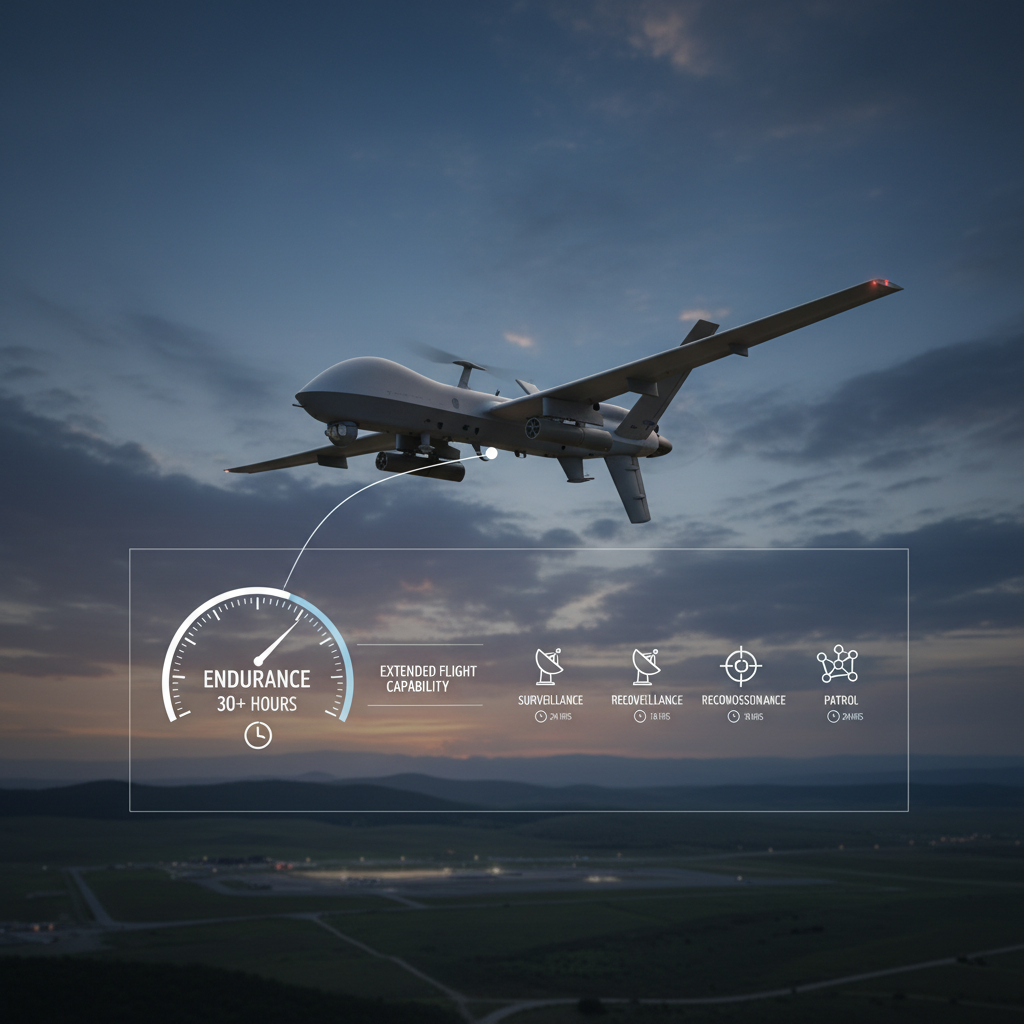
Reaper drones are specifically engineered for long-range missions, significantly enhancing their operational scope. Their ability to remain aloft for extended periods is vital for gathering intelligence and providing support in dynamic combat environments. The endurance of a Reaper drone is influenced by a variety of factors, including fuel capacity and engine efficiency. The MQ-9 Reaper is equipped with a robust fuel tank and an engine designed for optimal performance over long distances, allowing it to maintain its operational effectiveness without frequent interruptions. This durability is instrumental for military strategies that require consistent aerial presence, as it enables comprehensive monitoring of vast areas.
Factors Affecting Flight Time
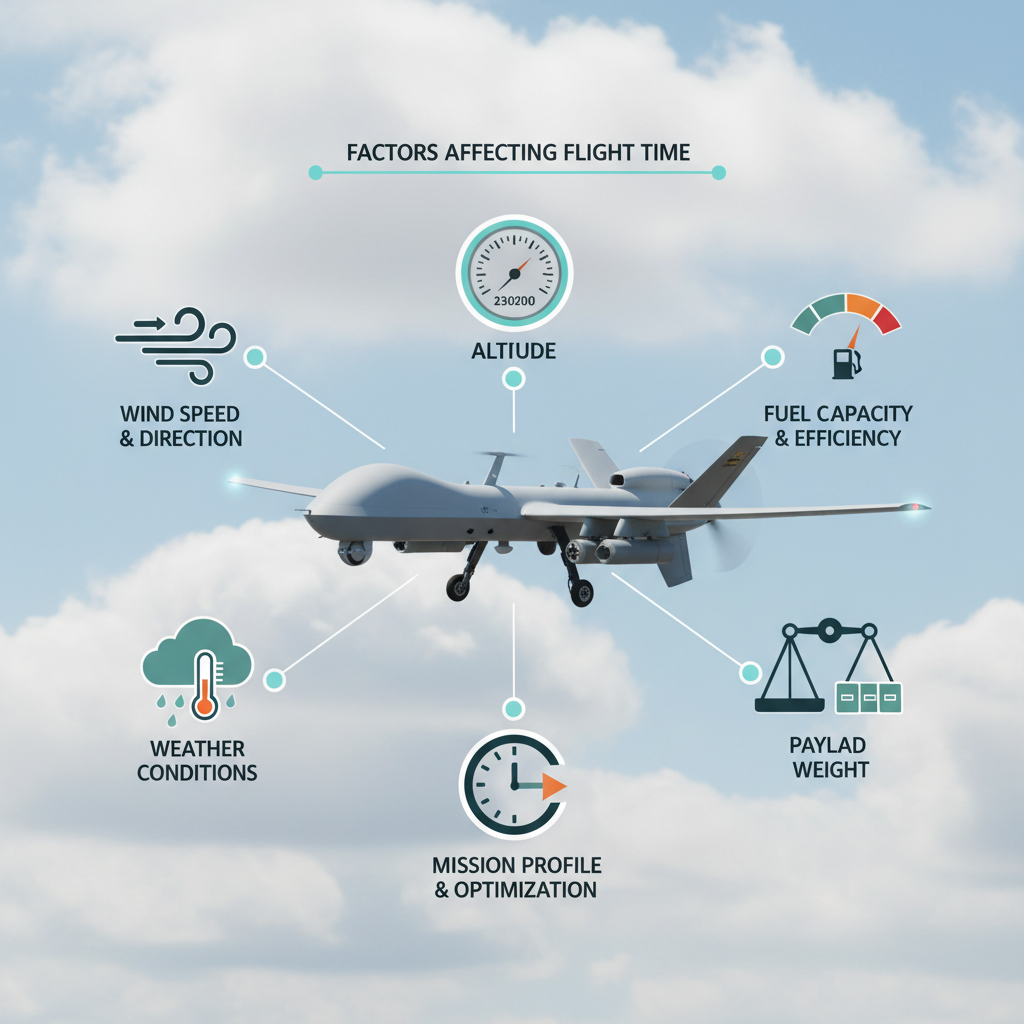
Several factors can significantly impact the flight endurance of Reaper drones. Weather conditions play a pivotal role; for instance, high winds and extreme temperatures can reduce fuel efficiency and, consequently, flight duration. A Reaper drone flying against strong headwinds will consume fuel more rapidly, diminishing its operational range. Similarly, payload weight is another critical consideration. The inclusion of weapons, surveillance equipment, or additional sensors can lower the maximum flight time. Each additional pound adds strain to the engines and requires more fuel to maintain altitude and speed. Therefore, mission planners must carefully balance the payload to optimize flight time while ensuring that all necessary equipment is onboard.
Technical Specifications of the Reaper Drone
The MQ-9 Reaper boasts impressive technical specifications that contribute to its operational success. With a maximum altitude of around 50,000 feet, it can survey large areas from a height that minimizes detection while providing a clear aerial view of the ground. The drone is powered by a turboprop engine that strikes a balance between speed and endurance, allowing it to cruise at over 200 knots. This engine type, combined with its design, facilitates efficient fuel consumption, which is essential for missions that require prolonged air time. The Reaper’s design also incorporates various technologies that enhance its capabilities, such as advanced avionics and sensors for improved situational awareness.
Mission Types and Their Impact on Flight Duration
The type of mission a Reaper drone undertakes can significantly influence its flight duration. Surveillance missions, which often require the drone to loiter over a designated area, typically demand longer flight times compared to strike missions, which may involve targeted attacks followed by a return to base. For example, during reconnaissance operations, a Reaper might remain in the air for hours, gathering critical intelligence without the risk of being grounded by fuel constraints. Conversely, strike missions can be executed more quickly, as they may involve a direct approach to a target, necessitating less loiter time. Understanding these distinctions is crucial for military planners aiming to maximize the effectiveness of their UAVs in various operational contexts.
Comparison with Other Drones
When comparing Reaper drones to other unmanned aerial vehicles (UAVs), it becomes evident that the MQ-9 has a longer flight duration than many of its counterparts, such as the MQ-1 Predator. While both drones share similar missions, the Reaper’s enhanced fuel capacity and engine efficiency allow it to outperform the Predator in terms of endurance. The Predator, for example, can stay airborne for around 24 hours under optimal conditions, making the Reaper a superior option for extended missions. Each drone type is tailored to specific operational needs, with the Reaper excelling in scenarios that demand prolonged surveillance and tactical versatility. In contrast, smaller drones may focus on rapid deployment and lower-cost operations but lack the endurance and payload capacity of the Reaper.
Future Developments in Drone Technology
The future of drone technology promises exciting advancements that may further extend the flight times of UAVs, including the MQ-9 Reaper. Innovations in battery technology are on the horizon, with researchers exploring new materials and designs that could enhance energy density and operational efficiency. Additionally, improvements in engine efficiency, especially in hybrid and electric propulsion systems, hold potential for increasing flight endurance. Emerging drone designs are also being developed, incorporating advanced aerodynamics and lightweight materials that could surpass the endurance of current models. These advancements will not only enhance military capabilities but may also pave the way for civilian applications, such as disaster response and environmental monitoring, by providing longer operational windows.
In conclusion, the Reaper drone’s ability to remain airborne for approximately 27 hours establishes it as a vital asset in military operations. Understanding the myriad factors that influence its flight duration—ranging from environmental conditions to mission types—provides valuable insights into its capabilities and operational potential. As drone technology continues to evolve, the enhancements on the horizon promise to revolutionize the capabilities of UAVs, making them even more effective in a variety of contexts. For those interested in military UAVs and technology, staying informed about these advancements will be essential in understanding the future landscape of aerial operations.
Frequently Asked Questions
How long can a Reaper drone stay in the air on a single flight?
A Reaper drone, officially known as the MQ-9 Reaper, can stay airborne for approximately 27 hours on a single flight, depending on its mission profile and payload. This impressive endurance allows it to conduct long-duration surveillance, reconnaissance, and strike missions without needing to refuel, significantly enhancing operational capabilities in various military applications.
What factors affect the flight duration of a Reaper drone?
The flight duration of a Reaper drone can be influenced by several factors, including payload weight, weather conditions, and mission type. Heavier payloads may reduce the drone’s endurance due to increased fuel consumption, while adverse weather conditions like high winds or rain can also impact performance and flight time.
Why is the endurance of the Reaper drone important for military operations?
The endurance of the Reaper drone is crucial for military operations as it enables sustained surveillance and intelligence-gathering over extended periods. This capability allows military forces to monitor targets continuously, conduct effective reconnaissance missions, and respond rapidly to changing battlefield dynamics, thereby enhancing situational awareness and operational effectiveness.
What is the maximum altitude a Reaper drone can fly, and how does it relate to flight duration?
The MQ-9 Reaper can operate at altitudes of up to 50,000 feet, which can significantly influence its flight duration. Flying at higher altitudes often results in lower air density, reducing drag and allowing for more efficient fuel consumption, ultimately extending the drone’s operational time in the air.
Which missions are best suited for the Reaper drone’s long flight times?
The Reaper drone’s long flight times make it particularly well-suited for missions such as persistent surveillance, intelligence collection, and precision strikes in combat zones. Additionally, its ability to remain in the air for extended periods allows for effective border patrol, anti-piracy operations, and humanitarian assistance, making it a versatile tool in both military and civilian contexts.
References
- https://en.wikipedia.org/wiki/General_Aviation#Unmanned_aerial_vehicles
- https://www.airforcemag.com/the-global-reaper-fleet/
- https://www.reuters.com/article/us-usa-drones-insight-idUSKBN2B72D8
- https://www.bbc.com/news/world-us-canada-41051314
- https://www.rand.org/pubs/research_reports/RR1477.html
- https://www.thedrive.com/the-war-zone/39904/the-predator-and-reaper-drones-are-more-capable-than-ever-before
- https://www.defense.gov/Explore/Features/Story/Article/Article/2160816/predator-reaper-drones-have-been-game-changers-in-war/
- https://www.nytimes.com/2021/01/26/us/predator-drone-remote-war.html
